

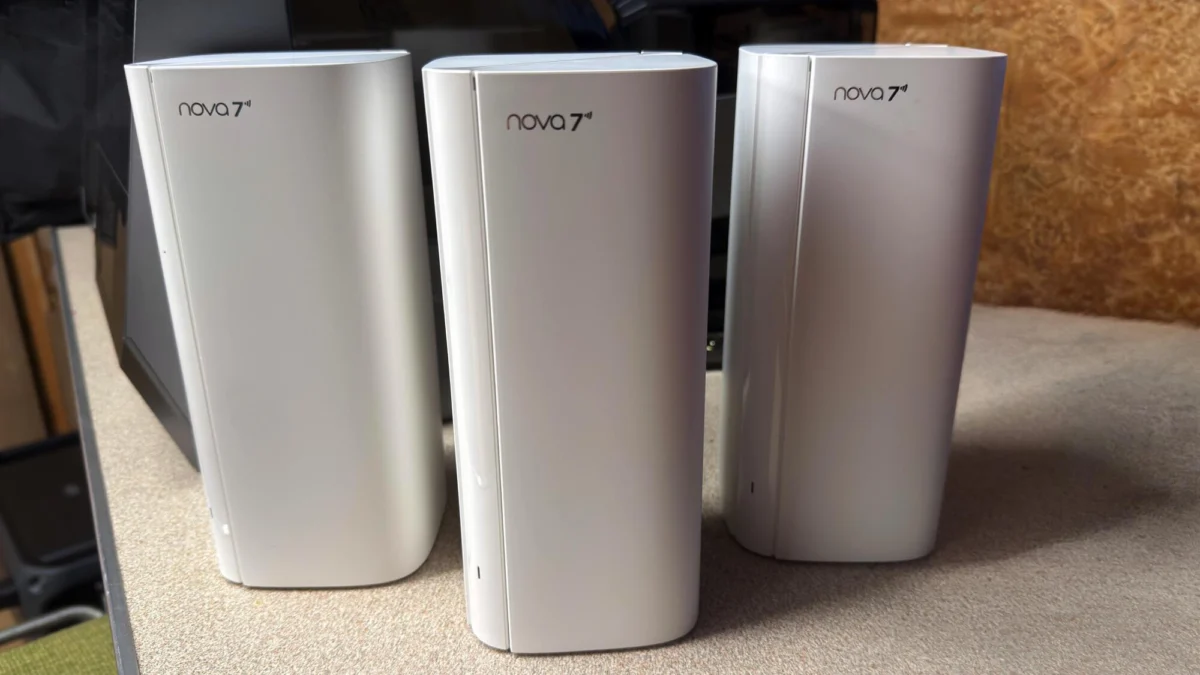
The landscape of home networking is undergoing a significant transformation with the introduction of the Wi-Fi 7 standard, promising unprecedented speeds and reduced latency for increasingly connected households. At the forefront of this shift is the Tenda BE5100 3-Pack Mesh Wi-Fi System, also known as the ME6 Pro, a networking solution designed to bridge the gap between high-end performance and consumer affordability. As the demand for bandwidth-intensive applications such as 8K streaming, cloud gaming, and extensive Internet of Things (IoT) ecosystems grows, the limitations of traditional single-router setups and legacy Wi-Fi extenders have become increasingly apparent. The BE5100 enters the market as a comprehensive solution aimed at providing blanket coverage for large residential and small office environments while future-proofing users for the next decade of digital evolution.
The Shift Toward Mesh Architecture and Wi-Fi 7
Historically, homeowners struggling with "dead zones"—areas where the Wi-Fi signal is weak or non-existent—relied on signal repeaters or Wi-Fi extenders. While these devices provided a basic solution, they were often plagued by performance degradation and the lack of seamless roaming. Users frequently had to manually switch between networks as they moved through their homes, and the extenders themselves often halved the available bandwidth. The advent of mesh networking revolutionized this experience by utilizing multiple interconnected nodes that function as a single, unified network.
The Tenda BE5100 leverages this mesh architecture but elevates it with the integration of Wi-Fi 7 (802.11be) technology. This latest generation of wireless connectivity is not merely an incremental speed boost; it introduces fundamental changes to how data is transmitted. Key features of Wi-Fi 7 included in the BE5100 system include Multi-Link Operation (MLO), which allows devices to send and receive data across different frequency bands simultaneously, and 4K-QAM (Quadrature Amplitude Modulation), which packs more data into each signal for enhanced efficiency.
Technical Specifications and Hardware Engineering
The BE5100 system is comprised of three identical units, each engineered to maximize signal penetration and throughput. Under the hood, each satellite is equipped with five internal high-gain antennas and five independent high-power Front-End Modules (FEMs). These FEMs are critical components that amplify the signal both during transmission and reception, allowing the units to penetrate thick obstacles, such as brick or stone walls, which typically stifle wireless signals.
In terms of raw speed, the BE5100 is rated for a combined throughput of approximately 5,100 Mbps. This is divided between two primary bands:
- 2.4 GHz Band: Capable of speeds up to 688 Mbps, optimized for range and lower-bandwidth IoT devices.
- 5 GHz Band: Capable of speeds up to 4,323 Mbps, designed for high-speed tasks such as gaming and ultra-high-definition video streaming.
The system is designed to handle broadband connections of up to 2,000 Mbps (2 Gbps), making it compatible with the highest-tier fiber-optic services currently available to residential consumers. Furthermore, the hardware is rated to support more than 160 simultaneous device connections, a necessity for modern households that may feature dozens of smart bulbs, cameras, appliances, and personal electronics.
Chronology of Wi-Fi Standards and the Tenda Release
The release of the Tenda BE5100 follows a rapid timeline of development in the networking sector. The Wi-Fi Alliance officially began certifying Wi-Fi 7 devices in early 2024, following years of draft specifications. Prior to this, Wi-Fi 6 and Wi-Fi 6E dominated the market, with 6E introducing the 6 GHz band to reduce congestion.
Tenda’s strategy with the BE5100 has been to move quickly into the Wi-Fi 7 space while maintaining a price point that undercuts established competitors like Amazon’s Eero or Netgear’s Orbi. While high-end Wi-Fi 7 mesh systems often debut at prices exceeding $500 to $1,000, Tenda positioned the BE5100 in the sub-$250 category, effectively democratizing access to next-generation hardware. This release marks a significant milestone in the commoditization of high-performance networking, moving Wi-Fi 7 from an enthusiast-only luxury to a mainstream consumer product.
Performance Analysis and Real-World Testing
Empirical testing of the Tenda BE5100 reveals its efficacy in challenging architectural environments. In trials conducted within a two-story structure featuring stone walls up to three feet thick—a notorious "router killer" environment—the three-pack system successfully provided blanket coverage of approximately 6,600 square feet. This performance far exceeds that of standard ISP-provided routers, which often fail to provide a stable signal beyond two or three rooms.

Data throughput tests using high-performance inputs, such as Starlink satellite dishes capable of 400-500 Mbps and multi-gigabit fiber lines, demonstrate that the BE5100 maintains high efficiency. During stress tests involving simultaneous 4K video streams on multiple devices, the system showed no signs of bottlenecking. For local network transfers, such as moving large files (30GB+) to a Network Attached Storage (NAS) device, the system achieved transfer speeds that allow for completion in under 100 seconds, showcasing the robustness of its internal backhaul communication.
Software Integration and User Experience
A significant barrier to the adoption of advanced networking hardware has historically been the complexity of setup. Tenda addresses this through a dedicated mobile application available on both iOS and Android platforms. The app utilizes a step-by-step guided process that simplifies the initial configuration, requiring minimal technical knowledge from the user.
One of the more innovative features included with the BE5100 is the inclusion of a self-adhesive NFC (Near Field Communication) tag. Users can write their network credentials to this tag via the app, allowing guests to tap their smartphones against the tag to connect instantly to the Wi-Fi without manually entering complex passwords. While this feature enhances convenience, security analysts suggest that in public or business settings, users should utilize third-party apps to password-protect the NFC tag to prevent unauthorized rewrites.
The Tenda app also includes a comprehensive diagnostic suite. This tool allows users to identify network issues, such as channel interference or hardware malfunctions, and provides automated suggestions for resolution. This proactive approach to maintenance reduces the need for professional technical support for common home networking hurdles.
Market Implications and Competitive Landscape
The introduction of the BE5100 at its current price point has significant implications for the networking market. For years, the industry was bifurcated between cheap, underperforming routers and expensive, high-end mesh systems. Tenda’s aggressive pricing—often seen as low as $189.99 for a three-pack during promotional periods—puts pressure on other manufacturers to lower their margins or innovate faster.
Industry analysts note that Tenda’s focus on "value-engineered" Wi-Fi 7 could accelerate the obsolescence of Wi-Fi 6 hardware. As consumers realize they can acquire the latest standard for a price comparable to older technology, the incentive to buy legacy hardware diminishes. This shift is expected to force a faster refresh cycle across the industry, benefiting consumers through better performance and forcing manufacturers to prioritize software stability and hardware efficiency to differentiate their products.
Broader Impact on the Smart Home Ecosystem
The reliability of a mesh system like the BE5100 is a critical enabler for the broader Smart Home and Internet of Things (IoT) industry. As households move toward the "Matter" and "Thread" standards for smart home interoperability, the underlying Wi-Fi network acts as the central nervous system. A failure in the Wi-Fi signal often results in the failure of security cameras, smart locks, and thermostats.
By providing a stable, high-capacity "blanket" of coverage, the BE5100 ensures that IoT devices at the periphery of a property—such as outdoor security cameras or garage door openers—remain connected. The system’s ability to handle over 160 devices simultaneously is particularly relevant as the average number of connected devices per household continues to rise, currently estimated at over 20 in developed markets and projected to double within the next five years.
Future Outlook and Conclusion
As the digital world moves toward more immersive experiences, including the "Metaverse," augmented reality (AR), and 8K video content, the infrastructure supporting these technologies must keep pace. The Tenda BE5100 3-Pack Mesh Wi-Fi System represents a strategic entry into this future. While the average household may not yet fully saturate a 2,000 Mbps connection, the overhead provided by Wi-Fi 7 ensures that the hardware will remain relevant as ISP speeds and device requirements inevitably increase.
In summary, the BE5100 offers a compelling combination of wide-area coverage, high-speed Wi-Fi 7 capabilities, and user-friendly software. Its success in the market signals a new era where high-end networking performance is no longer gated by a high price of entry, making reliable, high-speed internet access more attainable for a broader range of consumers. As networking technology continues to evolve, the emphasis will likely remain on the seamless integration of hardware and software, a trend that the Tenda BE5100 currently exemplifies.
