

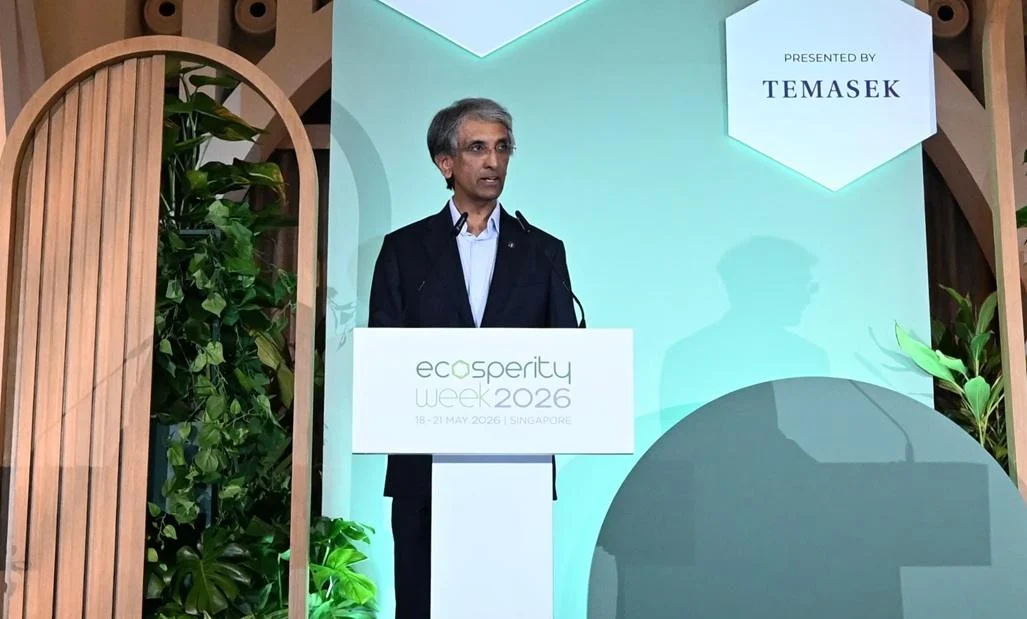
Temasek CEO Dilhan Pillay has signaled that the Singaporean state investment firm is likely to fall short of its ambitious 2030 portfolio decarbonization goals, citing a radical shift in the global landscape that has complicated the transition for hard-to-abate sectors. Speaking at the opening of the Ecosperity 2024 conference in Singapore, Pillay provided a pragmatic assessment of the firm’s climate trajectory, noting that while the 2030 interim targets may be missed, the organization remains steadfast in its ultimate commitment to achieving net-zero emissions by 2050. This admission serves as a significant bellwether for the global investment community, highlighting the growing friction between long-term sustainability aspirations and the immediate realities of geopolitical fragmentation, energy insecurity, and the nascent state of green technologies.
The 2030 target, established by Temasek in 2019, aimed to reduce the net carbon emissions attributable to its massive portfolio to half of 2010 levels. While the firm has successfully achieved a 30% reduction in emissions since the goal was set, the remaining 20% represents a steeper climb than originally anticipated. Pillay’s remarks underscore a "non-linear" path toward decarbonization, where early gains from "low-hanging fruit"—such as operational efficiencies and initial shifts toward renewables—are now being replaced by the harder work of transforming heavy industry and transport sectors that lack ready-made, cost-effective solutions.
The Evolution of the Global Landscape Since 2014
To understand Temasek’s current position, it is necessary to look at the historical context of its sustainability journey. When Temasek launched the Ecosperity conference in 2014, the global outlook on climate action was characterized by a burgeoning consensus. The lead-up to the Paris Agreement in 2015 saw a world moving toward greater integration, where trade and climate policy were seen as mutually reinforcing. At that time, as Pillay noted, there was a broad recognition that emissions transcended borders and required a unified, collective response.
However, the decade that followed has seen a fundamental dismantling of that international rules-based order. The rise of protectionist trade policies, the disruption of global supply chains due to the COVID-19 pandemic, and the return of large-scale geopolitical conflict have fractured the global energy market. The CEO highlighted that the world today is grappling with "less predictable policy signals" and "tighter fiscal positions," which have made the deployment of transition capital more complex. Governments that were once focused on subsidies for green energy are now balancing those needs against increased defense spending and domestic economic stabilization.
The Impact of Hard-to-Abate Sectors
A primary driver of the projected shortfall is Temasek’s significant exposure to sectors where decarbonization is technically and economically challenging. Unlike venture capital firms that may focus solely on "pure-play" green tech, Temasek’s portfolio includes mature, national-level infrastructure and transport assets that are essential to Singapore’s economy but are inherently carbon-intensive.
Singapore Airlines (SIA), in which Temasek holds a majority stake, serves as a quintessential example of these challenges. While the aviation industry has committed to net-zero targets, the path forward relies heavily on Sustainable Aviation Fuel (SAF). Pillay pointed out that despite collaborative efforts to scale SAF, it currently accounts for less than 1% of the global jet fuel supply. Furthermore, the cost of SAF remains prohibitively high, typically two to five times the price of conventional kerosene. For a major carrier like SIA, transitioning to SAF is not merely a matter of intent but of supply chain availability and economic viability.
Similarly, Temasek holds a 50% stake in Sembcorp Industries, a major player in the energy and urban development sectors. While Sembcorp has made significant strides in shifting its portfolio toward renewable energy—divesting from coal-fired plants and investing in wind and solar—the broader power generation sector still faces the "energy trilemma" of balancing sustainability with security and affordability. In many markets where Temasek operates, the transition from fossil fuels to renewables is slowed by the need for massive grid upgrades and the lack of long-duration energy storage technologies.
The Generative AI Factor and Energy Competition
In a modern twist to the decarbonization challenge, Pillay identified the emergence of generative artificial intelligence (AI) as a significant new variable. While AI holds the potential to optimize energy grids and accelerate material science discoveries for the climate transition, its immediate impact has been a massive surge in energy demand.
The proliferation of large language models and the data centers required to train them have created a "competition for capital" and power. Energy that might have been earmarked for industrial decarbonization is now being diverted to fuel the AI revolution. For an investment firm like Temasek, this creates a dual pressure: the need to invest in the next wave of technological innovation (AI) while simultaneously funding the capital-intensive energy transition. The high energy intensity of AI data centers threatens to offset some of the carbon savings achieved in other parts of the portfolio, adding another layer of difficulty to meeting the 2030 goals.
Strategic Initiatives and the Internal Carbon Price
Despite the acknowledgment of a potential miss on the 2030 timeline, Temasek is not retreating from its climate agenda. Instead, the firm is doubling down on three strategic pillars designed to drive long-term decarbonization:
- Direct Capital Deployment: Temasek is actively funneling capital into climate-aligned opportunities. This includes renewable energy, electrification, and industrial decarbonization. A notable recent example is Temasek’s support for Stegra (formerly H2 Green Steel), a Swedish company pioneering the use of green hydrogen to produce steel. Such investments are aimed at bringing nascent technologies to commercial scale, effectively creating the "green premiums" necessary for wider adoption.
- Portfolio Engagement: Rather than simply divesting from high-emitting companies—a move that often just moves emissions from one balance sheet to another without reducing global carbon levels—Temasek chooses to engage. By working with the boards and management teams of companies like SIA and Sembcorp, Temasek seeks to influence their transition strategies, encouraging the adoption of science-based targets and the integration of sustainability into core business operations.
- Institutionalizing Climate Metrics: Temasek has integrated climate considerations into its fundamental investment process. This includes the application of an internal carbon price, which was recently raised to US$50 per tonne of CO2e, with a projected path to reach US$100 by 2030. By attaching a financial cost to carbon in its investment valuations, Temasek ensures that the long-term risks of high-carbon assets are accounted for today. Additionally, the firm has linked sustainability performance to staff compensation, aligning internal incentives with environmental goals.
Analysis of Implications for the Investment Community
The transparency provided by Temasek is likely to resonate across the global financial sector. For years, many institutional investors have set 2030 targets that were based on a "best-case scenario" of technological breakthroughs and international cooperation. Temasek’s admission reflects a growing trend of "climate realism" among major asset owners.
Analysts suggest that this move could provide "cover" for other sovereign wealth funds and pension funds to be more honest about their own trajectories. The risk of "greenwashing" or over-promising has become a significant regulatory and reputational concern. By framing the 2030 target as a "milestone" that may evolve rather than a rigid failure, Temasek is arguing for a focus on the 2050 destination rather than the 2030 waypoint.
However, critics and environmental advocates may view this as a potential softening of corporate accountability. The 2030 deadline is widely regarded by climate scientists as a critical threshold for halving global emissions to limit warming to 1.5 degrees Celsius. A delay by one of the world’s most influential investors could be seen as a signal that the "urgency" of the climate crisis is being balanced against traditional financial returns and geopolitical stability.
Chronology of Temasek’s Sustainability Milestones
- 2010: The baseline year for Temasek’s carbon footprint, against which all future reductions are measured.
- 2014: Launch of the inaugural Ecosperity conference, signaling Temasek’s commitment to sustainable development and the "Twin Pillars" of Ecology and Prosperity.
- 2019: Temasek officially announces its target to halve portfolio emissions by 2030 and achieve net-zero by 2050.
- 2021: Temasek establishes GenZero, a dedicated investment platform focused on accelerating decarbonization globally with an initial capital commitment of S$5 billion.
- 2022: The firm raises its internal carbon price to US$42 per tonne, signaling a more aggressive approach to factoring in carbon risks.
- 2023: Temasek reports a 30% reduction in portfolio emissions compared to the 2010 baseline, marking a significant but slowing progress toward the 50% goal.
- 2024: CEO Dilhan Pillay acknowledges the likelihood of missing the 2030 target at the 10th-anniversary Ecosperity conference, citing the "harder and less linear" journey ahead.
Looking Toward 2050
As Temasek navigates the "turbulent waters" described by Pillay, the firm’s strategy appears to be shifting from aggressive short-term targets to deep, structural transformation. The focus on hard-to-abate sectors remains the most significant hurdle. For Singapore, a small island nation with limited natural resources, the success of its state investment firm in decarbonizing its portfolio is intrinsically linked to the country’s own national climate goals.
The "cost of inaction," as Pillay concluded, remains the ultimate motivator. While the 2030 target may be delayed, the firm’s thesis is that the transition is inevitable. The challenge lies in managing the transition in a way that preserves economic stability while radically reducing environmental impact. In the coming years, the investment community will be watching closely to see if Temasek’s "pragmatic commitment" leads to the technological breakthroughs required to bridge the gap between 30% and 100% decarbonization.
