

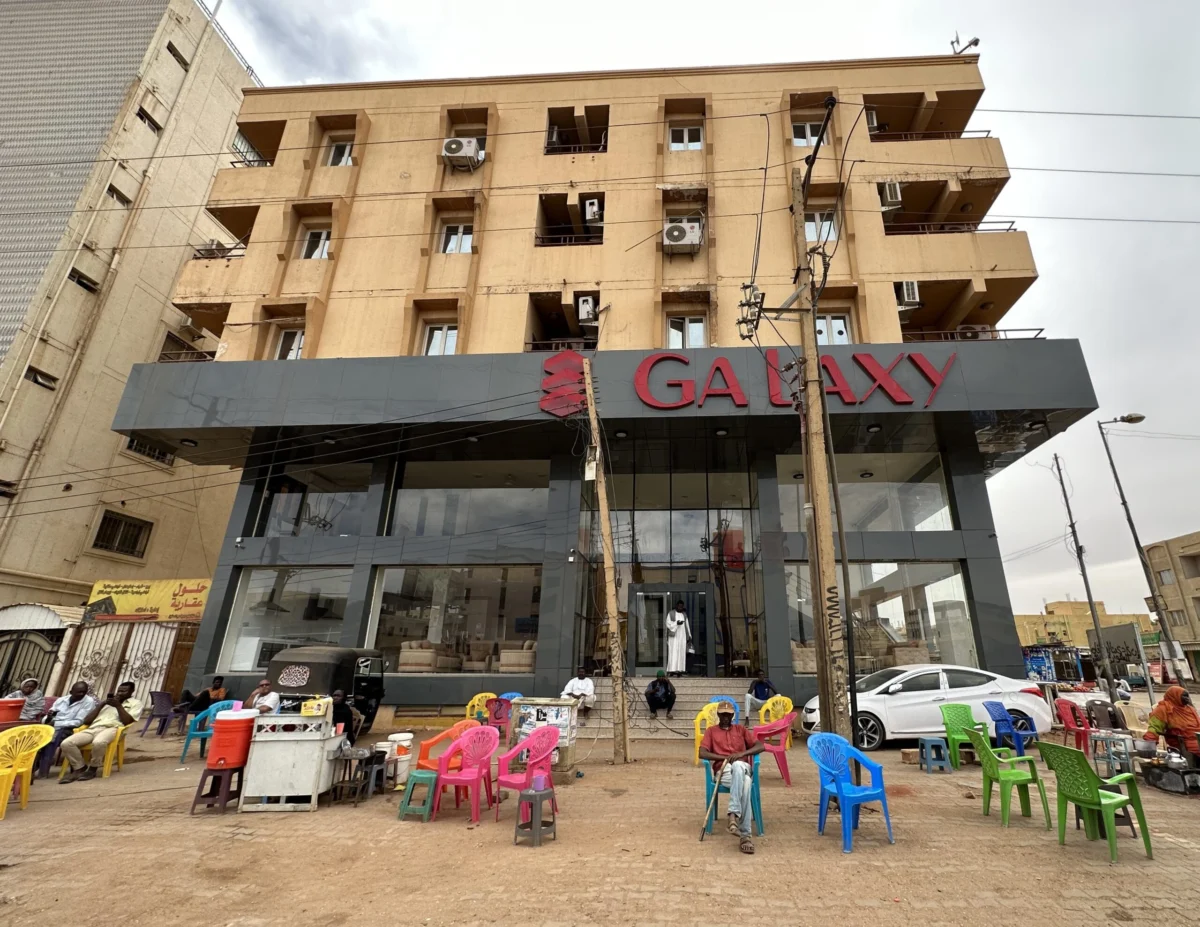
The international community is raising urgent alarms as Sudan teeters on the edge of a total humanitarian collapse, with the United Nations warning that the nation has reached a "breaking point" after more than two weeks of relentless urban warfare. As foreign governments conclude their complex evacuation operations, pulling diplomats and citizens from the embattled capital of Khartoum, the millions of Sudanese civilians left behind face a deteriorating landscape of air strikes, looting, and a catastrophic breakdown of essential services. Despite the nominal extension of a 72-hour ceasefire on Sunday, the sounds of heavy artillery and anti-aircraft fire continued to reverberate through Khartoum and its sister cities on Monday, signaling a grim reality: the truce exists more in diplomatic communiqués than on the ground.
The conflict, which erupted on April 15, 2023, is the violent culmination of a long-simmering power struggle between two formerly allied military leaders: General Abdel Fattah al-Burhan, the head of the Sudanese Armed Forces (SAF), and General Mohamed Hamdan Dagalo, better known as Hemedti, who leads the paramilitary Rapid Support Forces (RSF). What began as a dispute over the timeline and structure for integrating the RSF into the national army—a key component of a planned transition to civilian rule—has devolved into a full-scale war that threatens to destabilize the wider Horn of Africa and Red Sea regions.
The Human Cost and the Health Care Collapse
The statistics emerging from the Sudanese Ministry of Health paint a harrowing picture of the toll on human life. As of May 1, official records indicate at least 528 people have been killed and 4,599 wounded. However, these figures are widely considered to be significant undercounts. The United Nations and medical unions on the ground suggest that the actual death toll is likely much higher, as many bodies remain uncollected in the streets or are buried in private yards because it is too dangerous to reach hospitals or cemeteries.
The health care infrastructure in Khartoum and the Darfur region has essentially buckled. Approximately 70% of hospitals in areas near the fighting are out of service, according to the Sudanese Doctors’ Union. Those that remain open are operating with dwindling supplies of oxygen, blood, and surgical equipment. Many facilities have been hit by shelling or occupied by combatants, turning sanctuaries of healing into tactical outposts. For the civilian population, the lack of medical care is compounded by the scarcity of basic necessities. Power and water grids have been severely damaged, leaving neighborhoods in sweltering heat without clean drinking water or refrigeration for food.
A City Transformed by Looting and Lawlessness
Residents who have ventured out of their homes during lulls in the fighting describe a capital city that has been fundamentally altered. Khartoum, once a bustling hub of commerce and culture, is now a landscape of scorched buildings and abandoned markets. Widespread looting has become a secondary crisis. Industrial zones have been systematically stripped of machinery, and warehouses containing vital food supplies have been raided.
"We saw dead bodies. An industrial area that was all looted. We saw people carrying TVs on their backs and big sacks looted from factories," said Mohamed Ezzeldin, a resident who briefly fled the capital only to return when he found the costs of living in safer provinces were prohibitively high due to the massive influx of internally displaced persons.
The lawlessness extends to residential areas. RSF troops have reportedly taken up positions in civilian homes, using them as shields against SAF air strikes. Meanwhile, civilians like Jamila, a mother still trapped in the capital, report that her family is down to one meal a day. The constant psychological pressure of the conflict is inescapable. "The sound of fighting is in our ears all day," she noted, highlighting the trauma being inflicted on a generation of Sudanese children.
Chronology of the Conflict: From Transition to Total War
To understand the current crisis, one must look at the fragile political landscape that followed the 2019 ousting of long-time autocrat Omar al-Bashir.
- October 2021: General Burhan and Hemedti joined forces to lead a military coup, dissolving the civilian-led transitional government and derailing the democratic path.
- December 2022: Under intense international and domestic pressure, the military signed a "framework agreement" with civilian groups to return to a democratic transition.
- Early April 2023: Tensions spiked over the details of security sector reform. The SAF demanded a two-year integration period for the RSF, while the RSF pushed for a ten-year timeline.
- April 15, 2023: Fighting broke out simultaneously in Khartoum and several other cities. The RSF claimed control over the presidential palace and the airport, while the SAF responded with heavy aerial bombardments.
- April 25–30, 2023: Multiple "permanent" ceasefires were brokered by the United States and Saudi Arabia, only to be violated within hours of their commencement.
- May 1, 2023: Foreign evacuations wind down as the UN warns of a humanitarian breaking point.
Mass Displacement and Regional Implications
The conflict is not contained within Sudan’s borders. The UN Refugee Agency (UNHCR) reports that at least 50,000 people have already fled the country, seeking safety in neighboring Chad, Egypt, South Sudan, and Ethiopia. This mass exodus is straining the resources of nations that are already struggling with their own economic and security challenges.
In the western region of Darfur, the fighting has reignited ethnic tensions that have plagued the area for decades. Reports of inter-communal violence and the burning of markets in cities like El Geneina suggest that the current power struggle in Khartoum is acting as a catalyst for a wider civil war. The fear among analysts is that Sudan could become a "failed state" patchwork of fiefdoms, providing a vacuum for extremist groups and disrupting one of the world’s most vital shipping lanes in the Red Sea.
The International Response and the Aid Logistical Nightmare
Martin Griffiths, the UN Under-Secretary-General for Humanitarian Affairs, has emphasized that the "scale and speed of what is unfolding in Sudan is unprecedented." Before the war, nearly a third of the population—roughly 15 million people—was already dependent on humanitarian aid. That number has now skyrocketed.
The logistical challenge of delivering aid is immense. Port Sudan, on the Red Sea coast, has become the primary entry point for medical supplies and food, as the airport in Khartoum remains a battleground. However, transporting these supplies from the coast to the interior requires security guarantees that neither warring faction has been willing or able to provide.
Cindy McCain, head of the World Food Programme (WFP), announced that the agency is resuming operations in the more stable states of Sudan after a temporary suspension following the deaths of three WFP employees early in the conflict. However, she cautioned that the security situation remains "highly precarious," and the ability to reach the most affected populations in Khartoum and Darfur remains severely limited.
Military Stalemate: Drones versus Urban Guerrillas
The military dynamics suggest a protracted conflict. The Sudanese Armed Forces (SAF) possess a clear advantage in heavy weaponry, including fighter jets and Chinese-made drones. They have focused their efforts on targeting RSF supply lines and bases from the air. However, the RSF is a highly mobile, battle-hardened paramilitary force that has fanned out across residential neighborhoods, making it difficult for the army to dislodge them without causing massive civilian casualties and destroying the city’s infrastructure.
General Burhan has publicly stated that he will not sit down with Hemedti, whom he labels a rebel leader. Conversely, Hemedti has stated that negotiations can only begin once the SAF ceases its aerial campaign. This mutual intransigence has left little room for a diplomatic breakthrough, despite mediation efforts by the African Union, the Intergovernmental Authority on Development (IGAD), and a coalition of Western and Middle Eastern powers.
Economic Devastation and the Road Ahead
The economic impact of the war is devastating. The cost of basic goods has tripled in some areas, and the banking system has largely collapsed, leaving people with no access to their savings. For those like Victoria, a tea seller who used to work the streets of Khartoum, the choice is between the risk of a bullet and the certainty of hunger. "I risk my life to try to work and if God helps me I’ll get them some food," she said. "Just sitting useless doesn’t help and being scared doesn’t help."
As the smoke continues to rise over Khartoum, the prospect of a quick resolution remains dim. The international community faces a dual challenge: pressuring the generals to honor a genuine ceasefire while simultaneously building a massive humanitarian pipeline to prevent a famine. Without a decisive shift in the political will of the combatants, Sudan faces the dark prospect of a fragmented future, defined by displacement, poverty, and a lost generation.
