

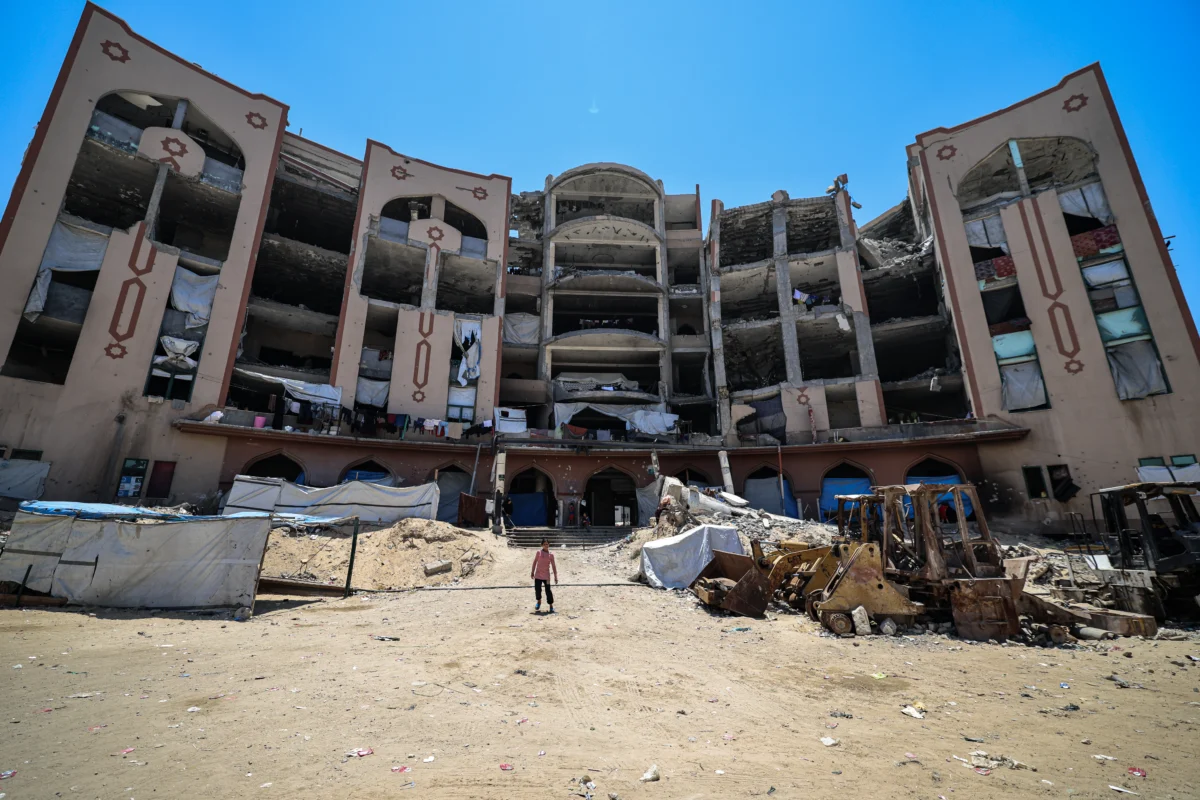
The Islamic University of Gaza (IUG), once a cornerstone of higher education and a beacon of academic excellence in the Palestinian enclave, currently stands as a testament to both the devastating impact of modern warfare and the unyielding spirit of academic resilience. For decades, the institution served as a premier hub for students pursuing degrees in complex fields such as medicine, health sciences, and engineering. Despite the persistent challenges posed by a long-standing blockade and periodic escalations, the university managed to maintain a rigorous academic environment that rivaled regional peers. However, the onset of the current conflict on October 8, 2023, initiated a period of unprecedented destruction that has threatened to dismantle the very foundations of Gaza’s intellectual future. Today, as the university attempts to navigate a fragile and frequently violated ceasefire that began in October 2025, the focus has shifted from standard academic growth to a desperate, creative struggle to rebuild an entire educational ecosystem from the ruins.
A Legacy of Academic Excellence Under Siege
Before the catastrophic events of late 2023, the Islamic University of Gaza was recognized for its commitment to practical, hands-on training. This was particularly evident in its medical and engineering faculties, where theoretical knowledge was meticulously paired with laboratory application. The university administration understood that for Gaza to be self-sufficient, its professionals needed to be trained on the latest technology. To this end, significant investments were made in specialized equipment. In a cruel twist of timing, Yassin al-Nounou, the university’s laboratory coordinator, noted that a shipment of advanced medical and health science equipment—including high-fidelity anatomy models and educational skeletons—had arrived just days before the hostilities commenced. These tools were intended to bridge the gap between classroom learning and the real-world clinical environments students would eventually enter.
The university’s infrastructure was a point of pride. It housed dozens of specialized laboratories where students spent thousands of hours handling biological samples, testing engineering theories, and mastering medical diagnostics. This environment was not merely about obtaining a degree; it was about building the human capital necessary to sustain a society living under a crippling siege. When the bombing began, these centers of innovation were among the first to suffer, transforming years of financial investment and academic planning into twisted metal and pulverized concrete.

Chronology of Disaster: The Destruction of IUG
The timeline of the university’s destruction mirrors the broader humanitarian crisis in the Gaza Strip. Following the commencement of military operations in October 2023, the campus became a frequent target of Israeli air strikes.
- October 2023: Initial strikes targeted administrative and peripheral buildings, disrupting the start of the semester and forcing the evacuation of staff and students.
- December 9, 2023: A significant turning point occurred with the destruction of the Faculty of Medicine. This facility was the heart of Gaza’s medical training program, housing the essential tools for the next generation of doctors.
- 2024 – Early 2025: As the war intensified, the university’s role shifted from education to survival. Standing structures were repurposed as temporary shelters for thousands of displaced Palestinians fleeing the violence in northern and central Gaza. During this period, the siege tightened, preventing the entry of even basic educational supplies such as pens, paper, and notebooks.
- October 2025: A ceasefire was announced, but the "peace" has been characterized by frequent violations and a lack of clear pathways for reconstruction. The university now faces the monumental task of assessing what remains of a campus that has lost nearly 20 buildings.
The statistical weight of the loss is staggering. Reports indicate that 19 educational buildings were completely destroyed. The damage extends to 500 classrooms, 200 scientific laboratories, and 75 computer laboratories. Furthermore, the central library, a repository of cultural and scientific heritage, lost more than 240,000 books, journals, and original academic theses—a loss of data and history that may never be fully recovered.
The Human Toll and Academic Displacement
Dr. Abdulraouf Ali al-Manama, the dean of the university’s health sciences faculty, has described the past three years as the greatest disaster in the institution’s half-century history. The physical loss of buildings is compounded by the psychological and social toll on the student body. The mass displacement of Gaza’s population means that students are scattered across the territory, often living in tents or overcrowded shelters with no access to electricity or the internet.
For students like Deema Muhaisen, a medical student, the war has effectively ended the traditional university experience. "In many cases, we received lectures in hospital corners and between patient rooms, gathered around doctors, in places that did not provide the minimum requirements for an educational environment," Muhaisen explained. The destruction of the medical faculty meant she no longer had a home base for her studies. Her education became a nomadic journey through the overcrowded wards of Gaza’s remaining hospitals.

This shift has created a precarious situation for medical education. While clinical exposure is vital, it cannot entirely replace the controlled environment of a laboratory where foundational skills are built. In hospitals, the priority is—rightly—the treatment of the wounded, leaving little room for formal instruction. Muhaisen and her peers have had to transition from students to volunteer medical staff almost overnight, assisting in emergency departments and surgery units to fill the gap left by a decimated healthcare workforce.
Adapting to the "New Normal": Digital and Field-Based Solutions
In response to the physical erasure of their campus, the IUG administration has been forced to innovate. The university has adopted several temporary measures to keep the educational process alive:
- Decentralization: To mitigate the risks of travel and the lack of a central hub, the university established five smaller branches across the Gaza Strip. This allows students to access resources closer to where they are currently displaced.
- Digital Simulations: For courses in medical microbiology, biochemistry, and molecular diagnostics, the university has turned to digital simulations and recorded experiments. While these provide a theoretical understanding, Dr. al-Manama warns that they cannot replace the tactile experience and confidence-building provided by real-world laboratory work.
- Integrated Field Training: The university has strengthened partnerships with local healthcare centers and hospitals. Students now receive much of their practical training on the job, though this is often unstructured due to the ongoing humanitarian crisis.
- Online Learning: Despite the "digital divide" caused by frequent power outages, IUG continues to offer theoretical coursework via online platforms, hoping that students can catch up on practical requirements once facilities are rebuilt.
Broader Implications: Scholasticide and the Future of Gaza
The destruction of the Islamic University of Gaza is part of a broader trend that some observers and human rights organizations have labeled "scholasticide"—the systemic destruction of a nation’s educational infrastructure. An assessment by the Palestinian Ministry of Education and Higher Education, in collaboration with UNESCO, confirms that nearly every higher education institution in Gaza has sustained significant damage.
The implications for the future of the Gaza Strip are profound. A society’s ability to recover from war is directly linked to its ability to produce doctors, engineers, and teachers. By targeting the laboratories and libraries of IUG, the conflict has not just destroyed buildings; it has attempted to sever the pipeline of professional expertise necessary for reconstruction.

The university’s laboratory coordinator, Yassin al-Nounou, emphasizes the long-term impact of this "practical gap." Students who graduate without having used modern diagnostic equipment or conducted physical experiments may face significant hurdles when they enter the global or local job market. "Today, there is no equipment and no laboratory like the ones that existed before," he stated, highlighting the anxiety felt by students who fear they will be unprepared for the realities of their professions.
The Path to Reconstruction
Rebuilding the Islamic University of Gaza will require more than just mortar and stone; it requires a massive influx of international aid, the lifting of the siege to allow for the import of scientific equipment, and a sustained period of stability. The university currently needs everything from microscopes and incubators to specialized chemicals and laboratory reagents—items that are frequently restricted under "dual-use" import regulations.
Despite these overwhelming odds, the spirit within the university remains one of defiance and hope. The resilience of students like Muhaisen, who continues to study between shifts in the emergency room, reflects a collective determination to preserve the intellectual life of Gaza. "Investing in education today is an investment in recovery," Muhaisen said, "because rebuilding people is no less important than rebuilding stones."
As the international community debates the political future of the region, the Islamic University of Gaza stands as a reminder that the true foundation of any future state lies in its classrooms and laboratories. The struggle to maintain education amidst the rubble is, at its core, a struggle for the right to a future. The university’s graduates will be the ones to lead the reconstruction of Gaza’s hospitals, power grids, and schools, making the restoration of their education a matter of urgent regional importance.
