

The United Nations has issued a stark warning that Sudan is reaching a humanitarian "breaking point" as the conflict between the Sudanese Armed Forces (SAF) and the paramilitary Rapid Support Forces (RSF) enters its third week with no sign of a permanent resolution. Despite several attempts to broker a lasting truce, the capital city of Khartoum remains a theater of heavy artillery fire, airstrikes, and desperate urban combat. As the international community winds down its complex evacuation operations, the millions of Sudanese citizens left behind face a rapidly deteriorating environment characterized by the collapse of basic services, widespread looting, and a dwindling supply of food and medicine.
The conflict, which erupted on April 15, 2023, has fundamentally transformed the landscape of Sudan’s major urban centers. According to the Sudanese Health Ministry, the death toll has climbed to at least 528, with more than 4,500 individuals wounded. However, United Nations officials and local medical unions caution that these figures are likely significant underestimates. Many casualties remain uncounted because the intensity of the fighting prevents families from reaching hospitals or morgues, forcing many to bury their dead in backyard gardens or local parks.
The Escalation of Urban Warfare in Khartoum
In Khartoum, a city of five million people, the nature of the fighting has created a state of perpetual terror. The Sudanese Armed Forces, led by General Abdel Fattah al-Burhan, have increasingly relied on their superiority in the air, deploying fighter jets and drones to strike RSF positions. Conversely, the RSF, commanded by Mohamed Hamdan Dagalo, widely known as Hemedti, has utilized its high mobility to embed itself within densely populated residential neighborhoods. This tactical entrenchment has effectively turned civilian homes and hospitals into shields, leading to significant collateral damage.
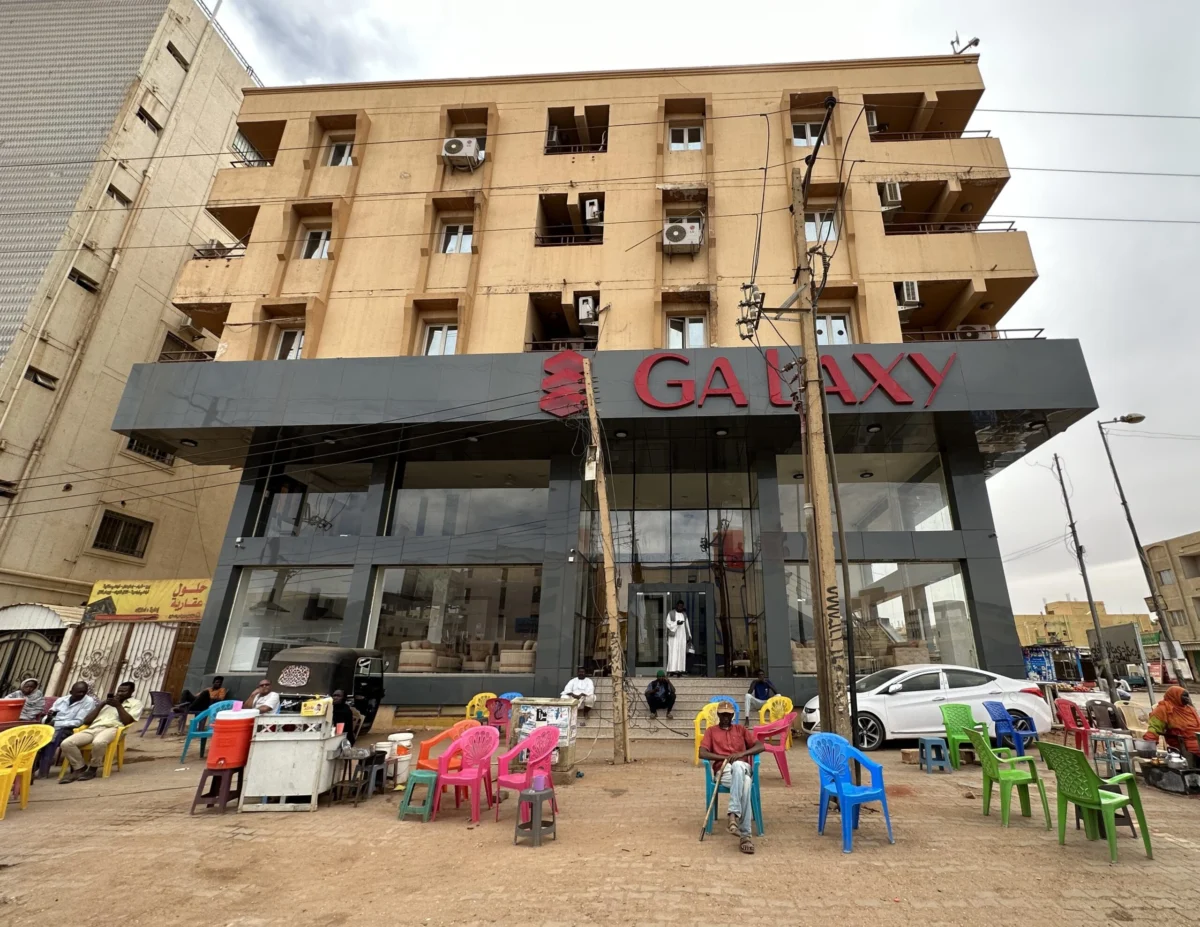
Eyewitness accounts from residents who have managed to flee describe a city unrecognizable from its pre-war state. Looting has become systemic, targeting not only grocery stores and pharmacies but also industrial zones and private residences. Mohamed Ezzeldin, a resident who briefly fled the capital only to return due to the prohibitive costs of living elsewhere, reported seeing an industrial area entirely stripped of its assets. The sight of individuals carrying looted electronics and sacks of raw materials has become a common feature of the chaotic streets.
The failure of the most recent 72-hour ceasefire extension, agreed upon on April 30, underscores the deep-seated mistrust between the two military leaders. While both sides claimed to be honoring the truce for humanitarian purposes, the sound of anti-aircraft fire and explosions continued to reverberate across the capital on Monday morning. The SAF claimed it had successfully reduced the RSF’s combat effectiveness by nearly 50%, while the RSF maintained that it held its ground in key strategic locations, including areas near the Republican Palace and Khartoum International Airport.
A Nation at the Breaking Point: The Humanitarian Toll
Martin Griffiths, the UN Under-Secretary-General for Humanitarian Affairs and Emergency Relief Coordinator, described the speed and scale of the unfolding disaster as "unprecedented." Even before the outbreak of hostilities, Sudan was struggling with a fragile economy and high levels of food insecurity. Currently, approximately one-third of the population—roughly 15 million people—requires some form of humanitarian assistance. The war has exacerbated this need exponentially.
The collapse of the healthcare system is perhaps the most acute aspect of the crisis. In Khartoum, an estimated 70% of hospitals are non-functional due to proximity to the fighting, lack of medical supplies, or the flight of medical personnel. Those that remain open are operating under extreme duress, often without electricity or running water. The World Health Organization (WHO) has expressed concern over the seizure of a national public health laboratory, warning of a "high risk of biological hazard" if specialized technicians are unable to secure the facility.
Displacement has also reached critical levels. The UN Refugee Agency (UNHCR) reported that at least 50,000 people have crossed Sudan’s borders into neighboring Chad, Egypt, South Sudan, and Ethiopia. Many others have made the perilous journey to Port Sudan on the Red Sea coast, hoping to secure passage on ships bound for Saudi Arabia. For those unable to leave, the struggle is for daily survival. Jamila, a resident of Khartoum, shared that her family has been reduced to eating one meal a day. The presence of RSF troops stationed directly outside her home has made even the shortest trip to find food a life-threatening endeavor.
The Winding Down of International Evacuation Missions
As the security situation remains volatile, foreign governments have largely concluded their emergency evacuation efforts. Over the past two weeks, a massive logistical operation involving dozens of countries saw thousands of diplomats, aid workers, and foreign nationals extracted via military transport planes and naval vessels.
Germany and several other European nations have officially ended their missions. The United Kingdom’s final evacuation flight was scheduled to depart from the Wadi Seidna airfield on Monday, ending a window of opportunity for British nationals and eligible residents. While these operations were successful in removing foreign citizens from harm’s way, they have left a vacuum in the humanitarian sector. Many international NGOs were forced to suspend operations and evacuate their international staff, leaving local Sudanese employees to manage the crisis with limited resources.
However, some organizations are attempting to pivot. The World Food Programme (WFP) announced it would resume operations in areas of Sudan that remain relatively stable, such as the eastern and northern states. This decision comes after a temporary suspension following the tragic killing of three WFP staff members in North Darfur during the early days of the conflict. WFP head Cindy McCain emphasized that while the security situation is "highly precarious," the agency cannot abandon the millions of people who are now facing starvation.
Historical Context: The Power Struggle Between Former Allies
To understand the current violence, it is necessary to examine the fractured relationship between General Burhan and Hemedti. Both leaders were instrumental in the 2019 ousting of long-time dictator Omar al-Bashir following a popular uprising. In October 2021, they joined forces again to execute a military coup that derailed Sudan’s planned transition to civilian-led democracy.
The alliance was always one of convenience rather than shared vision. Tensions began to boil over during negotiations for a new transition agreement backed by the international community. The primary point of contention was the integration of the RSF—a paramilitary group that grew out of the Janjaweed militias used by Bashir in Darfur—into the regular Sudanese army. Disagreements over the timeline for this integration and the chain of command eventually led to the mobilization of forces in Khartoum and the subsequent outbreak of war.
The personal animosity between the two men has become a major barrier to peace. General Burhan has publicly stated he would never sit down for talks with Hemedti, labeling the RSF a "rebel militia." Hemedti, in turn, has demanded that the army cease hostilities before any dialogue can occur, accusing Burhan of being a "criminal" and an "Islamist extremist" loyal to the old Bashir regime.
Regional Destabilization and the Darfur Conflict
The conflict in Khartoum has also reignited old wounds in the Darfur region, where the RSF has deep roots. Reports from West Darfur indicate a surge in inter-communal violence, with tribal militias taking up arms as the central authority collapses. The city of El Geneina has seen particularly heavy fighting, with reports of hospitals being looted and entire neighborhoods burned.
The regional implications of a protracted Sudanese civil war are profound. Sudan shares borders with seven countries, many of which are already grappling with their own internal instabilities. Egypt, which views Sudan as vital to its national security and its interests in the Nile waters, has expressed deep concern. Chad and South Sudan are facing an influx of refugees that threatens to overwhelm their already limited infrastructure. There is also a significant risk that regional powers could be drawn into the conflict, turning Sudan into a proxy battleground for broader geopolitical interests in the Red Sea and the Sahel.
The Fragility of Diplomatic Mediations
While the United States, Saudi Arabia, and the African Union have been active in trying to mediate a ceasefire, the results have been inconsistent. The "Jeddah initiative," led by the U.S. and Saudi Arabia, has sought to bring representatives from both sides to the negotiating table to discuss a more permanent cessation of hostilities and the establishment of humanitarian corridors.
However, the lack of enforcement mechanisms for the ceasefires has allowed both the SAF and the RSF to continue their operations with relative impunity. Military analysts suggest that both sides still believe a total military victory is possible, which discourages genuine compromise. The SAF is banking on its heavy weaponry and air force to eventually grind down the RSF, while the RSF is relying on its ability to wage a war of attrition within the urban sprawl of Khartoum.
As the international community shifts its focus from evacuations to long-term humanitarian relief, the challenge remains immense. Without a sustained and monitored ceasefire, the delivery of aid to the millions in need will remain nearly impossible. The "breaking point" the UN warned of is no longer a distant threat; for many in Sudan, it is the daily reality of a nation being torn apart by the ambitions of its military elite.
The coming days will be critical. If the current cycle of violence continues, Sudan risks descending into a state of total collapse, with consequences that will be felt far beyond its borders for decades to come. The resilience of the Sudanese people, who have spent years protesting for a civilian-led future, is being tested as never before by the very institutions that were supposed to protect them.
