

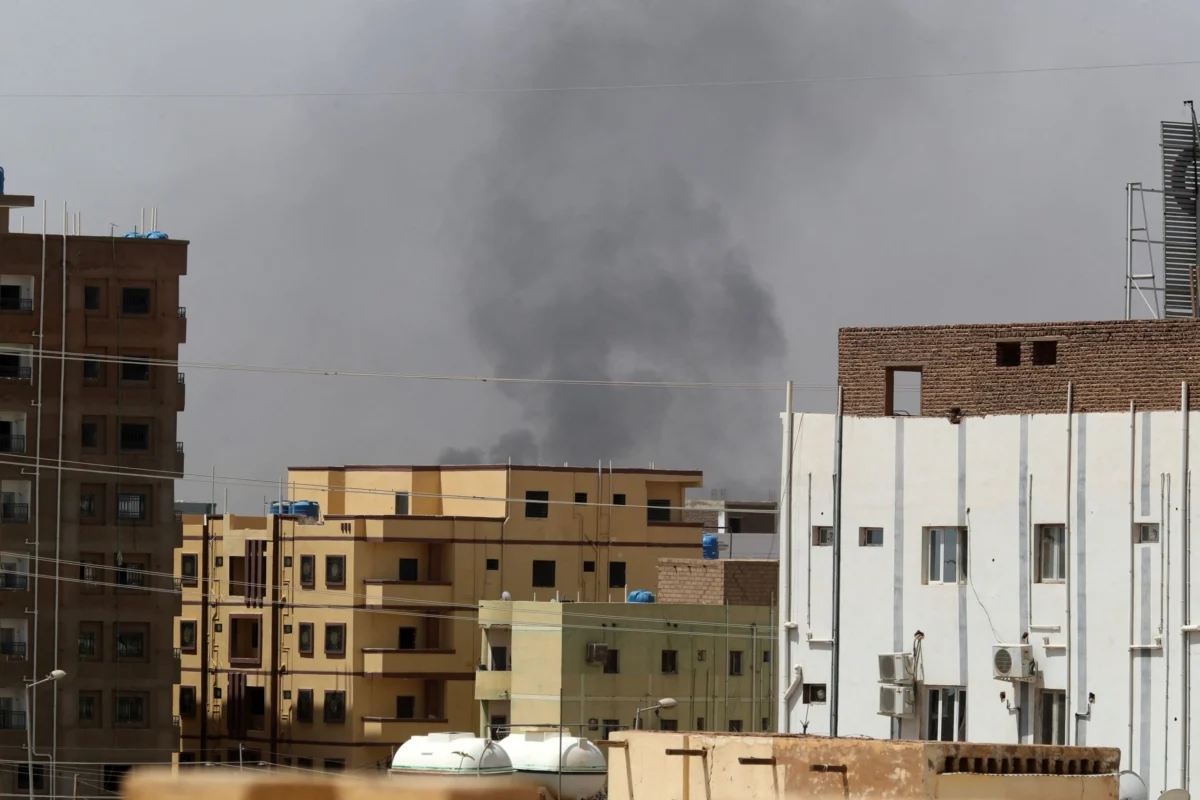
Sporadic fighting and the distant rumble of artillery continued to echo across the Sudanese capital of Khartoum on Sunday, even as residents expressed a cautious, weary hope following the announcement of a new week-long ceasefire agreement. Brokered by the United States and Saudi Arabia after intense negotiations in Jeddah, the deal represents the most significant diplomatic breakthrough since the conflict erupted on April 15. The agreement, signed by representatives of the Sudanese Armed Forces (SAF) and the paramilitary Rapid Support Forces (RSF), is scheduled to take effect on Monday evening at 9:45 p.m. local time. Unlike previous short-lived truces, this pact includes a formal, internationally supported monitoring mechanism designed to ensure compliance and facilitate the delivery of desperately needed humanitarian aid to millions of trapped civilians.
The signing of the Jeddah document marks a pivotal moment in a five-week conflict that has transformed the streets of Khartoum into a battlefield and pushed the nation to the brink of total collapse. While previous ceasefire declarations were made unilaterally or through informal channels—only to be violated within hours—this is the first time both warring factions have put pen to paper on a negotiated truce. However, the atmosphere on the ground remains thick with skepticism. Analysts and residents alike point to the fact that neither the army chief, General Abdel Fattah al-Burhan, nor the RSF commander, Mohamed Hamdan Dagalo, known as Hemedti, attended the talks in person. The ability of these leaders to enforce the agreement among their rank-and-file soldiers, many of whom are engaged in decentralized urban warfare, remains the primary question hanging over the deal.
The Humanitarian Crisis and the Struggle for Survival
The human cost of the power struggle between Sudan’s two most powerful generals has been staggering. According to the latest figures from the World Health Organization (WHO), at least 705 people have been killed and over 5,287 injured since mid-April. However, medical professionals and local activists warn that the true death toll is likely significantly higher, as many bodies remain uncollected in the streets or are buried in makeshift graves without being officially recorded. The conflict has triggered a massive displacement crisis, with the United Nations reporting that more than 1.1 million people have fled their homes. Of these, approximately 840,000 are internally displaced within Sudan, while over 250,000 have crossed borders into neighboring countries such as Egypt, Chad, Ethiopia, and South Sudan.
In Khartoum, the situation has reached a breaking point. Residents who have not fled are enduring a nightmare of mass looting, a total collapse of the healthcare system, and severe shortages of food, fuel, and clean water. Witnesses in central and southern Khartoum reported that the sound of clashes persisted throughout Sunday, despite the news of the impending ceasefire. Safaa Ibrahim, a 35-year-old resident of the capital, described the toll the war has taken on her family. "We are tired of this war. We have been chased away from our homes, and the family has scattered between towns in Sudan and Egypt," she said in a phone interview. "We want to return to normal life and safety. Al-Burhan and Hemedti have to respect people’s desire for life."
The collapse of infrastructure has left the city’s remaining hospitals barely functional. According to the Sudanese Doctors’ Union, approximately 70% of hospitals in conflict zones are out of service, often because they have been occupied by military forces, hit by shelling, or have run out of basic medical supplies and electricity. The Jeddah agreement specifically outlines the restoration of essential services and the withdrawal of armed forces from hospitals and key public facilities, a move that activists say is the only way to prevent a secondary catastrophe driven by disease and untreated injuries.
A Chronology of Escalation: From Transition to Civil War
The roots of the current conflict can be traced back to the 2019 popular uprising that ended the thirty-year rule of President Omar al-Bashir. Following Bashir’s ouster, a fragile power-sharing agreement was established between civilian leaders and the military. However, this transition was derailed in October 2021 when General al-Burhan and Hemedti joined forces to carry out a military coup, dissolving the civilian-led government and seizing full control of the state.
The partnership between the SAF and the RSF was always one of convenience rather than shared vision. Tensions began to simmer in early 2023 during negotiations over a new transition plan supported by the international community. The primary point of contention was the integration of the RSF—a powerful paramilitary group that grew out of the Janjaweed militias in Darfur—into the regular army. Disagreements over the timeline for this integration and the future chain of command eventually led to a total breakdown in communication.
On the morning of April 15, the simmering rivalry exploded into open warfare in Khartoum and quickly spread to other regions, most notably Darfur. The SAF, which possesses a significant air force and heavy artillery, has utilized aerial bombardments to target RSF positions. In response, the RSF has embedded its fighters within residential neighborhoods, using homes and schools as bases, which has resulted in high civilian casualties and widespread property destruction.
Strategic Implications and the Monitoring Mechanism
The Jeddah agreement is unique because it includes a "Short-Term Ceasefire and Humanitarian Arrangement." This document specifies that a monitoring committee, comprising representatives from Saudi Arabia, the United States, and the two warring parties, will oversee the implementation of the truce. This mechanism is intended to provide a platform for reporting violations and coordinating the safe passage of humanitarian convoys.
The international community has reacted with cautious optimism. In a joint statement, the U.S. State Department and the Saudi Ministry of Foreign Affairs emphasized that while the agreement is a step forward, it is not a final solution. "It is well known that the parties have previously announced ceasefires that have not been observed," the statement noted. "Unlike previous ceasefires, the agreement reached in Jeddah was signed by the parties and will be supported by a U.S.-Saudi and international-supported ceasefire monitoring mechanism."
Military analysts suggest that the success of the monitoring mechanism will depend on the willingness of the commanders to allow international observers or remote monitoring via satellite imagery and other data points. There is also the concern of "spoilers"—local commanders or rogue elements within either side who may not feel bound by an agreement signed in a foreign city. Senior army general Yassir al-Atta, speaking on Sudan state TV, defended the army’s tactics, stating they were attempting to "cleanse" residential areas of RSF presence. He even suggested that while formal civilian arming was not yet required, residents had a "natural right" to arm themselves for self-defense, a statement that many fear could lead to further lawlessness and the "Libyanization" of the conflict.
Regional Stability and the Threat of Contagion
The war in Sudan is not merely an internal power struggle; it is a geopolitical crisis with the potential to destabilize the entire Horn of Africa and the Sahel region. Sudan shares borders with seven countries, many of which are already grappling with their own internal instabilities, droughts, and economic crises. The influx of hundreds of thousands of refugees is putting an immense strain on the resources of neighboring states.
In the western region of Darfur, the conflict has taken on an ethnic dimension, reviving memories of the genocide that occurred there two decades ago. Reports from the city of El Geneina indicate that the fighting has devolved into inter-communal violence, with the RSF and aligned Arab militias clashing with members of the Masalit community. This regionalization of the conflict makes a national ceasefire even more difficult to maintain, as local grievances and historical animosities often override directives from Khartoum.
Furthermore, Sudan’s strategic location on the Red Sea makes it a point of interest for global powers, including Russia, China, and various Middle Eastern nations. The prolonged absence of a stable government and the continuation of the war could create a vacuum that extremist groups might exploit, further complicating the international response.
The Path Ahead: Beyond the Seven-Day Truce
The immediate goal of the Jeddah deal is to create a "humanitarian pause" that allows for the repair of water and power lines, the restocking of hospitals, and the safe exit of civilians from combat zones. However, mediators have been clear that this week-long window is only a precursor to more difficult negotiations. Future talks are expected to address the permanent cessation of hostilities and the eventual return to a civilian-led political process.
The Sudanese people, meanwhile, remain caught in the middle of a conflict they did not choose. The popular uprising of 2019 demonstrated a clear desire for democracy and the removal of military influence from governance. The current war is seen by many activists as a betrayal of those revolutionary ideals by two generals who are more interested in personal survival and power than the welfare of the nation.
"The people of Khartoum are waiting for the truce and the opening of humanitarian corridors," said Mohamed Hamed, a local activist. "The health situation is getting worse day after day. We need more than just a week of silence; we need a future where we don’t have to fear the sound of planes or the sight of gunmen on our street corners."
As Monday evening approaches, the world watches to see if the guns will finally fall silent. The success or failure of this Jeddah-brokered agreement will likely determine whether Sudan can find a path toward de-escalation or if it will slide further into a protracted civil war that could haunt the region for a generation. For the millions of Sudanese citizens huddled in their homes or trekking toward borders, the stakes could not be higher. The next seven days will serve as a litmus test for the credibility of General al-Burhan and Hemedti, and more importantly, as a potential lifeline for a nation in agony.
