

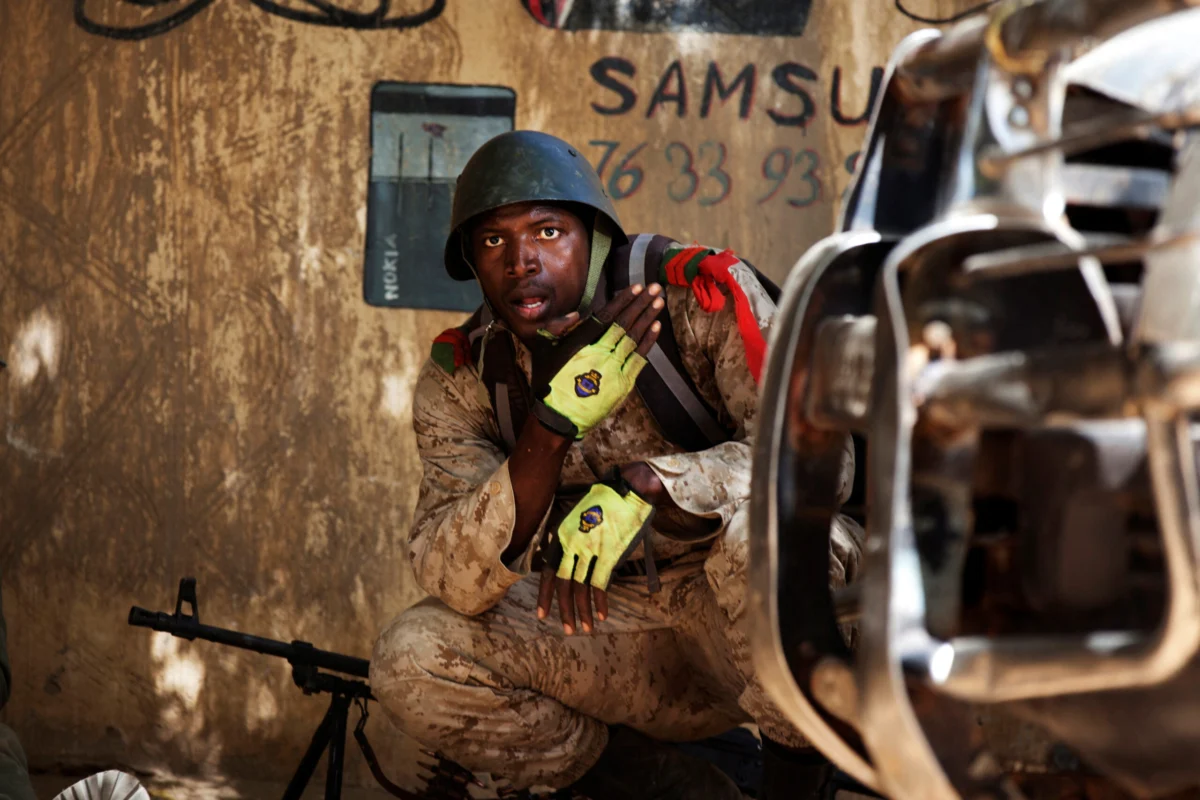
In a significant escalation of the long-running conflict in the Sahel, armed groups in military-run Mali have launched a series of renewed, coordinated attacks on multiple towns across the nation, targeting both the Malian Armed Forces (FAMa) and their Russian paramilitary allies. The assaults, which occurred on Saturday, represent a sophisticated offensive by a coalition of separatist and jihadist forces, striking at the heart of the military junta’s security apparatus and its foreign support network. The raids targeted high-profile army positions, including bases utilized by the Russian-backed Africa Corps, signaling a deteriorating security landscape despite the government’s promises of stabilization following its pivot away from Western military partnerships.
According to statements from the Malian military and rebel communiqués, the coordinated strikes spanned the country’s northern, central, and southern regions. A Tuareg-led separatist group and a prominent regional al-Qaeda affiliate have both claimed responsibility for the operations. These events follow a similar pattern of high-intensity, multi-pronged assaults seen two months ago when the capital, Bamako, was targeted. The latest wave of violence underscores the growing capability of insurgent groups to bypass traditional defensive lines and strike strategically significant installations, including a major prison complex and critical military outposts.
Mapping the Offensive: Strategic Targets and Military Responses
The Malian army initially confirmed that five distinct positions came under heavy fire on Saturday. These locations included Aguelhok, Anefis, and Gao in the volatile northern region; Sevare in central Mali; and Kenieroba in the south. The geographical spread of these attacks suggests a high level of logistical coordination between the various armed groups involved. In the central town of Sevare, which serves as a major hub for military operations and humanitarian logistics, the army reported intense fighting. Official military communiqués later claimed the situation was "totally under control," asserting that 20 "terrorists" were neutralized in Sevare and another six in Gao.
However, the human cost to the government side remains a point of contention. While the army acknowledged that one pro-government fighter was killed and four others were wounded in Gao, independent verification of casualties remains difficult due to restricted access to the conflict zones. In a subsequent update, the military noted that it had successfully repelled further incursions in the central towns of Konna and Somadougou. These operations were reportedly conducted with the direct assistance of the Africa Corps, the Russian paramilitary organization that succeeded the Wagner Group.
Evidence of the intensity of the clashes surfaced on social media and encrypted messaging platforms. Drones operated by the Africa Corps reportedly captured footage of strikes against rebel positions in Anefis, while other videos purportedly showed Russian personnel engaged in defensive maneuvers at a base in Aguelhok. Perhaps most concerning for the transitional government was the attack in Kenieroba, located in the southern part of the country. This site houses a major prison complex where several high-profile members of Mali’s political opposition are currently detained. The targeting of such a facility indicates an intent by the insurgents to not only degrade military capacity but also to potentially trigger domestic political instability.
The Belligerents: An Unlikely Alliance of Separatists and Jihadists
The responsibility for this latest wave of violence has been claimed by two distinct but occasionally aligned entities: the Azawad Liberation Front (FLA) and Jama’at Nusrat al-Islam wal-Muslimin (JNIM). The FLA, a Tuareg-dominated rebel coalition formed in early 2024, represents the latest iteration of the decades-old struggle for self-determination in northern Mali, a region the rebels refer to as Azawad. Led by Alghabass Ag Intalla, the FLA seeks to secure independence or significant autonomy for the Tuareg people, who have long complained of marginalization by the central government in Bamako.
In contrast, JNIM is an al-Qaeda-linked jihadist coalition formed in 2017 through the merger of several radical groups, including Ansar Dine, Katina Macina, and al-Mourabitoun. Led by the veteran militant Iyad Ag Ghali, JNIM’s objectives are rooted in extremist ideology, aiming to expel all foreign influence—particularly Western and Russian—and to establish an Islamic state governed by Sharia law across the Sahel. While the FLA’s nationalist goals and JNIM’s religious extremism are fundamentally different, the two groups have increasingly found common ground in their opposition to the Malian military junta and its Russian allies.
This tactical convergence was previously demonstrated in late April, when a series of coordinated attacks across the country resulted in the death of Mali’s Defense Minister, Sadio Camara. Analysts suggest that while these groups may eventually compete for territory and influence, their current priority is to overstretch the Malian army’s resources and delegitimize the government’s claim that it can provide security without the help of the United Nations or French forces.
Historical Context: A Decade of Coups and Conflict
To understand the current crisis, one must look back at the cycle of instability that has plagued Mali since 2012. In that year, a Tuareg rebellion in the north was hijacked by al-Qaeda-linked militants, who quickly seized control of major cities like Timbuktu and Gao. This prompted a French-led military intervention in 2013, which successfully pushed the jihadists back into the desert but failed to eliminate the underlying causes of the conflict.
The subsequent years saw the deployment of a large UN peacekeeping mission (MINUSMA) and the signing of the 2015 Algiers Peace Agreement between the government and northern separatist groups. However, the peace deal was never fully implemented, and the security situation continued to deteriorate as jihadist violence spread from the north to central Mali and into neighboring Burkina Faso and Niger.
Frustration with the government’s inability to quell the insurgency led to a military coup in August 2020, which ousted President Ibrahim Boubacar Keita. A second coup in May 2021, led by Colonel Assimi Goita, solidified the military’s grip on power. Under Goita, Mali’s foreign policy underwent a radical shift. Citing a lack of results and perceived infringements on national sovereignty, the junta expelled French forces and demanded the withdrawal of UN peacekeepers. In their place, the government invited Russian mercenaries—initially under the Wagner Group banner—to provide security and combat the insurgency.
The Russian Pivot and the Africa Corps
The arrival of Russian forces marked a turning point in Mali’s security strategy. After the death of Wagner founder Yevgeny Prigozhin in 2023, the Russian Ministry of Defense restructured these operations under the "Africa Corps." This move integrated the paramilitary activities more directly with the Russian state’s foreign policy objectives. While the junta has praised the effectiveness of Russian support, critics and international observers have raised concerns over alleged human rights abuses and the limited impact on the ground.
Recent data from conflict monitoring organizations suggests that despite the presence of Russian fighters and the deployment of advanced drone technology, the number of violent incidents and civilian casualties in Mali has remained at historic highs. The strategy of the Africa Corps and the FAMa has largely focused on high-impact kinetic operations, which the insurgents have countered with guerrilla tactics and coordinated multi-front offensives like the one witnessed this Saturday.
Broader Impact and Geopolitical Implications
The escalating violence in Mali has profound implications for the wider Sahel region. Mali, along with its neighbors Burkina Faso and Niger—both also under military rule—has formed the Alliance of Sahel States (AES). This bloc has turned away from traditional regional bodies like ECOWAS and sought closer ties with Moscow. However, the inability of the AES members to contain insurgencies within their borders threatens to turn the region into a permanent corridor of instability.
Alex Vines, the Africa programme director at the European Council on Foreign Relations, has noted that the Malian authorities are increasingly being pushed into "securitised enclaves." This means that while the government may maintain control over major urban centers and fortified bases, the vast rural stretches and connecting corridors remain under the de facto control or influence of armed groups. This "enclave" strategy limits the state’s ability to provide essential services, further alienating the population and providing fertile ground for insurgent recruitment.
The humanitarian situation continues to worsen alongside the fighting. According to UN reports, hundreds of thousands of Malians have been internally displaced, and millions are facing acute food insecurity. The departure of international NGOs and the withdrawal of MINUSMA have left a massive void in the provision of aid and the monitoring of human rights.
Analysis of the Current Security Trajectory
The latest attacks demonstrate that the FLA and JNIM have adapted to the new military reality in Mali. By coordinating their strikes, they force the FAMa and the Africa Corps to divide their forces, preventing the concentration of military might in any single theater. Furthermore, the targeting of infrastructure like prisons and bases in the south—traditionally the most stable part of the country—indicates that the insurgency is no longer confined to the northern "Azawad" region.
For the military junta, the political stakes are high. Colonel Goita’s legitimacy is built on the promise of restoring order. If the coordinated attacks continue to penetrate deep into government-held territory, the narrative of "restored sovereignty" through Russian partnership may begin to fray. As the conflict enters this more aggressive phase, the prospect of a negotiated settlement seems increasingly remote, with both the government and the insurgents seemingly committed to a total military victory—a goal that has remained elusive for over a decade.
In the coming weeks, the international community will be watching closely to see if the Malian army can launch a credible counter-offensive or if Saturday’s events signal a permanent shift in the balance of power toward the insurgent coalition. For now, the people of Mali remain caught in the crossfire of a complex war that shows no signs of abating.
