

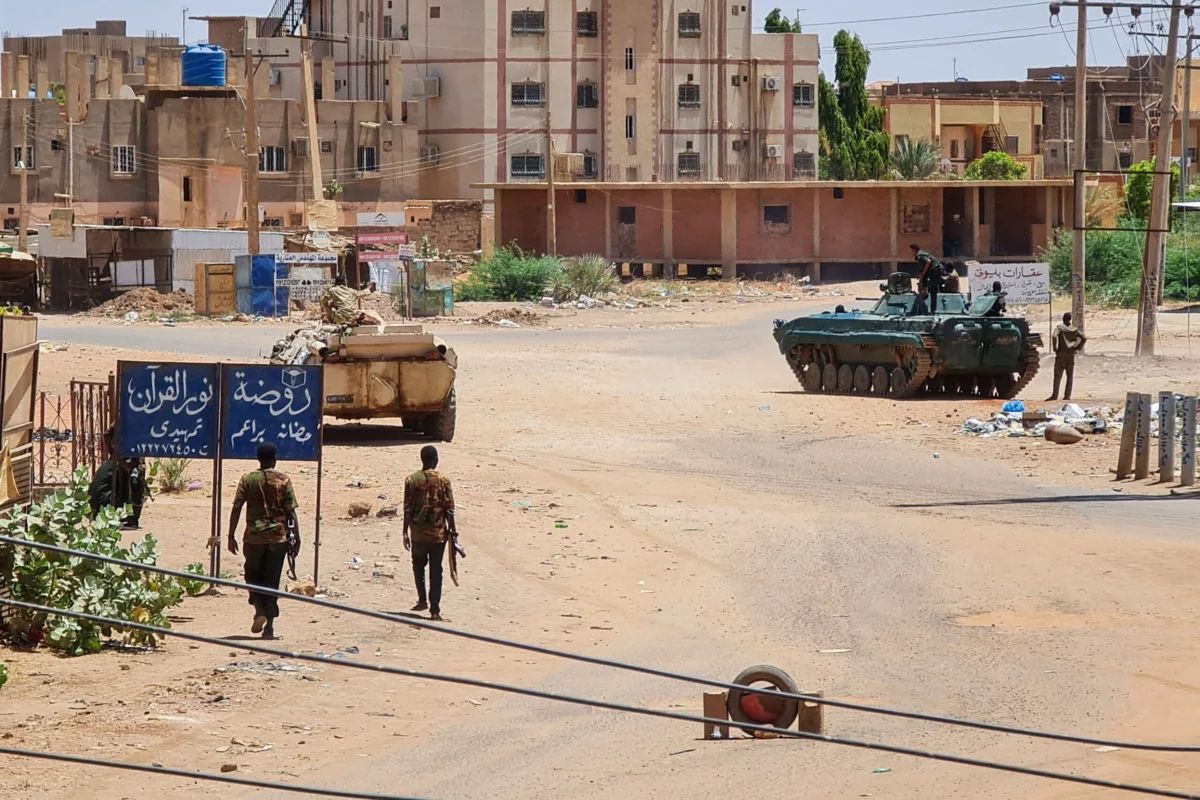
One month after the initial eruption of hostilities between Sudan’s primary military factions, the nation remains gripped by a devastating conflict that has defied international mediation and pushed the Horn of Africa toward a generational catastrophe. What began on April 15, 2023, as a localized power struggle in the capital of Khartoum has metastasized into a nationwide war of attrition, characterized by heavy artillery fire, aerial bombardments, and a complete breakdown of essential services. Despite high-level diplomatic efforts in Jeddah, Saudi Arabia, brokered by the United States and the Saudi kingdom, a sustainable ceasefire remains elusive, and the humanitarian toll continues to mount at an exponential rate.
The International Rescue Committee (IRC) and the World Health Organization (WHO) have issued increasingly dire reports regarding the state of the Sudanese population. As of the one-month mark, official figures estimate that at least 600 people have been killed and over 5,000 injured, though medical professionals on the ground and international monitors warn that the actual death toll is likely significantly higher due to the inability of health workers to reach combat zones and the prevalence of bodies left in the streets. Nearly one million people have been displaced, with hundreds of thousands seeking refuge in neighboring countries such as Chad, Egypt, Ethiopia, and South Sudan, many of which are already grappling with their own internal instabilities and resource scarcities.
The Humanitarian Collapse and Urban Warfare
The fighting in Khartoum and its sister cities, Omdurman and Bahri, has transformed densely populated residential neighborhoods into active battlefields. The Sudanese Armed Forces (SAF), led by General Abdel Fattah al-Burhan, has utilized its air superiority to conduct strikes against positions held by the Rapid Support Forces (RSF), the paramilitary group commanded by Mohamed Hamdan Dagalo, known as Hemedti. In response, the RSF has embedded its fighters within civilian infrastructure, including hospitals, schools, and private homes, leading to a "scorched earth" reality for the capital’s inhabitants.
The IRC Vice President for East Africa, Kurt Tjossem, emphasized on Monday that the "needs are immense, immediate and will be for a long time." This sentiment is echoed by those remaining in Khartoum, who face a daily struggle for survival. The collapse of the banking system and the physical destruction of markets have led to a 100% to 200% increase in the price of basic commodities such as bread, fuel, and clean water. Furthermore, the deliberate targeting and looting of medical facilities have left the city’s healthcare system in a state of near-total paralysis. According to the Sudanese Doctors’ Trade Union, more than 70% of hospitals in conflict zones are out of service, either due to damage, lack of supplies, or occupation by armed groups.
A Chronology of Escalation: From Revolution to Civil War
To understand the current impasse, it is necessary to trace the trajectory of Sudan’s political landscape over the last four years. The roots of the current conflict lie in the fragile and ultimately failed transition to democracy that followed the 2019 ousting of longtime dictator Omar al-Bashir.
- April 2019: Mass civilian protests lead to the military’s removal of Omar al-Bashir. A transitional government is formed, sharing power between civilian leaders and the military.
- October 2021: Generals Burhan and Hemedti, once allies in the military council, lead a joint coup to dissolve the civilian government of Prime Minister Abdalla Hamdok. This move triggers massive street protests and results in the freezing of billions of dollars in international aid from the World Bank and the IMF.
- Late 2022 – Early 2023: Under international pressure, the military signs a "framework agreement" to return to civilian rule. However, tensions begin to simmer over the timeline and command structure for integrating the RSF into the regular Sudanese Army.
- April 15, 2023: Tensions reach a breaking point. Skirmishes at the Soba military base and Khartoum International Airport escalate into a full-scale war for control of the state.
- May 2023: Fighting spreads to the Darfur region, reigniting old ethnic tensions and raising fears of a renewed genocide in a region already scarred by decades of violence.
The current conflict is fundamentally a clash between two visions of military dominance. General Burhan seeks to maintain the traditional hegemony of the SAF, while Hemedti, who rose to power through the Janjaweed militias in Darfur, aims to preserve his autonomous power base and vast business empire, which includes significant interests in gold mining and livestock.
The Diplomatic Impasse in Jeddah
International efforts to quell the violence have focused on the "Jeddah talks." While the SAF and RSF sent representatives to Saudi Arabia to discuss humanitarian corridors, the talks have been criticized for their narrow scope. A "Declaration of Commitment to Protect the Civilians of Sudan" was signed, promising to allow the safe passage of aid and the restoration of electricity and water. However, these commitments have proven to be little more than ink on paper.
Critics, including Sudanese-Australian activist and writer Yassmin Abdel-Magied, argue that the international community’s approach is flawed because it treats the two warring generals as the only legitimate stakeholders. "Global leaders had inadvertently given Burhan and Hemedti political legitimacy and rewarded their belligerence," Abdel-Magied noted in an interview with CNBC. By focusing solely on the military factions, the voices of the Sudanese people—who spearheaded the 2019 revolution—have been marginalized.
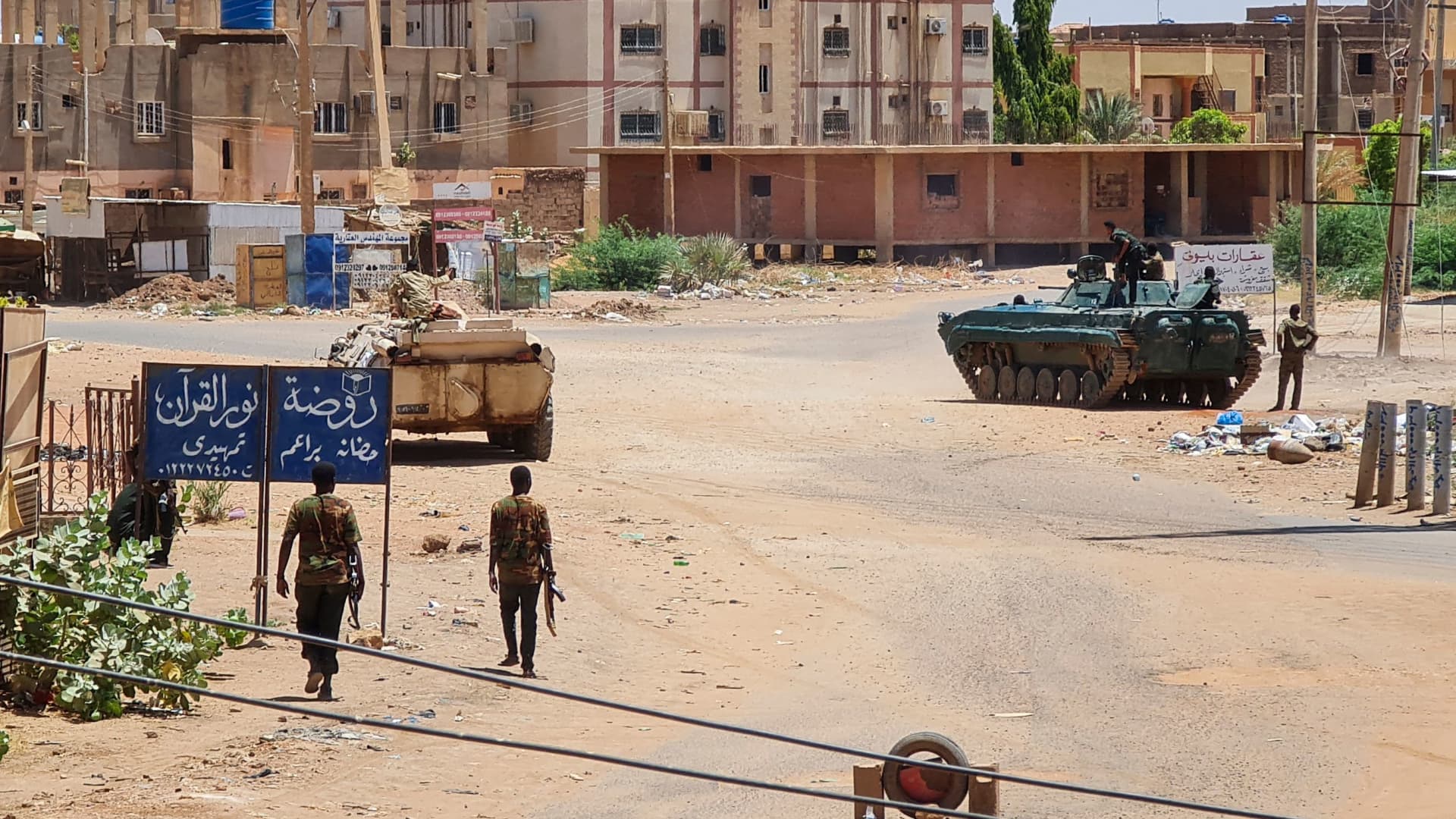
The United Kingdom’s Minister for International Development and Africa, Andrew Mitchell, recently addressed the UN Human Rights Council, stressing the need to break the "cycle of impunity." Yet, without the threat of harsh, targeted sanctions against the generals’ financial networks, many analysts believe the fighting will continue until one side achieves a decisive, albeit unlikely, military victory.
Foreign Influence and Regional Destabilization
The conflict in Sudan is not happening in a vacuum. Both the SAF and the RSF enjoy various levels of support from regional powers, which complicates the path to peace. Egypt has historically backed General Burhan and the SAF, viewing the regular army as a guarantor of stability on its southern border. Conversely, the RSF has cultivated ties with the United Arab Emirates and has reportedly received support from the Wagner Group, a Russian private military company active in neighboring Libya and the Central African Republic.
Saudi Arabia and the United States find themselves in a delicate balancing act, attempting to mediate while also protecting their own strategic interests in the Red Sea. The University of Cambridge’s Associate Professor Sharath Srinivasan points out that these complex international relationships provide both sides with the resources and political cover to continue fighting. If the financial and military pipelines from foreign backers are not "throttled," as suggested by Abdel-Magied, the incentive for the generals to return to the negotiating table remains low.
The Role of Civil Society: Resistance Committees
Amidst the failure of the state and the brutality of the warring factions, Sudanese civil society has emerged as the only functional support system for many citizens. Informal neighborhood networks known as "resistance committees," which were instrumental in the pro-democracy protests of 2019 and 2021, have pivoted to humanitarian work.
These committees have organized "emergency rooms" to coordinate medical evacuations, distribute food, and repair damaged infrastructure. They represent a grassroots democratic model that stands in stark contrast to the authoritarianism of the SAF and RSF. Abdel-Magied and other advocates argue that these committees should be given a seat at the diplomatic table. By empowering civilian delegates who have no vested interest in the military status quo, the international community could create a more sustainable framework for a future Sudan.
Analysis: The Threat of State Failure
The most pressing concern for the international community is the potential for Sudan to become a "failed state." Sudan’s geography—bordering seven countries and sitting on the Red Sea—makes its stability vital for the entire region. A prolonged civil war could lead to a permanent vacuum of power, inviting extremist groups to gain a foothold and triggering a refugee crisis that could destabilize neighboring nations already on the brink.
"Sudan was not in a great place even before this started," Abdel-Magied warned, referring to the economic stagnation and political volatility that followed the 2021 coup. The fear is that the current trajectory could lead to thirty years of dysfunction, similar to the situations seen in Somalia or Libya.
As the conflict enters its second month, the "window of opportunity" to prevent a total state collapse is closing. Diligent, thought-through international action that prioritizes civilian protection and accountability over military appeasement is the only remaining path to preventing the worst-case scenario. For the 46 million inhabitants of Sudan, the cost of continued inaction is not merely a political setback, but a total loss of the nation they have fought so hard to reclaim.
