

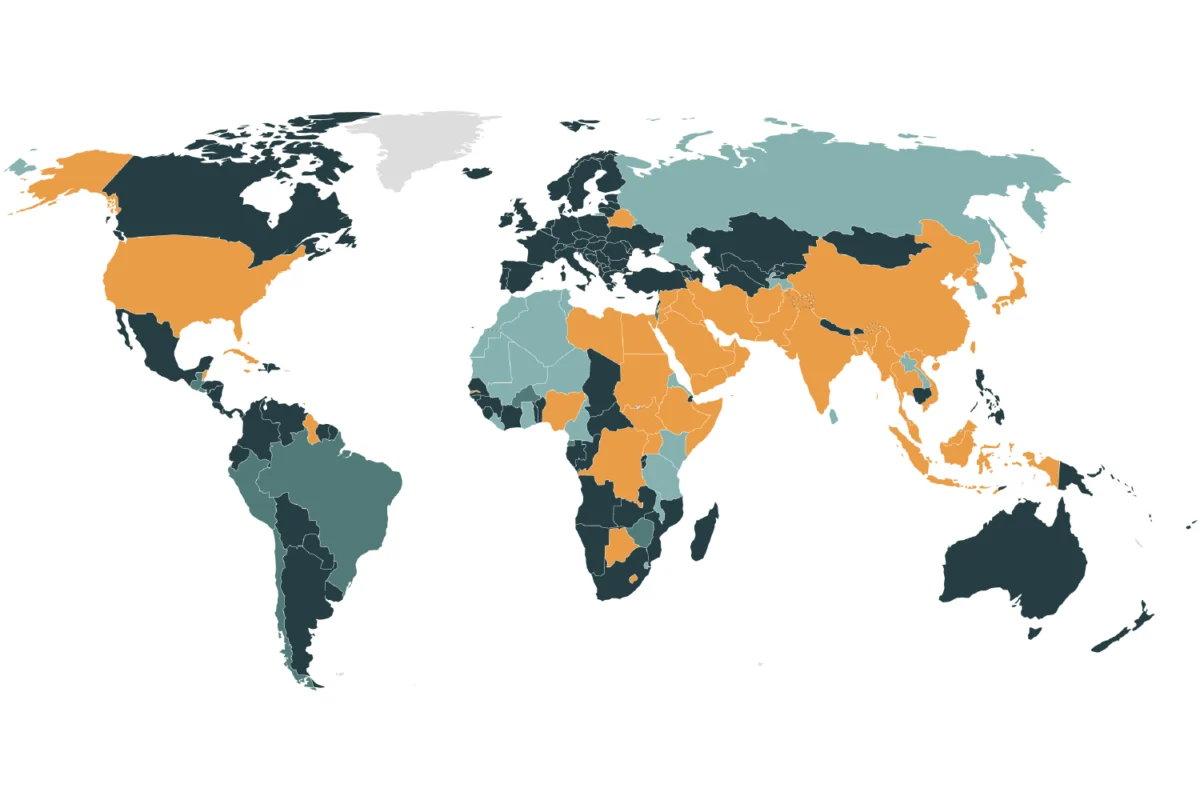
In a landmark legislative session on Tuesday, the Lebanese Parliament voted by a significant majority to formally abolish the death penalty, marking a historic shift in the legal landscape of the Middle East. The decision, passed by the 128-member legislative body, makes Lebanon the first nation in the region to strike capital punishment from its books, signaling a departure from long-standing judicial traditions in a part of the world where the practice remains prevalent. Under the new legislation, all existing and future death sentences will be commuted to life imprisonment with aggravated hard labor, a move that human rights organizations have hailed as a monumental step toward the protection of the right to life.
The legislative victory follows decades of advocacy by domestic civil society groups and international human rights observers. While Lebanon had maintained an unofficial moratorium on executions since January 2004, its courts had continued to hand down death sentences for a variety of crimes, including murder and acts of terrorism. The new law provides clarity to a legal system that had existed in a state of limbo for over 20 years, effectively transitioning the nation from an "abolitionist in practice" status to one that is "abolitionist in law."
A Legislative Milestone in the Levant
The parliamentary vote on Tuesday saw a robust debate regarding the replacement of the ultimate penalty with "aggravated hard labor." This specific legal designation is intended to ensure that while the state no longer claims the right to take a life, the severity of the punishment for the most heinous crimes remains high. Lawmakers supporting the bill argued that the move aligns Lebanon with international human rights standards and fulfills the country’s obligations under various United Nations treaties.
The timing of the decision is particularly noteworthy given the broader regional context. For decades, the Middle East and North Africa (MENA) region has been characterized by some of the highest execution rates globally. By breaking ranks with its neighbors, Lebanon has positioned itself as a regional pioneer in judicial reform. Supporters of the bill expressed hope that the move would spark a "domino effect" across other Arab nations, though analysts suggest that the political and legal frameworks of neighboring states remain significantly more entrenched in the practice of capital punishment.
Chronology of Lebanon’s Path to Abolition
The road to Tuesday’s vote has been long and fraught with political and social challenges. To understand the significance of this shift, it is necessary to look at the timeline of capital punishment in the Lebanese Republic:
- 1990s (Post-Civil War Era): Following the end of the Lebanese Civil War, the state resumed executions as a means of asserting authority and deterring violent crime. During this period, several high-profile executions were carried out.
- January 2004: Lebanon carried out its last three executions. Despite significant domestic and international objections, the state executed three men convicted of murder. This event sparked a massive outcry from human rights defenders, leading to the establishment of an unofficial moratorium.
- 2004–2025: For over two decades, Lebanese presidents and ministers of justice generally refused to sign execution warrants. However, the judiciary continued to issue death sentences. This created a growing population of "death row" inmates who lived in a state of perpetual legal uncertainty.
- Late 2025: Data from the Lebanese Ministry of Justice’s Directorate of Prisons revealed that 85 individuals were facing death sentences. These inmates occupied a specialized wing of the prison system, awaiting a finality that the state was hesitant to provide.
- August 2026: The Lebanese Parliament introduces and passes the bill to scrap capital punishment, officially replacing it with life imprisonment.
The Global Context: A Growing Trend Toward Abolition
Lebanon’s decision reflects a broader global trend documented by Amnesty International. According to the organization’s most recent reports, nearly three-quarters of the world’s countries have now abolished the death penalty in law or practice. Amnesty categorizes countries into four distinct groups:
- Abolitionist for all crimes: Countries whose laws do not provide for the death penalty for any crime.
- Abolitionist for ordinary crimes only: Countries whose laws provide for the death penalty only for exceptional crimes, such as those committed under military law or in exceptional circumstances like wartime.
- Abolitionist in practice: Countries that retain the death penalty for ordinary crimes but have not executed anyone during the past 10 years and are believed to have a policy or established practice of not carrying out executions.
- Retentionist: Countries that retain the death penalty for ordinary crimes and have carried out executions in recent years.
Lebanon’s transition from the third category to the first is a significant data point in the 2026 global human rights report. However, the global picture remains complex. While the number of countries abolishing the practice is increasing, the number of executions in the remaining retentionist states has seen a dramatic and concerning spike.
Analyzing the Spike in Global Executions
Despite the progress made in countries like Lebanon, 2025 was a dark year for global human rights. Amnesty International recorded 2,707 executions worldwide in 2025, representing a staggering 78 percent increase from the 1,518 recorded in 2024. This surge is primarily attributed to a massive increase in judicial killings in Iran.
In Iran, executions more than doubled, rising from 972 in 2024 to at least 2,159 in 2025. These figures include executions for drug-related offenses, which international law prohibits from being subject to the death penalty, as they do not meet the threshold of "most serious crimes." Furthermore, the 2025 figures do not include the thousands of executions believed to have taken place in China, where data on the death penalty is classified as a state secret.
Executions were carried out in 17 countries in 2025, a number that has remained relatively consistent since 2018. This suggests that while fewer countries are using the death penalty, those that do are using it with increasing frequency and intensity.
Official Responses and Human Rights Advocacy
The reaction to Lebanon’s parliamentary vote has been overwhelmingly positive among international observers. A spokesperson for Amnesty International described the vote as "a beacon of hope for human rights in the Middle East." The organization noted that Lebanon’s move proves that even in regions facing significant political and security challenges, the protection of fundamental human rights can prevail.
"Lebanon has sent a powerful message to the world and specifically to its neighbors," the statement read. "The death penalty is a violation of the right to life and the ultimate cruel, inhuman, and degrading punishment. By choosing to replace it with life imprisonment, Lebanon is choosing the path of justice over vengeance."
Within Lebanon, the reaction was more nuanced. While human rights activists celebrated in the streets of Beirut, some conservative factions expressed concern that the removal of the death penalty might lead to a rise in violent crime. However, legal experts pointed to the "aggravated hard labor" clause as a sufficient deterrent. This provision requires inmates to perform labor-intensive tasks within the prison system, intended to serve as both a punishment and a contribution to the state.
Broader Implications and Future Challenges
The abolition of the death penalty in Lebanon carries significant implications for the country’s international relations. For years, the European Union and various UN bodies have pressured Lebanon to formalize its moratorium. This legislative change is expected to facilitate deeper cooperation between Lebanon and the EU, particularly in areas of judicial reform and extradition treaties. Many European nations refuse to extradite suspects to countries where they might face the death penalty; Lebanon’s new law removes this legal barrier.
However, the decision also brings immediate logistical challenges. The Ministry of Justice must now address the status of the 85 individuals previously on death row. While their sentences are automatically commuted to life imprisonment, the Lebanese prison system is already grappling with severe overcrowding and limited resources. Integrating these high-security prisoners into the general life-imprisonment population—while implementing the "hard labor" aspect of their sentences—will require significant administrative restructuring.
Furthermore, the definition of "aggravated hard labor" remains a point of contention. Human rights groups have signaled that they will monitor the implementation of this labor to ensure it does not cross the line into forced labor or "cruel and unusual punishment," which would violate other international human rights standards.
Conclusion
Lebanon’s historic vote marks the end of an era and the beginning of a new chapter in the nation’s legal history. By becoming the first Middle Eastern country to abolish the death penalty, Lebanon has challenged the regional status quo and aligned itself with the global majority. While the spike in executions in neighboring countries like Iran highlights the ongoing struggle for human rights in the region, Lebanon’s decision serves as a significant milestone. As the 85 individuals on death row begin their new sentences of life imprisonment, the eyes of the world will remain on Lebanon to see how this transition impacts the country’s pursuit of justice, security, and human dignity.
