

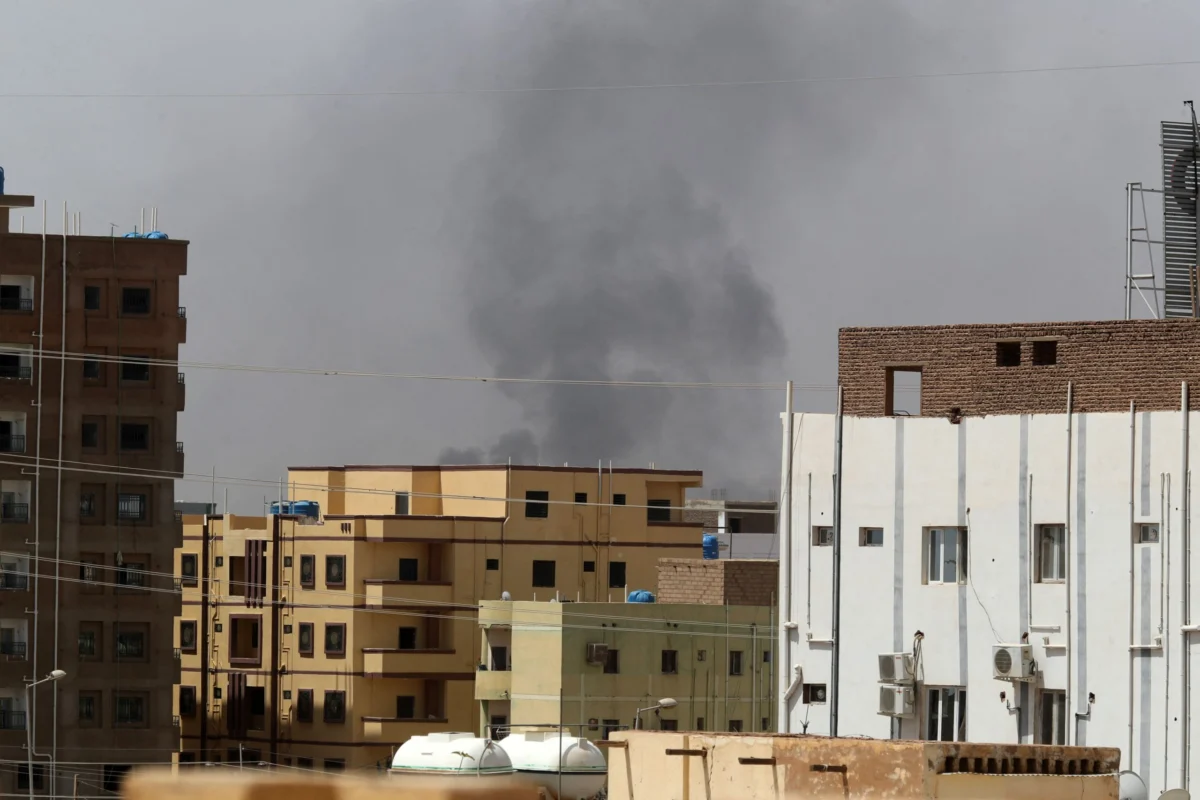
Sporadic fighting between Sudan’s warring factions continued to reverberate across the capital city of Khartoum on Sunday, residents reported, even as a newly brokered deal between the Sudanese Armed Forces and the paramilitary Rapid Support Forces raised cautious hopes for a reprieve. The agreement, facilitated by Saudi Arabia and the United States, outlines a week-long ceasefire intended to facilitate the delivery of desperately needed humanitarian aid and restore essential services to a population trapped in a rapidly deteriorating war zone. Signed in the Saudi port city of Jeddah, the deal is scheduled to take effect on Monday evening, marking a significant, if tenuous, milestone in a conflict that has entered its second month with no clear end in sight.
While numerous ceasefire announcements have been made since the outbreak of hostilities on April 15, 2023, the Jeddah agreement is distinguished by being the first formal truce signed by both parties following direct negotiations. Crucially, the deal includes an internationally supported monitoring mechanism, involving representatives from the mediating nations, intended to track compliance and report violations. Despite this structural improvement, the atmosphere in Khartoum remains one of intense anxiety and skepticism. On Sunday, the sounds of heavy artillery and small arms fire were heard in central and southern districts of the capital, serving as a grim reminder that the ink on the diplomatic papers has yet to translate into peace on the ground.
The Genesis of the Conflict and the Path to Jeddah
The war in Sudan is the culmination of a long-simmering power struggle between General Abdel Fattah al-Burhan, the head of the Sudanese Armed Forces (SAF), and General Mohamed Hamdan Dagalo, widely known as Hemedti, who leads the Rapid Support Forces (RSF). The two generals were once uneasy allies, having collaborated in the 2019 ousting of longtime autocrat Omar al-Bashir and the subsequent 2021 military coup that derailed Sudan’s transition toward civilian-led democracy. However, tensions escalated sharply over the proposed integration of the RSF into the regular army—a key requirement of a framework agreement intended to return the country to civilian rule.
Disagreements over the timeline of this integration and the future chain of command became the catalyst for violence. The SAF insisted on a rapid two-year integration period, while the RSF pushed for a ten-year window, seeking to maintain its autonomy and political leverage. When negotiations collapsed in mid-April, the dispute transformed into a full-scale kinetic conflict that has transformed Khartoum, a city of five million people, into a primary battlefield. The RSF quickly embedded its fighters within residential neighborhoods, occupying hospitals, schools, and private homes, while the SAF responded with heavy artillery and frequent aerial bombardments, leaving civilians caught in the crossfire.
Humanitarian Catastrophe and Mass Displacement
The human cost of the five-week conflict has been staggering. According to the World Health Organization, at least 705 people have been killed and more than 5,287 injured, though medical officials and local activists warn that the actual death toll is likely much higher due to the inability of emergency services to reach many areas. The fighting has triggered a massive displacement crisis, with the United Nations reporting that over 1.1 million people have fled their homes. Approximately 840,000 people have been internally displaced within Sudan, while more than 250,000 have crossed borders into neighboring countries, including Egypt, Chad, South Sudan, and Ethiopia.
In Khartoum, those who have not fled face a daily struggle for survival. The city’s infrastructure is in a state of near-total collapse. Mass looting has gutted markets and warehouses, while the banking system has largely ceased to function, leaving residents without access to cash. Power and water supplies are intermittent at best, and the healthcare system is on the brink of total failure. Estimates suggest that up to 70% of hospitals in conflict-affected areas are out of service, either due to physical damage, lack of supplies, or occupation by armed groups.
Safaa Ibrahim, a 35-year-old resident who spoke to reporters while attempting to coordinate her family’s safety, articulated the exhaustion felt by millions. "We’re tired of this war," she said. "We’ve been chased away from our homes, and the family has scattered between towns in Sudan and Egypt. We want to return to normal life and safety. Al-Burhan and Hemedti have to respect people’s desire for life." Her sentiment reflects a broader civilian demand for the warring generals to prioritize the welfare of the nation over their personal ambitions for total victory.
Terms of the Jeddah Agreement and Monitoring Mechanisms
The short-term ceasefire signed in Jeddah is specifically designed to address the immediate humanitarian needs of the population. Unlike previous "gentlemen’s agreements" that relied solely on the goodwill of the commanders, this seven-day truce includes a "Ceasefire Monitoring and Coordination Committee." This committee is expected to utilize satellite imagery and ground-level reporting to identify breaches of the agreement. The primary objectives are to allow for the safe passage of civilians, the delivery of food and medical supplies, and the repair of essential utility infrastructure such as water pumping stations and power grids.
Mediators have emphasized that this short-term deal is intended as a confidence-building measure. If successful, it could pave the way for more substantive negotiations regarding a permanent cessation of hostilities and the eventual withdrawal of military forces from urban centers. However, the absence of both Burhan and Hemedti from the Jeddah talks has raised questions about their personal commitment to the process. Analysts suggest that both leaders still believe a military victory is possible, which complicates the enforcement of any truce among their respective rank-and-file soldiers.
Escalation Beyond the Capital: The Darfur Crisis
While Khartoum remains the epicenter of the fighting, the conflict has reignited long-standing ethnic and tribal tensions in other parts of the country, most notably in the western region of Darfur. In cities like El Geneina, the fighting has taken on a more communal character, with reports of ethnically motivated attacks and the large-scale burning of displacement camps. The RSF, which grew out of the Janjaweed militias accused of atrocities in Darfur in the early 2000s, has been heavily involved in the renewed violence there.
Senior army general Yassir al-Atta recently addressed the security vacuum on Sudan state TV, stating that the army’s priority is to dislodge RSF forces from civilian infrastructure. When questioned about reports of tribal leaders calling for civilians to arm themselves, Atta characterized it as a "natural right" for self-defense, though he maintained that a general mobilization was not yet required. This rhetoric has raised concerns among international observers about the potential for the conflict to devolve into a fragmented civil war involving various local militias and ethnic factions, further destabilizing the Horn of Africa.
Regional Implications and International Response
The instability in Sudan poses a significant threat to its neighbors, many of whom are already struggling with their own internal challenges. Egypt, which shares a long border and deep historical ties with Sudan, is facing a massive influx of refugees and fears for the security of its southern flank. Chad and South Sudan, both dealing with fragile transitions and limited resources, are also struggling to manage the humanitarian fallout.
The international community has been vocal in its condemnation of the violence but remains divided on the best path forward. The African Union and the Intergovernmental Authority on Development (IGAD) have attempted to lead mediation efforts, but the Saudi-U.S. initiative in Jeddah has emerged as the primary diplomatic track. The United Nations has repeatedly called for an immediate and unconditional ceasefire, warning that Sudan is on the precipice of a "catastrophic" collapse.
Chronology of the 2023 Sudan Conflict
- April 15: Heavy fighting erupts in Khartoum and other cities between the SAF and RSF following weeks of tension over the integration of forces.
- April 18-20: Multiple 24-hour ceasefires are announced but immediately violated; foreign nations begin planning the evacuation of diplomatic staff.
- April 25: A 72-hour ceasefire brokered by the U.S. allows for a significant uptick in evacuations, though fighting persists in several sectors.
- May 4: The UN warns of a looming humanitarian disaster as food and water supplies dwindle and the health system collapses.
- May 11: SAF and RSF representatives sign the "Declaration of Commitment to Protect the Civilians of Sudan" in Jeddah, though no ceasefire is reached at this stage.
- May 20: The parties sign a seven-day "Short-Term Ceasefire and Humanitarian Arrangement" in Jeddah, scheduled to begin on May 22.
- May 21: Continued clashes reported in Khartoum as residents wait to see if the Monday evening deadline will be respected.
Analysis of the Road Ahead
The success of the Jeddah agreement hinges on whether the monitoring mechanism can effectively deter violations and whether the top leadership of both factions can control their forces on the ground. The logistical challenge of delivering aid into a war zone where the RSF controls many residential streets and the SAF controls the skies is immense. Furthermore, the issue of "humanitarian corridors" remains contentious; for these to work, both sides must agree on specific routes and refrain from using aid shipments as a cover for military movements.
If the ceasefire holds, it will provide a vital window for international aid agencies to replenish stocks and for civilians to seek safety or medical care. However, without a political solution that addresses the fundamental disagreement over the transition to civilian rule and the status of the RSF, any truce is likely to be temporary. The international community faces the difficult task of pressuring the warring generals toward a permanent peace deal while ensuring that the Sudanese people are not forgotten in a protracted conflict. As Khartoum enters another night under the sound of gunfire, the world watches to see if the Jeddah deal will finally silence the guns or if it will merely be another footnote in a deepening national tragedy.
