

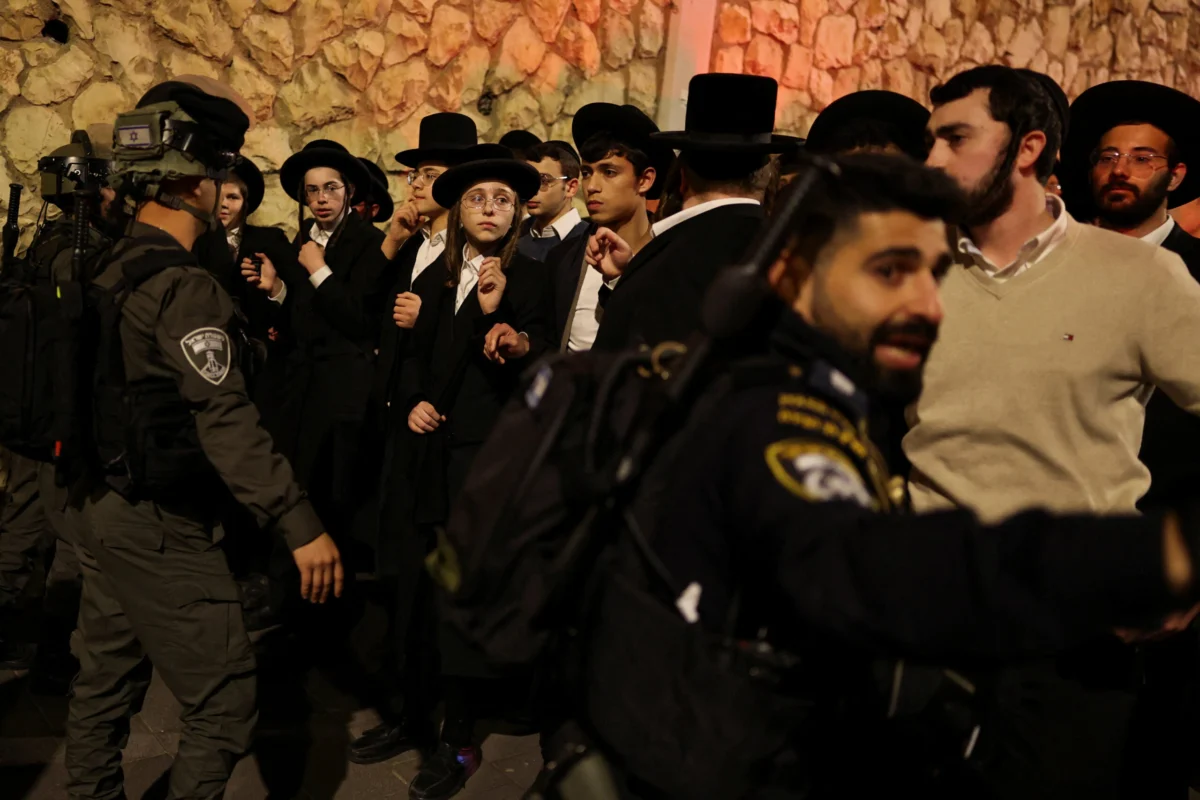
The Israeli political landscape has been thrust into a state of profound uncertainty as the ruling coalition officially submitted a call for early elections this week, a move precipitated by the irreparable fractures within the government over the contentious issue of ultra-Orthodox military conscription. Should the motion pass in the Knesset next week as anticipated by parliamentary observers, a general election will be mandated within 90 days, placing the national vote in the third week of August 2026. This development would bring a premature end to the government’s current term, which was legally scheduled to conclude on October 27, 2026, and marks a significant turning point in the long-standing debate over "equality of the burden" in Israeli society.
The collapse of the coalition follows years of escalating tension between secular and religious factions, a divide that has only widened under the pressures of a multi-front regional conflict. Ultra-Orthodox parties, specifically Shas and United Torah Judaism (UTJ), have served as the foundational pillars of Prime Minister Benjamin Netanyahu’s far-right coalition since 2022. For these parties, the exemption of their constituents from the mandatory military draft—a requirement that applies to nearly all other Israeli Jewish citizens—has been a non-negotiable political priority. However, the convergence of judicial mandates, public outcry, and an exhausted military apparatus has finally pushed the coalition beyond its breaking point.
The Catalyst of the Collapse: A Timeline of Political Erosion
The current crisis traces its immediate roots to July 2025, when the ultra-Orthodox parties Shas and UTJ formally withdrew their consistent support for the government’s legislative agenda. The ultimatum was clear: the parties would no longer guarantee a majority for the Prime Minister unless a permanent law was enacted to codify the exemption of Haredi (ultra-Orthodox) men from military service. While the parties continued to support the government on critical survival votes for several months, the internal cohesion of the "right-wing bloc" began to disintegrate.
The final blow came from within the United Torah Judaism party, specifically its Degel Hatorah faction. The faction’s spiritual leader, Rabbi Dov Lando, a highly influential figure in the Haredi world, declared that he had lost all faith in Prime Minister Netanyahu’s ability or willingness to protect the interests of the religious community. Addressing his Knesset members, Rabbi Lando stated that the concept of a unified political "bloc" was effectively dead. He instructed his representatives to work toward the immediate dissolution of the Knesset, asserting that the party would henceforth only act in the interest of the "yeshiva world"—the religious academies where Haredi men engage in full-time Torah study.
The Legal and Historical Context of the Draft Exemption
The refusal of Haredi Jews to serve in the Israel Defense Forces (IDF) is a conflict as old as the state itself. In 1948, Israel’s first Prime Minister, David Ben-Gurion, granted a small group of approximately 400 elite Torah scholars an exemption from military service to help rebuild the world of Jewish learning that had been decimated during the Holocaust. At the time, the Haredi population was a tiny fraction of the Israeli public.

However, as the Haredi community has grown to represent roughly 13 percent of the population, the number of exemptions has ballooned into the tens of thousands. This demographic shift has created a massive disparity in national service. In 1998, the High Court of Justice ruled that the existing exemption framework was illegal, as it violated the principle of equality. Since then, successive governments have attempted to pass temporary measures to defer recruitment, only to have them repeatedly struck down by the judiciary.
The legal deadlock reached a fever pitch in June 2024, when the High Court issued a landmark ruling ordering the government to begin the active conscription of ultra-Orthodox men and to freeze state subsidies for religious schools whose students did not comply. Despite this order, the military has struggled with enforcement. Testimony presented to the Knesset revealed that of the approximately 24,000 draft notices issued to Haredi men in recent months, only 1,200 individuals have reported for service. This minimal compliance has sparked widespread protests, both by Haredi Jews resisting the draft and by secular Israelis demanding an end to the exemption.
Military Necessity in a Multi-Front War
The timing of this political collapse is particularly critical due to the unprecedented strain on the Israel Defense Forces. Over the past two years, the IDF has been engaged in high-intensity operations across Gaza, Lebanon, and Syria, while also managing direct escalations with Iran. These prolonged campaigns have left the military’s regular and reserve forces severely overextended.
On Sunday, the IDF Chief of Staff, Lieutenant General Eyal Zamir, provided a sobering assessment to the Knesset’s Foreign Affairs and Defense Committee. He emphasized that the recruitment of ultra-Orthodox men is no longer just a social or political debate, but a matter of national survival. "I do not deal with political or legislative processes," Zamir told lawmakers. "I deal with a multi-front war and defeating the enemy. To keep doing that, the IDF needs more soldiers immediately."
Zamir’s testimony highlighted that the current burden on the reserve forces—many of whom have served multiple tours of duty over the last 24 months—is unsustainable. The military leadership has argued that the influx of thousands of new Haredi recruits is essential to maintaining the operational tempo required for the ongoing regional conflicts. The shortage of manpower has led to extended service periods for conscripts and increased call-ups for reservists, many of whom are struggling to balance military duties with their professional and family lives.
Public Sentiment and the Political Alternative
The demand for Haredi conscription is one of the few issues that unites a broad spectrum of the Israeli public. Recent polling by the Israeli Democracy Institute indicates that approximately 85 percent of the general public supports the imposition of sanctions on those who refuse the draft. This includes support for the termination of state benefits, such as childcare subsidies and housing grants, for families where the primary earner is a religious student refusing military or national service.

This public sentiment has been a boon for opposition leaders Yair Lapid and Naftali Bennett. The two leaders, who previously headed a diverse "change government," have positioned themselves as the primary alternative to Netanyahu. Their joint platform focuses heavily on the "equality of the burden," promising to end the cycle of exemptions and to launch a formal investigation into how the current government allowed the recruitment crisis to reach such a critical stage.
Political analysts suggest that if an election is held in August, the conscription issue will be the central theme of the campaign. For Netanyahu, who has historically relied on the Haredi parties to maintain his hold on power, the loss of their support creates a precarious path to victory. Without the ultra-Orthodox "bloc," the Prime Minister may find it impossible to form a coalition, potentially ending his record-breaking tenure.
Broader Implications and National Outlook
The dissolution of the Knesset and the move toward early elections carry significant implications for the region. A 90-day election period often results in a "lame-duck" government, which may have limited authority to make major strategic decisions regarding the ongoing conflicts in Gaza and Lebanon. Furthermore, the internal social rift created by the conscription debate threatens to undermine national unity at a time when the country faces its most significant external threats in decades.
For the Haredi community, the crisis represents an existential challenge to their traditional way of life. Religious leaders argue that full-time Torah study provides a "spiritual shield" for the nation that is as vital as the military’s physical shield. They fear that integration into the military will lead to the secularization of their youth and the erosion of their closed, religious society.
As the Knesset prepares for the vote to dissolve itself next week, the eyes of the international community and the Israeli public remain fixed on the August projection. The upcoming election will not only decide the next government but will likely determine whether Israel can resolve its internal contradictions regarding religion and state, or if the "equality of the burden" will remain a permanent source of national instability. With the IDF calling for reinforcements and the public demanding fairness, the status quo that has existed since 1948 appears to have finally reached its end.
