

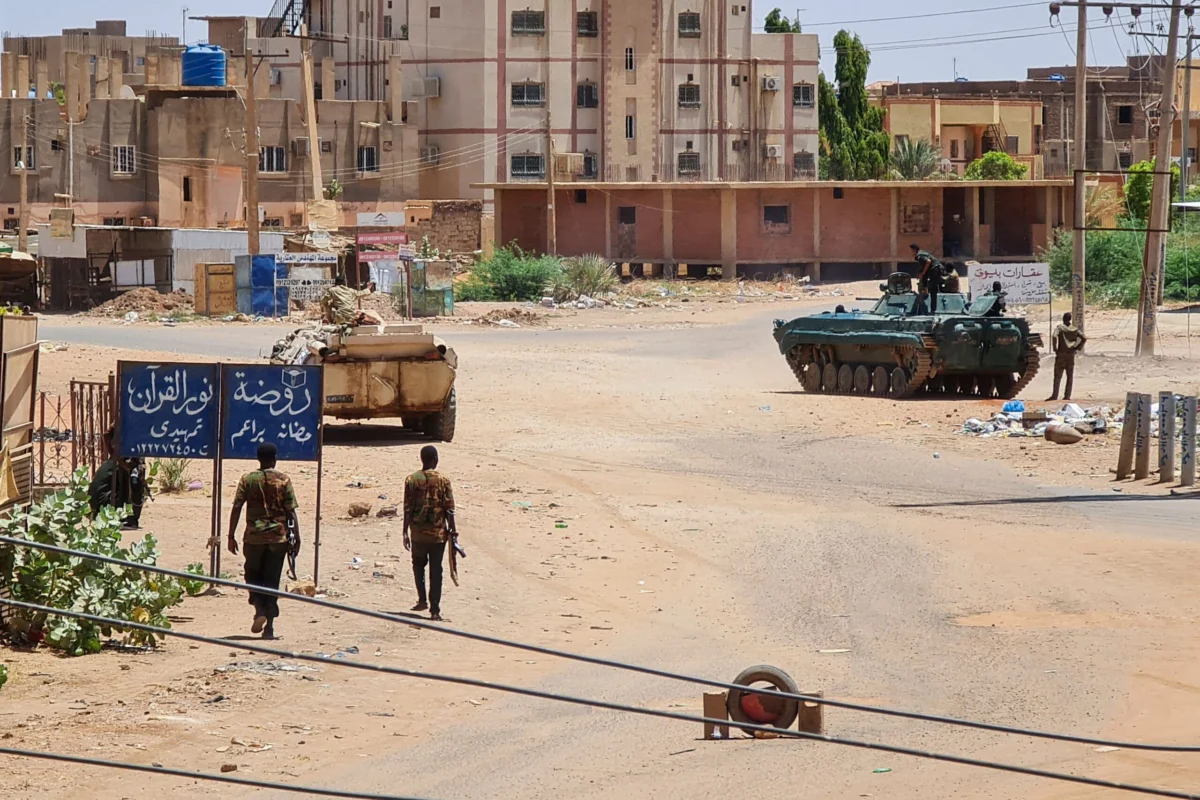
One month after the initial eruption of heavy gunfire and explosions in Khartoum, the conflict between Sudan’s two primary military factions has transformed from a localized power struggle into a nationwide humanitarian catastrophe. Despite high-stakes, internationally-brokered peace talks held in Jeddah, Saudi Arabia, the Sudanese Armed Forces (SAF) and the paramilitary Rapid Support Forces (RSF) remain locked in a violent stalemate. Airstrikes, heavy artillery, and urban warfare continue to devastate the capital and its surrounding regions, while the conflict has reignited long-standing ethnic and political tensions in the western Darfur region. As the international community watches with growing alarm, the prospects for a lasting ceasefire appear increasingly remote, leaving the nation’s 46 million inhabitants caught in a crossfire of unprecedented proportions.
The Current Stalemate: Failed Diplomacy in Jeddah
The peace talks in Jeddah, facilitated by the United States and Saudi Arabia, were initially viewed as a glimmer of hope for a nation on the brink of collapse. However, the reality on the ground has starkly contradicted the diplomatic rhetoric. While both sides signed a "Declaration of Commitment" to protect civilians and allow for the safe passage of humanitarian aid, these promises have largely remained on paper. Tentative ceasefires, often announced with great fanfare, have collapsed within hours of their implementation, as both General Abdel Fattah al-Burhan of the SAF and Mohamed Hamdan Dagalo, known as Hemedti, of the RSF, vie for total military and political dominance.
The core of the diplomatic failure lies in the fundamental lack of trust between the two warring generals. Neither side appears willing to make the necessary concessions to facilitate a transition to civilian rule, a goal that has been the rallying cry of the Sudanese people since the 2019 ousting of long-time dictator Omar al-Bashir. Observers note that the Jeddah talks have also been criticized for their lack of inclusivity, specifically the absence of Sudanese civilian leaders and grassroots organizations. Without a substantial civilian voice at the table, many fear that any agreement reached between the two military factions will only serve to legitimize their power at the expense of democratic aspirations.
A Humanitarian Catastrophe in Numbers
The human cost of the month-long conflict is staggering and continues to climb. According to the International Rescue Committee (IRC), more than 600 people have been officially recorded as killed, with over 5,000 injured. However, medical professionals and local activists on the ground warn that the actual death toll is likely significantly higher, as many bodies remain uncounted in the streets of Khartoum and the remote villages of Darfur. The violence has triggered a massive displacement crisis, with nearly one million people fleeing their homes. Approximately 700,000 people are internally displaced within Sudan, while hundreds of thousands more have crossed borders into neighboring Egypt, Chad, Ethiopia, and South Sudan, countries that are themselves grappling with economic and security challenges.
For those who remain in the conflict zones, daily life has become a desperate struggle for survival. The commitment by both factions to restore essential services has not materialized. Large swaths of Khartoum are without electricity or running water. The prices of basic commodities, including bread, oil, and fuel, have surged by more than 300% in some areas, rendering them inaccessible to the average citizen. Hospitals have not been spared; the World Health Organization (WHO) reports that a significant percentage of healthcare facilities in Khartoum are non-functional due to looting, lack of supplies, or being occupied by military forces. This collapse of the healthcare system has exacerbated the risk of disease outbreaks and untreated trauma, creating what the IRC describes as a "secondary humanitarian crisis."
The Roots of the Rivalry: From Partners to Enemies
To understand the current conflict, one must look back to the fragile and ultimately doomed partnership between Burhan and Hemedti. In 2021, the two generals joined forces to lead a military coup that ousted the civilian-led transitional government of Prime Minister Abdalla Hamdok. At the time, they claimed the move was necessary to "correct the path" of the revolution. For a period, the SAF and RSF shared power in an uneasy alliance, while the international community, including the World Bank and major Western powers, froze billions of dollars in aid to pressure the military to return to a civilian-led democratic process.
The rift between the two leaders began to widen over the proposed integration of the RSF into the regular Sudanese Army. This integration was a key component of a framework agreement aimed at restoring civilian rule. However, disagreements over the timeline for this integration—Burhan pushed for two years, while Hemedti demanded ten—and the future chain of command became insurmountable. By early April 2023, the tension had reached a breaking point, with both sides mobilizing troops in Khartoum. The first shots fired on April 15 signaled the end of the alliance and the beginning of an all-out war for the soul of the Sudanese state.
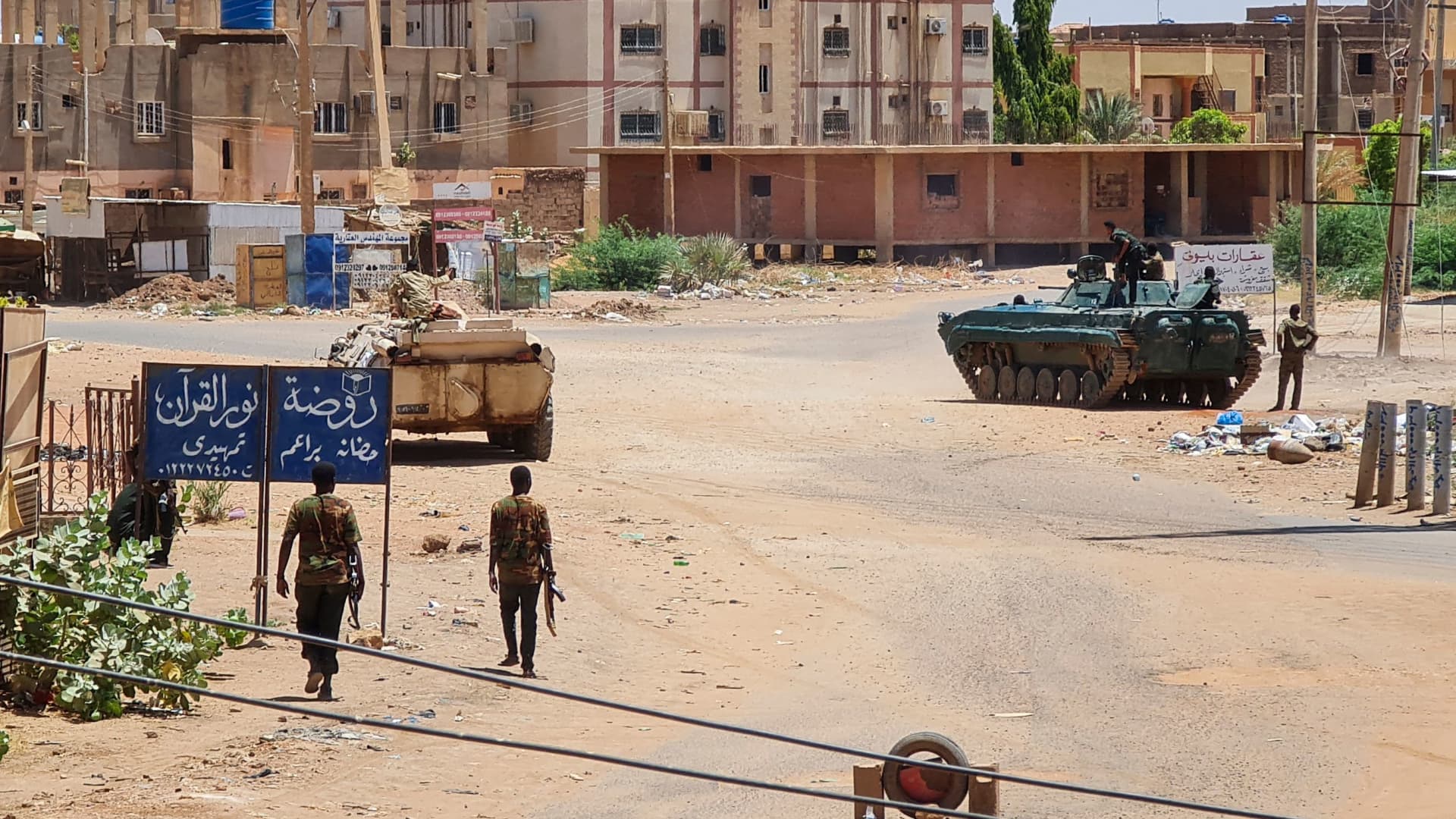
A Chronology of Sudan’s Fragile Transition
The path to the current crisis is marked by several pivotal moments that define Sudan’s modern political landscape:
- April 2019: Following months of mass protests, the military ousts President Omar al-Bashir. A Transitional Military Council (TMC) is formed.
- August 2019: A power-sharing agreement between the military and civilian protest groups leads to the formation of a Sovereign Council and the appointment of Abdalla Hamdok as Prime Minister.
- October 2021: General Burhan and Hemedti lead a coup, dissolving the civilian government and arresting Hamdok. Massive pro-democracy protests follow, met with a violent crackdown.
- December 2022: A "framework agreement" is signed between the military and some civilian groups to restart the transition, but it is met with skepticism by grassroots "Resistance Committees."
- April 15, 2023: Violent clashes erupt in Khartoum between the SAF and RSF, quickly spreading to other regions, including Darfur and North Kordofan.
- May 2023: Peace talks begin in Jeddah, while the UN warns of a "protracted conflict" and a looming famine.
The Geopolitics of the Conflict: Foreign Interests and Influence
The war in Sudan is not merely a domestic affair; it is deeply entangled in a web of regional and international interests. Both the SAF and RSF have cultivated powerful foreign allies. Egypt has historically supported General Burhan and the SAF, viewing the regular army as a guarantor of stability on its southern border. Conversely, Hemedti and the RSF have maintained strong ties with the United Arab Emirates (UAE) and have reportedly received support from the Russian mercenary group, Wagner. Saudi Arabia and Libya have also played complex roles, at times acting as mediators and at others being accused of favoring one faction over the other.
These foreign relationships provide the warring generals with the financial and military resources necessary to sustain a prolonged conflict. Analysts argue that as long as external actors continue to funnel resources into Sudan, the incentive for either leader to negotiate in good faith remains low. The international community’s challenge is to create a unified front that pressures these regional backers to "throttle" the supply of weapons and funds, thereby forcing a genuine ceasefire.
The Civilian Voice: Resistance Committees and the Quest for Democracy
Amidst the chaos of the warring generals, the voice of the Sudanese people is often drowned out. However, the "Resistance Committees"—informal, neighborhood-based networks—have emerged as the backbone of civilian resilience. These groups, which led the pro-democracy protests in 2019 and 2021, have now pivoted to providing essential services. They facilitate evacuations, run soup kitchens, and coordinate the delivery of medical supplies to besieged neighborhoods.
Activists like Yassmin Abdel-Magied argue that the international community has inadvertently rewarded the "belligerence" of the generals by treating them as the sole political actors in Sudan. She suggests that any viable solution must include delegates from these civilian committees. "The framework is already there," Abdel-Magied noted, emphasizing that accountability for past atrocities—including the 2019 Khartoum massacre and the long-standing violence in Darfur—is essential for a stable future. Without holding the military leadership accountable, many fear that Sudan will remain trapped in a cycle of impunity and cyclical violence.
Broader Implications and the Risk of State Failure
The implications of a failed Sudanese state are profound for the African continent and the Middle East. Sudan sits at a strategic crossroads, bordering seven countries and holding a significant coastline on the Red Sea, a vital global shipping lane. A prolonged conflict risks destabilizing an already volatile region, potentially triggering a massive refugee crisis in Europe and the Middle East and creating a vacuum that extremist groups could exploit.
The economic fallout is equally concerning. Sudan is a major producer of gold and agricultural products. The disruption of these industries, coupled with the flight of human capital, could set the country’s development back by decades. As Andrew Mitchell, the U.K. Minister for International Development and Africa, recently stated, the international community must send a "united message of horror" and work tirelessly to revert Sudan to a "political track."
The window of opportunity to prevent a total state collapse is narrowing. While the fighting continues to rage in the streets of Khartoum, the ultimate resolution will require more than just a military victory or a signed paper in Jeddah. It will require a fundamental restructuring of Sudan’s political and military architecture, one that prioritizes the needs and democratic aspirations of its 46 million people over the ambitions of two rival generals. As the conflict enters its second month, the urgency for "intentional, diligent, and thought-through action" has never been greater. Without it, the "worst-case scenario" of a disintegrated Sudan may soon become an irreversible reality.
