

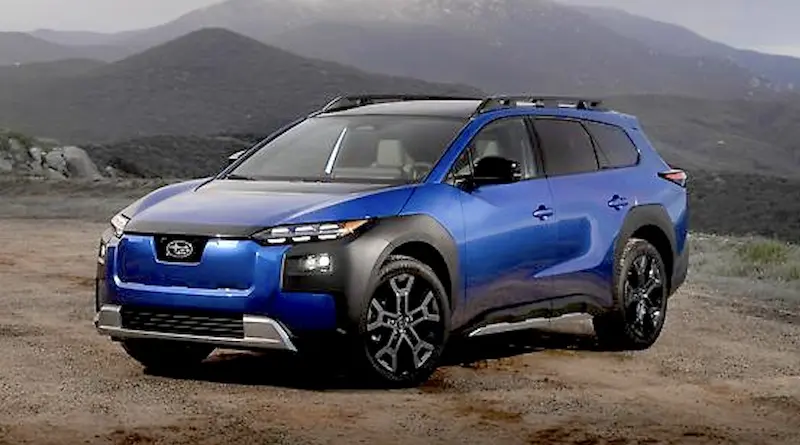
The Subaru Trailseeker has emerged as a significant outlier in the American electric vehicle market, maintaining a steady upward trajectory in sales despite a broader industry slowdown that characterized much of the previous year. Introduced early in 2026, the Trailseeker represents Subaru’s most concerted effort to date to capture the growing crossover between outdoor enthusiasts and sustainable technology. While the competitive landscape for electric SUVs remains crowded with established players, Subaru has leveraged a unique marketing strategy centered on domestic pets to anchor its brand identity in the zero-emission era. This focus on the "pet-centric" household has not only distinguished the vehicle from its competitors but has also tapped into a powerful demographic shift that is reshaping how and why Americans purchase new vehicles.
The Strategic Evolution of Subaru Loves Pets
The current success of the Trailseeker is rooted in a marketing foundation laid nearly two decades ago. The "Subaru Loves Pets" initiative, which officially debuted in 2008, was originally designed to align the brand with the lifestyle values of its core customer base: active, outdoor-oriented individuals who view their dogs as integral parts of their adventures. However, as the automotive market transitioned toward electrification, this campaign evolved from a peripheral community-outreach program into a primary driver of sales strategy.
Market data suggests that the role of pets in the American household has undergone a fundamental transformation since the campaign’s inception. Animals are increasingly viewed as family members with specific needs that dictate consumer behavior, particularly in the realm of transportation. Subaru’s internal research, supported by a comprehensive study from Talker Research, indicates that 73% of U.S. pet owners are more likely to choose road travel over other forms of transportation for holiday trips specifically to accommodate their pets. This sentiment is particularly pronounced among the demographics most likely to consider an EV.
Subaru’s "Subaru Loves Pets" campaign now includes a specialized line of pet-friendly accessories, ranging from crash-tested harnesses to custom-fitted cargo liners and ramps designed for the Trailseeker’s specific dimensions. By addressing the logistical challenges of traveling with animals, Subaru has positioned the Trailseeker not just as an environmentally friendly vehicle, but as a practical solution for the modern, multi-species family.
Decoding the Generational Divide in EV Adoption
The success of the Trailseeker is inextricably linked to a widening generational gap in both environmental attitudes and pet ownership. According to data from the Zero Emission Transportation Association (ZETA), age remains the most accurate predictor of EV purchase intent in the United States. While 75% of adults aged 18–34 and 72% of those aged 35–49 express a high likelihood of purchasing or leasing an EV within the next five years, that figure plummets to 23% among consumers aged 65 and older.
This generational divide is mirrored in pet-related travel habits. The Talker Research report commissioned by Subaru found that 75% of Gen Z and 70% of Millennials have traveled with a pet in the last five years. In contrast, only 40% of Baby Boomers reported doing the same. Furthermore, younger pet owners are significantly more likely to plan their entire travel itineraries around their animals’ needs, with 42% of Gen Z and Millennials doing so compared to just 27% of older cohorts.
For Subaru, these overlapping data points created a clear target: the younger, pet-owning consumer who is predisposed to electrification but requires a vehicle that accommodates a rugged, mobile lifestyle. The Trailseeker’s cargo space has become a pivotal selling point in this regard. While 26% of all drivers prioritize cargo space for pet gear, that number jumps to 35% among hybrid and EV drivers. By focusing on the "room for everything" narrative, Subaru has effectively neutralized many of the traditional barriers to EV entry for this specific group.
Performance Metrics and Industry Recognition
The Trailseeker’s market entry followed a cautious rollout strategy. After Subaru recalibrated its broader electrification timeline following the 2025 market volatility, the Trailseeker was released on a limited basis in January 2026. Full-scale deliveries to dealerships began in April, and the vehicle immediately showed promise. In May 2026, the model recorded 1,074 sales, a figure that analysts viewed as a strong foundation for a brand-new nameplate in the EV sector.
By the end of October 2026, cumulative sales for the year reached 6,006 units. While this volume is modest compared to the dominant market share of Tesla or Subaru’s own internal combustion engine (ICE) staples like the Outback—which moved over 118,000 units in the same period—it signals a successful transition for a brand that has historically been synonymous with gasoline-powered boxer engines.

The vehicle’s technical specifications have played a crucial role in its critical reception. The Trailseeker was recently named to the 2026 Wards 10 Best Engines & Propulsion Systems list. Evaluators praised the vehicle’s 375-horsepower powertrain and its ability to maintain range estimates during rigorous real-world driving conditions. With an MSRP starting at $39,995 and an EPA-estimated range of 281 miles, the Trailseeker occupies a competitive "sweet spot" in the market, balancing performance with affordability.
Further accolades arrived on October 29, when the Trailseeker was named "Car of the Year" in the 2027 TopGear.com US Car Awards. Top Gear correspondents highlighted the vehicle’s off-road capabilities, specifically the "X-MODE" system which automates traction control on difficult terrain. With 8.5 inches of ground clearance, the Trailseeker maintains the "go-anywhere" utility that Subaru fans have come to expect, bridging the gap between the rally-inspired heritage of the WRX and the practical needs of a modern electric SUV.
Technical Capabilities and Cold-Weather Reliability
One of the primary concerns for EV buyers in the northern United States—a traditional stronghold for Subaru—is battery performance in cold climates. To address this, the Trailseeker includes an advanced onboard battery preconditioning system. This technology allows the battery to be warmed either manually via the touchscreen or automatically when a charging station is set as a destination in the navigation system.
Subaru’s engineering team has stated that the Trailseeker can maintain consistent charging speeds at temperatures as low as 14 degrees Fahrenheit. On a 150 kW DC fast charger, the vehicle can replenish its battery from 10% to 80% in approximately 28 minutes. These features are critical for a brand whose identity is built on all-weather reliability and "any-season" adventure.
Geopolitical Influences and the Economic Case for EVs
The broader economic environment has also played an unexpected role in the Trailseeker’s sales momentum. In late February 2026, the geopolitical landscape shifted dramatically when President Donald Trump initiated military actions in Iran. This conflict led to a rapid escalation in global oil prices, significantly increasing the cost of gasoline for American consumers.
This spike in fuel costs occurred shortly after the Republican-led Congress moved to eliminate the $7,500 federal EV tax credit in late 2025. Initially, analysts feared the loss of the subsidy would cripple EV sales. However, the surge in oil prices effectively reset the value proposition. For many consumers, the long-term savings on fuel now outweigh the loss of the upfront tax credit, making the $39,995 starting price of the Trailseeker increasingly attractive.
As the conflict in the Middle East continues to impact energy markets, Subaru and other manufacturers are seeing a renewed interest in electrification as a form of "energy independence" for the individual household. While the President recently suggested that peace negotiations are gaining momentum, the volatility of the past year has left many consumers wary of future fuel price shocks, driving them toward the stability of electric propulsion.
Conclusion: The Path Forward for Subaru Electrification
The Trailseeker serves as a bellwether for Subaru’s future in the United States. By successfully integrating its long-standing cultural identity—specifically its commitment to the pet-owning community—with modern EV technology, the company has found a way to navigate a polarized and fluctuating market.
The challenge ahead for Subaru will be scaling this success. While 6,006 units represent a strong start for the Trailseeker, the brand remains heavily dependent on its traditional ICE models like the Outback and Forester. To meet its long-term sustainability goals, Subaru will need to transition its high-volume "loyalists" to electric platforms. The Trailseeker’s ability to win "Car of the Year" awards and secure spots on "Best Engine" lists suggests that the product is capable of competing on its merits.
As the 2027 model year approaches, the automotive industry will be watching to see if Subaru can translate the "Trailseeker" momentum into a broader lineup of EVs that appeal to both the heart—through the love of pets and nature—and the wallet—through engineering efficiency and competitive pricing. For now, the Trailseeker stands as a testament to the idea that in a changing world, some things—like the bond between a driver and their dog—remain a powerful constant in the marketplace.
