

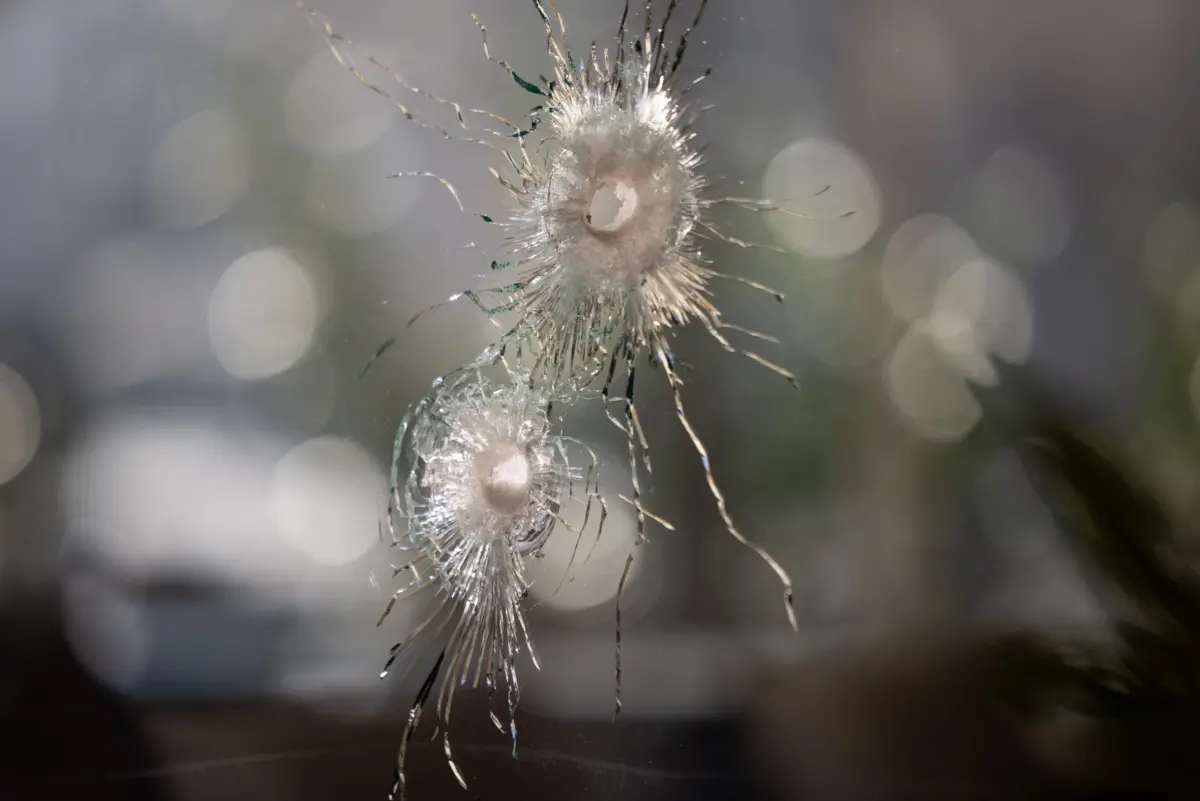
The investigation into the mass shooting that devastated Krakow’s historic center has taken a significant turn as Polish authorities confirm the suspect’s deep-seated interest in far-right extremism and notorious mass murderers. Poland’s Justice Minister, Waldemar Zurek, announced on Tuesday that digital forensics conducted on the suspect’s devices revealed a disturbing pattern of radicalization. According to the minister, the gunman had spent considerable time researching Anders Behring Breivik, the Norwegian white supremacist responsible for the 2011 massacre that claimed 77 lives. This revelation has sent shockwaves through a nation already reeling from the violence that erupted in its cultural heart, transforming a criminal investigation into a broader debate over domestic extremism and political accountability.
The suspect, identified by prosecutors as 24-year-old Michal Oksinski, a factory worker from the outskirts of Krakow, died in a local hospital on Monday. He had been under heavy guard since Saturday, following a high-stakes confrontation with police in Krakow’s Main Market Square (Rynek Główny). Oksinski had sustained life-threatening injuries during his arrest, which occurred just minutes after he allegedly opened fire from his vehicle on a crowd of locals and tourists. The shooting resulted in the deaths of six people in the square, while approximately a dozen others remain hospitalized with varying degrees of injury.
A Detailed Chronology of the Tragedy
The events that culminated in Saturday’s bloodshed appear to have begun hours before the first shots were fired in public. Forensic evidence and crime scene investigations suggest that Oksinski’s rampage started at his family residence. On Saturday morning, police discovered the bodies of Oksinski’s father, mother, and sister within their home. All three had been fatally shot. Authorities believe Oksinski murdered his family before driving into the center of Krakow to continue his assault. This "family annihilation" phase of the crime is often seen in mass shooters who seek to sever all ties to their former lives before committing a public act of terror.
Shortly after midday on Saturday, Oksinski arrived at the Main Market Square, one of Europe’s largest and most famous medieval squares. Eyewitnesses described a scene of sudden, chaotic violence. Driving a dark sedan, the gunman navigated toward a crowded pedestrian area near the Cloth Hall (Sukiennice). Armed with a semi-automatic weapon equipped with a silencer—a detail later confirmed by Minister Zurek—Oksinski began firing at bystanders. The use of a silencer suggests a degree of tactical planning intended to delay the public’s realization of the danger, allowing the shooter to claim more victims before the crowd could disperse or police could pinpoint the source of the noise.
Within minutes, Polish police, who maintain a heavy presence in the tourist-heavy district, intercepted the vehicle. Following a brief exchange of gunfire, officers managed to disable the suspect. Oksinski was neutralized and taken into custody, but the damage was already done. Six people lay dead among the cobblestones of the historic square, an area usually filled with flower vendors, horse-drawn carriages, and outdoor cafes.
Evidence of Radicalization and Symbolic Ties
The search of Oksinski’s car and personal effects provided investigators with a clearer picture of his ideological motivations. Beyond the digital history of his interest in Anders Behring Breivik, police recovered a Gadsden flag from his possessions. The flag, which features a coiled rattlesnake on a yellow background with the motto "Don’t Tread on Me," originated during the American Revolution but has been increasingly co-opted by various far-right, libertarian, and anti-government movements in the United States and abroad.
Justice Minister Zurek emphasized that the presence of the flag, combined with the suspect’s digital footprint, provides a "very strong indication of right-wing extremism." The fascination with Breivik is particularly concerning to European security agencies. Breivik, who targeted a youth camp and a government building in Oslo in 2011, wrote a sprawling manifesto that has since become a foundational text for "lone wolf" attackers across the globe. By studying Breivik, Oksinski was following a pattern seen in other mass shooters, such as the Christchurch mosque attacker in New Zealand, who also cited Breivik as an inspiration.
The inclusion of a silencer in the suspect’s arsenal further points to a premeditated "tactical" approach to the massacre. Polish investigators are currently tracing the origin of the firearm and the muzzle device, as Poland maintains some of the strictest gun control laws in the European Union. Acquiring such equipment would likely have required access to black market channels or a sophisticated understanding of how to bypass legal restrictions.
Political Fallout and the War of Words
The tragedy has not only caused national mourning but has also ignited a fierce political dispute between Poland’s governing coalition and the nationalist opposition. The friction began just hours after the shooting when Interior Minister Marcin Kierwinski suggested that the attack was fueled by far-right ideology. This immediate classification drew the ire of the Law and Justice (PiS) party, the former ruling party now in opposition.

Jaroslaw Kaczynski, the leader of PiS, vehemently rejected the government’s narrative, labeling the claims of far-right influence a "blatant lie." Kaczynski and his allies have accused the current administration of "politicizing a tragedy" to tarnish the reputation of nationalist and conservative movements in Poland. Michal Wojcik, a PiS lawmaker, expressed his outrage to the media, stating that the government’s rhetoric was "dishonest toward the international community" and designed to frame political opponents as extremist sympathizers.
In response to the backlash, members of the government appeared to soften their language on Monday, pending the full results of the investigation. However, by Tuesday, following the discovery of the Breivik-related search history, Minister Kierwinski stood by his initial assessment. He told public radio that while he is waiting for the final investigative report, the evidence gathered thus far supports the theory of ideological radicalization. The debate highlights the deep polarization within Polish society, where even a consensus on the nature of a national tragedy remains elusive.
The Shadow of Anders Behring Breivik
To understand the gravity of the link between Oksinski and Breivik, one must look at the impact of the 2011 Norway attacks. Breivik’s actions were not merely a burst of violence but a calculated political statement against multiculturalism, Islam, and the "cultural Marxism" he believed was destroying Europe. His manifesto, "2083: A European Declaration of Independence," has been translated into multiple languages and continues to circulate in the darker corners of the internet.
Security analysts note that the "Breivik model" of terrorism is particularly difficult for intelligence agencies to thwart. It involves a single individual who radicalizes in isolation, avoids large-scale conspiracies that might attract surveillance, and focuses on "soft targets" to maximize psychological impact. In the case of Krakow, the choice of the Main Market Square—a symbol of Polish history and a hub for international tourism—echoes the symbolic targeting seen in other extremist-motivated attacks.
National Mourning and Societal Impact
As the political battle rages in Warsaw, the city of Krakow is focused on healing. On Monday, thousands of residents and visitors participated in a "March of Silence." Political rivals, including members of the ruling coalition and opposition figures, briefly set aside their differences to walk together from the shooting site to the Wawel Cathedral. The march was a somber tribute to the six victims in the square and the three family members killed in their home.
Makeshift memorials have appeared throughout the city, with candles, flowers, and notes of condolence lining the streets leading to the Main Market. For many Poles, the shooting has shattered a long-held sense of security. Poland is statistically one of the safest countries in Europe regarding violent crime and mass shootings. The rarity of such events in the country has made the Krakow attack even more traumatic for the public consciousness.
Broader Implications for European Security
The Krakow shooting serves as a grim reminder that the threat of radicalized "lone wolf" actors remains a primary concern for European security services. While much of the focus in recent years has been on religious extremism, the rise of far-right radicalization has become an equally pressing issue. The ease with which extremist ideologies can cross borders via the internet means that a factory worker in Poland can be influenced by the actions of a terrorist in Norway or a movement in the United States.
Furthermore, the use of the Gadsden flag suggests a globalization of extremist symbols. Symbols once specific to American political discourse are now being adopted by European actors who see themselves as part of a broader, international struggle against perceived government overreach or cultural shifts.
Investigators are expected to continue their work for several months, focusing on Oksinski’s online interactions to determine if he was part of any digital communities that may have encouraged his actions. There is also the question of whether he had any direct accomplices or if anyone was aware of his plans. For now, the Polish government faces the dual challenge of providing justice for the victims and navigating a volatile political landscape that has been further complicated by the blood shed in Krakow.
As the nation waits for the final forensic reports, the tragedy stands as a stark warning of the dangers posed by the convergence of mental instability, easy access to extremist propaganda, and the desire for infamy. The historic stones of Krakow’s square have been cleaned, and the tourists have returned, but the psychological scars of Saturday’s events will likely influence Polish policy and social discourse for years to come.
