

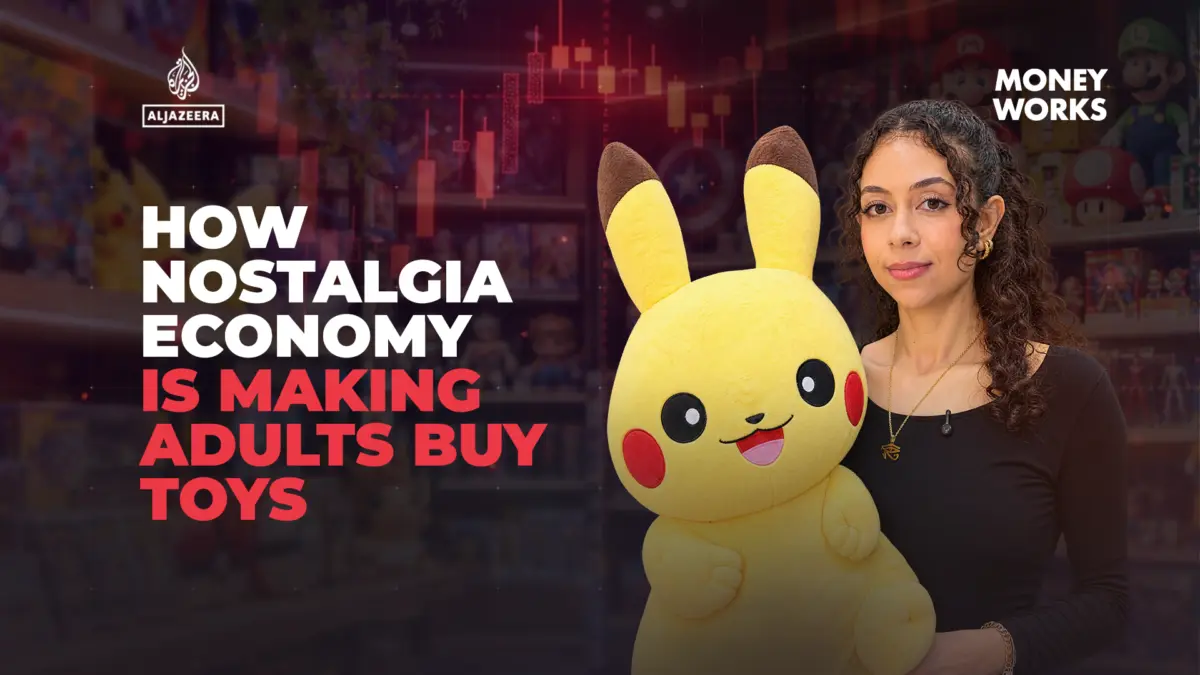
The global toy market has undergone a fundamental transformation, shifting its primary focus from children to a demographic that was once considered a niche secondary audience: adults. Often referred to as "kidults," these consumers—typically aged 18 and older—have become the most significant growth engine for legacy toy manufacturers and boutique collectibles brands alike. As traditional birth rates decline in many developed economies, the industry has pivoted to capture the disposable income of adults who are increasingly turning to toys for stress relief, creative expression, and investment. This trend, analyzed in depth by Al Jazeera’s Yasmeen ElTahan, highlights a broader socioeconomic shift where play is no longer seen as a developmental phase to be outgrown, but as a lifelong lifestyle choice supported by the "nostalgia economy."
The Emergence of the Kidult Powerhouse
The toy industry’s "new favorite consumer" is an adult with a stable income and a deep-seated connection to the intellectual properties (IP) of their youth. According to market research, adults are now responsible for nearly one-fourth of all toy sales globally. In regions like North America and Western Europe, this figure is even higher, with adult consumers propping up market segments that would otherwise be in decline due to the proliferation of digital entertainment among younger generations.
Unlike children, who rely on parental purchasing power, adult consumers possess direct disposable income. They are less price-sensitive when it comes to high-quality craftsmanship, limited editions, and complex assembly kits. This has allowed companies like LEGO, Mattel, and Hasbro to expand their profit margins by introducing "premium" lines specifically designed for adult aesthetics and displayability rather than durability for play.
A Chronology of the Adult Toy Market Evolution
The journey of the adult toy consumer from a subculture of "collectors" to a mainstream economic force has evolved over several decades:
- The Collector Era (1980s – 1990s): During this period, adult interest in toys was largely confined to vintage collecting. Enthusiasts sought out original Star Wars figures or vintage dolls, primarily through specialized hobby shops and conventions.
- The Rise of the "Nerd" Culture (2000s – 2010s): The explosion of the Marvel Cinematic Universe (MCU) and the mainstreaming of comic book culture began to bridge the gap. Brands like Funko Pop! capitalized on this by creating stylized figurines that appealed to a wide range of adult fans across various media franchises.
- The Pandemic Catalyst (2020 – 2022): The COVID-19 lockdowns served as a massive accelerant. Isolated at home, adults sought comfort in nostalgic activities. Building complex LEGO sets or collecting trading cards became a primary form of escapism and mental health maintenance. Sales in the adult category spiked by double digits during this period and never fully retreated.
- The Market Maturity (2023 – 2026): By late 2026, the industry has fully integrated the adult consumer into its business model. Major retailers now have dedicated "Adult" or "Collector" aisles, and toy fairs prioritize high-end display pieces alongside traditional playthings.
The Psychological Pull of the Nostalgia Economy
At the heart of this trend is the nostalgia economy—a marketing strategy that leverages the emotional connection consumers have with their past. For many adults, purchasing a toy they once owned (or one they could not afford as a child) provides a sense of continuity and comfort in an increasingly volatile world.
Psychologists suggest that "kidulting" serves as a therapeutic outlet. In a digital-heavy work environment, the tactile nature of building a model or the visual satisfaction of a curated shelf of action figures offers a tangible sense of accomplishment. This emotional resonance is what Al Jazeera’s report identifies as a "safety net" for the industry; while children’s tastes are fickle and influenced by fleeting viral trends, adult nostalgia is enduring and predictable.
Supporting Data: The Numbers Behind the Trend
Recent data from market intelligence firms such as Circana (formerly the NPD Group) underscores the financial weight of this demographic. In the 2024–2025 fiscal years, the "kidult" segment was the only area of the toy market to show consistent year-over-year growth.
- Market Share: Adults (18+) now account for approximately $9 billion in annual sales in the United States alone.
- Spending Habits: The average adult toy buyer spends 40% more per transaction than the average parent buying for a child.
- Top Categories: The most popular categories for adults include building sets (LEGO), action figures, "designer" plush toys, and complex board games.
- Growth Rate: While the overall toy market saw a modest 1% growth, the adult-targeted sector grew by 12% in the same period.
These figures indicate that the toy industry is no longer dependent solely on the "holiday rush" driven by children’s wish lists. Instead, a steady stream of "self-gifting" by adults provides year-round stability for manufacturers.
Corporate Responses and Industry Shifts
The world’s largest toy manufacturers have radically altered their strategies to cater to this aging audience. LEGO, for instance, launched its "Adults Welcome" campaign, featuring minimalist packaging and complex sets like the 9,000-piece Titanic or architectural icons. These products are marketed as home decor rather than toys.
Mattel has seen similar success with its "Mattel Creations" platform, which sells high-end, limited-edition versions of Barbie and Hot Wheels to collectors. During the 2023–2024 "Barbie" movie phenomenon, Mattel’s sales were heavily bolstered by adult women purchasing collectible dolls, proving that nostalgia-driven media can bridge the gap between cinema and retail.
Hasbro has utilized its "HasLab" crowdfunding platform to produce massive, high-cost items—such as a $500 Star Wars Galatic Cruiser—that are only manufactured once a minimum number of adult backers have committed to the purchase. This "direct-to-consumer" model eliminates the risk of unsold inventory and targets the most dedicated segment of the fan base.
Official Reactions and Expert Analysis
Industry analysts suggest that the shift toward adult consumers is a necessary adaptation to global demographic changes. "We are seeing a ‘Peter Pan’ effect on a global scale," says Dr. Elena Rossi, a consumer behavior analyst. "But from an economic standpoint, it’s a rational pivot. With birth rates hitting record lows in markets like Japan, South Korea, and parts of Europe, toy companies must find new ways to stay relevant. Adults are the only growing demographic in the toy aisle."
Retailers are also weighing in on the trend. Spokespersons from major global chains have noted that the "unboxing" culture on social media platforms like TikTok and YouTube has further fueled the trend. Influencers who review toys for an adult audience have created a community where "toy hunting" is a respected hobby rather than a childish pursuit. This social validation has removed the stigma once associated with adult toy collecting.
Broader Implications and Future Outlook
The rise of the adult toy consumer has implications that extend beyond the toy aisle. It reflects a broader shift in how society defines "adulthood." The traditional markers of maturity—home ownership, marriage, and child-rearing—are being delayed or bypassed by many in the Millennial and Gen Z cohorts. In their place, personal hobbies and the curation of "identity through objects" have taken center stage.
Furthermore, the environmental impact of this trend is coming under scrutiny. Adult-targeted toys often involve more plastic, intricate packaging, and global shipping for limited releases. As the market grows, companies are facing pressure to ensure that the nostalgia economy does not come at a high environmental cost, leading to a rise in "eco-friendly" collector lines made from recycled plastics or sustainable wood.
Looking ahead to the late 2020s, the "kidult" phenomenon is expected to stabilize as a permanent pillar of the global economy. As long as the "nostalgia economy" continues to offer an emotional escape from the complexities of modern life, the toy industry will continue to find its most loyal—and lucrative—customers among the grown-ups. The transition of toys from playthings to "lifestyle assets" marks a new chapter in retail history, where the boundary between childhood and adulthood continues to blur in the pursuit of joy and connection.
