


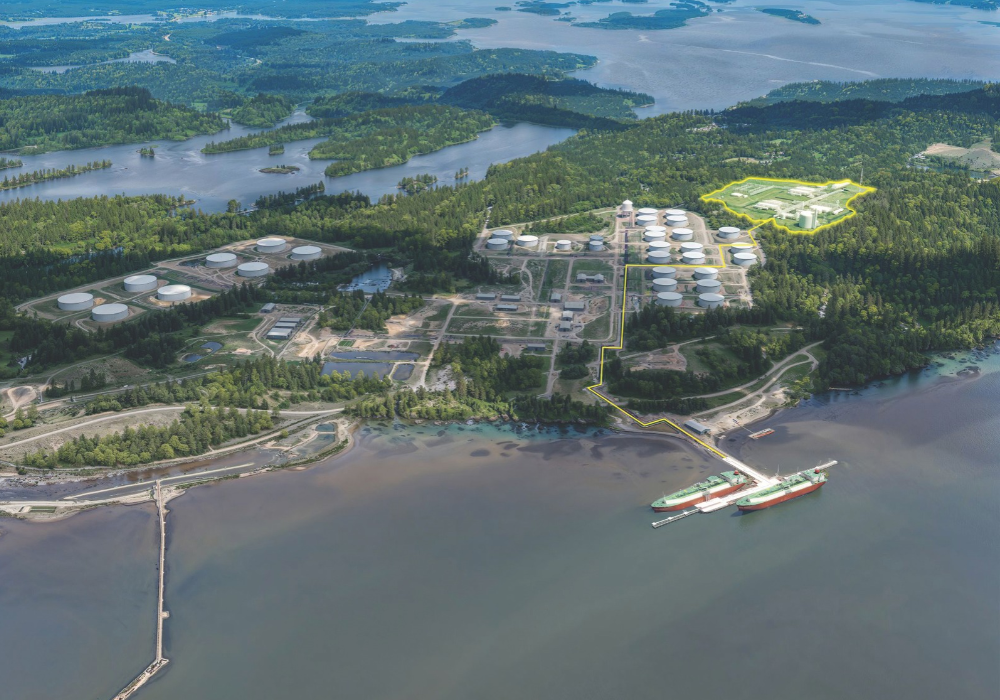
In August 2022, the windswept coast of Stephenville, Newfoundland, served as the backdrop for what was hailed as a historic pivot in global energy geopolitics. Standing alongside then-German Chancellor Olaf Scholz, Canadian Prime Minister Justin Trudeau signed a joint declaration of intent to establish a Canada-Germany Hydrogen Alliance. The agreement was ambitious, outlining a supply chain that would see Atlantic Canada exporting green hydrogen—produced via massive wind farms—to Europe by 2025. The initiative was framed not just as an economic boon for Atlantic Canada, but as a critical pillar of the European Union’s strategy to achieve carbon neutrality and sever its dependence on Russian natural gas following the invasion of Ukraine.
The vision was clear: Atlantic Canada, with its world-class wind resources and strategic proximity to Europe, would become a global hub for the "fuel of the future." However, two years later, the initial euphoria has been replaced by a sobering reality. As the 2025 deadline approaches, the path to commercialization has become increasingly obstructed by technical inefficiencies, financial instability, and the withdrawal of key international partners. The narrative of green hydrogen as a seamless replacement for fossil fuels is being re-evaluated by analysts, engineers, and policymakers alike, as the industry faces a "valley of death" between pilot projects and large-scale viability.
A Chronology of Declining Momentum
The timeline of Canada’s green hydrogen ambitions reflects a rapid ascent followed by a series of significant structural shocks. In the wake of the 2022 accord, the European Union signaled its support by committing €200 million to foster the development of Canadian renewable hydrogen. This was intended to help meet the EU’s broader Hydrogen Strategy, which targets the import of 10 million tonnes of renewable hydrogen by 2030.
By 2023, the momentum appeared to be holding. Nova Scotia announced its largest-ever wind energy build-out to power hydrogen production, and companies like EverWind Fuels and World Energy GH2 became household names in the energy sector. However, the first major cracks appeared in early 2024. In February, the consortium behind the very project that hosted the Trudeau-Scholz ceremony filed for creditor protection. The move followed a decision by the Newfoundland and Labrador government to reclaim Crown lands previously earmarked for the project, citing a lack of progress and financial milestones.
The setbacks intensified in August 2024. A major German energy firm, which had previously signed a memorandum of understanding (MOU) to purchase green hydrogen and ammonia from Nova Scotia’s EverWind Fuels, announced it would not be moving forward with the deal. The withdrawal of this "offtake" agreement—the contractual promise to buy the product—was a devastating blow to the project’s bankability. Without guaranteed buyers, the multibillion-dollar export complexes required to convert wind energy into transportable hydrogen remain high-risk gambles that private capital is increasingly hesitant to fund.
The Thermodynamic and Economic Hurdle
At the heart of the industry’s struggle is a fundamental law of physics that cannot be circumvented by policy or subsidies: the low energy density of hydrogen and the significant energy losses inherent in its production. Green hydrogen is created through electrolysis, a process where renewable electricity is used to split water into hydrogen and oxygen. While the concept is environmentally sound, the execution is remarkably inefficient.
Paul Martin, a chemical engineer and co-founder of the Hydrogen Science Coalition, points out that the process of converting electricity to hydrogen, compressing or liquefying it for storage, transporting it across the Atlantic, and then reconverting it back into electricity or usable energy results in a staggering 63% loss of the original energy input. "You can’t make that go away," Martin explains. "It’s structurally inherent to the idea of using hydrogen as a fuel."
Furthermore, hydrogen is the smallest molecule in the universe, making it notoriously difficult to contain and transport. It requires extreme pressures (up to 700 bar) or cryogenic temperatures (-253°C) to be moved in any meaningful quantity. Compared to liquid natural gas (LNG), hydrogen contains significantly less energy per unit of volume. This means that even if the production costs were to drop, the logistics of shipping hydrogen from the Port of Belledune or the Strait of Canso to Hamburg or Rotterdam remain prohibitively expensive. Historically, because of these challenges, 85% of the hydrogen used globally is produced on-site where it is consumed, rather than traded as a global commodity.
Niche Applications and Local Utilities
Despite the cooling of the export market, green hydrogen is not being abandoned entirely. Instead, the focus is shifting toward "right-sized" applications where hydrogen serves a specific, localized purpose that batteries cannot easily fulfill. In Canada, this shift is most evident in remote and Indigenous communities currently reliant on expensive, high-emission diesel generators.
The Xaxli’p First Nation in British Columbia is currently exploring the development of a community-owned green hydrogen utility. The goal is to produce liquefied hydrogen fuel to provide a clean energy alternative for remote regions where the electrical grid does not reach. Similarly, in Quebec’s Magdalen Islands, Hydro-Québec is investigating hydrogen as a solution for seasonal energy storage.
The Magdalen Islands rely on a 66-megawatt diesel thermal plant. As the islands integrate more wind energy, they face a storage problem: energy demand in the winter is roughly 25 megawatts higher than in the summer. Jasmin Raymond, a professor at the Institut national de la recherche scientifique and a Canada Research Chair, suggests that the islands’ unique geology could be the key. The islands sit atop massive salt domes. By creating salt caverns, surplus wind energy generated during the summer can be converted into hydrogen and stored underground.
"The concept would be to make green hydrogen when you have surplus electricity from the windmills, store it underground in the caverns dissolved in the salt, and use it when you need it," Raymond says. While batteries are excellent for short-term, daily storage, they are economically unviable for the long-duration, seasonal storage required in northern climates.
Decarbonizing the "Hard-to-Abate" Sectors
Beyond energy storage, the most viable path for green hydrogen lies in replacing the 120 million tonnes of "grey" hydrogen currently produced annually from fossil fuels. This hydrogen is a critical feedstock for the production of nitrogen fertilizer, oil refining, and chemical manufacturing. Transitioning these existing industrial processes from fossil-based hydrogen to green hydrogen would result in massive immediate carbon savings.
The heavy industry sector, particularly steel manufacturing, is also looking toward hydrogen. In Sweden, the Stegra project (formerly H2 Green Steel) is pioneering the use of green hydrogen to replace coking coal in the reduction of iron ore. However, this transition comes with a "green premium." Steel produced using this method currently costs approximately one-third more than conventionally produced steel.
For these projects to succeed, there must be a regulatory environment that penalizes carbon emissions or a market that is willing to pay more for "green" commodities. Without such mechanisms, green hydrogen remains an expensive alternative in a global market that still prioritizes low-cost production.
Expert Analysis: The "Hydrogen Ladder" vs. Direct Electrification
The current stagnation in the Canadian hydrogen sector has reignited a debate among energy experts regarding the best use of limited renewable resources. Paul Martin argues that the obsession with hydrogen may be distracting from "lower-hanging fruit." He suggests that before investing billions in complex hydrogen infrastructure, Canada should focus on direct electrification—using renewable power for home heating (heat pumps) and transportation (electric vehicles).
"Why on earth would you be fussing over the hard-to-decarbonize sectors when you haven’t done the easy ones yet?" Martin asks. From an efficiency standpoint, using electricity to power a heat pump is roughly five to six times more efficient than using that same electricity to create hydrogen for combustion.
Conversely, proponents like Jasmin Raymond argue that while electrification is the priority, the complexity of the global energy transition requires advanced planning for the technologies of 2040 and 2050. "It’s still a bit early for that technology to enter the market," Raymond admits. "That said, it doesn’t mean we should not work on it. With energy systems, we really need to think in advance."
Broader Implications for Atlantic Canada’s Economy
The stalling of the hydrogen export industry carries significant implications for the economic forecasts of Atlantic Canada. For provinces like Newfoundland and Labrador and Nova Scotia, green hydrogen was marketed as a "generational opportunity" akin to the oil booms of previous decades. Thousands of jobs were promised in construction, operation, and maintenance of wind farms and ammonia plants.
If the export market fails to materialize, these provinces risk having over-invested political and financial capital into a single-sector solution. However, the infrastructure being built—specifically the massive expansion of wind energy—remains a net positive for the regional grid. Even if the energy is not converted to hydrogen, the increased renewable capacity can help decarbonize the local electricity supply, which in some parts of the Maritimes still relies heavily on coal and heavy oil.
Conclusion
The 2022 handshake between Trudeau and Scholz represented a moment of geopolitical necessity and environmental optimism. But as the technical and financial hurdles of green hydrogen become more pronounced, Canada’s role as a "hydrogen superpower" is being recalibrated. The future of the industry likely lies not in the grand vision of a global liquid hydrogen commodity market, but in targeted, strategic applications: cleaning up heavy industry, providing seasonal storage for isolated grids, and replacing fossil-based feedstocks in agriculture.
As the industry navigates this period of disillusionment, the lesson for policymakers is one of pragmatic balance. Green hydrogen is a tool in the decarbonization toolkit, but it is not a panacea. The coming decade will determine whether Atlantic Canada’s wind will power the factories of Europe or whether it will be redirected to the more immediate task of cleaning up the Canadian grid closer to home. Regardless of the outcome, the "muddy" path to commercialization underscores a fundamental truth of the energy transition: the shift away from fossil fuels will be as much a battle against the laws of thermodynamics as it is against the constraints of economics.
