

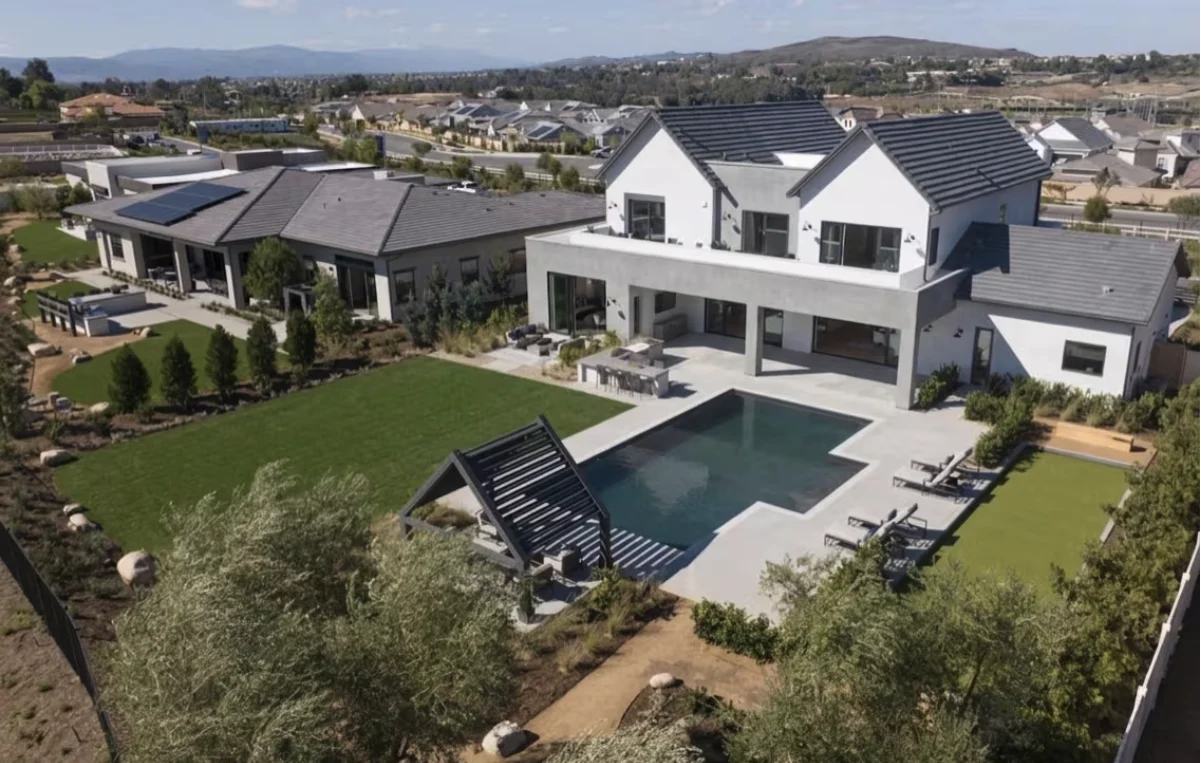
In a landmark recognition for the international housing sector, Sommers Bend, the flagship SHAWOOD community developed by Japan-based Sekisui House Ltd. in the United States, has been honored with the Award of Excellence in the Construction and Development Project category at the 9th JAPAN Construction International Award. This prestigious accolade, conferred by Japan’s Ministry of Land, Infrastructure, Transport and Tourism (MLIT), represents a historic milestone as it marks the first time a detached-home community development has received such high-level recognition since the award’s inception. The announcement, made on Thursday, underscores the growing influence of Japanese construction methodologies and sustainable building practices within the competitive United States housing market.
The JAPAN Construction International Award was launched in fiscal 2017 with a specific strategic mandate: to recognize and promote "Quality Infrastructure" projects involving Japanese companies operating overseas. By highlighting excellence in planning, design, and construction, the Japanese government aims to support the global expansion of its domestic industries while fostering international collaboration. The selection of Sommers Bend for the 9th edition of the award signals that Sekisui House’s unique approach to residential development—one that emphasizes precision, environmental stewardship, and long-term durability—has successfully transitioned from a niche concept to a globally recognized standard for excellence.
A New Paradigm for American Residential Development
Located in the growing city of Temecula, California, Sommers Bend serves as a 57-lot detached-home community that functions as a real-world proof of concept for Sekisui House’s SHAWOOD brand. Sales of these homes officially commenced in 2024, following years of research and development aimed at adapting Japanese building standards to the American regulatory and cultural landscape. The project is not merely a collection of houses but an extension of Sekisui House’s integrated, Japan-honed system. This ecosystem spans the entire lifecycle of a home, including intensive research and development, bespoke architectural design, factory-controlled production and procurement, and rigorous construction management.
At the heart of Sommers Bend is the proprietary S-MJ construction system. This technology represents an evolution of Japan’s traditional post-and-beam method, which has been refined over centuries to withstand seismic activity and high humidity. In the U.S. market, Sekisui House has implemented a hybrid approach, combining the S-MJ system with locally sourced 2×4 framing. This synthesis creates a highly replicable framework that allows for the structural integrity and precision of Japanese engineering while maintaining the aesthetic and spatial qualities familiar to Western buyers. The result is a home characterized by larger window openings, seamless indoor-outdoor connections, and a level of structural accuracy that is often difficult to achieve with traditional on-site "stick-built" construction.
A Chronology of Strategic Expansion and Accolades
The success of Sommers Bend is the culmination of a decade-long strategic entry into the U.S. market by Sekisui House. The company first introduced the SHAWOOD concept to American audiences in 2020 with the "Chōwa" concept home, which was showcased at the International Builders’ Show in Las Vegas. This was followed in 2021 by Talon Ridge, a six-home pilot project that tested the viability of the SHAWOOD system in a localized setting.
By 2024, Sommers Bend had begun to dominate the regional and national award circuits. The community received a SoCal MAME (Major Achievement in Marketing Excellence) Award and secured the highest honor at the PCBC Gold Nugget Awards, often referred to as the "Academy Awards" of the building industry. The momentum continued into 2025, where Sommers Bend took home Gold Awards—the top recognition—in four distinct categories at The Nationals, an event hosted by the National Association of Home Builders (NAHB). These awards recognized the community’s overall plan, two individual model homes, and its innovative sales center.
The 9th JAPAN Construction International Award adds a layer of sovereign validation to these industry honors. By receiving the Award of Excellence from MLIT, Sekisui House has demonstrated that its U.S. operations meet the highest standards of the Japanese government’s "Quality Infrastructure" initiative, which prioritizes safety, environmental sustainability, and economic efficiency.
Engineering for Resilience and Decarbonization
The evaluation committee at MLIT specifically cited Sommers Bend’s combination of environmental performance, durability, and disaster resilience as key factors in its decision. In an era where climate change and energy volatility are top-of-mind for homeowners, Sekisui House has positioned its homes as a solution to these modern challenges. All residences at Sommers Bend meet net-zero energy home (ZEH) specifications. To achieve this, every home is equipped as standard with high-efficiency solar power generation and integrated battery storage systems.
This focus on energy independence aligns perfectly with California’s stringent Title 24 energy codes, which require solar on most new homes. However, the Sommers Bend model goes further by standardizing the "solar-plus-storage" configuration, ensuring that homes are not only producing green energy but are also resilient against grid outages—a frequent concern in the Western United States due to heatwaves and wildfire-related safety power shutoffs.
Durability is another cornerstone of the SHAWOOD philosophy. The structural components used in Sommers Bend were developed and tested at Sekisui House’s extensive research facilities in Japan. These materials are informed by the company’s decades of experience in disaster response, particularly regarding seismic activity and typhoons. By utilizing highly durable materials, such as the proprietary Bellburn ceramic exterior wall panels, Sekisui House aims to deliver homes that require less maintenance over their lifecycle and can better withstand natural hazards, thereby reducing the total carbon footprint associated with repair and replacement.
Addressing the Labor Shortage through Technology Transfer
One of the most significant implications of the Sommers Bend project for the broader U.S. homebuilding industry is its approach to labor and workforce development. The U.S. construction sector has faced a chronic shortage of skilled labor for years, a problem that is particularly acute in high-cost Western markets. Sekisui House addresses this by shifting much of the precision work from the construction site to the factory.
The project promotes the pre-cutting and pre-setting of components in a controlled factory environment. This ensures that when materials arrive at the job site, they fit together with millimetric precision, reducing the need for on-site adjustments and significantly cutting down on construction waste. This industrialized building approach allows for high-quality results even when the local pool of highly specialized tradespeople is limited.
Furthermore, the award recognized Sekisui House’s commitment to technology transfer. The company has invested heavily in creating English-language construction manuals and instructional videos, and it provides hands-on training for U.S.-based workers. Some local contractors have even been offered training opportunities in Japan to learn the nuances of the SHAWOOD system. This investment in human capital ensures that the precision of the Japanese system is maintained across the ocean, creating a repeatable and scalable model for high-quality housing.
Market Impact and the Path to 3,000 Homes
Sekisui House has managed the Sommers Bend project through every phase, from initial land development and vertical construction to final sales and marketing. The community functions as a full-scale showroom for the brand’s global vision. The "Experience Center" and model homes allow buyers, policymakers, and industry partners to see the internal structural systems and environmental initiatives firsthand, demystifying the technology behind the SHAWOOD name.
For U.S. builders and investors, Sommers Bend serves as a compelling case study. It demonstrates that an industrialized, high-performance building system can be applied to for-sale detached housing at a scale and price point that appeals to a broad market, rather than being restricted to the ultra-luxury segment. As state and local governments across the West continue to tighten energy and resilience standards, the "pre-equipped" model of Sommers Bend offers a blueprint for regulatory compliance and market differentiation.
Looking ahead, Sekisui House has ambitious plans for its U.S. operations. Working in collaboration with local builders and regional partners, the company intends to expand the SHAWOOD platform primarily along the West Coast. The stated goal is to reach an annual delivery of 3,000 homes in the United States by 2031. This target would move SHAWOOD from a specialized niche product to a significant player in major Western metropolitan areas.
The recognition of Sommers Bend at the 9th JAPAN Construction International Award confirms that the integration of Japanese precision and American lifestyle preferences is not only possible but highly successful. As Sekisui House continues its expansion, its focus on "Making Home the Happiest Place in the World" through sustainable, disaster-resilient, and high-quality construction is likely to leave a lasting mark on the American suburban landscape. For the U.S. housing industry, the success of Sommers Bend suggests that the future of homebuilding may lie in the seamless blend of advanced manufacturing, environmental responsibility, and international technological exchange.
