

The American real estate market is currently navigating a period of profound divergence, where localized industrial booms are creating immediate housing shortages while broader commercial sectors grapple with a mounting debt crisis. From the rapid transformation of small-town Texas into a global artificial intelligence hub to the sharp rise in commercial loan delinquencies across major metropolitan centers, investors are facing a complex environment defined by high interest rates and shifting demand drivers. Recent data suggests that while certain sectors like AI infrastructure are driving localized wealth, the broader commercial landscape is hitting a "maturity wall" that threatens the stability of multifamily and office assets alike.
The Stargate AI Effect: Industrial Expansion and the Boom-Town Cycle
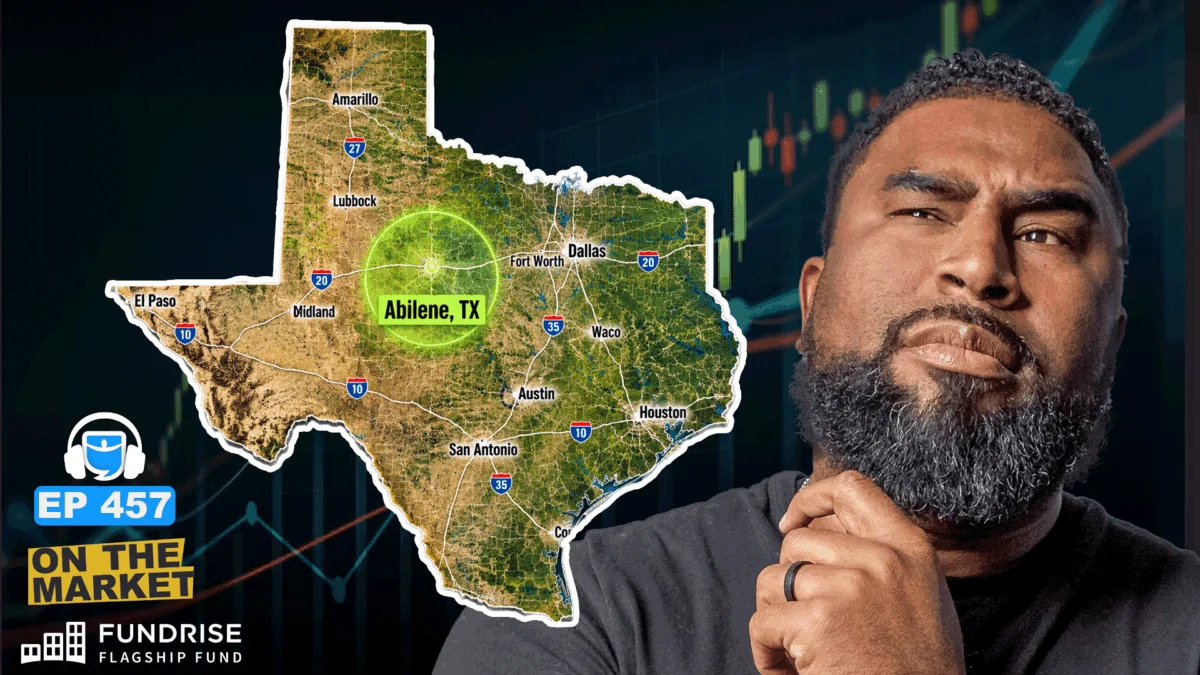
In Abilene, Texas, a city with a population of roughly 125,000, the announcement and commencement of the Stargate AI facility have triggered an economic phenomenon reminiscent of historical resource rushes. The project, a four-million-square-foot data center complex, represents one of the most significant infrastructure investments in the United States. To facilitate construction, the project required an immediate influx of approximately 6,000 construction workers—representing a nearly 5% surge in the local population almost overnight.
This sudden demand has placed unprecedented pressure on the local housing inventory. According to market reports, home prices in Abilene surged by 9.5% year-over-year as the influx of workers exhausted available rentals, hotel rooms, and short-term housing options. However, economists and seasoned investors warn that this "AI rush" carries inherent risks typical of boom towns. Once construction is finalized, the permanent workforce required to maintain such a facility often numbers in the hundreds rather than the thousands. This creates a looming "exodus risk," where the temporary population departs for the next major project, potentially leaving behind a surplus of overvalued housing and high-vacancy rentals.
Historical parallels can be drawn to the Bakken oil boom in the Dakotas during the late 2000s and early 2010s. In those instances, investors who entered the market at the peak of construction demand often found themselves "holding the bag" when oil prices fluctuated or production stabilized, leading to a sharp correction in property values. For the Abilene market, the sustainability of current price levels will depend on whether the city can leverage the data center to attract secondary industries and diversify its employment base beyond the initial infrastructure phase.
The Rising Tide of Commercial Real Estate Distress
While industrial pockets see rapid growth, the broader commercial real estate (CRE) sector is facing a significant cooling period characterized by rising delinquencies. Data from CreditIQ highlights a sharp uptick in distress beyond the well-documented struggles of the office sector. In August, sectors including industrial, hospitality, retail, and self-storage posted a combined $14.6 billion in new distress.
The "maturity wall"—a term referring to the massive volume of commercial loans reaching the end of their terms and requiring refinancing—is becoming a primary concern for the Federal Reserve and private lenders. With interest rates significantly higher than they were when these loans were originated three to five years ago, many property owners are finding it impossible to refinance without significant capital injections or loan modifications.
The office sector remains the epicenter of this crisis. In major hubs like Seattle, vacancy rates have climbed to 28.2%, the highest in the Puget Sound region’s history. Eerie scenes of vacant high-rises are becoming common in New York, Los Angeles, and San Francisco, which together account for a staggering 57% of the nation’s $87 billion in distressed office debt. The shift toward remote and hybrid work models has permanently altered the valuation metrics for Class A and B office space, forcing a reckoning among institutional investors.
The Multifamily Squeeze and the 600 Percent Surge in Delinquencies
Perhaps the most alarming trend for residential investors is the rapid deterioration of the multifamily sector. Over the past two years, the rate of delinquencies in multifamily housing has increased by 600%. This spike is largely attributed to the prevalence of floating-rate debt used by syndicators and developers during the 2021-2022 acquisition frenzy. As the Secured Overnight Financing Rate (SOFR) skyrocketed, the cost of servicing these debts eclipsed the rental income generated by the properties, especially as rent growth began to plateau in many markets.
Unlike the single-family market (1-4 units), where many owners are locked into 30-year fixed-rate mortgages with significant equity, commercial multifamily owners are often subject to rate resets every few years. Henry Washington, a prominent real estate investor, noted that even smaller commercial assets are feeling the pinch. A duplex originally financed at a 4% interest rate five years ago may now face a renewal rate of 7% or higher. While smaller units can often absorb these costs if they were bought conservatively, larger projects with hundreds of units face catastrophic cash flow deficits when interest expenses double.
The Tightening Grating on Fix-and-Flip Investors
The residential redevelopment sector, commonly known as "fixing and flipping," is also showing signs of strain as mortgage rates remain elevated. A recent survey of 270 active home flippers revealed that 59% reported an increase in "days on market" during the second and third quarters of the year. The impact is most pronounced in the Northwest and Texas, where 83% and 75% of flippers, respectively, reported longer selling times.
The era of "guaranteed" profits appears to have ended. Approximately 17% of flippers reported selling properties below their initial After Repair Value (ARV) estimates. Profit margins are being squeezed from two sides: higher holding costs due to longer sales cycles and the necessity of offering buyer concessions or price drops to move inventory.
Seasonality, a factor largely absent during the post-pandemic housing frenzy, has returned to the market. Investors who purchased properties in the spring with the expectation of a quick summer exit found themselves competing in a crowded market where buyer demand was dampened by 7% mortgage rates. Experts suggest that successful flippers must now underwrite deals with a "multiple exit" strategy, ensuring that a property can function as a profitable long-term rental or a break-even short-term rental if the primary sale fails to materialize.
Strategies for Resilience: Loan Modifications and Interest Reserves
In response to these challenges, a trend of "extend and pretend"—or more formally, loan modifications—has emerged. Lenders, wary of a repeat of the 2008 financial crisis, are showing a surprising willingness to negotiate with borrowers rather than proceeding directly to foreclosure. Banks have learned that managing a foreclosed 100-unit apartment complex is often more costly than reducing the loan balance or fixing the interest rate for a struggling operator.
James Dainard, an experienced investor in the Pacific Northwest, highlighted the importance of proactive banking relationships. In one instance, a 12-unit building facing a rate reset to 7.5% was salvaged through a "light modification." By paying a relatively small fee, the investor was able to fix the rate at 6% for the remainder of the term, preserving the property’s cash flow.
Another emerging strategy is the use of "interest reserves" during refinancing. For investors with significant equity but tightening cash flow, some lenders are allowing a portion of the loan to be set aside to cover the first several months of interest payments. This provides a crucial "runway" for the investor to complete renovations or wait out a seasonal market dip without the pressure of immediate monthly outflows.
Broader Economic Impact and Market Outlook
The current state of the U.S. real estate market is a study in regional and sectoral contradictions. While the AI-driven industrial boom in places like Abilene and Quincy, Washington, provides a blueprint for high-yield, short-term opportunities, the broader commercial landscape is undergoing a painful deleveraging process.
The implications for the wider economy are significant. As banks contend with rising delinquencies in office and multifamily sectors, credit conditions are likely to tighten further, making it more difficult for small-scale developers to secure funding. However, for well-capitalized investors, this period of distress represents a generational buying opportunity. The "path of progress"—investing in areas with clear, long-term infrastructure commitments and diverse job growth—remains the most viable strategy for mitigating the risks of the current cycle.
As the market moves toward the final quarter of the year, the focus for investors has shifted from aggressive expansion to defensive management. Success in this environment requires a granular understanding of local demand drivers, a conservative approach to debt, and the agility to shift strategies as interest rate trajectories become clearer. The "boom" may be localized, but the "crunch" is systemic, and navigating the space between the two will define the winners of this real estate cycle.
