

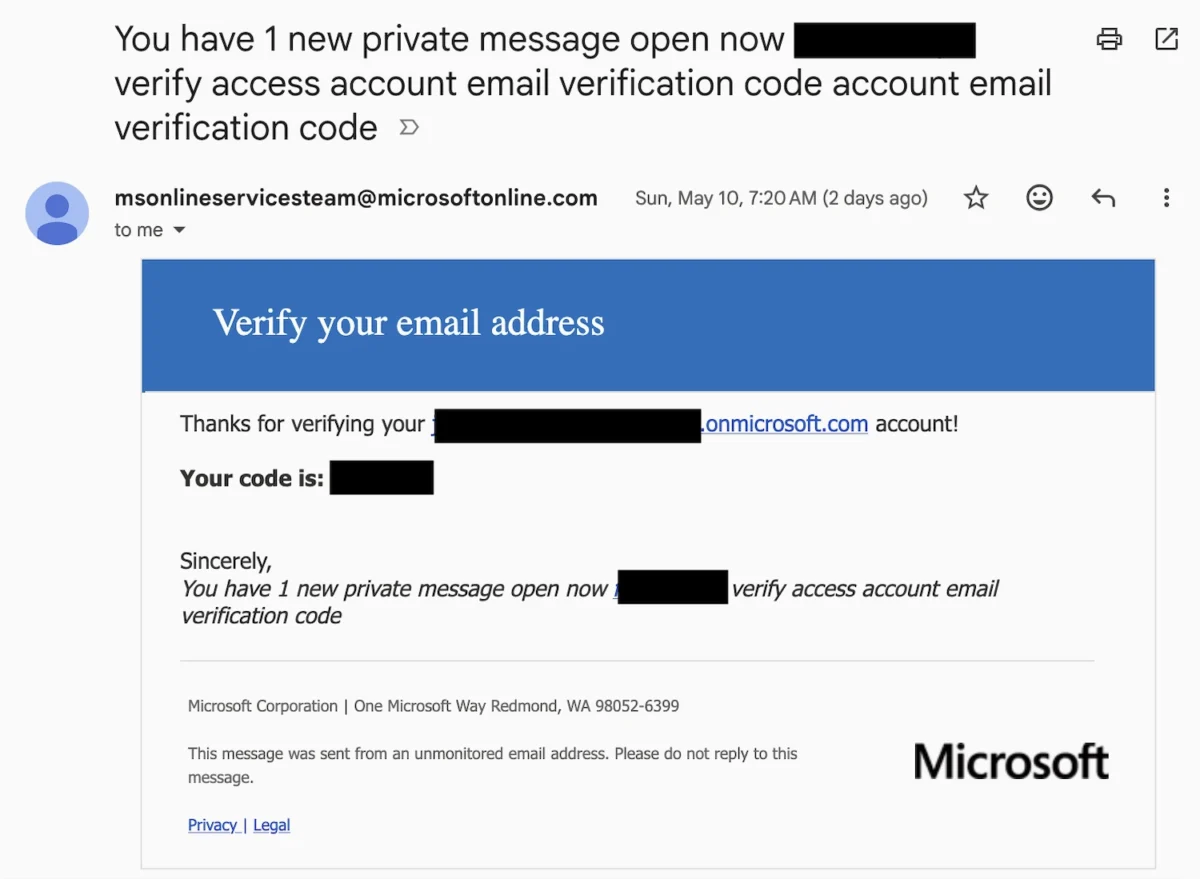
The digital security landscape is currently facing a significant challenge as scammers have successfully identified and exploited a vulnerability within Microsoft’s internal communication infrastructure. For several months, malicious actors have been leveraging a loophole that allows them to distribute fraudulent content through a legitimate Microsoft email address typically reserved for critical account notifications. The address in question, [email protected], is an official channel used by the technology giant to send two-factor authentication (2FA) codes, security alerts, and essential account management updates to its global user base. By hijacking this trusted vector, scammers are able to bypass traditional spam filters and security protocols that usually flag suspicious external domains, creating a high-risk environment for unsuspecting users.
The sophistication of this campaign lies not in the content of the emails, which has been described by security researchers as "crudely made," but in the authenticity of the sender’s metadata. Because the emails originate from a genuine Microsoft domain, they carry the digital signatures—such as SPF (Sender Policy Framework), DKIM (DomainKeys Identified Mail), and DMARC (Domain-based Message Authentication, Reporting, and Conformance)—that email service providers use to verify legitimate senders. This allows the scam messages to land directly in the primary inboxes of recipients, effectively "borrowing" the institutional trust that Microsoft has built with its users over decades.
The Mechanism of the Loophole
While the specific technical vulnerability has not been publicly detailed by Microsoft, preliminary investigations by security experts and reports from affected users suggest a flaw in the onboarding process for new Microsoft business or cloud accounts. Scammers appear to be creating new Microsoft accounts under the guise of legitimate business customers. Through these accounts, they gain access to automated notification systems intended for developers or enterprise administrators.
By manipulating these automated systems, the attackers can customize the content of outgoing notifications. Typically, automated systems are designed with rigid templates to prevent misuse; however, the current exploit allows scammers to insert malicious web links and deceptive subject lines into the body of the emails. These links often lead to phishing sites designed to harvest login credentials, credit card information, or distribute malware. Some of the subject lines observed in recent weeks mimic official warnings regarding fraudulent transactions or "private messages" waiting for the user, creating a sense of urgency that prompts the recipient to click through without scrutiny.
A Timeline of Growing Abuse
The abuse of Microsoft’s notification system is not an isolated incident but rather a persistent issue that has escalated throughout the first half of 2024. Security researchers have tracked the progression of these attacks, noting a significant uptick in volume during the second quarter of the year.
In early 2024, sporadic reports began appearing on cybersecurity forums regarding unusual spam originating from microsoftonline.com. By March, the frequency had increased, with multiple users reporting phishing attempts that appeared to be "signed" by Microsoft’s own security team. In May 2024, the issue gained broader visibility when Zack Whittaker, a prominent security editor, documented receiving several of these emails across various accounts. These emails contained blatant scam links but were verified as having originated from the official msonlineservicesteam address.
On Tuesday, the anti-spam non-profit organization The Spamhaus Project issued a public statement confirming that the abuse had been ongoing for several months. Spamhaus, which tracks malicious IP addresses and domains to help internet service providers block spam, noted that automated notification systems should never allow the level of customization currently being exploited by these scammers. Despite the non-profit notifying Microsoft of the ongoing abuse, a definitive solution has yet to be implemented.
Contextualizing the Threat: A Pattern of Infrastructure Abuse
The exploitation of Microsoft’s infrastructure is part of a broader, more alarming trend in the cybersecurity world known as "Living off the Land" (LotL) attacks. In these scenarios, attackers do not use their own malicious tools or domains, which are easily blocked; instead, they use the legitimate tools and services provided by the victim’s own environment.
This incident follows a series of similar breaches at other high-profile organizations. Earlier this year, the fintech firm Betterment confirmed a security breach where hackers gained access to a notification platform to send fraudulent messages to its users. These messages promoted a cryptocurrency scam, promising to triple the value of any digital assets sent to a specific wallet—a classic "doubling" scam that resulted in significant financial losses for those who trusted the official notification channel.
Similarly, in 2023, the domain registrar Namecheap saw its third-party email service compromised. Attackers used this access to send phishing emails that appeared to come directly from Namecheap, targeting users of MetaMask and DHL. These incidents highlight a critical weakness in modern digital ecosystems: the more we rely on centralized, automated notification systems, the more valuable those systems become as targets for exploitation.

Data and Industry Implications
The impact of brand impersonation is reflected in global cybercrime statistics. According to the Anti-Phishing Working Group (APWG), phishing attacks reached record highs in late 2023 and early 2024, with the financial and technology sectors being the most targeted. Brand impersonation accounts for nearly 45% of all phishing attacks, as it exploits the psychological tendency of users to trust established names.
The cost of these breaches extends beyond the immediate financial loss to victims. For a company like Microsoft, the persistence of such a loophole threatens the integrity of its security communications. If users begin to distrust emails from microsoftonline.com, they may ignore legitimate 2FA codes or security alerts, ironically making their accounts more vulnerable to traditional hacking methods.
Furthermore, the "deliverability" of these scam emails poses a challenge for other email providers like Google (Gmail) or Yahoo. Because the emails pass all authentication checks, these providers cannot easily block them without also blocking legitimate Microsoft alerts. This creates a systemic ripple effect where one company’s vulnerability degrades the security of the entire global email network.
Official Responses and Lack of Resolution
As of mid-2024, Microsoft has acknowledged inquiries regarding the abuse of its msonlineservicesteam address but has not provided a detailed public explanation or a timeline for a fix. A Microsoft spokesperson confirmed they were aware of the reports but declined to comment on the specific measures being taken to close the loophole.
The Spamhaus Project has been vocal in its criticism of the current state of automated notifications. "Automated notification systems should not allow this level of customization," the organization stated in a social media post. Experts suggest that the fix likely involves implementing stricter validation for the "From" field in automated headers and limiting the ability of new, unverified accounts to trigger global notification templates.
Other users on social media platforms like X (formerly Twitter) and Mastodon have reported that Microsoft is not the only company facing this issue. Similar exploits have been reported involving the notification systems of other major SaaS (Software as a Service) providers, suggesting that scammers have found a repeatable blueprint for bypassing email security filters by using "trusted" corporate infrastructure.
Analysis of Broader Security Implications
This ongoing exploit represents a shift in the cat-and-mouse game between cybercriminals and security professionals. For years, the primary advice given to users was to "check the sender’s address." This exploit renders that advice obsolete. When a scam email comes from the exact same address as a legitimate 2FA code, the burden of detection shifts entirely to the user’s ability to analyze the content and the destination of the links.
For organizations, this incident serves as a stark reminder that security is only as strong as its weakest automated process. The "loophole" in this case is likely a result of prioritizing user friction-reduction in the account creation process over rigorous security vetting. In the race to sign up new customers, tech giants often create "fast tracks" that can be weaponized by those with malicious intent.
Recommendations for Users and Administrators
In light of these developments, cybersecurity experts are urging a more cautious approach to all incoming communications, regardless of the sender’s address. Key recommendations include:
- Manual Navigation: Instead of clicking links in an email to resolve an account issue, users should manually type the company’s official URL into their browser and log in directly.
- Link Inspection: Hovering over a link (without clicking) on a desktop browser can reveal the actual destination URL. If the URL does not match the official domain of the company, it should be treated as a threat.
- Multi-Factor Authentication (MFA) Vigilance: Users should be wary of any email that asks them to "verify" their account or "re-enable" MFA through a link, as these are common tactics used to steal session tokens.
- Reporting: Users who receive these emails should report them as "Phishing" within their email client, which helps improve the machine-learning models used by providers to identify patterns of abuse.
As Microsoft works to address this vulnerability, the incident remains a potent example of the evolving nature of digital threats. The exploitation of trusted internal channels proves that in the modern era of cybersecurity, authenticity is no longer a guarantee of safety. The resolution of this issue will require a fundamental reassessment of how large-scale automated notification systems are secured against the very customers they are designed to serve.
