

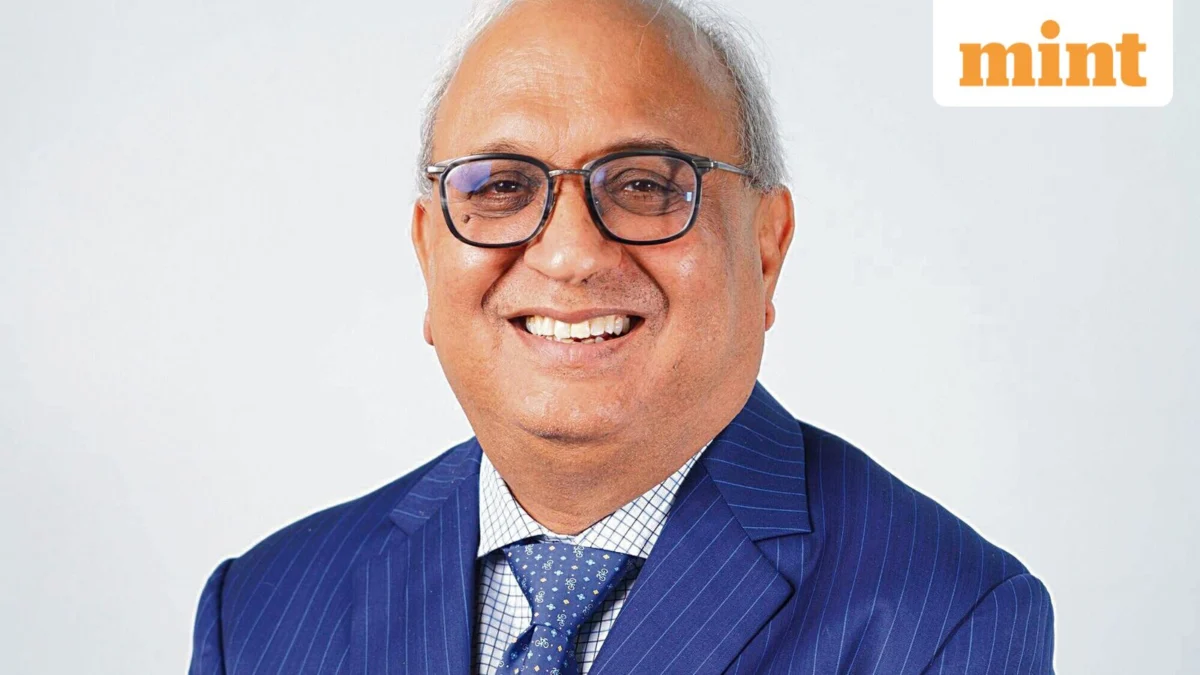
The intersection of domestic retail participation in equity markets and the stability of the Indian national currency has become a focal point of intense economic debate following a provocative analysis by the global brokerage firm Jefferies. The central point of contention involves the surge in Systematic Investment Plan (SIP) inflows, which have reached record heights, and their alleged role in facilitating a smoother exit for Foreign Institutional Investors (FIIs), thereby indirectly contributing to the depreciation of the Indian rupee. While Jefferies suggests that these domestic flows have provided a "cushion" that inadvertently allowed foreign capital to leave without immediate catastrophic market crashes, veteran fund manager Samir Arora, founder of Helios Capital, has stepped forward to offer a robust defense of the Indian retail investor. Arora argues that the narrative blaming SIPs for currency weakness is not only incomplete but ignores the far more damaging macroeconomic consequences that would have occurred had that capital been deployed elsewhere.
The debate arrives at a critical juncture for the Indian economy. In the first half of 2026, the Indian rupee has faced significant headwinds, depreciating nearly 7% against the U.S. dollar and breaching the psychologically important 96 mark. This performance has positioned the rupee among the weakest in the emerging market peer group, sparking a search for structural causes. While traditional factors like the U.S. Federal Reserve’s monetary policy and global oil prices remain relevant, the Jefferies note introduced a more nuanced internal dynamic: the idea that India’s domestic investment boom is providing the liquidity necessary for foreign investors to liquidate their holdings in an "expensive" market, ultimately leading to a net outflow of dollars.
The Jefferies Thesis: Capital Flows vs. Currency Stability
According to the Jefferies report, the primary driver behind the rupee’s recent decline is not necessarily a blowout in the current account deficit (CAD), which has remained relatively manageable, but rather a shift in the capital account. The brokerage highlighted that over the past 24 months, equity market-driven outflows have totaled approximately $78 billion. This massive divestment by foreign entities was largely absorbed by domestic institutional investors (DIIs), fueled by the relentless monthly contributions of millions of Indian households through SIPs.
The brokerage’s logic suggests that in a typical market cycle, a massive sell-off by FIIs would lead to a sharp correction in stock prices, which might eventually discourage further selling as valuations become more attractive. However, because domestic inflows remained so strong—reaching record levels of ₹38,503 crore in March 2026 and ₹38,410 crore in April 2026—stock prices remained relatively buoyant. This price stability, Jefferies argues, gave foreign investors an "easy exit route." As these investors sold their equity holdings and converted their rupee proceeds into dollars to repatriate funds, the constant demand for dollars exerted downward pressure on the rupee.
Furthermore, the report noted that tax incentives for equity investments, along with increased allocations from the Employees’ Provident Fund Organisation (EPFO) and the National Pension System (NPS), have created a structural bid for Indian equities. While this has protected the indices from a "bloodback," it has created a unique scenario where the domestic market’s strength facilitates the currency’s weakness by enabling large-scale capital repatriation.
Samir Arora’s Rebuttal: The "Alternative Use" Argument
Samir Arora has challenged this interpretation by urging critics to consider the counterfactual scenario. His argument centers on the premise that household savings are not static; if they were not flowing into SIPs, they would inevitably be directed toward other asset classes or consumption, most of which would have an even more detrimental impact on the rupee and the broader economy.
Arora outlined four primary alternatives for these savings. First, he noted that if Indian investors had lost faith in domestic equities, they might have sought to diversify globally. Investing in international markets would require converting rupees to dollars, which would directly contribute to currency depreciation—the very problem critics are concerned about. Second, he pointed to gold, a traditional favorite for Indian households. India is one of the world’s largest importers of gold, and a surge in gold demand is a well-documented drain on foreign exchange reserves and a major contributor to the current account deficit.
Third, Arora addressed the possibility of these funds being diverted toward discretionary consumption. He argued that excessive spending on imported electronics, high-end smartphones, or luxury dining does not build long-term national wealth in the same way that disciplined financial savings do. Finally, he compared SIP returns to traditional bank deposits. While bank deposits offer safety, their net-of-tax returns, often in the 4-5% range, have struggled to keep pace with inflation. Arora noted that even in volatile periods, SIPs have generally provided comparable or superior returns over the past two years, making them a more productive use of capital for the individual and the financial system.
The Role of Private Equity and the "New Age" Economy
A significant portion of the FII selling in recent years has come from the "block deal" market, where private equity (PE) firms and early investors in "new-age" tech companies have sought exits following successful Initial Public Offerings (IPOs). Arora defended these exits as a necessary part of a healthy financial ecosystem. He argued that preventing FIIs or PE investors from exiting would signal to the world that India is a difficult market to leave, which would drastically reduce the attractiveness of the country for future foreign direct investment (FDI).
In a more colloquial but poignant observation, Arora linked these capital flows to the modernization of the Indian urban experience. He noted that the capital provided by public markets—often funded by the very SIPs in question—has allowed new-age businesses to scale. These businesses, ranging from quick-commerce to home services, have fundamentally changed daily life. Arora remarked that without the growth of these companies, fueled by the exit-entry cycle of PE and retail investors, the convenience of modern urban living, such as app-based grocery delivery or home maintenance services, would not exist. This, he suggested, is a tangible economic benefit that outweighs the temporary volatility of the currency.
Statistical Context: The Surge of the Retail Investor
The scale of domestic participation in India is unprecedented in the country’s financial history. Data from the Association of Mutual Funds in India (AMFI) underscores this shift. The record inflow of ₹38,503 crore in March 2026 represents a massive leap from the levels seen just a few years prior, such as the ₹37,840 crore recorded in October 2024. This trend signifies a deep-seated "financialization" of Indian household savings, moving away from "dead" assets like physical gold and real estate into productive market capital.
However, this financialization has coincided with a period of significant global volatility. The 7% depreciation of the rupee in 2026 can be attributed to a "perfect storm" of factors:
- Interest Rate Differentials: While the Reserve Bank of India (RBI) has maintained a cautious stance, the U.S. Federal Reserve’s "higher for longer" interest rate policy has kept the dollar index (DXY) strong, drawing capital back to the United States.
- Geopolitical Tensions: Ongoing concerns regarding the Strait of Hormuz and broader Middle Eastern stability have kept energy prices elevated. As a major oil importer, India’s trade balance is highly sensitive to these fluctuations.
- Valuation Gaps: Indian equity markets have traded at a significant premium compared to other emerging markets like China or Brazil. This has prompted FIIs to "rebalance" their portfolios, selling high in India to buy undervalued assets elsewhere.
Analysis of Implications: Stability vs. Growth
The debate between Jefferies and Arora highlights a fundamental tension in emerging market economics: the balance between market stability and currency value. From one perspective, the "SIP revolution" has been a resounding success. It has democratized wealth creation and provided the Indian market with a level of resilience that was absent during previous crises, such as the 2013 "Taper Tantrum." In those days, a fraction of the current FII selling would have sent the Nifty and Sensex into a tailspin.
However, the Jefferies report serves as a reminder that no economy is an island. The very mechanism that provides domestic stability—consistent retail buying—can create a "valuation bubble" if not matched by corporate earnings growth. If FIIs perceive that domestic flows are keeping prices artificially high, they will continue to use the liquidity to exit, putting perpetual pressure on the rupee.
The broader implication for the Reserve Bank of India is a complex policy environment. The RBI must manage the rupee’s decline to prevent imported inflation while ensuring that it does not burn through foreign exchange reserves too quickly in a futile attempt to fight global trends. The central bank’s task is made easier by the fact that the rupee’s decline has been relatively orderly, rather than a panicked crash, thanks in part to the steadying hand of domestic institutional buying.
Looking Ahead: Potential for Recovery
Despite the current pressure, the outlook is not entirely bleak. Jefferies pointed out that historical precedents suggest a recovery could be on the horizon. Previous episodes of sharp rupee depreciation have often been followed by a resurgence in foreign portfolio investment (FPI) flows within the following 12 months. Several factors could trigger this reversal:
- Valuation Correction: If Indian markets undergo a healthy correction or if earnings growth catches up to prices, the "expensive" tag may disappear, attracting FIIs back.
- Global Shifts: An unwinding of the "artificial intelligence trade," which has concentrated capital in U.S. tech stocks, could lead to a redistribution of funds toward emerging markets.
- Geopolitical Easing: Any resolution or stabilization in global shipping routes and energy markets would provide immediate relief to the rupee.
In conclusion, while the debate over the role of SIPs in currency depreciation continues, the consensus among domestic market participants like Samir Arora is that the rise of the retail investor is a structural positive for India. The "easy exit" for foreign investors may be a side effect, but the alternative—a market entirely dependent on the whims of global capital—would likely result in far greater instability. As the Indian economy matures, the interaction between domestic savings and global capital flows will remain a critical area for policymakers and investors alike to navigate.
