

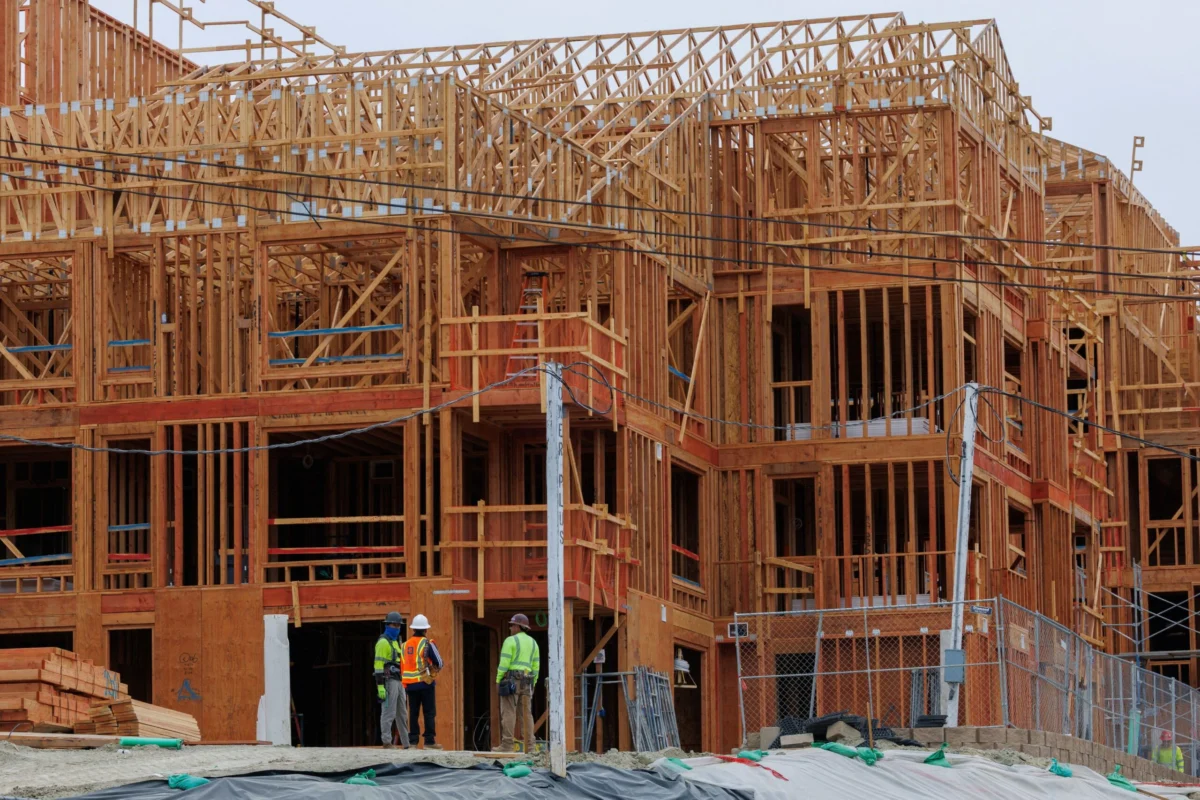
America’s housing industry stands at a critical juncture, grappling with a severe housing deficit and an escalating shortage of skilled labor. This dual challenge, impacting housing affordability and economic stability, has forced the sector to explore innovative solutions, with robotics and automation emerging as a promising, albeit nuanced, answer. Far from the popular vision of humanoid robots replacing human workers on construction sites, the most significant gains are currently being realized through narrower, highly specialized applications: machines designed to prevent errors, optimize coordination between trades, automate repetitive tasks, and facilitate the shift of more construction processes into controlled factory environments.
The American Housing Deficit: A Deepening Crisis
The United States faces a profound housing shortage, estimated by the National Association of Home Builders (NAHB) in its 2026 Housing Outlook to be roughly 1.2 million homes. This deficit is not merely a statistical anomaly but a societal and economic crisis with far-reaching implications. The roots of this problem extend back over a decade, with underbuilding following the 2008 financial crisis exacerbating an already growing demand fueled by population growth and changing household formations. High interest rates, coupled with the scarcity of available properties, have pushed homeownership out of reach for millions of Americans and driven rental costs to unprecedented levels, disproportionately affecting lower and middle-income families.
The ripple effects of this shortage are felt across the economy. Limited housing supply contributes to inflation, as housing costs represent a significant portion of consumer spending. It also constrains labor mobility, as individuals and families are often unable to relocate for better job opportunities due to a lack of affordable housing in new areas. This stagnation in turn impacts economic dynamism and growth. The persistent lack of inventory means that even a slight increase in demand can trigger significant price hikes, creating a volatile market that further deters potential homebuyers and exacerbates the affordability crisis.
The Shrinking Workforce: A Critical Bottleneck
Compounding the supply problem is a severe and persistent labor shortage within the construction sector. At the close of 2025, nearly 300,000 construction jobs remained unfilled across the nation. This figure represents a significant bottleneck for an industry tasked with closing the housing gap. The NAHB further estimates that the industry needs to attract approximately 740,000 new workers annually to account for growth, retirements, and individuals leaving the field. This required influx of talent is proving increasingly difficult to achieve.
The demographics of the construction workforce paint a stark picture. A significant portion of skilled tradespeople are nearing retirement age, and there has been a noticeable decline in younger generations entering these professions. Factors contributing to this trend include a societal emphasis on four-year college degrees over vocational training, the physically demanding nature of construction work, and a perception of the industry as less technologically advanced or appealing. The lack of available labor not only slows down projects but also drives up wages, further contributing to the cost of new homes. According to NAHB chief economist Robert Dietz, labor shortages alone cost homebuilders about $11 billion annually through increased costs and lost production, adding roughly two months to the average construction timeline. This financial burden and extended project duration directly translate into higher prices for consumers and fewer homes being built overall.
Productivity Plateau: A Decades-Old Challenge
Beyond the immediate issues of supply and labor, the residential construction industry has long grappled with a fundamental productivity problem. Since 1993, productivity in residential construction has increased by only about 16%, a stark contrast to gains of more than 50% observed across the overall economy during the same period. This lagging productivity is a complex issue, often attributed to the highly fragmented nature of the industry, reliance on manual processes, a lack of standardization, and susceptibility to external factors like weather.
Unlike manufacturing, where processes can be highly standardized and optimized, each construction project often presents unique challenges—different designs, varying soil conditions, diverse architectural specifications, and a multitude of subcontractors. This inherent variability makes it difficult to implement repetitive, efficiency-boosting measures common in other sectors. The fragmented supply chain, often involving numerous material suppliers and specialty contractors, further complicates coordination and real-time optimization. This entrenched low productivity means that even with a full workforce, the industry would struggle to meet the escalating housing demand efficiently, underscoring the necessity for a transformative shift in how homes are built.
Robotics in Construction: Beyond the Humanoid Hype
While the potential of robotics is clear, the current reality diverges significantly from popular imagination. Robert Dietz of the NAHB, when asked about robotics meaningfully improving homebuilding productivity, candidly stated, "It’s too early." He emphasized that there is "no single, simple, scalable solution," pointing to a confluence of factors including labor, regulatory costs, land availability, supply chains, and financing as additional constraints on housing production. The current impact of robotics, while promising on individual projects, remains too narrow and limited in scale to materially reduce the national housing shortage.
Industry experts caution against envisioning humanoid robots performing complex tasks like hanging drywall or painting on dynamic job sites. Patrick Murphy, Chief Investment Officer of Florida-based Coastal Construction, notes that the popular image of construction robotics is well ahead of reality. The inherent variability of construction sites—where the environment literally transforms daily—poses a significant challenge for general-purpose robots designed for fixed factory settings. Tessa Lau, founder of Dusty Robotics, who transitioned from general robotics to construction, highlights this distinction. Factories are relatively easy to automate because robots perform the same task repeatedly in a stable environment. Construction, conversely, demands adaptability and problem-solving capabilities that current robotics largely lack. Every project introduces new variables, from design specifics to material choices and owner requirements, making uniform, repetitive automation incredibly difficult to implement across diverse sites.
Precision and Efficiency: Where Automation Excels Today

Despite the challenges, measurable gains are emerging in highly specific, well-structured tasks within construction. Vineet Kamat, a University of Michigan professor specializing in construction robotics, points to layout, factory automation, and task-specific applications such as drilling, fastening, and material handling as areas showing the clearest results. The primary benefits in these applications are not full labor replacement but rather improved precision, a significant reduction in errors, and greater throughput. The key question, Kamat emphasizes, is not merely whether a robot can perform a task in a pilot program, but whether it can do so reliably across varied conditions with a positive business case.
One of the most compelling examples of this targeted automation comes from Dusty Robotics. Founder Tessa Lau developed the FieldPrinter after experiencing "information mistakes" during her own home remodel, where critical details were lost between architectural plans and the workers on site. The FieldPrinter addresses this gap by taking digital building plans and precisely printing them directly onto the floor. It can mark walls, plumbing, electrical, and mechanical locations, along with text, images, and QR codes, ensuring all trades work from the same coordinated instructions. This standardization, Lau argues, is the true problem robotics should solve, not merely labor replacement. Dusty Robotics claims one operator can lay out 10,000 to 15,000 square feet a day, up to 10 times faster than traditional manual methods. Global construction giant Skanska reported a 75% reduction in rework and a 35% reduction in its layout schedule after implementing Dusty’s multi-trade layout system.
Further illustrating the combined power of automation and prefabrication, Aaron Love, President and CEO of Oh Snap Layout, uses Dusty’s technology in Southern California homebuilding alongside prefabricated wall panels and pre-cut materials. While replacing a chalk-line snapping worker with a robot offers some benefit, Love explains that the larger gains come from the holistic coordination. When framers, electricians, plumbers, and HVAC contractors all work from the same precisely printed layout, duplicated work is minimized, and back-and-forth communication between trades is significantly reduced. This integrated approach, exemplified by systems like RapidShell (offered by Reliable Wholesale Lumber, combining Dusty’s layout with pre-cut material packages and prefabricated components), has cut shell construction times from approximately 21 days to just 11 to 12 days. However, Love notes that the industry is still in a "prove-it phase," gathering data to quantify the full spectrum of savings across the entire construction process, as it requires extensive coordination and buy-in from multiple stakeholders.
The Factory Floor: Japan’s Blueprint for Modern Homebuilding
Perhaps the most significant near-term gains for the U.S. industry can be glimpsed in Japan, a global leader in residential construction robotics. Driven by an aging workforce and a rapidly shrinking labor pool—demographic pressures even more acute than in the U.S.—Japan has adopted factory-based construction out of necessity. Treating homebuilding like an advanced automotive assembly line, Japanese developers like Sekisui Heim are constructing as much as 80% of a home entirely by robots within highly controlled factory environments, with final assembly occurring on site. These plants utilize advanced automation for welding, structural framing, and material handling.
Kawasaki Robotics, a supplier of equipment to Sekisui Heim, reported that the use of industrial robots at one factory increased production from 55 to 65 housing units per day while simultaneously reducing the number of operators by 20. Sekisui Heim estimates that this substantial investment in robotics will pay for itself in approximately three years, demonstrating a clear business case for this approach. This "less sexy" but highly effective factory automation, as Murphy describes it, represents a significant breakthrough. He highlights examples such as factory-built wall systems and prefabricated bathroom, kitchen, and laundry pods, which can be manufactured with precision and efficiency off-site and then quickly integrated into on-site construction.
Murphy, who is also managing director of Renco USA, a composite structural building system with components manufactured at an automated facility in Palm Beach County, Florida, states that their facility can produce enough material for roughly 7,000 homes annually. Renco structures, he notes, can be erected in about one-sixth the time required for traditional wood, concrete, or metal framing, leading to total building schedule reductions of roughly 30% to 40%. The benefits extend beyond direct construction time: if factory-built components (e.g., a room designed to be 10 feet by 10 feet) consistently meet exact dimensions, then windows, doors, cabinets, and tiles can be fabricated in advance with perfect fit. "Time is money," Murphy emphasizes, explaining that shorter schedules translate to lower financing costs and reduced expenses associated with maintaining an operational job site. However, the efficiency of prefabrication hinges on design stability; changes in dimensions, fixtures, or finishes require manufacturers to redesign and reprogram systems, eroding the benefits of repetition. This makes tract housing, multifamily developments, and other projects with repeated designs prime candidates for benefiting from factory-based automation at scale.
Economic and Logistical Hurdles to Widespread Adoption
While the potential is clear, the path to widespread adoption of construction robotics and automation in the U.S. is paved with significant economic and logistical hurdles. As Robert Dietz pointed out, labor is just one of many constraints. Regulatory costs, land availability, supply chain inefficiencies, and access to financing also weigh heavily on housing production. The substantial upfront investment required for advanced robotics and factory automation can be a barrier for many builders, particularly smaller firms.
Integrating new technologies with existing, often traditional, construction methods and a diverse network of subcontractors also presents a challenge. The industry’s fragmented nature means that achieving the full benefits of systems like robotic layout or prefabrication requires significant coordination and buy-in across multiple trades—a shift that necessitates changes in established workflows and potentially new training for workers. Furthermore, demonstrating a clear, quantifiable return on investment (ROI) across the entire construction process is still an ongoing effort, as highlighted by Aaron Love’s "prove-it phase" assessment. Builders need robust data to justify the transition from conventional practices to new, technology-driven approaches.
Looking Ahead: Incremental Gains and Evolving Roles
Vineet Kamat anticipates that robotics will increase housing output over the next five to ten years, but through targeted productivity gains rather than a wholesale transformation of the industry. He predicts that factory automation, prefabrication, and robotic layout will likely advance fastest, while job-site robots will spread initially in repetitive, physically demanding, or precision-sensitive tasks. This suggests a future where human workers and advanced machines collaborate, each leveraging their unique strengths.
Even as automation advances, the need for skilled construction workers is not expected to disappear. Instead, their roles are likely to evolve, requiring new skills in operating, programming, and maintaining robotic systems, as well as managing complex integrated construction processes. Patrick Murphy firmly believes that "the blue-collar jobs are going to have probably the best decade they’ve ever had," emphasizing that skilled welders, electricians, and plumbers—those who are "where the rubber meets the road in construction"—will remain indispensable for the foreseeable future. Their expertise will be crucial in tasks requiring judgment, adaptability, and intricate problem-solving that remain beyond the current capabilities of even the most advanced construction robots.
In conclusion, America’s housing crisis and the chronic labor shortage in construction demand innovative solutions. Robotics and automation are stepping up to the plate, not as a silver bullet for immediate, wholesale replacement of human labor, but as a strategic enabler of precision, efficiency, and standardization. From robotic layout systems that eliminate costly errors to highly automated factory production lines mirroring automotive assembly, these technologies are incrementally, yet meaningfully, reshaping how homes are built. The journey ahead involves overcoming significant investment, logistical, and cultural hurdles, but the promise of a more productive, efficient, and ultimately more affordable housing industry powered by smart technology is a compelling vision for the future.
