

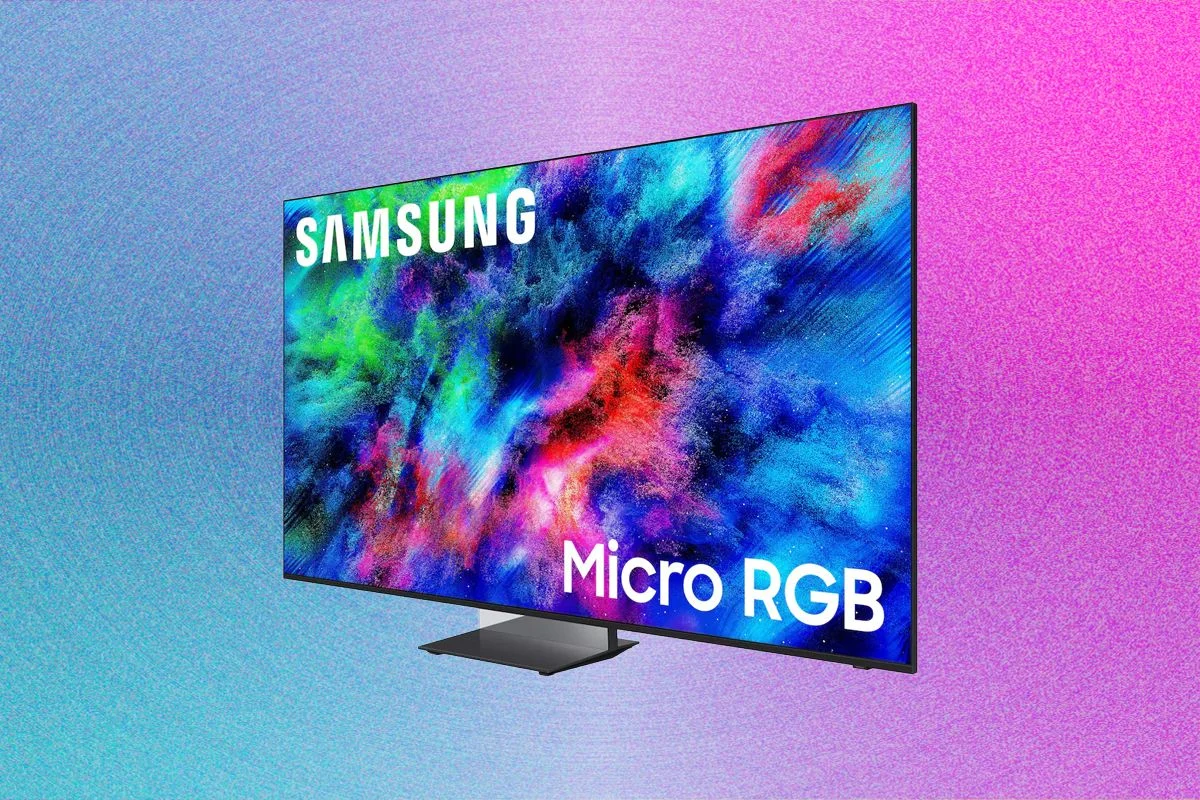
The promise of next-generation display technology often carries the weight of immense consumer expectation, particularly when a market leader like Samsung Electronics introduces a premium model aimed at redefining the home cinema experience. The Samsung Micro RGB R95H arrives as a flagship contender in the burgeoning micro-pixel category, a segment designed to bridge the gap between the high-contrast allure of OLED and the peak brightness of traditional LED-backlit LCDs. However, as the television industry pivots toward increasingly sophisticated light-emitting diode structures, the R95H serves as a case study in the complexities of balancing aggressive anti-glare measures with the vibrant color reproduction that enthusiasts demand from a $3,200 investment.
The Evolution of Micro RGB Technology
To understand the positioning of the Samsung R95H, one must first examine the shift from standard Mini-LED to Micro RGB architecture. Traditional LED televisions rely on a backlight—often white or blue—filtered through a liquid crystal layer and color filters. Micro RGB technology represents a significant leap forward by utilizing dedicated red, green, and blue sub-pixels. This approach is intended to provide a more direct and pure light source, theoretically resulting in a wider color gamut and superior contrast ratios without the "blooming" artifacts often associated with less precise local dimming zones.
Samsung has long been a pioneer in this space, having transitioned from its successful QLED (Quantum Dot LED) branding to more experimental and high-end iterations like "The Wall." The R95H is part of an effort to democratize this high-end tech into consumer-friendly sizes, specifically the 65-inch and 75-inch formats. Despite these innovations, the R95H faces stiff competition from rivals such as LG’s Micro RGB Evo and Hisense’s UR9 series, both of which have set high benchmarks for color accuracy and user customization.

Physical Design and Hardware Architecture
The R95H distinguishes itself immediately through a thoughtful approach to industrial design and user installation. Samsung has opted for a centralized pedestal stand rather than the "duck-feet" style legs found on many modern large-format displays. This design choice is functionally significant; it allows the 65-inch unit to sit securely on narrower furniture, such as antique hutches or compact media consoles, even if the screen edges overhang the base.
The installation process is remarkably streamlined. The pedestal snaps into the chassis in approximately ten seconds, requiring no screws or specialized tools. This focus on "out-of-the-box" readiness extends to the connectivity suite. The R95H features four HDMI ports, including a dedicated gaming port and an HDMI eARC (Enhanced Audio Return Channel) port for seamless integration with high-fidelity soundbars or AV receivers.
Furthermore, the television supports Wi-Fi 6E, a standard that offers lower latency and higher throughput than the more common Wi-Fi 6. For users seeking a minimalist aesthetic, the R95H is compatible with Samsung’s Wireless One Connect box. This external hub can be placed up to 30 feet away, transmitting video and audio signals wirelessly to the screen, thereby eliminating the "cable nest" typically found behind wall-mounted units.
Software Integration and User Interface
While the hardware is robust, the software experience on the R95H presents a more polarized narrative. The television operates on Samsung’s proprietary Tizen OS. While Tizen has a long history, some industry analysts and users have noted that it feels less intuitive than the Google TV interface adopted by competitors like Sony and Hisense.

Initial setup requires the use of the Samsung SmartThings app and a mandatory two-factor authentication process, which may feel cumbersome to users expecting a simple plug-and-play experience. During early testing phases, technical inconsistencies were noted; for instance, the native Netflix application failed to install correctly on some units, prompting an internal investigation by Samsung’s software engineering teams. Similar issues were reported regarding Google Cast functionality, though Apple AirPlay remained stable.
Conversely, the R95H remote control has received praise for its minimalist philosophy. Eschewing the button-heavy designs of LG and TCL, Samsung’s remote features a layout reminiscent of the Apple TV 4K controller. It includes dedicated buttons for AI features and voice assistants, allowing users to toggle between Samsung’s Bixby and Amazon’s Alexa. While the voice prompt for Alexa proved occasionally unresponsive in quiet environments, the physical mic button provided a reliable backup for searching through content libraries.
Performance Benchmarks and the Anti-Glare Trade-off
The core of the R95H’s value proposition lies in its visual performance, yet this is where the device faces its most significant scrutiny. In standardized benchmarks, such as the Spears & Munsil tests, the R95H met the BT.2020 color gamut specifications—a requirement for high-end HDR content. However, raw data does not always translate to perceived realism.
A primary point of contention is Samsung’s aggressive anti-glare technology. While this feature is highly effective at reducing reflections in bright living rooms, it appears to have a dampening effect on the display’s inherent vibrancy. In side-by-side comparisons with the LG Micro RGB Evo, the Samsung R95H struggled to differentiate subtle skin tones, often rendering different complexions with a uniform, flattened appearance.

The "Dynamic" mode, intended to showcase the screen’s peak capabilities, resulted in noticeable color bleeding and blooming in high-contrast scenes. Meanwhile, the "Filmmaker" mode—designed to present movies exactly as the director intended—often felt overly dim, losing shadow detail in moody thrillers. This lack of a "sweet spot" in picture settings suggests that the R95H’s image processing may not be as sophisticated as the hardware’s potential suggests.
Content Testing: Movies, Gaming, and Sports
To evaluate the R95H in real-world scenarios, various media formats were tested:
Cinematic Performance
Dark, atmospheric films like The Creator and Dune revealed the limitations of the R95H’s contrast management. Shadow details were frequently "crushed," turning deep blacks into muddy grays. In Disney+’s Hoppers, a film characterized by bright, saturated palettes, the intended "shocking blue" of animated birds appeared drab. The anti-glare coating, while useful for daytime viewing, seemed to strip the "pop" out of high-dynamic-range (HDR) highlights.
Gaming Excellence
The R95H finds its redemption in the gaming sector. Supporting a 120Hz refresh rate for consoles like the Xbox Series X and up to 165Hz for PC gaming via its dedicated port, the television offers exceptional response times and low latency. Titles such as Subnautica 2 and Forza Horizon 6 looked vivid and fluid. Interestingly, the anti-glare tech that hindered movies actually benefited racing simulations, lending a sense of "gritty realism" to car models and asphalt textures, making them look less like digital assets and more like real-world objects.

AI Soccer Mode Pro
Perhaps the most impressive software feature is the AI Soccer Mode Pro. Samsung has developed a specific algorithm to detect and enhance sports broadcasts. During World Cup testing, this mode corrected the "grayed-out" look prevalent in other settings, delivering phenomenal green grass saturation and improved audio clarity for crowd noise and commentary.
Market Context and Competitive Landscape
The R95H enters a market where price-to-performance ratios are under intense pressure. At $3,200 for the 65-inch model, it is positioned as a premium alternative to OLED. However, the LG Micro RGB Evo, though starting at a larger 75-inch size for $4,500, offers a level of picture-quality customization and "visual boom" that the Samsung currently lacks.
Furthermore, the rise of budget-friendly giants like Hisense and TCL, who are integrating similar Mini-LED and RGB technologies at lower price points, puts Samsung in a difficult position. The R95H must justify its premium through brand ecosystem and design, but for the discerning videophile, the lack of precise color control remains a significant hurdle.
Industry Implications and Future Outlook
The release of the R95H highlights a broader trend in the display industry: the "AI-ification" of the viewing experience. Samsung is leaning heavily into AI-driven modes (like the Soccer Mode) to compensate for hardware-based limitations or to simplify the user experience. While this benefits the casual viewer who does not want to navigate "Expert Settings," it may alienate the enthusiast market that expects a flagship Micro RGB set to outperform OLED in every metric.

Samsung’s engineering team is reportedly aware of the software bugs and the feedback regarding the anti-glare impact. Future firmware updates may refine the Tizen OS experience and recalibrate the "Dynamic" and "Standard" modes to better utilize the Micro RGB sub-pixels.
Final Analysis
The Samsung Micro RGB R95H is a high-quality television that excels in specific niches—most notably gaming and live sports. Its physical design is a triumph of ergonomics, and its connectivity features like Wi-Fi 6E and the Wireless One Connect box point toward a cable-free future.
However, as a showcase for Micro RGB technology, it feels incomplete. The very feature meant to protect the image—the anti-glare coating—ultimately acts as a veil that prevents the colors from reaching their full, "mind-blowing" potential. For consumers seeking the absolute pinnacle of cinematic realism, the R95H may require further evolution. For those prioritizing a bright-room gaming hub with the easiest setup in the industry, it remains a formidable, if expensive, contender.
