

The residential pool maintenance industry is undergoing a significant technological transformation as homeowners increasingly pivot from manual labor and legacy hydraulic systems toward autonomous, battery-powered robotics. For decades, pool owners relied on pressure-side or suction-side cleaners—clunky devices tethered to the pool’s filtration pump by long, unsightly hoses. However, the 2026 market landscape is now dominated by intelligent, cordless robots equipped with artificial intelligence, ultrasonic sensors, and high-capacity lithium-ion batteries. These advancements represent more than just convenience; they signify a shift toward more sustainable, efficient, and thorough water management solutions that reduce the strain on primary pool equipment and lower long-term maintenance costs.
The Evolution of Pool Cleaning Technology: A Brief Chronology
To understand the current state of robotic pool cleaners, one must look at the trajectory of the industry over the last four decades. In the 1980s and 1990s, the "pressure-side" cleaner was the gold standard. These units used water pressure from a dedicated booster pump to move around the pool and venturi suction to collect debris. While effective, they required the pool’s main pump to run at high speeds, consuming significant electricity.
The early 2000s saw the rise of corded electronic cleaners. These were independent of the pool’s plumbing but required a waterproof "floating cable" connected to a power supply on the deck. While an improvement, the cables were prone to tangling and limited the robot’s reach. By the early 2020s, the industry began the transition to the current "cordless era." Modern units now utilize onboard batteries and wireless charging docks, allowing the pool to remain an obstacle-free environment for swimmers while the robot is in operation.

High-Performance Flagships: The Beatbot AquaSense 2 Ultra
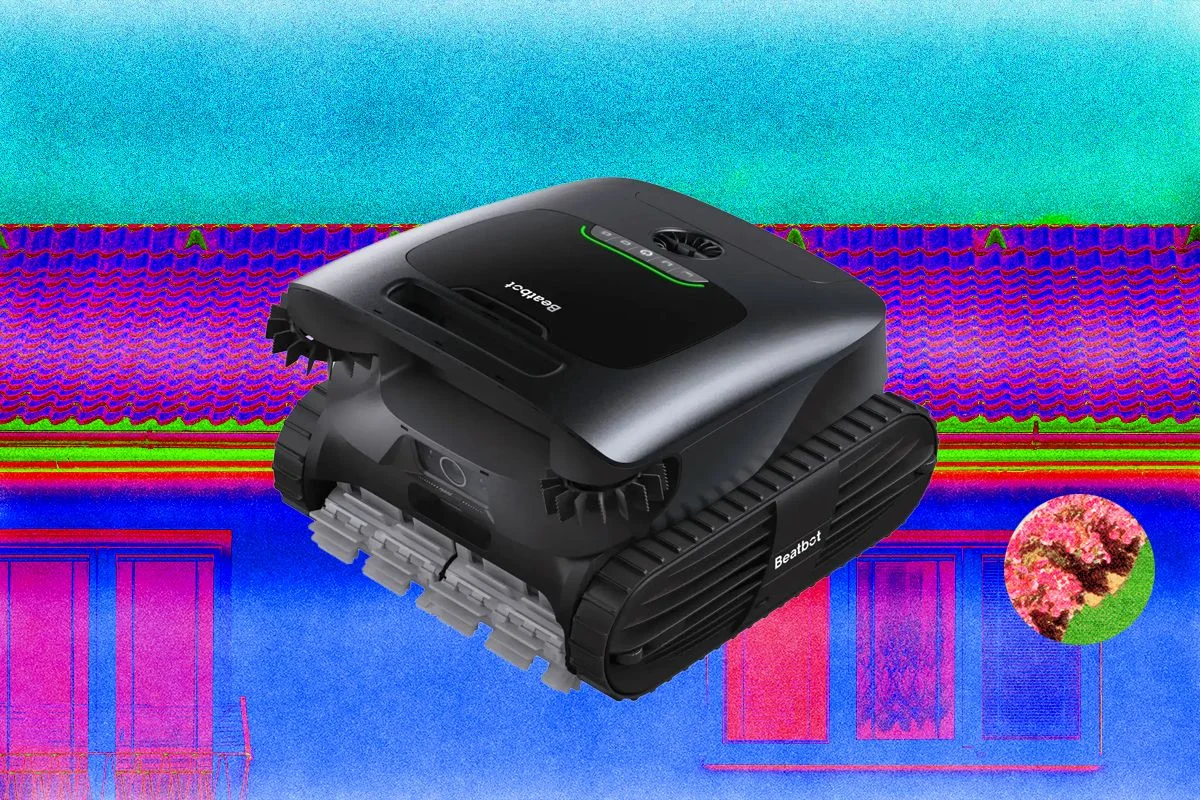
At the pinnacle of the current market stands the Beatbot AquaSense 2 Ultra. This model represents the high-end integration of AI and mechanical engineering, though it carries a premium price tag of approximately $3,000. Industry data indicates that the AquaSense 2 Ultra is designed for comprehensive "five-point" cleaning: floors, walls, waterlines, surface skimming, and water clarification.
The unit is powered by a robust battery capable of providing up to six hours of continuous operation. One of its standout features is AI-powered debris detection, which allows the robot to identify and target specific areas of high contamination rather than following a purely random or pre-programmed path. Furthermore, the robot’s ability to float to the surface upon completion of a cycle addresses a common pain point in the industry—the need for manual retrieval using a hook and pole. However, this level of power comes with physical trade-offs; the unit weighs 29 pounds, making it a heavy lift for some users when removing it from the water.
Battery Endurance and Longevity: The iGarden M1-AI Series
For homeowners who prefer a "set it and forget it" approach, the iGarden M1-AI series has emerged as a leader in battery endurance. While many standard robots require recharging after every two to three hours of use, the iGarden M1-AI 90 features a massive 12,500 mAh battery.
Data from field tests suggests that this unit can operate for up to nine hours in "floor-only" mode. This allows the robot to remain in the pool for a week or more, running on a scheduled basis before requiring a recharge. The M1-AI series also utilizes a dual-mode cleaning strategy: it first maps the pool using an S-shaped path to ensure total coverage, then activates onboard cameras and AI algorithms to "hunt" for any remaining debris. This methodical approach ensures a higher capture rate for fine particles that traditional robots might bypass.

Market Disruption: The Rise of Budget-Friendly Intelligence
The democratization of robotic technology has led to a surge in high-quality entry-level models, most notably the Dreame Z1 Pro and the base Beatbot AquaSense 2. Historically, pool robots priced under $800 were often underpowered or lacked the sensors necessary to navigate complex pool shapes.
The Dreame Z1 Pro has challenged this trend. Originally launched at a much higher price point, it has recently seen aggressive price cuts, often retailing for around $499. Despite the lower cost, it features magnetic charging to prevent water ingress at the charging port and an effective mobile app that provides a graphical map of the pool’s cleaning progress. Similarly, the Beatbot AquaSense 2, now priced at approximately $799, offers wireless charging and waterline parking—features previously reserved for units costing twice as much. This downward pressure on pricing is expected to increase the adoption rate of robotic cleaners among middle-market homeowners through 2027.
Surface Management: Robotic Skimmers and Water Clarification
A growing sub-sector of the market focuses on the pool’s surface. While floor cleaners handle sunken debris, surface skimmers like the Beatbot iSkim Ultra and the Bublue Vortex V5 address leaves and pollen before they have a chance to sink and decay.
The iSkim Ultra, priced at $699, utilizes solar power to provide nearly indefinite runtime during summer months. It is distinguished from "dumb" skimmers by its front-mounted sensors, which prevent it from colliding with pool walls, thereby protecting both the unit and the pool’s tile or liner. Another innovative feature appearing in 2026 is the integration of water clarification systems. The AquaSense 2 Pro, for instance, includes a subsystem that dispenses clarifying solution while cleaning, which helps clump fine particles together so the filter can more easily trap them, resulting in "crystal clear" water.

Industry Safety and Standards: The Lithium-Ion Debate
The shift to battery power has not been without controversy. As with electric vehicles and laptops, the use of high-capacity lithium-ion batteries in a water environment has raised safety concerns. There have been isolated reports of thermal runaway events involving pool robots, leading some "pool gurus" to remain staunch advocates for corded models.
In response, manufacturers have implemented multi-layered safety protocols. Modern batteries are housed in hermetically sealed, pressure-tested compartments. Furthermore, many high-end robots now feature "smart charging" that monitors cell temperature and voltage in real-time. From a journalistic perspective, while the risk of fire is non-zero, it is statistically comparable to other household lithium-powered electronics. The market’s overwhelming preference for cordless convenience suggests that consumers view the benefits of a "hose-free" deck as outweighing the perceived risks.
Comparative Data and Model Specifications
To provide a clearer picture of the 2026 market, the following data highlights the specifications of the leading models currently available:
- Beatbot AquaSense 2 Ultra: $3,000 | 6-hour battery | AI Debris Detection | Floor, Wall, Waterline, Surface, Clarification.
- iGarden M1-AI 90: $1,399 (on sale) | 9-hour battery | 12,500 mAh | Visual AI Mapping.
- Dreame Z1 Pro: $499 | Budget leader | Magnetic charging | App-based mapping.
- Beatbot Sora 70: $1,499 | Mid-range | Focus on wall and floor scrubbing.
- Aiper Scuba V3: $1,400 | Advanced computer vision | Efficient navigation but shorter battery life.
Impact on Professional Pool Services
The rise of advanced robotics is beginning to change the economic model of professional pool service. Traditionally, homeowners paid monthly fees for a "pool guy" to visit once a week to vacuum and balance chemicals. With robots now capable of daily, thorough cleaning, the need for professional vacuuming has diminished.

Industry analysts suggest that professional services are pivoting toward "chemical-only" or "equipment maintenance" plans. By allowing a robot to handle the daily debris removal, the professional technician can focus on complex tasks like water chemistry, pump repairs, and filter deep-cleans. This hybrid approach—DIY automation paired with professional chemical oversight—is becoming the standard for the modern luxury home.
Future Implications: The Autonomous Backyard
Looking forward, the integration of pool robots into the broader "smart home" ecosystem is inevitable. We are already seeing the first generation of self-cleaning robots, such as the Beatbot AquaSense X, which pairs with a base station (the AstroRinse) for automatic debris disposal and charging.
As solar-powered skimmers and AI-driven floor cleaners become more interconnected, the "autonomous backyard" is moving from a futuristic concept to a practical reality. For the consumer, this means less time spent on "cruel" labor in the heat and more time enjoying the primary investment: the pool itself. While the initial costs remain high for premium models, the trajectory of the market suggests that high-tech, effortless pool maintenance is no longer a luxury, but an expected standard of modern homeownership.
