

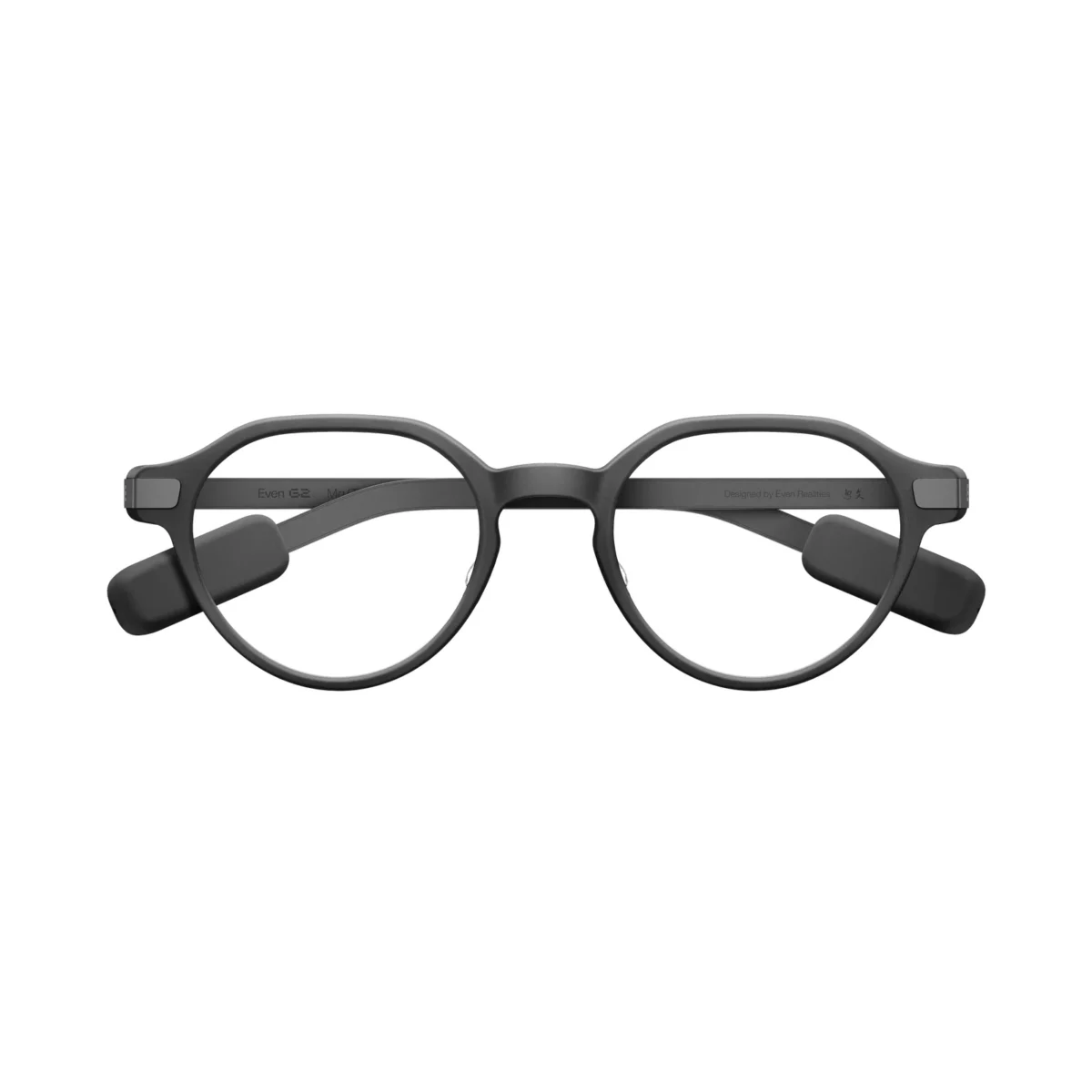
The consumer electronics industry is currently witnessing a pivotal shift as hardware manufacturers move beyond the smartphone to explore the next generation of personal interfaces. Even Realities, a rising player in the augmented reality space, has positioned its G2 smart glasses as a specialized tool for professionals, prioritizing productivity and privacy over the multimedia-heavy approach favored by industry giants like Meta and Snap. By utilizing a high-brightness monochrome heads-up display (HUD) and omitting cameras entirely, the G2 represents a distinct philosophical departure from the "all-in-one" wearable trend, focusing instead on the specific needs of executives, presenters, and international travelers.
Hardware Evolution and Technical Specifications
The G2 is the second-generation flagship from Even Realities, arriving as a significant technical upgrade over its predecessor, the G1. The company has focused heavily on improving the visual clarity and responsiveness of the HUD, which is the centerpiece of the user experience. The G2 features a green monochrome display capable of reaching a peak brightness of 1,200 nits, an increase from the 1,000 nits found on the G1. This enhancement is critical for ensuring that text and data remain legible in diverse lighting conditions, including direct outdoor sunlight.
Furthermore, the display’s refresh rate has been tripled from 20Hz to 60Hz, providing a much smoother scrolling experience for notifications and teleprompter text. The active display area has also been expanded by 75%, allowing for more complex data visualizations without cluttering the user’s field of vision. To support the device’s voice-activated features and AI integration, Even Realities doubled the microphone count from two to four, aiming for better voice isolation in noisy environments.
Structurally, the G2 is engineered for long-term comfort, weighing just 35 grams. This is achieved through the use of high-end aerospace materials: the main frame is constructed from magnesium alloy, while the temples are made from titanium alloy. This combination ensures the glasses are light enough for all-day wear while remaining durable enough for the rigors of daily commuting and travel. The lenses also include integrated UV protection, allowing the device to function as standard protective eyewear even when the smart features are powered down.
Connectivity and the Smartphone Ecosystem
Despite the advanced hardware, the Even Realities G2 remains tethered to the smartphone ecosystem. The device relies on a Bluetooth connection to a companion app for the majority of its computational heavy lifting and data retrieval. Early iterations of the software were reportedly plagued by connectivity instabilities, with users noting frequent disconnections. However, recent firmware and app updates have stabilized the link, reflecting the company’s commitment to refining the user experience post-launch.
The dependency on the phone highlights a broader challenge in the smart glasses sector: the "standalone" wearable remains elusive due to battery and thermal constraints. The G2 addresses the battery concern by claiming up to two days of usage on a single charge under typical conditions. The device is accompanied by a robust charging case that can provide seven full recharges before the case itself requires a USB-C connection. While the case is too large for standard pocket storage, its protective qualities and high battery capacity make it a viable companion for long-distance travel.

Functional Suite: Translation, Navigation, and Productivity
Even Realities has tailored the G2’s software suite to cater to a specific professional demographic. The device operates through a combination of touch-sensitive controls on the temples and voice commands. A double-tap on the control pad surfaces a "dashboard" that aggregates calendar events, stock market updates, and top news headlines.
One of the most praised features is the real-time translation capability. During international summits and trade shows, such as the Global Connect Show (GCS), the G2 has demonstrated its utility by providing live subtitles for conversations in languages including Chinese, French, and Spanish. This feature allows users to follow complex presentations or negotiations without the need for a human translator or a handheld device. The primary limitation remains the "one-way" nature of the HUD; while the wearer can see the translation, the interlocutor requires the app to see the wearer’s response in their own language.
The "Navigate" feature provides turn-by-turn directions directly in the wearer’s line of sight. Notably, this system does not integrate with Google Maps or Apple Maps, requiring users to input routes through the proprietary Even Realities app. While this allows for a UI optimized for the monochrome HUD, early users have reported occasional inaccuracies in address geocoding, suggesting that the software’s mapping backend is still a work in progress.
For public speakers and executives, the "Teleprompt" and "Conversate" features offer significant utility. The "Conversate" mode provides a live transcript of meetings, which has recently been enhanced with "prep notes." This AI-driven feature allows the glasses to reference uploaded documents during a live conversation, popping up explanatory bubbles for technical terms or acronyms as they are mentioned. This context-aware assistance represents a sophisticated application of Large Language Models (LLMs) in a wearable format.
The Even AI Assistant and the R1 Smart Ring
At the core of the G2’s interaction model is "Even AI," a proprietary voice assistant. Activated by a wake word, the assistant is designed to manage to-do lists, answer queries, and control glass functions. However, the assistant currently faces challenges in high-noise environments. Despite the four-microphone array, ambient noise—particularly in dense urban environments—can hinder the AI’s ability to trigger or accurately transcribe requests. Additionally, the AI’s tendency to deliver long, unskippable paragraphs of text on the HUD suggests a need for more concise, "glanceable" information delivery.
To complement the glasses, Even Realities launched the R1 Smart Ring, a $249 accessory designed to provide a more discreet method of controlling the glasses. The R1 features a touch-sensitive surface for navigating the G2’s menus and includes health-tracking sensors for heart rate, SpO2, and sleep monitoring. Market analysts have questioned the R1’s value proposition, noting that the health-tracking market is already dominated by established players like Oura and Ultrahuman. Furthermore, since the glasses already feature touch controls on the temples, the R1 is often viewed as a redundant, albeit sleek, addition to the kit.
Strategic Positioning and Industry Impact
The recent financial success of Even Realities has sent ripples through the tech industry. In July 2026, the company officially reached "unicorn" status with a $1 billion valuation following a $150 million funding round led by Chinese tech giants Meituan and Tencent. This influx of capital signals strong investor confidence in the "productivity-first" wearable market.

Unlike the Meta Ray-Bans, which have found success as a social media tool for capturing first-person video, the Even Realities G2 avoids the "glasshole" social stigma by omitting cameras. This design choice makes the G2 acceptable in high-security corporate environments and private social settings where filming is discouraged. Even Realities is betting that the future of AR is not about capturing the world, but about augmenting the user’s ability to process information within it.
The competitive landscape for HUD-style glasses remains niche but growing. While Meta and Snap are developing high-end color AR glasses (such as Project Orion and Spectacles 5), they are currently focused on developer kits rather than mass-market consumer hardware. This leaves Even Realities to compete primarily with specialized Chinese manufacturers like Rokid and Inmo, who also utilize monochrome or simplified displays for information density rather than immersive gaming.
Future Outlook and Conclusion
For the Even Realities G2 to move beyond a "nice-to-have" gadget for tech enthusiasts and become an essential professional tool, the company must address its software ecosystem. While the hardware is widely considered top-tier in terms of build quality and aesthetics, the reliance on a proprietary mapping system and the occasional inconsistencies of the Even AI assistant remain hurdles to mainstream adoption.
The company’s shift toward supporting third-party applications is a step in the right direction, potentially opening the door for specialized enterprise tools in fields such as medicine, engineering, and logistics. However, the ultimate success of the G2 will depend on whether Even Realities can develop enough first-party "killer apps" that make the HUD an indispensable part of the workday.
In summary, the Even Realities G2 is a bold experiment in the future of the interface. By stripping away the distractions of cameras and speakers, it offers a focused, professional experience that respects privacy while enhancing the wearer’s cognitive capabilities. As the company utilizes its new funding to refine its AI and software backend, the G2 stands as a compelling blueprint for the next generation of productivity wearables.
