

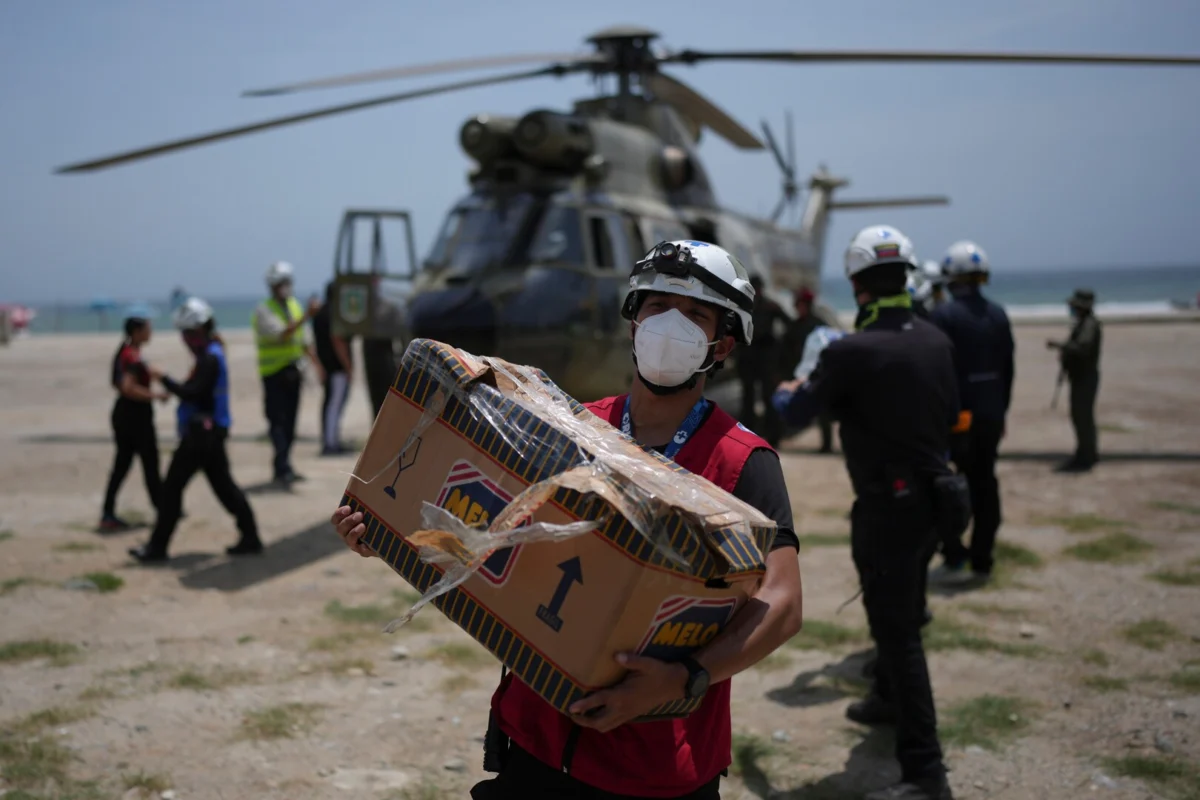
The Catastrophe Unfolds: A Nation Grapples with Devastation
The tranquil coastal landscape of La Guaira, a region historically vulnerable to extreme weather, was irrevocably altered by what is now being referred to as "The La Guaira Deluge of 2026." A series of torrential downpours, beginning in mid-June and escalating dramatically over several days, triggered widespread flash floods and catastrophic landslides across the state. The deluge, which peaked between June 20th and 24th, transformed rivers into raging torrents and hillsides into rivers of mud, engulfing homes, infrastructure, and entire communities. The sheer volume of rainfall, reportedly exceeding historical records for a single week, overwhelmed the region’s drainage systems and the natural stability of its mountainous terrain, leading to a disaster of a magnitude not seen since the devastating Vargas tragedy of 1999. Early estimates from the Venezuelan Ministry of Interior and Justice suggest that over 1,500 people have lost their lives, with thousands more injured and an estimated 150,000 individuals displaced from their homes, many of whom have lost everything. The immediate aftermath saw heroic but often overwhelmed local rescue efforts, as first responders battled impassable roads, collapsed bridges, and ongoing geological instability to reach trapped survivors. The capital, Caracas, though spared the direct impact of the landslides, experienced significant disruptions due to blocked access routes and supply chain interruptions originating from La Guaira, which serves as a vital port and gateway to the nation’s capital.
A Chronology of Crisis: From Torrential Rains to Widespread Destruction
The unfolding of the La Guaira Deluge followed a rapid and brutal timeline:
- June 15-18, 2026: Meteorological services issue warnings for unusually heavy rainfall across the Venezuelan coast, attributing the anomaly to a complex interaction of tropical weather systems and atmospheric moisture. While severe, the initial forecasts did not fully predict the impending catastrophe.
- June 19, 2026: Rainfall intensifies significantly in La Guaira and neighboring coastal states. Minor flooding is reported in low-lying areas, and local authorities advise residents in high-risk zones to prepare for potential evacuation.
- June 20, 2026: The situation deteriorates sharply. Persistent, heavy downpours throughout the night lead to the first major flash floods in communities like Catia La Mar and Macuto. Rivers swell beyond their banks, cutting off several critical roads.
- June 21, 2026: The disaster reaches its critical phase. As the ground becomes super-saturated, numerous landslides begin across the steep slopes overlooking the Caribbean Sea. Entire sections of hillsides collapse, sweeping away homes, vehicles, and vital infrastructure. The main coastal highway (Autopista Caracas-La Guaira) is rendered impassable in multiple sections. Communication lines begin to fail in affected areas.
- June 22-23, 2026: The torrential rains continue with unrelenting force. The full extent of the devastation becomes clearer, revealing entire neighborhoods buried under mud and debris. Search and rescue operations are launched, hampered by continued rainfall, unstable ground, and the sheer scale of the destruction. The Venezuelan government declares a state of emergency for La Guaira and requests international assistance.
- June 24, 2026: The heaviest rainfall begins to subside, allowing for a clearer assessment of the damage. Aerial surveys reveal widespread devastation, particularly in the municipalities of Vargas, Caruao, and Maiquetía. The official death toll begins to rise rapidly as more bodies are recovered.
- June 25-30, 2026: Initial international aid flights begin to arrive at Simon Bolívar International Airport (SVMI), which itself was partially affected but remained operational. Search and rescue teams from various nations deploy to the hardest-hit zones. Efforts focus on evacuating survivors, providing immediate medical attention, and establishing temporary shelters.
- July 1-3, 2026: With the immediate crisis subsiding into a protracted humanitarian effort, the focus shifts to establishing a robust aid distribution network. Emergency relief stations are set up across La Guaira, coordinating the delivery of food, water, and medical supplies to the tens of thousands of displaced and affected individuals. The United Nations reports the involvement of 27 nations in the coordinated international response, signaling the global community’s commitment to supporting Venezuela through this tragedy.
Unprecedented Needs: The Scale of the Humanitarian Challenge
The La Guaira Deluge has created a humanitarian crisis of immense proportions, placing enormous strain on Venezuela’s already challenged public services and infrastructure. Beyond the tragic loss of life, the material destruction is staggering. Over 20,000 homes are estimated to be completely destroyed or severely damaged, rendering tens of thousands homeless. Critical infrastructure has been decimated; major arteries like the coastal highway and numerous secondary roads are impassable, isolating communities and complicating aid delivery. Bridges have collapsed, power grids are severely disrupted, and water treatment facilities have been damaged, leading to widespread shortages of potable water.
The health implications are particularly concerning. Hospitals and clinics in La Guaira, some of which sustained damage themselves, are overwhelmed with patients suffering from injuries, exposure, and stress-related ailments. The lack of clean water and sanitation in temporary shelters raises the specter of waterborne diseases like cholera and typhoid, demanding urgent public health interventions. The psychological trauma inflicted on survivors, many of whom witnessed unspeakable horrors and lost family members, homes, and livelihoods, is profound and will require long-term mental health support.
Humanitarian organizations on the ground have identified critical needs:
- Food Security: Immediate provision of non-perishable food items, emergency rations, and infant formula for an estimated 100,000 people.
- Water and Sanitation: Access to safe drinking water for at least 150,000 individuals, through bottled water, purification tablets, and mobile water treatment units. Establishment of temporary latrines and hygiene kits to prevent disease outbreaks.
- Shelter: Tents, tarpaulins, blankets, and sleeping mats for the thousands displaced and living in temporary shelters or with host families.
- Medical Aid: Deployment of mobile medical teams, field hospitals, essential medicines, surgical supplies, and vaccination campaigns.
- Logistics: Heavy machinery for clearing debris, fuel for transportation, and communication equipment to coordinate relief efforts in cut-off areas.
The economic fallout for La Guaira, a vital port and tourist destination, is projected to be severe. The damage to port facilities, fishing fleets, and tourism infrastructure will have long-lasting consequences for local livelihoods and the national economy. The cost of reconstruction is expected to run into billions of dollars, far exceeding Venezuela’s current financial capacity.
A Global Response: International Solidarity in Action
The international community’s response to the La Guaira Deluge has been swift and robust, demonstrating a remarkable outpouring of solidarity. The United Nations Office for the Coordination of Humanitarian Affairs (OCHA) has activated its emergency response mechanisms, working closely with the Venezuelan government to coordinate the influx of aid. The UN Resident Coordinator for Venezuela, Mr. Santiago Morales, stated in a press briefing on July 2nd, "The scale of this disaster demands a united global front. We are incredibly grateful for the rapid and generous response from member states, which is vital in preventing a secondary crisis. Our priority remains saving lives and ensuring dignity for those affected."
Among the 27 nations contributing aid are neighboring countries such as Colombia, Brazil, and Ecuador, which have dispatched search and rescue teams, medical personnel, and emergency supplies. Farther afield, countries like Spain, Russia, China, the United States, and several European Union member states have sent cargo planes laden with essential goods, including field hospitals, water purification systems, heavy equipment, and specialized disaster relief personnel. The United States Agency for International Development (USAID) confirmed the delivery of several tons of emergency food and hygiene kits, while the European Union announced a significant financial contribution to humanitarian organizations operating on the ground.
Non-governmental organizations (NGOs) have also played a crucial role. The International Federation of Red Cross and Red Crescent Societies (IFRC) immediately launched an emergency appeal, deploying volunteers and establishing distribution points. Doctors Without Borders (Médecins Sans Frontières) has set up mobile clinics to provide medical care and psychological first aid, particularly in remote areas. UNICEF is focusing on the needs of children, providing nutritional support and creating child-friendly spaces in temporary shelters. The World Food Programme (WFP) is working to establish food pipelines to ensure consistent delivery of sustenance to the most vulnerable populations. This multi-faceted international assistance is proving indispensable in augmenting Venezuela’s domestic response capabilities.
Venezuela’s Leadership Responds: Calls for Unity and Aid
President Nicolás Maduro addressed the nation from a disaster zone in La Guaira on June 28th, declaring a "national tragedy" and vowing full government support for recovery efforts. "We are facing a moment of profound sorrow and immense challenge," President Maduro stated. "But we will overcome this with the spirit of our people and the solidarity of our friends around the world. Every resource, every effort, is being channeled to assist our brothers and sisters in La Guaira." He announced the creation of a special presidential commission for reconstruction and rehabilitation, tasked with overseeing both immediate relief and long-term rebuilding.
Minister of Interior and Justice, Admiral Remigio Ceballos Ichaso, highlighted the immediate activation of the National Risk Management System, deploying thousands of military personnel, police, and civil protection agents. He acknowledged the unprecedented challenges, particularly regarding logistics and infrastructure damage, but affirmed the government’s commitment to ensuring all aid reaches those in need. The Venezuelan armed forces have been instrumental in clearing debris, transporting supplies, and assisting in evacuations, often operating in perilous conditions. The Ministry of Health has mobilized medical brigades from across the country to support the overwhelmed local health system and has launched public awareness campaigns on hygiene and disease prevention. Despite the scale of the disaster, government officials have emphasized the importance of unity and cooperation, both domestically and internationally, to navigate the path to recovery.
The Road Ahead: Long-Term Implications and Reconstruction
The La Guaira Deluge of 2026 has exposed profound vulnerabilities and carries significant long-term implications for Venezuela. In the short term, the immediate focus remains on humanitarian aid, preventing further loss of life, and stabilizing the affected population. However, the transition from emergency relief to recovery and reconstruction will be a monumental task.
Medium-term challenges include the extensive rebuilding of infrastructure, which will require substantial financial investment and technical expertise. Thousands of displaced individuals will need permanent housing solutions, and many will face prolonged unemployment as local economies struggle to recover. The psychological scars of the disaster will necessitate sustained mental health support programs. Public health surveillance will remain critical to prevent disease outbreaks, particularly as temporary shelters remain operational.
In the long term, the disaster underscores the urgent need for enhanced disaster preparedness and resilient infrastructure development, especially in areas prone to natural hazards. Climate change, with its potential to intensify extreme weather events, adds another layer of complexity, suggesting that such events might become more frequent and severe. Venezuela will need to invest in early warning systems, improved urban planning in high-risk zones, and robust environmental management strategies to mitigate future risks. The international cooperation forged during this crisis could potentially lay groundwork for broader diplomatic engagement and long-term partnerships, focusing on sustainable development and resilience building. The path to full recovery for La Guaira will be arduous and protracted, requiring sustained national effort and unwavering international support to rebuild lives, communities, and the very fabric of the region.
