

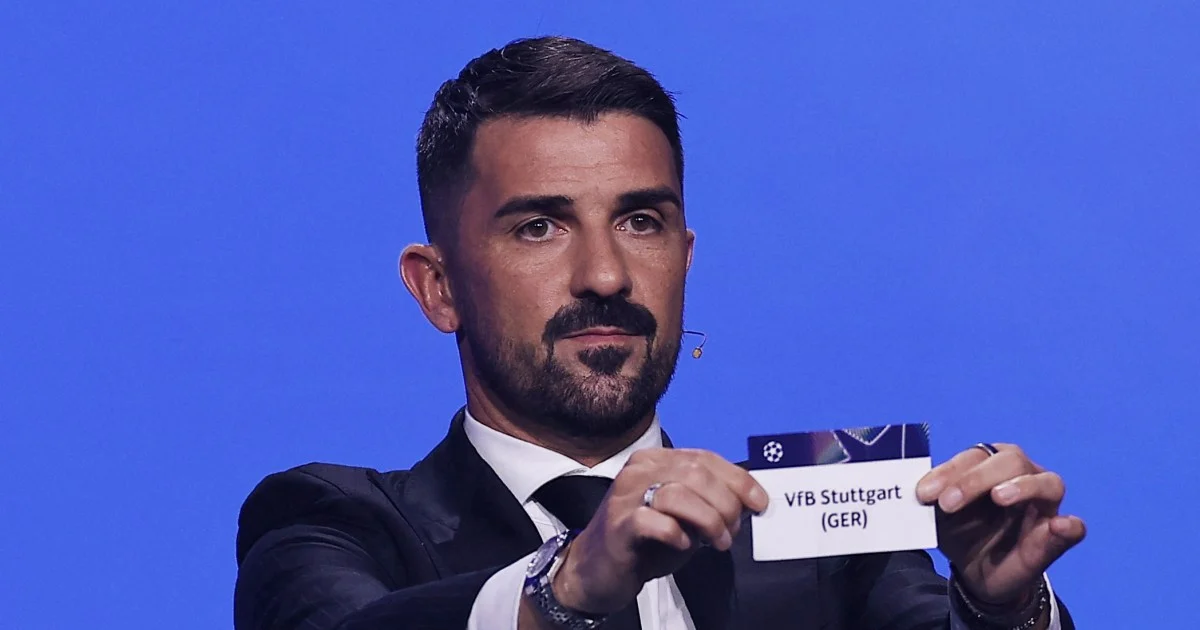
The highly anticipated draw for the 2026/27 UEFA Champions League league phase, conducted on Thursday, has unveiled a series of mouth-watering clashes and challenging paths for Europe’s elite clubs. Two-time defending champions Paris Saint-Germain (PSG) embark on an ambitious quest for an unprecedented third consecutive title, facing formidable opponents including Barcelona, Manchester City, and Aston Villa in their eight-match schedule. Last season’s runners-up and reigning Premier League champions, Arsenal, have also been handed a demanding set of fixtures, featuring encounters with European giants Real Madrid, Borussia Dortmund, and Bayern Munich. This season marks the third iteration of the expanded 36-team, single-league format, promising an extended spectacle of top-tier European football culminating in the final at Madrid’s Metropolitano Stadium on June 5, 2027.
The Evolving Landscape of European Football: The New Champions League Format
This season solidifies the presence of UEFA’s radical new Champions League format, a departure from the traditional group stage structure that had defined the competition for decades. Introduced two seasons prior, the "Swiss model" system pools all 36 qualifying teams into a single league table. Each team plays eight different opponents – four at home and four four away – determined by a seeding system that ensures a balance of strength across fixtures. This innovative approach was designed by UEFA to increase the number of high-profile matches, generate greater commercial revenue, and offer more opportunities for clubs from a wider array of leagues to participate and progress.
Under this format, the top eight teams in the unified league automatically qualify for the round of 16. Teams finishing from ninth to 24th positions will enter a knockout play-off round to determine the remaining eight spots in the last 16. This structure significantly extends the competition’s league phase, which now spans from September to late January, replacing the traditional six-match group stage. The aim is to enhance competitive intensity throughout the initial phase, eliminating the often-criticized "dead rubber" matches of the old format and ensuring that every result carries significant weight towards qualification. For clubs, this means greater financial incentives through increased broadcast revenues and matchday income, but also presents an added challenge in terms of squad depth, player rotation, and managing fixture congestion across domestic and European fronts. The 2026/27 season, therefore, is not just about individual club aspirations but also about how the broader ecosystem of European football continues to adapt to this evolving, demanding continental calendar.
Paris Saint-Germain’s Historic Treble Pursuit
Paris Saint-Germain, under the astute guidance of Luis Enrique, stand at the precipice of footballing history. Having lifted the coveted trophy in 2025 and successfully defended it in 2026, beating Arsenal on penalties in Budapest, the French champions are now targeting an unprecedented third consecutive Champions League title. Such an achievement would place them in an exclusive pantheon, with only Real Madrid’s legendary side from 2016-2018 having accomplished this feat in the last half-century.
The draw has presented PSG with a fascinating and demanding array of opponents for their league phase campaign. Their home fixtures will see them host Spanish giants Barcelona, Italian stalwarts Roma, Turkish champions Galatasaray, and Slovakian outfit Slovan Bratislava. Each of these matches carries its own narrative: a classic rivalry renewed with Barcelona, a test of tactical prowess against Roma, and the fervent atmosphere of a Galatasaray encounter, renowned for its intimidating home support.
On the road, Luis Enrique’s men face two significant trips to England, where they will confront Manchester City and Aston Villa. These encounters evoke recent triumphs, as PSG overcame both English clubs en route to their maiden Champions League title in 2025. Furthermore, they defeated Aston Villa again in the UEFA Super Cup earlier this month in Austria, adding another layer of competitive history to these impending battles. The return legs against such strong Premier League opposition will undoubtedly be among the most anticipated fixtures of the league phase, offering a true gauge of PSG’s current strength. Beyond England, PSG will also travel to Spain to face Villarreal and journey to Italy to take on Como, a club coached by former midfield maestro Cesc Fabregas, representing a refreshing challenge from Serie A’s emerging forces.
Reflecting on the draw even before it took place, Luis Enrique exuded confidence, telling reporters, "I can’t say anything bad about the Champions League, but I won’t be watching the draw. I will be relaxing and going out on my bike, then we’ll take a look at the menu. But I would sign up for the same result as in the last two years." His relaxed demeanor belies the immense pressure and expectation on his squad, but it also underscores the belief within the Parisian camp that they possess the quality and mentality to make history. The path is fraught with challenges, but for a club of PSG’s ambition, every match is a step towards cementing their legacy as one of Europe’s greatest teams. The tactical battles, the individual brilliance, and the sheer mental fortitude required will be immense, making their journey a captivating watch for football fans worldwide.
Arsenal’s Ambitious Challenge: Premier League Champions Aim for European Glory
Arsenal, fresh off their Premier League title triumph and eager to go one step further after reaching last season’s Champions League final, face a truly formidable schedule in the league phase. As the reigning English champions and last year’s European runners-up, Mikel Arteta’s side carries significant expectations, both domestically and continentally. The draw has pitted them against a blend of European royalty and rising forces, promising a stern test of their credentials.
Their home fixtures at the Emirates Stadium are set to be blockbuster affairs, welcoming legendary clubs such as Real Madrid, Borussia Dortmund, and Lille. These matches offer a chance for Arsenal to demonstrate their progress against established European powerhouses and to leverage their passionate home support, which has become a significant factor in their recent successes. Adding an intriguing dimension to their home schedule is Sabah, the Azerbaijani club making their debut in the league phase after navigating a challenging four two-legged qualifying ties. This fixture represents the beauty of the expanded format, bringing new clubs and fanbases into the European spotlight and offering a unique competitive experience.
However, it is Arsenal’s away ties that truly underscore the difficulty of their draw. The Gunners will embark on challenging journeys to face German giants Bayern Munich, Spanish contenders Real Betis, Italian powerhouse Napoli, and Czech champions Slavia Prague. The trip to Bayern Munich, in particular, revives a historical rivalry that has seen both joy and heartbreak for Arsenal fans in previous Champions League campaigns, often characterized by high-scoring encounters. Each of these away fixtures demands peak performance, tactical discipline, and mental resilience, as Arsenal seeks to accumulate crucial points in hostile environments, where the pressure to perform is magnified.
For Arsenal, balancing the rigors of a Premier League title defense with an arduous Champions League campaign will be the ultimate test of their squad depth and strategic planning. The extended league phase, stretching into late January, means sustained intensity for nearly five months. Analysts suggest that Arteta will need to expertly manage player fitness and rotation to ensure his key players remain sharp for both domestic and European challenges, preventing burnout and maintaining competitive edge. This season presents Arsenal with a golden opportunity to convert their domestic success into European supremacy, but the path laid out by the Champions League draw is one that demands nothing short of perfection from every member of their squad.
English Contingent: Liverpool, Manchester United, and Aston Villa’s European Journeys
Beyond the narratives of PSG’s pursuit of history and Arsenal’s quest for redemption, the other English clubs in the competition face equally compelling and challenging draws, each with their own unique aspirations and hurdles to overcome.
Liverpool, under the guidance of Andoni Iraola, will look to make a significant impact in this season’s Champions League, aiming to re-establish their European dominance. Their home fixtures will see them host Spanish giants Atletico Madrid, Portuguese powerhouse Porto, fellow Spanish side Villarreal, and French club Lens. These matches promise high-intensity encounters, particularly against Atletico, known for their tactical discipline and defensive solidity, which will test Liverpool’s attacking prowess. On their travels, Liverpool faces equally stern tests against Italian stalwarts Inter Milan, Belgian champions Club Brugge, the returning Turkish side Fenerbahce, and Austrian league phase debutants LASK. The variety of opponents, from established European names to ambitious new entrants, will demand adaptability and consistent performance from Iraola’s squad, who will need to demonstrate their versatility across different playing styles and environments. Liverpool’s recent European pedigree ensures they will be considered strong contenders, but their path is far from straightforward and will require careful navigation.
Manchester United, who did not secure a top-pot seeding, have been drawn into a demanding schedule that reflects their status outside the very top tier of European football, for now, as they aim for a resurgence. Their home matches at Old Trafford will bring Bayern Munich, Roma, RB Leipzig, and Sabah. These fixtures offer high-profile opportunities to showcase their capabilities against some of Europe’s best, and Old Trafford’s atmosphere will be crucial in securing vital points. However, it is their away fixtures that present the most significant challenge: trips to face Atletico Madrid, Portuguese side Sporting, Spanish outfit Villarreal, and Italian newcomers Como. Facing Atletico away, especially, is always a daunting prospect given their notoriously difficult home ground and defensive resilience, while the trips to Portugal and Spain will test their resolve and tactical discipline. For United, who are in a rebuilding phase, this Champions League campaign is crucial for their development and for re-establishing their presence among Europe’s elite. The expanded format will push their squad depth to its limits, requiring consistent performance from both established stars and emerging talents throughout the prolonged league phase.
Aston Villa, last season’s Europa League winners, make their return to the Champions League proper with high hopes under the astute management of Unai Emery, a proven master of European competition. Their draw includes a glamorous and challenging away trip to Barcelona, a monumental test of their progress against one of football’s most storied clubs. At home, they will welcome German heavyweights Borussia Dortmund, promising a vibrant and passionate atmosphere at Villa Park for what will be a physically demanding encounter. Furthermore, Villa will tackle two Istanbul giants, Galatasaray and Fenerbahce, adding a unique cultural and competitive dimension to their European journey, known for their fervent home support. Emery’s tactical acumen and Villa’s cohesive team play will be vital as they navigate a highly competitive schedule, aiming to prove they belong at Europe’s top table. Their performances in the Europa League demonstrated their capacity for knockout football, but the sustained intensity and higher quality of the Champions League league phase will be a new frontier for many in the squad, requiring a step up in consistency and performance.
Emerging Forces and Notable Returnees: Broadening the Champions League Landscape
The 2026/27 Champions League league phase is not just about the traditional powerhouses; it also celebrates the emergence of new contenders and the return of storied clubs, underscoring the expanded format’s aim to diversify the competition and broaden its appeal.
Fenerbahce, one of Turkey’s most celebrated clubs, makes a long-awaited return to the Champions League proper for the first time since the 2008/09 season. Their qualification, secured by overcoming French side Lyon in a thrilling playoff tie this week, signals a significant resurgence for Turkish football on the European stage. Their inclusion adds a passionate fanbase and a competitive edge to the league phase, especially with fixtures against clubs like Liverpool and Aston Villa, which are sure to be memorable encounters. Their return is a testament to sustained investment and strategic planning, promising exciting matches.
Among the truly "new names" in this season’s competition are Como from Italy and Sabah from Azerbaijan. Como, coached by Cesc Fabregas, have defied expectations in Serie A, upsetting the traditional order to earn their place among Europe’s elite. Their story is one of rapid ascent and tactical ingenuity, and their presence adds an exciting, fresh narrative to the competition, showcasing the potential for disruption in established leagues. Sabah, meanwhile, represents Azerbaijan’s growing footballing ambitions, having successfully navigated four two-legged qualifying ties – a remarkable achievement for a club making its debut at this level. Their journey highlights the potential for teams from less-established leagues to break through under the new format, bringing new talent and strategies to the forefront.
LASK from Austria also makes their debut in the league phase, having secured their spot after a stunning comeback victory over Scottish champions Celtic in the playoffs. Their qualification is a testament to their resilience and growing strength within Austrian football, demonstrating that solid domestic performance can translate into European opportunities. Similarly, Viking, last year’s Norwegian champions from the city of Stavanger, have reached the Champions League proper for the very first time. Their glamorous fixture schedule, which includes encounters with Bayern Munich, Atletico Madrid, Aston Villa, and Napoli, promises unforgettable experiences for their players and fans, and offers a unique insight into the expanding geographical reach of top-tier European club football. These new entrants not only bring fresh faces and exciting stories to the competition but also ensure a broader distribution of competitive matchups across the continent, enriching the overall tapestry of the Champions League.
The Schedule and Road to Madrid: A Chronology of European Ambition
The league phase of the 2026/27 UEFA Champions League is set to commence with the first wave of matches between Tuesday, September 8, and Thursday, September 10. This initial period will see clubs across Europe kick off their ambitious campaigns, embarking on a journey that will stretch over several months. Unlike the compact group stages of old, the new format extends the league phase significantly, with the final games of this initial stage scheduled for late January. This prolonged schedule demands sustained performance, strategic squad management, and an ability to navigate potential mid-season slumps, as teams contend with the cumulative fatigue of a demanding calendar.
UEFA is expected to release the full, detailed fixture schedule, including specific dates, kick-off times, and broadcast allocations for all eight matches per club, on Saturday. This announcement will be eagerly awaited by clubs, fans, and broadcasters alike, as it will allow for detailed planning of travel, logistics,
