

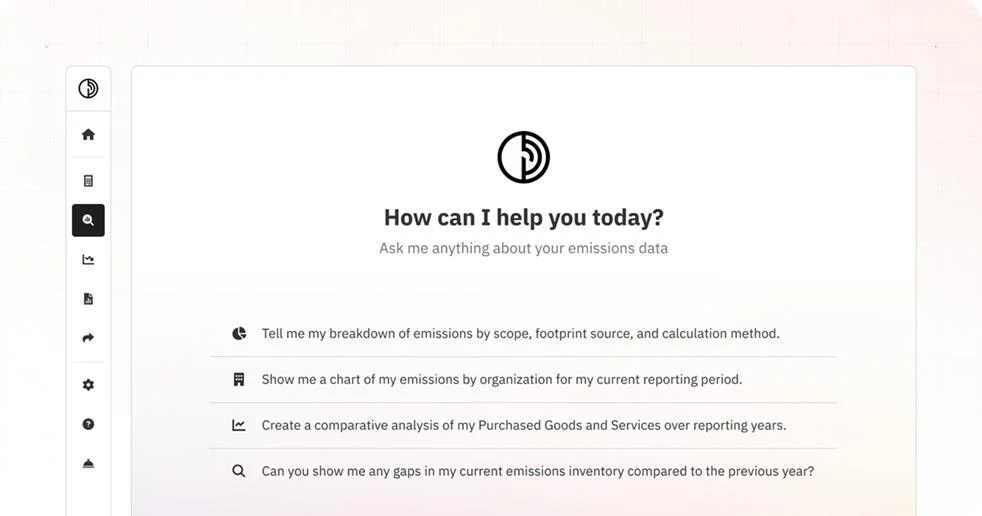
Sustainability software leader Persefoni has officially announced the rollout of the Persefoni Analytics Agent, a sophisticated agentic AI feature integrated into its core platform designed to revolutionize how enterprises interact with and interpret their carbon emissions data. This development, announced on May 5, 2026, represents a significant leap forward in the application of artificial intelligence within the Environmental, Social, and Governance (ESG) sector. By moving beyond simple data visualization into the realm of autonomous analytical reasoning, the Persefoni Analytics Agent aims to drastically reduce the time required for sustainability teams to extract actionable insights from complex datasets, facilitating faster decarbonization strategies and more robust regulatory compliance.
Founded in 2020, Persefoni has rapidly ascended as a pivotal player in the climate tech space. The company’s platform is engineered to help multinational corporations and large financial institutions navigate the increasingly intricate web of global carbon accounting standards. With the introduction of the Analytics Agent, the company is addressing a critical bottleneck in the industry: the "data-to-insight" gap. While many firms have successfully automated the collection of emissions data, the subsequent step—analyzing that data to understand specific drivers of carbon intensity—has remained a labor-intensive process often requiring specialized data science expertise.
The Technological Shift: From Generative to Agentic AI
The launch of the Persefoni Analytics Agent marks a transition from standard Generative AI (GenAI) to "Agentic AI" in the context of carbon accounting. While GenAI is primarily focused on creating content or answering questions based on existing information, Agentic AI is characterized by its ability to perform multi-step tasks, reason through complex queries, and interact with various data layers to achieve a specific goal.
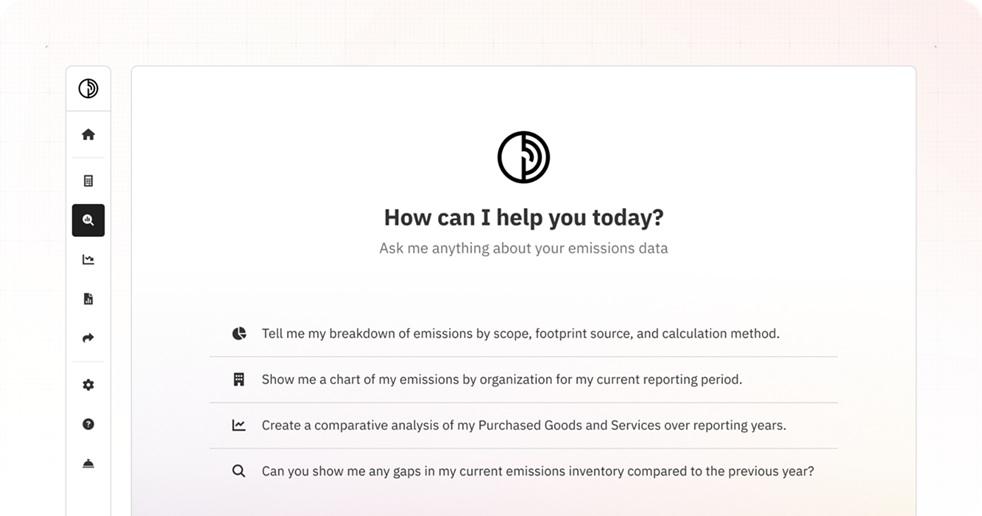
In practical terms, users of the Persefoni platform can now engage with their carbon footprint data using natural language prompts. Instead of manually filtering spreadsheets or building custom dashboards to identify which manufacturing facility saw the highest increase in Scope 2 emissions over the last quarter, a user can simply ask the agent to "identify the top three drivers of our emissions growth in the EMEA region and compare them to our 2025 baseline." The agent then autonomously scans the underlying ledger, performs the necessary calculations, pulls in relevant attributes such as energy source or production volume, and generates a structured response complete with visual aids.
This capability is built upon Persefoni’s existing AI-driven infrastructure, which already includes tools for carbon footprint calculation and decarbonization strategy development. By integrating agentic capabilities, the platform allows for a more iterative and conversational approach to data analysis. Users can follow up on initial findings with prompts like "reformat this into a table for the board of directors" or "visualize this data as a waterfall chart showing the impact of our recent renewable energy credits."
Addressing the Regulatory and Stakeholder Pressure
The timing of this launch is particularly relevant given the tightening global regulatory landscape. By 2026, the Corporate Sustainability Reporting Directive (CSRD) in the European Union and various climate disclosure mandates from the U.S. Securities and Exchange Commission (SEC) and the International Sustainability Standards Board (ISSB) have placed immense pressure on companies to provide "audit-ready" disclosures.
These regulations demand more than just top-line numbers; they require granular transparency into how those numbers were derived. The Persefoni Analytics Agent is designed to support this level of scrutiny. By allowing users to pull in additional ledger attributes—such as specific vendor information or geographical metadata—the agent ensures that sustainability reports are backed by a transparent and traceable data trail. This is essential for internal audits and for maintaining the confidence of institutional investors who are increasingly linking executive compensation and capital allocation to climate performance.
Kim Stroh, CTO and Co-founder of Persefoni, emphasized the transformative nature of this technology. According to Stroh, the introduction of agentic AI into carbon accounting represents a critical shift in the world of work. She noted that by enabling faster and deeper analysis, the agent helps surface insights that may have previously remained hidden in the sheer volume of corporate data. This, in turn, encourages sustainability teams to ask more meaningful questions about their operational efficiency and long-term climate resilience.
Chronology of Persefoni’s AI Evolution
The development of the Analytics Agent is the latest milestone in a multi-year effort by Persefoni to lead the digitization of carbon management.
- 2020-2022: Foundation and Data Aggregation. Persefoni focused on building a robust platform capable of ingesting vast amounts of financial and operational data to calculate Scope 1, 2, and 3 emissions according to the GHG Protocol.
- 2023-2024: Integration of Large Language Models (LLMs). The company began experimenting with LLMs to help users navigate complex reporting frameworks and provide basic explanatory text for their sustainability reports.
- 2025: Predictive Analytics and Decarbonization Planning. Persefoni introduced tools that allowed companies to model future emissions scenarios based on different business decisions, such as switching to electric vehicle fleets or changing suppliers.
- 2026: The Launch of Persefoni Analytics Agent. The current iteration moves the platform into the agentic era, where the AI acts as a co-pilot that can perform the heavy lifting of data manipulation and analytical reasoning.
This timeline reflects a broader trend in the software-as-a-service (SaaS) industry, where the focus has shifted from "systems of record" (databases) to "systems of intelligence" (AI-driven insights).
Key Features and Functional Capabilities
The Persefoni Analytics Agent includes several key features designed to streamline the workflow of sustainability professionals:
- Natural Language Interaction: Users do not need to know SQL or advanced data visualization techniques. They can interact with the system as they would with a human analyst.
- On-Demand Visualization: The agent can instantly generate charts, graphs, and structured tables. This is particularly useful for ad-hoc requests from senior leadership or external stakeholders.
- Dynamic Data Exploration: The agent can compare performance across different business units, time periods, and emission categories. It can also identify anomalies—such as a sudden spike in refrigerant leakage—that might otherwise go unnoticed.
- Ledger Attribute Integration: Beyond just emissions totals, the agent can access and analyze the underlying metadata in a company’s carbon ledger, providing context on why certain changes occurred.
- Iterative Refinement: The system supports follow-up prompts, allowing users to drill down into specific data points or reformat outputs without starting the search from scratch.
Broader Impact and Industry Implications
The introduction of agentic AI into the ESG space is expected to have far-reaching implications for how companies manage their environmental impact. Traditionally, carbon accounting has been a retrospective exercise—looking back at the previous year’s data to create a report. With tools like the Persefoni Analytics Agent, the process becomes more proactive and real-time.
For large-scale enterprises with complex supply chains, the ability to quickly analyze Scope 3 emissions (indirect emissions from the value chain) is a game-changer. Scope 3 often accounts for more than 70% of a company’s total carbon footprint but is notoriously difficult to track and analyze due to data fragmentation. An agentic AI can help bridge this gap by identifying high-impact suppliers and suggesting areas where procurement changes could yield the most significant emissions reductions.
Furthermore, this technology democratizes data access within an organization. By simplifying the interface for data analysis, Persefoni is enabling departments outside of the dedicated sustainability team—such as finance, procurement, and operations—to take ownership of their respective carbon footprints. This integration of climate data into daily business operations is a necessary step for companies aiming to reach Net Zero targets.
Market analysts suggest that the move toward agentic AI will set a new standard for the ESG software industry. Competitors in the space, such as Salesforce, Microsoft, and specialized startups, are likely to accelerate their own AI roadmaps in response. However, Persefoni’s deep focus on the specific nuances of carbon accounting—including its adherence to the Partnership for Carbon Accounting Financials (PCAF) and the GHG Protocol—provides it with a specialized data context that generic AI tools may struggle to replicate.
In conclusion, the Persefoni Analytics Agent is more than just a software update; it is a signal of the increasing maturity of the climate tech sector. As companies move from the "what" of reporting to the "how" of reduction, the ability to rapidly interpret and act upon data will be the primary differentiator of corporate climate leadership. By leveraging agentic AI, Persefoni is providing the tools necessary for businesses to navigate the transition to a low-carbon economy with greater speed, accuracy, and strategic insight.
