

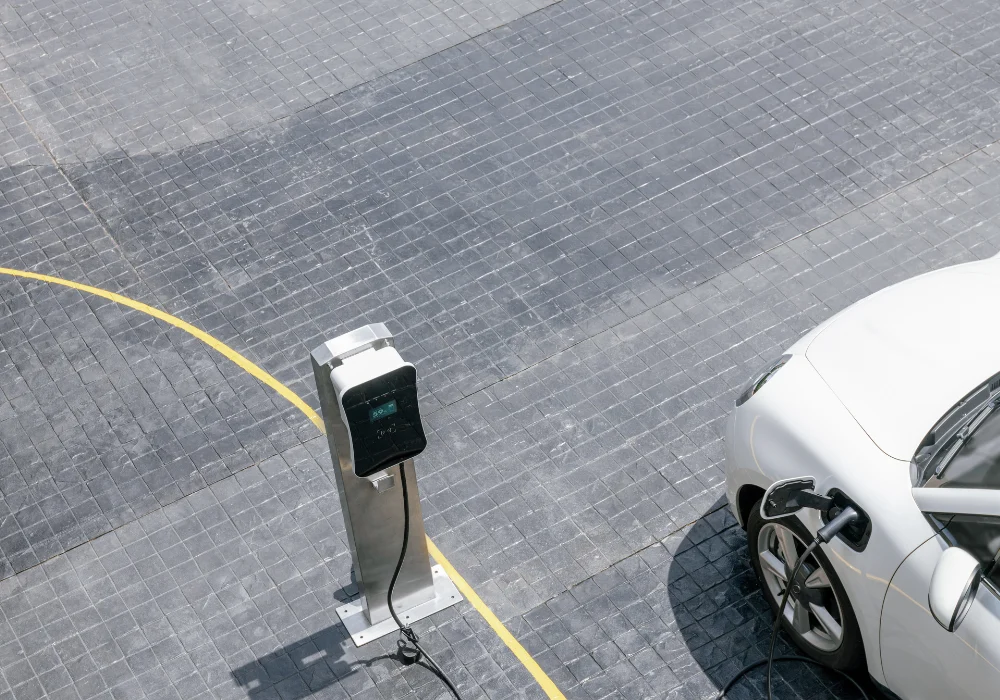
The global automotive landscape is undergoing a seismic shift as domestic sales of electric vehicles (EVs) accelerate across Europe and Asia, propelled by a combination of record-high gasoline prices and a rapidly maturing supply chain. As of the first quarter of 2026, the transition from internal combustion engines (ICE) to battery-electric vehicles (BEVs) has moved beyond a niche trend, with market analysts and researchers suggesting the industry is approaching a critical tipping point. This surge is particularly pronounced in regions where geopolitical volatility has rendered traditional fossil fuels prohibitively expensive, forcing a massive migration toward electrified transport.
The primary catalyst for this recent acceleration is the ongoing conflict involving the United States, Israel, and Iran, which has disrupted global oil supplies and sent prices at the pump to historic highs. In response, European BEV registrations saw a dramatic 30% increase in the first quarter of 2026 compared to the previous year. Data from March 2026 alone indicates a 50% jump in registrations, signaling that consumers are no longer merely considering electric options but are actively fleeing the volatility of the petroleum market.
The European Landscape: Regional Leaders and Market Drivers
The European Union and the European Free Trade Association (EFTA)—which includes Iceland, Liechtenstein, Norway, and Switzerland—reported that more than 21% of all new car registrations in March 2026 were fully electric. This milestone reflects a broader trend across the continent where policy support and infrastructure development have converged with economic necessity.
In the United Kingdom, the BEV market grew by 12.8% during the first three months of the year, with electric models accounting for 22.5% of all new car sales. However, the most striking figures continue to emerge from the Nordic countries, which have long served as the vanguard of the EV transition. Norway, a global leader in per-capita EV adoption, saw 98% of its new car sales in March 2026 consist of BEVs. Denmark followed at 76%, while Finland reached nearly 50%. Analysts attribute this dominance to a "triple threat" of success factors: high average wages, aggressive government subsidies, and a pervasive public charging network that alleviates "range anxiety" for rural and urban drivers alike.
Southern Europe is also showing signs of rapid catching up. Italy, historically slower to adopt EVs than its northern neighbors, experienced a 65% year-on-year increase in EV sales in March. In this market, the primary driver appears to be the immediate financial pressure of gas prices rather than environmental policy, suggesting that the "tipping point" is increasingly being dictated by the raw economics of daily commuting. France has also maintained strong momentum, with a 50% year-on-year uptake spurred by what regulators describe as "generous government incentives" designed to insulate the domestic population from energy price shocks.
The Asian Market and the Toyota Pivot
Across Asia, the narrative is similar but defined by different industrial players. Japan, often criticized for its slow transition to pure electric models in favor of hybrids, is seeing a significant reversal of trends. Toyota, the world’s largest automaker, reported selling nearly 3,500 EVs in March 2026—a staggering 4,117% increase compared to the same month in 2025. While the raw numbers remain lower than those of Chinese or European competitors, the percentage growth indicates a fundamental pivot in Toyota’s corporate strategy and a shift in Japanese consumer sentiment as gasoline alternatives become a financial priority.
China remains the undisputed titan of the global EV sector. Unlike other markets where growth is driven by recent price shocks, China’s market is characterized by a mature ecosystem where EVs and hybrids have seen sales double every year for several consecutive years. The Chinese domestic market is currently defined by fierce competition, falling prices, and a level of technological integration that Western manufacturers are struggling to match.
Scientific Analysis: The Irreversible S-Curve
The current market behavior aligns with findings from a comprehensive study published in Nature Communications by researchers from the University of Exeter, the University of Macao, and the World Bank. The study, which analyzed data from 2016 to 2023 and projected into the mid-2020s, posits that the global EV fleet is doubling every 1.5 years.
The researchers argue that the industry is entering a phase of "self-propelling" growth. According to the study, once investment is "sunk" into converting production lines and battery manufacturing facilities, the return to internal combustion vehicles becomes prohibitively expensive for automakers, regardless of fluctuations in oil prices. This creates a feedback loop: higher volume leads to lower costs (economies of scale), which leads to higher demand, further driving down costs.
However, the study notes a geographic disparity. While China and Europe have convincingly begun the tip toward EV dominance, the United States remains an outlier. Despite federal incentives, the U.S. market has not yet achieved the same exponential growth trajectory, hampered by political polarization over climate policy and a more fragmented charging infrastructure.
China’s Technological and Supply Chain Hegemony
A significant factor in the global EV transition is China’s stranglehold on the battery supply chain. A standard EV battery relies on four critical components: the cathode (typically containing lithium and other metals), the anode (graphite), the separator (a polyolefin film), and the electrolyte solution. Currently, Chinese firms dominate the global market share for all four components.
Beyond raw materials, Chinese innovation is setting the pace for the rest of the world. The latest iterations of lithium iron phosphate (LFP) batteries developed in China now rival the energy density of more expensive nickel manganese cobalt (NMC) batteries. These LFP batteries are not only cheaper but also safer and longer-lasting. Chinese manufacturing giant CATL recently unveiled a series of "stunning" technological innovations, including a battery with a driving range of 1,500 kilometers. Furthermore, the third generation of its Shenxing Superfast Charging Battery can reportedly charge from 10% to 90% in just over six minutes—roughly the same time it takes to refuel a traditional gasoline vehicle.
This technological lead extends to "intelligent cockpit" features and autonomous driving. Companies like Momenta (autonomous software), Huawei (charging systems), and Alibaba (digital integration) have created an ecosystem where the car is treated as a mobile technology platform, a concept that is highly popular in the Asian market.
The Western Response: "In China, For China"
The rapid rise of Chinese domestic brands like BYD has come at a significant cost to Western automakers. In 2020, Western brands such as BMW and Volkswagen held 64% of the Chinese market; by 2026, that share has plummeted to 32%. To survive, European manufacturers are moving away from exporting Western designs to China and are instead adopting a "localization" strategy.
BMW’s approach with the 2026/2027 iX3 serves as a primary example. The electric SUV is equipped with CATL batteries and features technology integrated from Huawei, Momenta, and Alibaba. BMW executives have explicitly stated that the vehicle was developed "in China, for China, and with China." The system is tailored specifically to local traffic conditions, urban density, and Chinese consumer preferences for high-tech driver assistance.
Volkswagen is pursuing a similar path, planning to launch 50 plug-in hybrid and EV models in China by 2030. This strategy involves shifting engineering and design responsibilities to Chinese subsidiaries to ensure the vehicles can compete with the rapid development cycles of local brands like NIO and XPeng.
Implications and Future Outlook
As the world moves toward the 2027 model year, the global automotive industry faces a landscape of both immense opportunity and significant risk. The "wildcard" for the near future remains the imposition of international tariffs. As Western governments seek to protect their domestic industries from a flood of low-cost Chinese EVs, trade barriers could slow the pace of adoption by keeping prices artificially high for consumers.
However, the momentum of the "tipping point" suggests that the transition is becoming decoupled from policy alone. The scientific and economic reality is that EVs are becoming the superior technology in terms of operating costs, performance, and maintenance. With gasoline prices remaining high due to geopolitical instability in the Middle East, the incentive for consumers to switch has never been stronger.
The next 24 months will likely determine which traditional automakers survive the transition. Those who can successfully collaborate with Chinese supply chains while building robust domestic manufacturing capabilities will be best positioned to weather the decline of the internal combustion engine. For the global consumer, the era of the "self-propelling" EV market has arrived, marking a definitive end to the century-long dominance of petroleum-based transport.
