

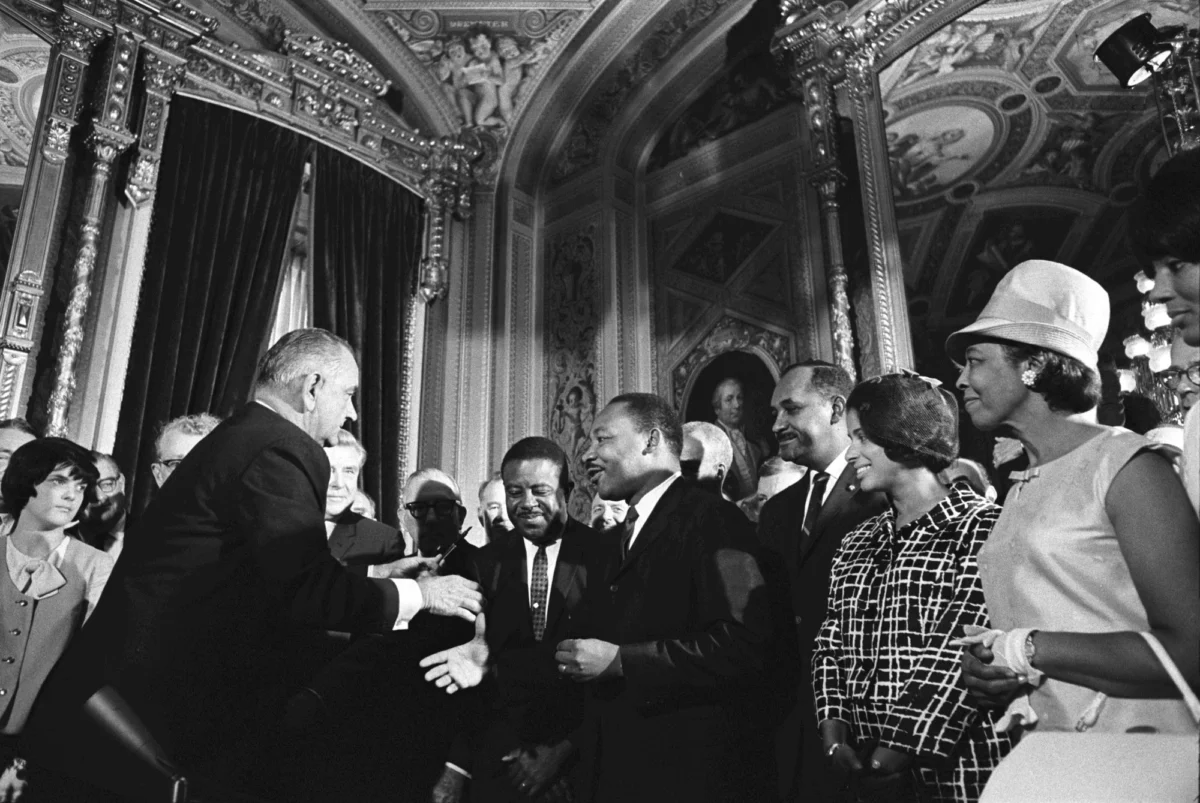
The landscape of American democracy underwent a seismic shift last week as the U.S. Supreme Court issued a landmark ruling in Louisiana v. Callais, effectively restricting a cornerstone of the 1965 Voting Rights Act and triggering a wave of mid-decade redistricting across the country. Within hours of the decision, which was handed down by the Court’s six-member conservative majority, several Southern states moved to overhaul their electoral maps, sparking a fierce legal and political confrontation that observers suggest could determine the balance of power in the U.S. House of Representatives for years to come. The ruling targets Section 2 of the Voting Rights Act (VRA), a provision long used to protect minority voters from having their influence diluted through discriminatory map-making. By narrowing the scope of this protections, the Court has opened the floodgates for partisan legislatures to redraw districts between the traditional ten-year census cycles, a practice that was once rare but has now become the central strategy of the 2026 midterm cycle.
The Legal Context of Louisiana v. Callais and the Erosion of Section 2
The Supreme Court’s decision in Louisiana v. Callais represents the latest in a series of judicial rollbacks affecting the Voting Rights Act. While the 1965 law was designed to dismantle the systemic barriers to voting faced by Black Americans and other marginalized groups, recent jurisprudence has steadily weakened its enforcement mechanisms. In 2013, the Shelby County v. Holder decision struck down the formula used to determine which jurisdictions required federal "preclearance" before changing voting laws. The 2026 ruling in Callais goes a step further by undermining Section 2, which prohibits any voting standard or practice that results in a denial or abridgment of the right to vote on account of race.

In the Callais ruling, the conservative majority argued that the Court was merely "updating" the application of the VRA to reflect modern realities. However, dissenters and voting rights advocates, including Michael Li, senior counsel at the Brennan Center for Justice, argue that the decision effectively eliminates the requirement for states with histories of discrimination to create "majority-minority" districts. These districts are designed to ensure that minority communities have a fair opportunity to elect candidates of their choice. Without the shield of Section 2, state legislatures are now increasingly free to engage in "racial gerrymandering" under the guise of partisan advantage.
A Chronology of the 2026 Redistricting War
The current crisis did not emerge in a vacuum. The timeline of the 2026 redistricting war traces back to the aftermath of the 2024 presidential election. Following the return of Donald Trump to the White House, the administration began a concerted effort to solidify a Republican legislative firewall.
In late 2025, President Trump began publicly advocating for mid-census redistricting, a move intended to bypass the traditional 2030 timeline and secure a more favorable map for the 2026 midterms. Texas was the first state to act on this rhetoric. In August 2025, the Texas state legislature proactively adopted a new congressional map designed to yield as many as five additional seats for the Republican party. Despite legal challenges, the Supreme Court ruled in April 2026 that Texas could proceed with these maps for the upcoming midterms.

Following the Texas precedent and the subsequent Louisiana v. Callais ruling on April 29, 2026, the movement accelerated:
- Louisiana: Governor Jeff Landry issued an emergency order halting the state’s primary elections to allow for the immediate redrawing of maps, aiming to eliminate a newly created second majority-Black district.
- Florida: Governor Ron DeSantis successfully pressured the state legislature to fast-track a map that targets Democratic strongholds.
- Alabama: State lawmakers met in early May to discuss the elimination of one or both of the state’s majority-Black districts, a move that could require the annulment of primary results for elections already in progress.
- Tennessee: The legislature convened a special session to potentially dismantle the state’s only majority-Black district, claiming the move reflects the "will of the voters."
The Mechanics of Modern Gerrymandering
Gerrymandering—the practice of drawing electoral boundaries to favor one party—has been a fixture of the American political system since the 19th century. However, the 2026 cycle has seen the practice reach unprecedented levels of sophistication. Utilizing modern data collection and high-powered algorithms, map-makers can now "pack" and "crack" districts with laser-like precision.
"Packing" involves concentrating the opposing party’s voters into a single district to minimize their influence in other areas, while "cracking" involves dispersing a community’s voters across multiple districts to ensure they never constitute a majority. The Supreme Court’s 2019 ruling that federal courts cannot hear challenges to partisan gerrymandering had already removed one layer of oversight; the 2026 gutting of Section 2 removes the racial protections that often served as a final check on these practices.

In response to the Republican-led efforts, Democratic-led states have launched counter-offensives. California voters recently approved a redistricting measure intended to expand the Democratic House majority by five seats. Similarly, Virginia and New York have seen legislative moves to redraw maps that would eliminate Republican-leaning districts. This "tit-for-tat" redistricting has led to what many experts describe as a state of "electoral chaos" heading into the November general election.
Economic Pressures and Falling Approval Ratings
The rush to redraw maps comes at a time of significant political vulnerability for the current administration. Despite the Republican victory in 2024, which many attributed to voter frustration over the cost of living, economic indicators have remained troubled. The "price of eggs," which became a symbolic rallying cry during the last election, has continued to rise, alongside broader food inflation.
Furthermore, the administration’s February 2026 decision to initiate military action against Iran has had immediate and severe domestic consequences. The resulting volatility in global energy markets caused U.S. gas prices to skyrocket, contributing to a record-setting 62 percent disapproval rating for the Trump administration in recent ABC News/Washington Post polling. Analysts suggest that the aggressive redistricting push is a strategic response to these flagging numbers—an attempt to "engineer" a victory that the current political climate might otherwise deny.

Data and Polling: The Midterm Outlook
Despite the efforts to reshape the electoral map, current polling data suggests a challenging road ahead for the incumbent party. A national survey released by NPR, PBS News, and Marist indicates that if the election were held today, Democrats would hold a 10-point lead on the generic congressional ballot. This data is echoed by Nate Silver’s analysis of an Emerson College poll, which also showed a +10 advantage for the opposition.
Key demographic shifts are also complicating the redistricting strategy. In Texas, for example, the new Republican-drawn map relies heavily on the support of Latino voters. However, a November 2025 survey by UnidosUS revealed that 81 percent of Latino voters in Texas expressed concern that the executive branch is exerting too much authority. More recent polling from Florida International University suggests a significant swing, with 60 percent of Latino voters nationally indicating they intend to vote for Democratic candidates in the midterms.
Public Outcry and Legal Challenges
The Supreme Court’s actions have not gone unchallenged. In Louisiana, voters and civil rights organizations, supported by the ACLU, filed an emergency federal lawsuit to stop the suspension of elections. The plaintiffs argue that the state’s attempt to bypass the Supreme Court’s customary one-month rehearing period is a violation of due process.
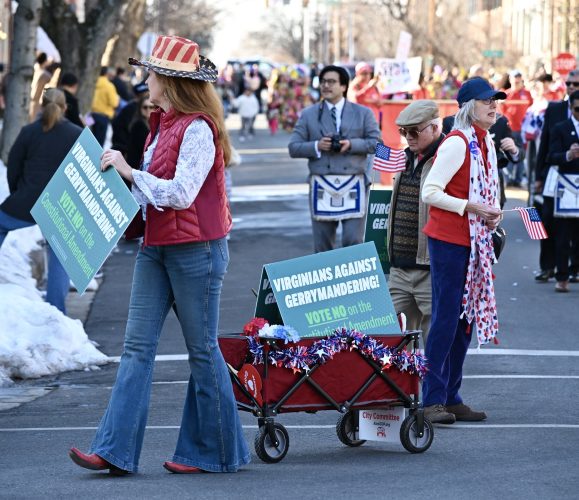
On the ground, the reaction has been visceral. In Birmingham, Alabama, hundreds of protesters gathered at the State House to decry the elimination of minority-representation districts. The protest featured prominent national figures, including New Jersey Senator Cory Booker and former Senator Doug Jones, signaling that the redistricting fight has become a central pillar of the national Democratic platform. In Tennessee, hundreds of citizens marched on the state Capitol in Nashville, challenging the legislature’s claim that redrawing maps was the "will of the people."
The legacy of the Civil Rights Movement looms large over these events. Many activists have drawn parallels between the current legislative efforts and the era of Jim Crow. The late Congressman John Lewis, a veteran of the "Bloody Sunday" march in Selma, often warned that the right to vote is "not a state of being" but an act that must be constantly defended. His words have become a mantra for the thousands of protesters currently taking to the streets across the South.
Broader Impact and Future Implications
The implications of the 2026 redistricting wars extend far beyond the immediate midterm elections. The normalization of mid-decade redistricting threatens to turn electoral boundaries into a permanent battlefield, where maps are redrawn every time a state house changes hands. This creates a cycle of instability that could erode public confidence in the fairness of elections.

Furthermore, the judicial narrowing of the Voting Rights Act suggests a fundamental shift in the Court’s approach to racial equity. By prioritizing "color-blind" map-making in a society where racial polarization remains a documented reality, the Court may be facilitating a return to a system where minority voices are effectively silenced in the halls of power.
As the nation moves toward the November 4 general election, the "unstoppable force" of voter mobilization will meet the "immovable object" of gerrymandered maps. While the Supreme Court has provided the tools for a radical reshaping of the American electorate, the final outcome remains in the hands of the voters. Whether the surge in public engagement and the shifting tides of polling data can overcome the structural advantages of the new maps remains the most critical question of the 2026 political cycle. The fight for the ballot, which many thought was settled in 1965, has proven to be an enduring and evolving struggle for the soul of the American republic.
