

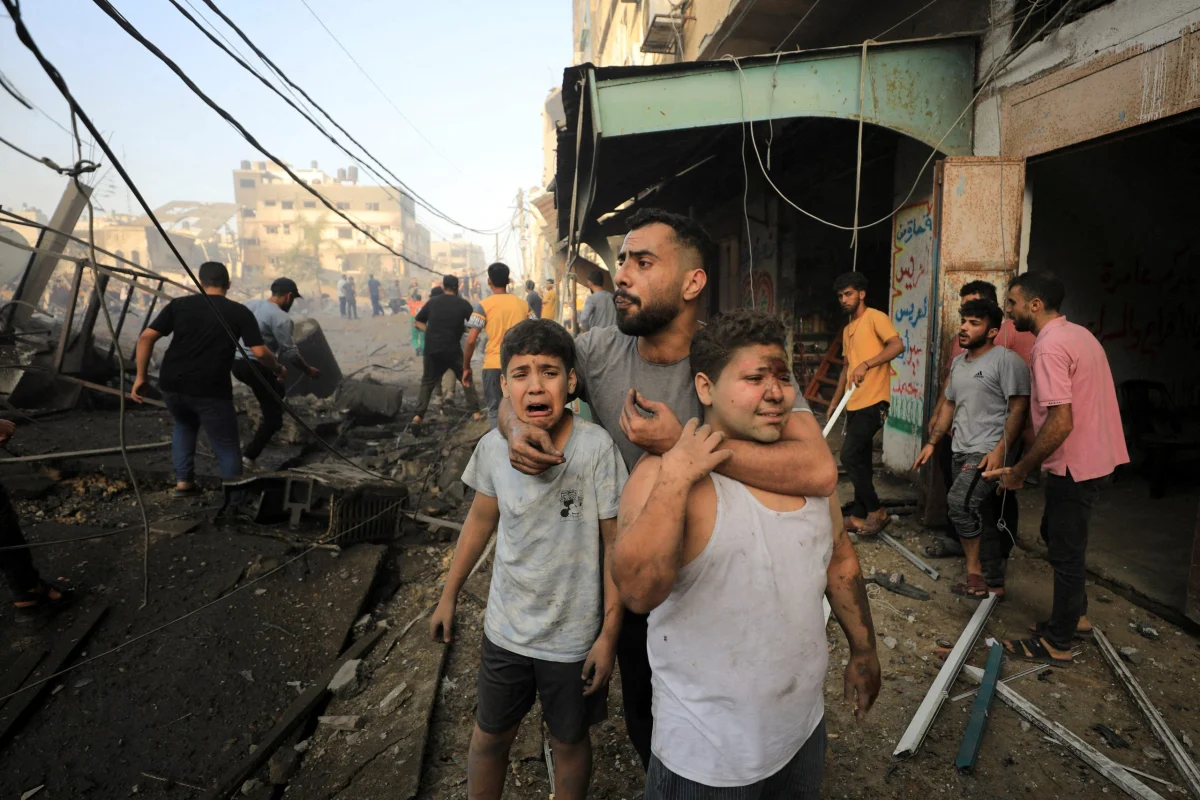
Palestinians in Gaza are preparing for the solemn burial of 105 individuals whose remains were recently recovered from the rubble of a devastating Israeli attack that occurred in Gaza City in October 2023. The victims were killed in a series of intense Israeli airstrikes on the afternoon of October 25, 2023, which involved at least 20 bombs and resulted in the complete leveling of the seven-storey Al Taj 3 residential building and the severe destruction of several other residential structures in the densely populated Yarmouk Square neighbourhood. The General Directorate of Civil Defence announced that coffins containing the remains of those killed would be carried in a funeral procession involving family members on Thursday, culminating in their burial at the Sheikh Radwan cemetery, located northwest of Gaza City. This recovery operation marks a significant, albeit tragic, milestone for families who have waited months to mourn and bury their loved ones, bringing a semblance of closure amidst the ongoing conflict.
The October 2023 Attack on Yarmouk Square: A Scene of Utter Devastation
The attack on October 25, 2023, was one of the early, yet particularly brutal, incidents in the broader Israeli military campaign that commenced after the October 7 attacks. The Yarmouk Square neighbourhood, a vibrant and bustling residential area, was transformed into a landscape of destruction within moments. Eyewitness accounts from the time described a terrifying barrage of explosions, with the Al Taj 3 building, a prominent seven-storey residential complex, collapsing entirely, trapping hundreds beneath its debris. Adjacent buildings suffered catastrophic damage, with many rendered uninhabitable. The sheer scale of the destruction made immediate rescue and recovery efforts incredibly challenging, a situation exacerbated by the ongoing hostilities and the critical targeting of essential infrastructure and equipment belonging to emergency services.
Abdul al-Majdalawi, operations director for Gaza’s civil defence, highlighted the profound difficulties faced by rescue teams in the immediate aftermath. He stated that it had been "impossible" to reach the bodies at the time of the attack, citing that "Bulldozers, excavators and other heavy machinery used by civil defence teams in Gaza were directly and deliberately targeted." This targeting of essential civil defence assets not only hampered initial rescue attempts but also severely crippled the capabilities of humanitarian responders for months, leaving countless bodies buried under vast quantities of rubble. The deliberate targeting of such equipment, if proven, raises serious questions regarding adherence to international humanitarian law, which mandates the protection of humanitarian workers and their essential tools.
A Prolonged Search for the Lost: Chronology of Recovery
The journey from the devastating strike on October 25, 2023, to the impending mass burial on Thursday has been a protracted and agonizing one. For months, the sites of destruction across Gaza, including Yarmouk Square, have held the grim secrets of those trapped beneath the rubble. The initial days and weeks following the attack were characterized by frantic, often bare-handed, efforts by residents and undertrained volunteers to search for survivors and retrieve bodies, frequently under renewed bombardment. The severe damage to infrastructure, coupled with the Israeli military’s declared operational zones and restrictions on movement, made systematic recovery efforts nearly impossible.
The recent recovery operation, which yielded the remains of 105 individuals from the Yarmouk Square site, represents a significant undertaking. Al Jazeera correspondent Ibrahim Khalili, reporting from Gaza City, noted that this was the fifth largest recovery operation of its kind since the conflict began in October 2023, in terms of the number of bodies retrieved. This statistic underscores the immense scale of human loss and the persistent challenge of accounting for the dead across the Gaza Strip. The operation was carried out in coordination with an Egyptian committee, indicating the need for external facilitation and resources to manage such a complex and sensitive task amidst the ongoing humanitarian crisis. The involvement of an external committee suggests the immense logistical and political hurdles faced in conducting recovery operations within Gaza, where access and resources are severely constrained. For the families, this marks the end of an unbearable period of uncertainty, allowing them to finally perform religious rites and achieve some measure of closure, however painful.
The Human Cost: Broader Context of Casualties and Destruction
The 105 victims from the Yarmouk Square attack are a fraction of the devastating human toll inflicted upon Gaza since October 7, 2023. According to the Gaza Health Ministry, over 37,000 Palestinians have been killed, and more than 85,000 injured, as of mid-June 2024. A significant proportion of these casualties are women and children. The United Nations Office for the Coordination of Humanitarian Affairs (OCHA) has repeatedly highlighted that the vast majority of those killed are civilians. Beyond direct fatalities, thousands more are still missing, presumed dead under the rubble, making comprehensive recovery and identification an ongoing, monumental task.
The destruction extends far beyond human lives. Satellite imagery and ground assessments reveal that a significant portion of Gaza’s residential buildings, infrastructure, and public services have been damaged or completely destroyed. Estimates vary, but reports suggest that over 60-70% of all residential units in Gaza have been affected, with large swathes of Gaza City, northern Gaza, and Khan Younis reduced to rubble. This widespread destruction contributes to the immense challenge of recovering bodies, as vast quantities of concrete and twisted metal must be meticulously sifted through, often without adequate heavy machinery or safety equipment.
The story of Osama Sharaf poignantly illustrates the personal magnitude of this tragedy. He shared his harrowing experience, stating, "37 members of his family were killed in the attack." For months, he has lived with the agony of not knowing the fate of many of them. "We recovered some of them at the beginning of the war, and today [Wednesday] 16 more were recovered, including my father, my mother, and all of my siblings. My sister’s son was also there with them," he recounted. This personal testimony underscores the generational loss and the profound emotional scars left by such attacks, where entire family lines are decimated in single incidents. The delayed recovery means months of suspended grief, unable to fully mourn or move forward.
Voices from the Rubble: Family Testimonies and Official Statements
The narrative of this mass burial is woven from the anguish of families and the resolute, yet often overwhelmed, statements of civil defence officials. Osama Sharaf’s account is particularly gut-wrenching, representing the silent suffering of countless Palestinians. His words paint a vivid picture of multi-generational loss, where the fabric of family and community is torn apart. The recovery of his parents and siblings, after such a long wait, while bringing a degree of closure, simultaneously reopens fresh wounds of grief. The sheer number – 37 family members – speaks to the high population density of Gaza and the catastrophic impact of large-scale bombardments on residential areas.
From the General Directorate of Civil Defence, their statements consistently underline the immense challenges faced by their teams. Beyond the direct accusations of targeting their equipment, they have repeatedly called for unimpeded access to sites of destruction and the provision of adequate resources. Their coordination with the Egyptian committee for this particular recovery operation highlights the international dimension of humanitarian aid and recovery efforts, often complicated by political and security considerations. Civil defence teams, already operating in one of the world’s most densely populated and blockaded territories, have been pushed to their absolute limits, working with dwindling resources and under constant threat.
While no specific Israeli statement regarding the October 25, 2023, Yarmouk Square attack was immediately available in the provided text, the Israeli military has consistently maintained that its operations in Gaza are aimed at dismantling Hamas infrastructure and capabilities, which it accuses of operating within civilian areas. Israel asserts that it takes precautions to minimize civilian casualties, often blaming Hamas for embedding itself among the civilian population and using them as human shields. However, these claims are frequently disputed by human rights organizations and international bodies, who point to the high number of civilian deaths, widespread destruction of civilian infrastructure, and the scale of displacement as evidence of potential violations of international law.
Humanitarian organizations, including various United Nations agencies and international NGOs, have consistently condemned the extensive loss of civilian life and the destruction of civilian infrastructure in Gaza. They have issued numerous calls for immediate ceasefires, protection of civilians, unimpeded humanitarian access, and adherence to international humanitarian law by all parties to the conflict. The UN has frequently highlighted the dire consequences of attacks on residential areas, schools, and hospitals, emphasizing the long-term trauma and humanitarian crisis exacerbated by the targeting of essential services and recovery efforts. The targeting of civil defence equipment, as reported by Abdul al-Majdalawi, aligns with broader concerns raised by these organizations regarding the operational environment for humanitarian actors in Gaza.
Broader Implications and The Path Forward
The mass burial of 105 victims from the Yarmouk Square attack carries profound broader implications, extending far beyond the immediate grief of the affected families. Firstly, it underscores the ongoing humanitarian crisis in Gaza, where the sheer volume of casualties and the scale of destruction mean that recovery efforts will likely continue for months, if not years. The process of identifying remains, particularly when bodies are severely disfigured or fragmented, is a complex and emotionally taxing endeavor that requires specialized forensic capabilities, which are largely absent or severely depleted in Gaza. The long-term psychological impact on survivors, witnesses, and recovery workers, who are repeatedly exposed to scenes of immense suffering, cannot be overstated. Generations will bear the scars of this conflict.
Secondly, the incident and the specific allegations of targeting civil defence equipment raise serious questions about potential violations of international humanitarian law (IHL). IHL mandates the protection of civilians and civilian infrastructure during armed conflict and prohibits attacks that are indiscriminate or disproportionate. The targeting of essential services like civil defence, which are crucial for saving lives and retrieving the dead, could be considered a violation if proven intentional and unjustified. Calls for independent investigations into such incidents are growing louder, with international bodies and human rights organizations demanding accountability for actions that may constitute war crimes. The lack of accountability often fuels cycles of violence and perpetuates grievances.
Thirdly, the incident highlights the immense challenges facing any future reconstruction efforts in Gaza. With entire neighborhoods reduced to rubble, the task of rebuilding will be staggering, requiring colossal financial investment, materials, and expertise. More importantly, it will require a stable political environment and sustained international support, which currently seem elusive. The recovery of bodies from under the rubble is a grim prelude to the monumental task of clearing debris and beginning the long process of urban renewal, a process that is inextricably linked to the emotional and psychological healing of the community.
Finally, the mass burial serves as a stark reminder of the enduring trauma inflicted upon the Palestinian population in Gaza. Each coffin represents not just an individual life lost, but a family shattered, a community diminished, and a future altered. The act of burial, a fundamental human right and a crucial step in the grieving process, is delayed by months, forcing families to live in a state of perpetual limbo. The international community continues to grapple with the complexities of the Israeli-Palestinian conflict, but events like the Yarmouk Square tragedy underscore the urgent need for a lasting resolution that prioritizes human life, dignity, and justice for all affected. The path forward remains fraught with challenges, but the imperative to prevent further loss of life and to ensure accountability for past atrocities is clearer than ever.
