

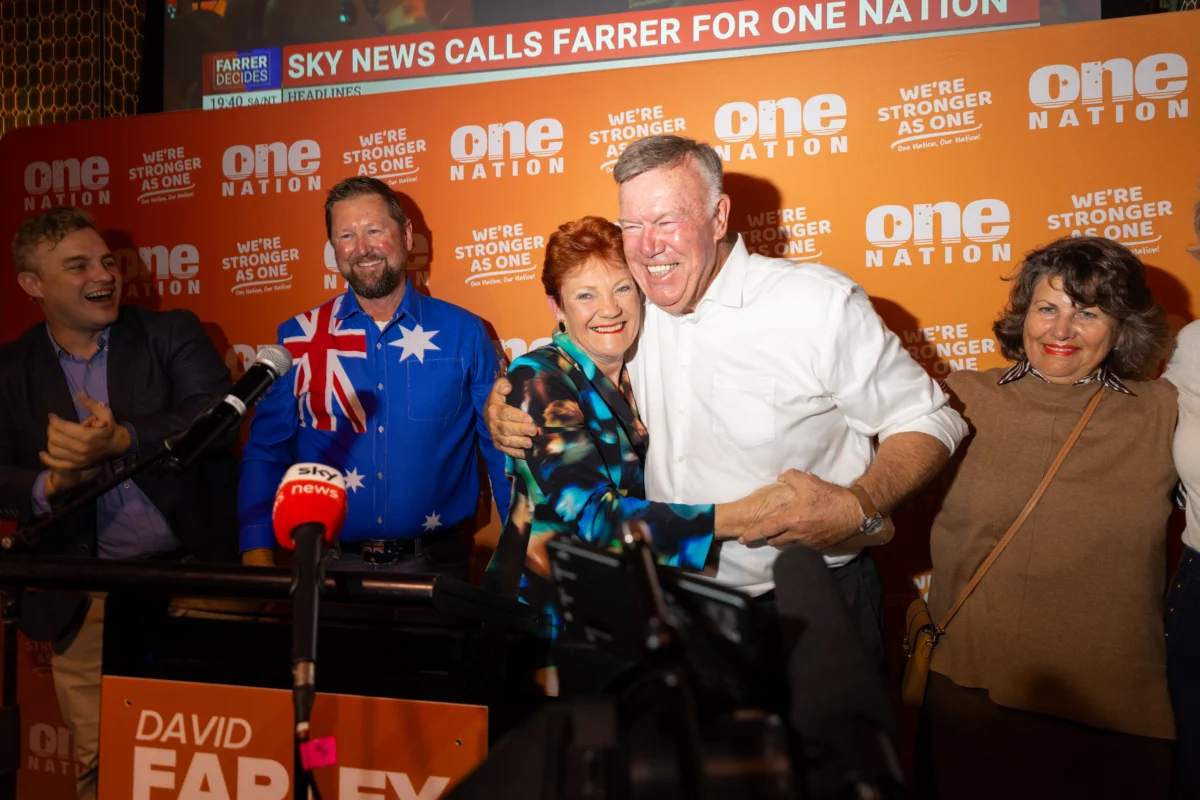
David Farley, the winning candidate for Australia’s far-right One Nation party, has achieved a historic victory, securing a seat in the country’s House of Representatives for the first time in the party’s three-decade history. This decisive win in the special election for the southwestern division of Farrer, located in rural New South Wales, marks a significant moment for the populist movement in Australian politics and reflects broader global trends of surging support for anti-establishment parties. Farley, a former agribusiness consultant, advocated for stricter migration policies tailored to Australia’s labour market needs and comprehensive farming reforms, resonating with a segment of the electorate expressing profound discontent with mainstream politics.
According to preliminary election results released on Saturday by the Australian Broadcasting Corporation (ABC), David Farley garnered a projected 59.1 percent of the vote, comfortably defeating his independent opponent, Michelle Milthorpe, who secured 40.8 percent. The centre-left Labor Party, which currently commands a majority in the lower house of parliament, notably chose not to field a candidate in this traditionally conservative electorate, a strategic decision that analysts suggest may have inadvertently cleared a path for a non-major party candidate. ABC election analyst Casey Briggs underscored the clarity of the result, stating in a broadcast, "It’s very clear, the next member for Farrer is David Farley. It’s not a close result."
The Farrer Division: A Conservative Bastion Under Pressure
The Farrer electorate is a vast, predominantly rural and regional division in New South Wales, encompassing agricultural heartlands and regional towns. Historically, Farrer has been a stronghold for conservative parties, particularly the Liberal Party. For decades, voters in Farrer have largely returned Liberal representatives to Canberra, making the loss of this seat to a party like One Nation a particularly poignant blow for the mainstream conservative movement. The special election was triggered by the resignation in February of Sussan Ley, a prominent figure in the Liberal Party and a former minister, who had held the seat with comfortable margins for many years. Her departure created an electoral vacuum, providing an unprecedented opportunity for challenger parties.
The demographic and economic profile of Farrer makes it fertile ground for populist messaging. Residents in regional Australia often voice concerns about issues distinct from those in metropolitan areas, including agricultural policy, water management, infrastructure investment, and access to essential services. Critically, discussions around immigration in regional areas frequently revolve around the availability of skilled and unskilled labour for industries like agriculture, as well as the social and economic integration of new arrivals. Farley’s platform, which explicitly linked migration policy to the needs of the Australian labour market, particularly in agriculture, directly addressed these localised anxieties. His emphasis on "policy that fits Australia, not the world" also tapped into a prevailing sentiment of national interest over globalist agendas, a common theme among populist movements.
One Nation’s Decades-Long Journey to Parliament’s Lower House
The victory in Farrer represents a significant milestone for One Nation, a party founded by the controversial politician Pauline Hanson in 1997. From its inception, One Nation has been characterised by its populist, anti-immigration, and protectionist platform, often appealing to voters disillusioned with the major parties. The party experienced a meteoric rise in the late 1990s, particularly in Queensland, but subsequent internal strife and electoral setbacks saw its influence wane. However, One Nation has demonstrated remarkable resilience, consistently re-emerging in the political landscape, particularly in the Senate (the upper house of parliament), where it has maintained a presence and often held the balance of power.
Despite its past successes in the Senate, securing a seat in the House of Representatives has remained an elusive goal. The lower house, where governments are formed and legislation is primarily initiated, requires a broader base of support within specific electorates under Australia’s preferential voting system, making it a harder battleground for smaller parties. Farley’s win, therefore, is not merely another electoral gain but a symbolic penetration into the core of Australia’s legislative power. Pauline Hanson, the enduring face of One Nation, has consistently articulated a vision for the party to expand its footprint beyond the Senate, and Farley’s success in Farrer provides the strongest evidence yet of the party’s growing appeal in mainstream electoral contests. This victory can be seen as a culmination of years of persistent campaigning and a strategic ability to tap into the frustrations of an increasingly disenchanted electorate.
David Farley: A New Voice for One Nation in Canberra
David Farley, with his background as an agribusiness consultant, brings a practical and industry-specific perspective to his policy positions, particularly on farming and migration. His expertise in the agricultural sector likely lent credibility to his calls for "farming reforms" and a migration policy explicitly designed to meet the labour demands of Australian industries. In his post-victory remarks, Farley articulated a vision for One Nation’s future, declaring that the party "has reached the end of its beginning" and is "going through the ceiling." This statement reflects a confident belief in the party’s momentum and its potential for continued growth.
Farley’s policy platform can be broken down into several key areas:
- Migration Policy: He advocated for an immigration policy based strictly on the needs of Australia’s labour market, particularly in agriculture. He stated, "We’re not going to implode any of our industries that are reliant on good quality, assimilating migrants into the country." However, he sharply contrasted this with a firm stance against what he perceives as unsustainable immigration, adding, "But we’re not going to entertain people to come here and live off our balance sheet, our purse and give us nothing." This rhetoric resonates with concerns about the economic impact of immigration and the integration of new arrivals, a common theme in populist discourse globally.
- Farming Reforms: While specific details of his proposed reforms were not extensively detailed in initial reports, his background suggests a focus on policies that support primary producers, enhance food security, and address challenges unique to the agricultural sector, such as water rights, market access, and regulatory burdens.
- Cost of Living: Farley also pledged to work towards bringing down the cost of living, a universal concern for Australians facing rising inflation, interest rates, and housing costs. His approach is encapsulated in his statement: "We’re going to have policy that fits Australia, not the world." This nationalist economic perspective prioritises domestic economic conditions and Australian citizens’ welfare above global economic integration or international agreements, aligning with the protectionist wing of the populist movement.
These policy planks, articulated by a candidate with direct experience in a key regional industry, offered a compelling alternative to voters in Farrer who felt their concerns were not adequately addressed by the major parties.
Reactions and Analysis from Across the Political Spectrum
The Farrer by-election result has elicited a range of reactions and analyses from political figures and commentators.
- David Farley’s Triumphant Stance: Farley’s post-victory comments exuded confidence and a sense of historic achievement for One Nation. His declaration of the party reaching "the end of its beginning" suggests an expectation of sustained growth and a more prominent role in national politics.
- Michelle Milthorpe’s Concession: The independent opponent, Michelle Milthorpe, congratulated Farley on his win but also issued a cautious challenge. She acknowledged that One Nation had successfully "reflect[ed] the anger we feel out here," but warned that "that is the easy part. The hard part is doing something about it." This statement highlights the significant hurdle populist parties often face in translating anti-establishment sentiment into effective governance and tangible policy outcomes.
- Pauline Hanson’s Perspective: While specific direct quotes from Pauline Hanson were not immediately available, it is highly probable that she would have celebrated this victory as a vindication of her long-held political vision and the party’s enduring relevance. For Hanson, this lower house win would symbolise a crucial step towards One Nation becoming a more mainstream and influential force in Australian parliament.
- The Labor Party’s Strategic Calculation: The Labor Party’s decision not to run a candidate in Farrer was likely a pragmatic one. Recognising the electorate’s deep conservative roots and the challenge of winning a by-election in such a seat, Labor may have opted to conserve resources and avoid diverting attention from its national agenda. However, the outcome – a win for the far-right – presents a new challenge, as it indicates a segment of the electorate that is deeply dissatisfied and open to populist alternatives, even in areas not traditionally aligned with Labor.
- The Liberal Party’s Dilemma: The loss of Farrer to One Nation is a significant setback for the Liberal Party. As the traditional conservative custodians of such regional seats, this result signals a potential erosion of their base and a growing disillusionment among conservative voters. It forces the Liberal Party to confront the challenge of how to reclaim voters who are gravitating towards One Nation’s more hardline, populist positions on issues like immigration and economic nationalism. This could trigger internal debates within the Liberal Party about their own messaging and policy platforms to counter the appeal of the far-right.
- Political Analysts’ Interpretations: Analysts are widely interpreting the Farrer result as more than just a by-election anomaly. Many see it as a strong protest vote against the major parties and a manifestation of deeper regional discontent. It underscores the ongoing challenges faced by mainstream political parties in connecting with voters who feel left behind or unheard, particularly in regional and rural areas. The victory suggests that One Nation is successfully capitalising on these sentiments, positioning itself as the authentic voice of disgruntled Australians.
Broader Implications for Australian Politics
While David Farley’s victory does not fundamentally alter the balance of power in the House of Representatives, where the Labor Party holds a secure majority with 94 out of 150 seats, its symbolic significance is profound.
- Increased Visibility and Platform for One Nation: A lower house seat provides One Nation with a direct voice in the chamber where most legislation is debated and passed. It offers Farley a platform to champion his policies and challenge government decisions directly, raising the party’s profile and influence.
- Pressure on Mainstream Parties: The Farrer result intensifies the pressure on both the Liberal and Labor parties to address the underlying causes of populist support. For the Liberal Party, it’s about retaining their conservative base. For Labor, it’s about understanding and responding to the concerns of regional Australia, even in electorates they may not contest.
- The Immigration Debate: Farley’s win will undoubtedly reignite and intensify the national debate around immigration policy. His focus on labour market needs and "assimilating migrants" will likely be echoed by One Nation in parliament, pushing the discussion towards more restrictive or targeted approaches.
- Regional Discontent: The election outcome unequivocally highlights the persistent and growing discontent in regional Australia. Issues such as perceived neglect, economic hardship, and a sense of cultural alienation are potent forces driving voters towards non-mainstream alternatives.
- Future of One Nation: This victory poses the question of whether it is a one-off protest or a harbinger of sustained growth for One Nation. If the party can demonstrate effectiveness in the lower house and continue to tap into voter frustration, it could build momentum towards future federal elections, potentially securing more seats and influencing policy directions.
Australia in a Global Context: The Rise of Populism
Farley’s victory in Farrer aligns with a noticeable global trend of growing electoral support for far-right populist parties. The original article briefly referenced the recent gains made by Britain’s populist right-wing Reform UK party in local council elections, often at the expense of the Labour Party. This parallel is highly instructive.
Across Europe, similar political shifts are evident. The Party for Freedom (PVV) in the Netherlands, led by Geert Wilders, recently emerged as the largest party in the general election, campaigning on an anti-immigration and anti-EU platform. In Germany, the Alternative for Germany (AfD) has seen a dramatic surge in support, particularly in eastern states, driven by anti-immigration sentiment and economic anxieties. France’s National Rally (RN), under Marine Le Pen, continues to be a formidable force, consistently challenging the centrist establishment. In North America, figures like Donald Trump in the United States exemplify the enduring appeal of anti-establishment, nationalist populism.
Common threads connect these movements:
- Anti-Immigration Stance: A central pillar for most, advocating for stricter border controls, reduced intake, and often, more stringent integration requirements.
- Anti-Establishment Rhetoric: A deep distrust of traditional political elites, mainstream media, and established institutions.
- Economic Nationalism/Protectionism: Prioritising domestic industries, jobs, and economic welfare over global trade agreements or international economic policies.
- Focus on Cost of Living: Directly addressing everyday economic struggles faced by citizens, often blaming existing government policies or global forces.
- Cultural Conservatism: Appeals to traditional values and a sense of national identity, often framed against perceived threats from multiculturalism or globalism.
The success of these parties, including One Nation in Australia, suggests a widespread dissatisfaction with the status quo and a search for political alternatives that promise to put national interests and the concerns of ordinary citizens first. The Farrer by-election, therefore, is not an isolated incident but a local manifestation of a powerful global political current.
In conclusion, David Farley’s historic win for One Nation in Farrer, while not immediately impacting the parliamentary majority, is a significant symbolic victory that underscores the persistent appeal of populist, far-right politics in Australia. It signals a shifting political landscape, putting mainstream parties on notice to address deep-seated voter frustrations, particularly in regional areas, concerning issues of migration, economic security, and national identity. As One Nation gains a new platform in the lower house, the coming years will test its ability to translate populist anger into concrete legislative action, and its influence on Australian political discourse is set to grow.
