

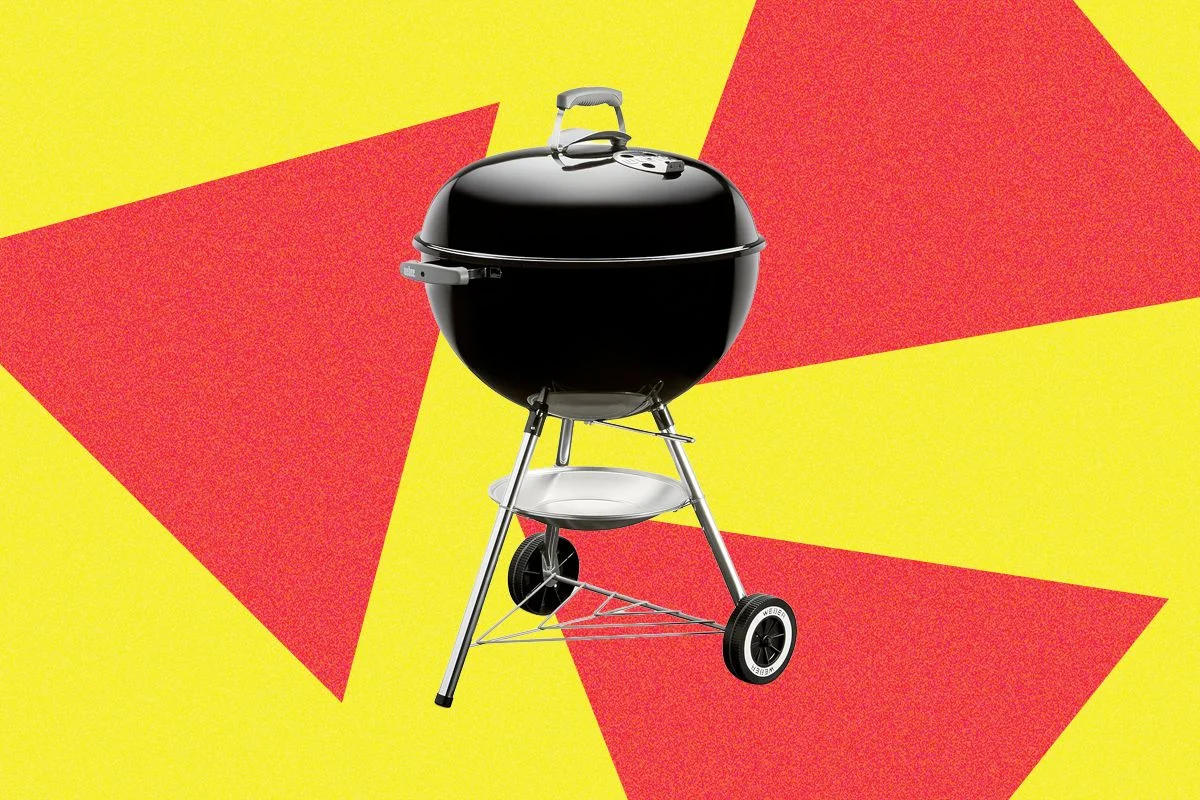
The traditional art of grilling has long been viewed as a primal intersection of fire, smoke, and human intuition. For decades, the hallmark of a master pitmaster was the ability to sense the subtle "give" of a medium-rare steak or the delicate heft of a perfectly rendered brisket. This "Zen" of backyard cooking required a meticulous understanding of airflow, involving the manual adjustment of vents to feed oxygen to pyramidal charcoal embers within kettle-style or kamado-style cookers. However, a significant technological shift is currently reshaping the landscape of outdoor culinary arts. The emergence of sophisticated aftermarket technology now allows enthusiasts to bypass years of trial-and-error, transforming "dumb" analog grills into precision-engineered smart cookers through the use of app-controlled fans and digital temperature probes.
The Evolution of the Smart Grilling Ecosystem
The concept of the "smart grill" is not entirely new. Over the last decade, high-end manufacturers have introduced all-in-one smart cookers, such as the Recteq 1600 or flagship Traeger models, which often exceed the $1,000 price point. These machines integrate sensors, automated pellet delivery, and internal venting systems. While these units offer unparalleled convenience, they introduce a distinct set of challenges related to longevity and technical obsolescence. As software ecosystems evolve, there is a growing concern among consumers that a thousand-dollar investment could be rendered useless if a manufacturer discontinues an app or if a proprietary internal sensor fails.
In response, a robust aftermarket has developed, focusing on modular upgrades. This philosophy allows users to retain the "dumb" hardware of a resilient, long-lasting grill—such as the ubiquitous Weber Kettle or the ceramic Big Green Egg—while "souping it up" with modern controllers. This modular approach mirrors the automotive aftermarket, where a reliable base vehicle is enhanced with third-party performance parts. By decoupling the digital controller from the grill’s physical structure, users can upgrade their technology as it improves without having to replace the entire cooking apparatus.
The Mechanics of Digital Airflow Control
The fundamental technology behind most aftermarket smart grill controllers is the Proportional-Integral-Derivative (PID) controller. This is the same logic used in high-end espresso machines and smart home thermostats. Unlike a primitive thermostat that simply turns a fan on or off based on a set point, a PID controller measures temperature differentials moment by moment and responds predictively.
The system typically consists of three components:
- A Pit Probe: A sensor that monitors the ambient temperature at the grill’s cooking surface.
- A Meat Probe: One or more sensors inserted into the food to monitor internal doneness.
- A Variable-Speed Fan: A motorized unit attached to the grill’s intake vent that modulates the amount of oxygen reaching the charcoal.
By controlling the oxygen supply, the system can precisely regulate the intensity of the fire. While the process is rarely as perfect as an indoor electric oven, it offers a level of stability that is nearly impossible to achieve through manual vent manipulation, especially during "low and slow" cooks that can last upwards of 12 hours.
Spider Grills Venom: A Specialized Solution for the Weber Kettle
The Weber Kettle, first introduced in 1952, remains the world’s best-selling charcoal grill due to its simplicity and durability. The Spider Grills Venom ($280) is an aftermarket device specifically engineered to integrate with the 22-inch and 26-inch versions of this classic grill.
During technical evaluations, the Venom has demonstrated a high degree of integration. The installation process typically takes less than ten minutes and involves mounting the controller to the bottom vent of the kettle. The device utilizes 2.4 GHz Wi-Fi, a frequency chosen for its superior range in outdoor environments compared to the faster but shorter-range 5 GHz band.
Operational data suggests that while the Venom is highly accurate for low-temperature smoking, it can exhibit a minor "overshoot" when aiming for high-sear temperatures (e.g., 450°F and above), sometimes exceeding the target by 25 degrees before leveling off. Despite this, the ability to set a target temperature on a smartphone and receive alerts when meat reaches its destination has been characterized as a paradigm shift for kettle owners, effectively turning a $150 analog tool into a precision instrument.
ChefsTemp ProTemp S1: Modularity for Ceramic Cookers
Ceramic or "kamado" grills, such as the Kamado Joe or Big Green Egg, present a different set of thermal challenges. These grills are prized for their heavy ceramic walls, which retain heat with exceptional efficiency. However, this same retention makes them difficult to cool down if the fire becomes too intense.

The ChefsTemp ProTemp S1 system addresses this through a modular wireless design. It replaces the stock screw-in thermometer with a digital hub and pairs it with a wireless fan unit known as the "Breezo." Because the components are modular, the system can be adapted to a wide variety of brands, including Primo, Akorn, and Vision.
However, the modularity introduces complexity. A full setup requires the synchronization of the controller, the fan, the smartphone, and multiple probes. Technical analysts have noted that this reliance on a multi-device ecosystem requires a robust Wi-Fi signal. In environments with weak outdoor connectivity, users may face challenges switching between Bluetooth and Wi-Fi modes, which often requires a full unpairing and re-pairing of the system. Despite these hurdles, the ChefsTemp app provides sophisticated guidance, offering estimates on "time to doneness" and "flip alerts" based on the specific cut and thickness of the meat.
The "Luddite" Alternative: Weber Connect Smart Grilling Hub
For many veteran grillers, the introduction of an automated fan is seen as an unnecessary failure point. This segment of the market often prefers "monitoring-only" technology. The Weber Connect Smart Grilling Hub, released in 2020, serves this demographic.
Unlike the Venom or the ProTemp S1, the Weber Connect does not intervene in the cooking process. It is a universal hub that supports up to four probes and sends temperature data to a smartphone via Wi-Fi or Bluetooth. This allows the griller to perform other tasks while maintaining a "digital eye" on the cook. If the temperature of the charcoal drops below a certain threshold, the app alerts the user to add more fuel. This approach preserves the traditional "art" of fire management while providing a safety net against ruined meals.
Market Context and Consumer Trends
The rise of aftermarket grill tech coincides with a broader surge in the global barbecue market. According to data from the Hearth, Patio & Barbecue Association (HPBA), nearly 70% of U.S. households own a grill or smoker. Within this market, charcoal remains a dominant force due to the flavor profile it provides.
The "smartification" of these traditional grills represents a bridge between two consumer desires: the authentic flavor of wood and charcoal, and the convenience of the modern smart home. Market analysts suggest that the outdoor cooking sector is following the trajectory of the indoor kitchen, where connectivity is becoming a standard expectation rather than a luxury feature.
Timeline of Smart Grilling Innovation
- 2010-2015: The "Early Adopter" Phase. Introduction of basic Wi-Fi thermometers and early pellet grill controllers.
- 2018-2020: The "Integration" Phase. Major brands like Weber and Big Green Egg launch their first official smart accessories (Weber Connect, Egg Genius).
- 2021-Present: The "Aftermarket Boom." Companies like Spider Grills and ChefsTemp refine PID-controlled fan systems for legacy hardware.
Broader Implications and Industry Analysis
The shift toward aftermarket smart technology has several implications for the industry and the consumer:
1. Accessibility: Smart technology lowers the barrier to entry for complex culinary techniques like Texas-style brisket or reverse-seared ribeye. By automating temperature control, the "fear of failure" that often prevents beginners from attempting long smokes is significantly reduced.
2. Sustainability and Longevity: By adding smart features to existing "dumb" grills, consumers extend the life of their hardware. A stainless steel or ceramic grill can last decades; by using modular electronics, the consumer avoids the "planned obsolescence" often found in integrated smart appliances.
3. Data-Driven Cooking: The transition from intuition to data allows for more consistent results. Pitmasters can now review "cook logs" to see exactly how their grill performed, allowing them to refine their techniques with scientific precision.
Conclusion
The transformation of "dumb" grills into smart machines via aftermarket technology represents a maturation of the outdoor cooking industry. It acknowledges that while the "primal" nature of cooking with fire is central to the experience, human error remains the most significant variable. Through the use of PID controllers, variable-speed fans, and sophisticated software, the modern backyard cook can now achieve professional-grade results on a budget. Whether through a dedicated system like the Spider Grills Venom or a universal monitor like the Weber Connect, the era of the "un-smart" grill is rapidly drawing to a close, ensuring that no grill—no matter how old or simple—is left behind in the digital age.
