

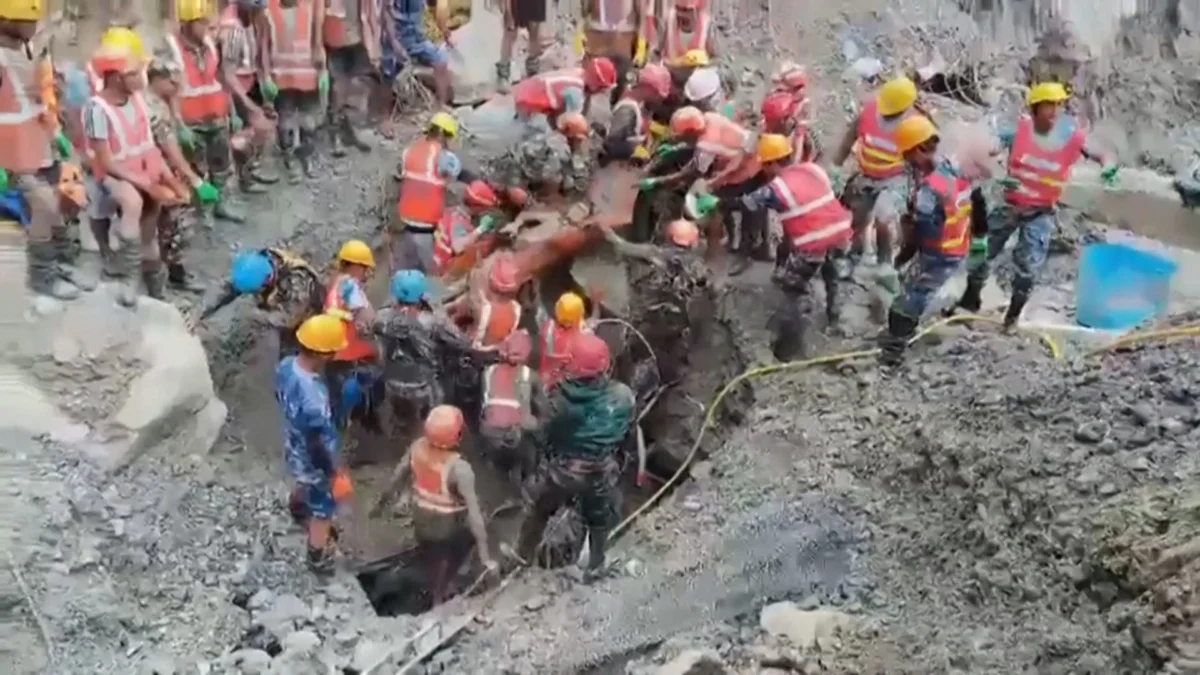
In a miraculous turn of events, rescuers in Nepal have pulled two workers alive from a hydropower tunnel along the Trishuli River, nine days after a devastating glacier collapse buried the site under an immense deluge of ice, rock, and mud. The successful extraction of the two individuals, whose identities have not yet been fully released but are understood to be part of the construction crew for the Upper Trishuli-1 Hydropower Project, has injected a powerful, albeit fragile, wave of hope into an otherwise grim search operation. Teams are now intensifying their efforts as they continue to comb through the treacherous debris, believing that at least 900 other individuals, primarily laborers and engineers, may still be trapped within the extensive tunnel network of various hydropower projects impacted by the catastrophic event. The incident, which occurred on August 26, 2026, has highlighted Nepal’s immense vulnerability to climate-induced disasters and the inherent risks associated with its ambitious hydropower development plans in the geologically unstable Himalayan region.
The Catastrophe Unfolds: A Glacier’s Fury
The disaster struck with brutal suddenness on the morning of August 26, 2026, in the mountainous region of Nepal, specifically impacting an area along the Trishuli River. Preliminary reports from glaciological experts and geological surveys suggest that the collapse was initiated by the sudden detachment of a significant portion of a high-altitude glacier. While the precise trigger is still under investigation, factors such as unprecedented seasonal heatwaves, accelerated glacial melt, and underlying seismic instability are being considered. The sheer volume of ice, estimated to be several million cubic meters, cascaded down the slopes, gathering immense momentum and incorporating rock, soil, and water into a deadly slurry. This massive debris flow, reminiscent of a flash flood but with the destructive power of a landslide, engulfed critical infrastructure, including multiple sections of hydropower tunnels and associated camps along the Trishuli River valley.
The Trishuli River is a vital artery for Nepal’s energy sector, hosting numerous ongoing and completed hydropower projects. The Upper Trishuli-1 Hydropower Project, an ambitious 216 MW run-of-river project, was reportedly in an advanced stage of construction, employing hundreds of workers across various sites, including long underground tunnels designed to channel river water to powerhouses. It is these tunnels, along with ancillary access roads and temporary worker accommodations, that bore the brunt of the glacial collapse, leaving a trail of devastation and an unknown number of casualties.
A Miraculous Rescue Against All Odds
The rescue of the two workers, whose names have been tentatively identified as Ramesh Rai and Krishna Tamang, marks a significant breakthrough. For nine agonizing days, their fate remained unknown. The rescue operation, a joint effort involving the Nepal Army, Armed Police Force, local police, and civilian volunteers, has been hampered by the extreme terrain, unstable debris, and the sheer scale of the affected area. Access roads were destroyed, communication lines severed, and the constant threat of further landslides and icefalls made progress painstakingly slow and incredibly dangerous.
According to a spokesperson for the Nepal Army’s disaster response unit, Major General Santosh Thapa, the two workers were discovered in a small, relatively stable pocket within a collapsed section of the main headrace tunnel. "Our specialized search and rescue teams, utilizing ground-penetrating radar and thermal imaging, detected signs of life late on September 3rd," Major General Thapa stated in a press briefing. "After hours of meticulous excavation and shoring up the unstable overhead, we managed to create a small opening. The workers were conscious but severely dehydrated and suffering from minor injuries. Their survival after nine days in such conditions is nothing short of a miracle and a testament to their resilience and the dedication of our rescue personnel."
The rescue operation involved carefully tunneling through compacted ice and rock, often by hand, to avoid causing further collapses. Medical teams were on standby, and upon extraction, Rai and Tamang were immediately airlifted to a hospital in Kathmandu for urgent medical attention. Their families, who had been holding vigil for over a week, expressed overwhelming relief and gratitude, offering a flicker of hope to the hundreds of other families still anxiously awaiting news.
The Ongoing Search for Hundreds
Despite the success of this isolated rescue, the overall situation remains dire. Estimates from the project developers and local authorities suggest that over 900 individuals are still unaccounted for. This figure includes workers from various shifts at the Upper Trishuli-1 project, as well as potentially smaller numbers from other upstream or downstream projects that might have been affected by the cascading debris flow. The vast majority are believed to be trapped within the extensive tunnel systems, which can stretch for kilometers, or buried under the immense volume of earth and ice.
The search strategy has now shifted to a multi-pronged approach. Heavy machinery, including excavators and bulldozers, are being deployed to clear access routes and open up main tunnel entrances where possible. Concurrently, specialized teams are conducting manual searches in areas deemed too unstable for heavy equipment, using sniffer dogs, drones equipped with advanced sensors, and acoustic listening devices. However, the sheer volume of debris, the depth of the burial in some areas, and the challenging topography present unprecedented obstacles. The race against time is critical, as the survivability rate diminishes significantly with each passing day.
Nepal’s Hydropower Ambitions and Environmental Realities
Nepal, a landlocked nation nestled in the Himalayas, possesses immense hydropower potential, often referred to as its "white gold." With an estimated theoretical capacity of over 83,000 MW, developing hydropower is central to the country’s economic growth, energy security, and aspirations to become a net exporter of electricity. Projects like Upper Trishuli-1 are crucial for meeting domestic demand and generating foreign exchange through cross-border energy trade, primarily with India.
However, this ambition comes with significant environmental and geological risks. The Himalayas are one of the most tectonically active and geologically fragile mountain ranges in the world, prone to earthquakes, landslides, and flash floods. Furthermore, they are on the front lines of climate change. According to a 2023 report by the International Centre for Integrated Mountain Development (ICIMOD), Himalayan glaciers are melting at an unprecedented rate, with some regions experiencing a 65% acceleration in ice loss since the beginning of the 21st century. This rapid glacial retreat contributes to the formation and expansion of glacial lakes, which can burst, leading to devastating glacial lake outburst floods (GLOFs). It also destabilizes ice masses, increasing the likelihood of sudden collapses, such as the one witnessed on August 26.
The Trishuli River basin, known for its steep gradients and numerous tributary valleys, is particularly susceptible to such events. While environmental impact assessments (EIAs) are mandatory for hydropower projects, the dynamic and rapidly changing climate conditions often present unforeseen challenges that can exceed the scope of conventional risk analyses.
A History of Himalayan Disasters
Nepal has a tragic history of natural disasters. From the devastating Gorkha earthquake in 2015 that claimed nearly 9,000 lives, to annual monsoon-induced landslides and floods that displace thousands and cause widespread destruction, the country is acutely vulnerable. The current glacier collapse adds to a growing list of climate-related extreme events that are becoming more frequent and intense. In 2021, a similar, albeit smaller, glacier burst in Uttarakhand, India, killed over 200 people and destroyed two hydropower projects, serving as a stark warning of the dangers posed to infrastructure in these fragile ecosystems.
These incidents underscore the urgent need for enhanced early warning systems, robust disaster preparedness, and a reassessment of construction practices in high-risk zones. The challenge lies in balancing the pressing need for economic development with the imperative of safeguarding lives and the environment.
Official Response and International Support
The Nepali government has declared a national emergency in the affected districts. Prime Minister Sher Bahadur Deuba expressed profound sorrow over the incident and pledged "every possible resource" for the rescue operation and subsequent relief efforts. "This is a moment of immense tragedy for our nation," PM Deuba stated in an address to the nation. "We are working tirelessly to save those trapped and to support the families affected. We must also confront the broader challenge of climate change, which is threatening the very fabric of our communities and infrastructure."
The Ministry of Energy, Water Resources, and Irrigation has initiated an internal inquiry into the incident, focusing on the environmental impact assessments and safety protocols implemented by the affected projects. The Ministry of Home Affairs is coordinating the multi-agency rescue effort, which includes technical assistance from international partners. India, China, and the United Nations Office for Disaster Risk Reduction (UNDRR) have offered specialized equipment, expert personnel, and financial aid to support Nepal’s response. Search teams from neighboring countries, with experience in high-altitude rescues, are reportedly en route or already on the ground.
Expert Perspectives and Future Implications
Experts are weighing in on the broader implications of the disaster. Dr. Pema Gyamtsho, a glaciologist at Kathmandu University, emphasized the need for a paradigm shift in development planning. "We are seeing direct consequences of climate change," Dr. Gyamtsho explained. "The stability of Himalayan glaciers is rapidly diminishing. Future infrastructure projects, especially those in river valleys fed by glacial systems, must incorporate far more comprehensive and dynamic risk assessments that account for accelerating melt rates and increased geological instability. This isn’t just about a single event; it’s about a pattern."
The incident will undoubtedly lead to a rigorous review of safety standards for all major infrastructure projects in Nepal’s mountainous regions. It highlights the importance of robust early warning systems, real-time monitoring of glacial activity, and the development of evacuation protocols for construction sites in high-risk areas. The economic impact could be substantial, not only due to the immediate loss of life and property but also from potential delays or cancellations of future hydropower projects, which could jeopardize Nepal’s energy independence goals.
Humanitarian Impact and Community Resilience
Beyond the immediate crisis, the human toll is immense. Families of the missing workers are enduring an agonizing wait, gathering at makeshift information centers, clinging to every piece of news. Many of the workers are migrant laborers from remote parts of Nepal, whose families depend entirely on their income. The psychological trauma on survivors, rescue workers, and the affected communities will be long-lasting. Local communities, often the first responders in such crises, have shown remarkable resilience, mobilizing quickly to assist rescue teams and provide support. Their intimate knowledge of the terrain has proven invaluable in navigating the treacherous landscape.
The disaster also raises questions about worker safety and social protection in large-scale infrastructure projects. Ensuring adequate insurance, compensation, and support for the families of victims will be a critical task for the government and project developers.
Long-Term Policy and Global Responsibility
The glacier collapse along the Trishuli River serves as a poignant reminder of Nepal’s precarious position at the nexus of development aspirations and climate vulnerability. It necessitates not only an immediate, robust disaster response but also a fundamental re-evaluation of long-term development strategies. This includes investing more heavily in climate change adaptation measures, strengthening institutional capacities for disaster risk reduction, and advocating strongly on the global stage for accelerated climate action to mitigate the root causes of such catastrophic events.
As rescue efforts continue into their second week, the fragile hope kindled by the rescue of two workers remains overshadowed by the grim reality of hundreds still missing. The international community watches closely, aware that the fate of Nepal’s infrastructure and its people is increasingly intertwined with the health of the planet’s most majestic, yet vulnerable, mountain range. The full extent of the tragedy and its long-term ramifications will only become clear in the weeks and months to come, but the lessons learned from this disaster must shape Nepal’s future resilience.
