

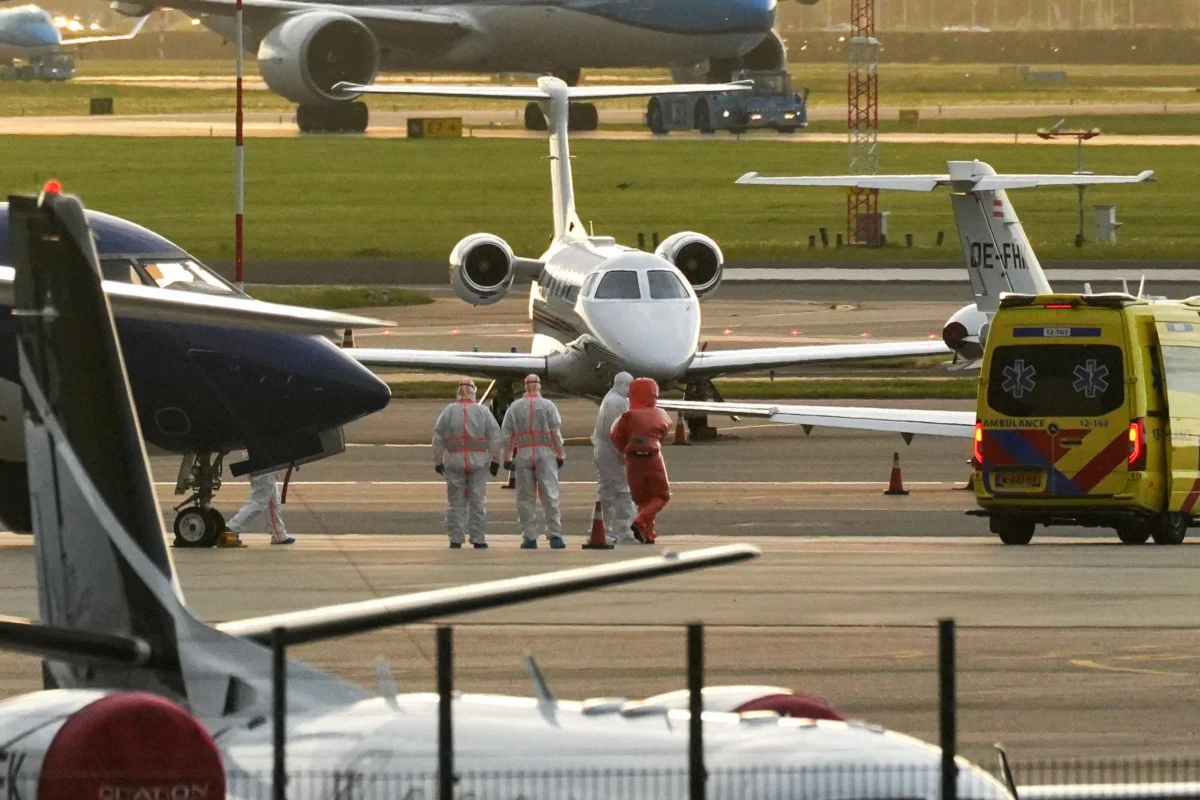
As passengers return to the United States following a rare and concerning outbreak of the Andes hantavirus aboard a cruise ship, the nation’s public health infrastructure has faced a critical challenge: the absence of a widely available, validated diagnostic tool capable of identifying the pathogen in its earliest, most treatable stages. While federal agencies and most state laboratories remained unequipped for rapid molecular diagnosis of this specific South American strain, the Nebraska Public Health Laboratory (NPHL) at the University of Nebraska Medical Center (UNMC) in Omaha has successfully mobilized to fill the void. Within a matter of days, the facility developed and validated a custom diagnostic test, positioning Nebraska as a likely national leader in the detection of this lethal virus.
The initiative was spurred by the notification that 16 American passengers from the affected vessel would be transported to Omaha for monitoring and potential treatment. Facing a pathogen with a historical case fatality rate of approximately 35 percent, experts at UNMC recognized that traditional testing methods would be insufficient for the proactive management of these high-risk individuals. The result of their efforts is a specialized polymerase chain reaction (PCR) test, a molecular diagnostic tool that can identify the presence of viral genetic material long before the patient’s immune system produces detectable antibodies.
The Challenge of the Andes Virus
The Andes virus (ANDV) is a member of the hantavirus genus, but it is distinct from the strains typically encountered in North America. While the United States has long managed cases of the Sin Nombre virus—primarily found in the Four Corners region and transmitted by deer mice—the Andes virus is native to South America, specifically Argentina and Chile. It is unique among hantaviruses for its documented potential for person-to-person transmission, a factor that significantly elevates its public health risk profile compared to its North American relatives.
Genetically, the Andes virus differs substantially from the Sin Nombre strain. This genetic divergence means that the diagnostic tests currently utilized by state labs in the U.S. Southwest are ineffective at detecting the South American variety. Without a specific molecular probe designed for the Andes virus’s unique RNA sequence, a patient could test negative on standard domestic hantavirus panels while actively carrying a life-threatening infection.
A Critical Diagnostic Gap
The urgency of Nebraska’s development of the PCR test highlights a significant gap in the national diagnostic landscape. When the NPHL first sought assistance, Director Peter Iwen contacted the U.S. Centers for Disease Control and Prevention (CDC). While the CDC maintains the capability to perform serological testing—which identifies antibodies produced in response to an infection—this method is inherently reactive. Antibodies typically do not reach detectable levels until a patient is already symptomatic and the illness has progressed.
According to Andrew Nixon, a spokesperson for the U.S. Department of Health and Human Services, the CDC does possess a PCR test for the Andes virus. However, this tool was classified as a "research test," meaning it had not undergone the rigorous validation required for clinical patient management. In the regulated world of medical diagnostics, a research-grade test cannot be used to officially confirm a diagnosis or dictate clinical interventions until it is proven to be consistent, accurate, and reliable through a formal validation process. While the CDC has begun the process of validating its own molecular test, the timeline for federal rollout did not align with the immediate arrival of the 16 cruise ship passengers in Omaha.
The Timeline of Innovation: From Research to Reality
The development of the Nebraska test was characterized by an extraordinary level of inter-institutional cooperation and rapid scientific execution. The timeline of the breakthrough reflects a weekend of high-stakes laboratory work:
- Early Week: Nebraska health officials are notified of the incoming passengers. Dr. Peter Iwen identifies the lack of available diagnostic PCR testing for the Andes strain after consulting with the CDC and other state labs, including those in California.
- Thursday/Friday: The NPHL reaches out to Steven Bradfute, a prominent hantavirus researcher at the University of New Mexico. It is discovered that Frannie Twohig, a graduate student in Bradfute’s lab, had previously developed an Andes virus PCR protocol for her doctoral research.
- Friday Evening: Bradfute’s lab ships essential materials to Omaha via overnight delivery. This includes chemical reagents and, crucially, non-infectious genetic material of the Andes virus required to serve as a "positive control" for the test.
- Saturday Morning: The materials arrive at the University of Nebraska Medical Center. The NPHL team begins the labor-intensive process of assembling the test components and initiating the validation protocol.
- Saturday/Sunday: The team works through the weekend, conducting approximately 300 individual tests. They spike healthy human blood samples with varying concentrations of the Andes virus genetic material to determine the test’s sensitivity and specificity.
- Monday: The test is successfully validated. The lab now possesses the capacity to run several hundred diagnostic tests for patients, providing results with a high degree of clinical confidence.
Clinical Management and the Biocontainment Strategy
The 16 passengers are being monitored within UNMC’s specialized biocontainment infrastructure. This unit is one of the few in the world designed specifically for the management of highly hazardous pathogens that lack established vaccines or specialized pharmaceutical treatments. The facility gained international prominence in 2014 for its successful treatment of Ebola patients and again in early 2020 when it housed some of the first Americans evacuated from Wuhan and the Diamond Princess cruise ship during the onset of the COVID-19 pandemic.
The primary objective of the new PCR test is early intervention. The Andes virus typically targets the endothelial cells lining the small blood vessels in the lungs. As the infection progresses, these vessels leak fluid into the alveolar spaces, leading to Hantavirus Pulmonary Syndrome (HPS). This condition results in severe respiratory distress, fluid accumulation in the lungs, and, in many cases, total respiratory failure.
"These folks are going to have a very low concentration of [virus] in their system once they are early on in the stages of their disease," Dr. Iwen noted. By identifying the virus during this "low-titer" phase, clinicians can initiate supportive care—such as oxygen therapy, fluid management, and hemodynamic monitoring—well before the patient enters a critical state. Statistical data suggests that while there is no "cure" for hantavirus, the survival rate increases dramatically when intensive supportive care is provided in a specialized setting at the first sign of symptoms.
Broader Implications for Public Health Preparedness
The successful stand-up of the Andes virus test in Nebraska serves as a poignant case study in public health agility. Kelly Wroblewski, senior director of infectious diseases at the Association for Public Health Laboratories, noted that while the world is not facing a COVID-scale threat with the Andes virus, the localized nature of the outbreak does not diminish the need for readiness.
The 2020 COVID-19 rollout was famously marred by delays and faulty test kits from the CDC, which left state laboratories unable to track the early spread of the virus. The Nebraska experience demonstrates a shift toward decentralized, proactive laboratory development. By "getting ready before you even need to test," as Wroblewski phrased it, the NPHL has mitigated the risk of a diagnostic bottleneck.
However, the situation also underscores the continued limitations of the U.S. public health system regarding rare and exotic pathogens. Currently, only a handful of states, mostly in the Southwest, maintain even basic hantavirus antibody testing capabilities. As global travel continues to facilitate the movement of regional pathogens across borders, the ability of state-level labs to quickly develop "lab-developed tests" (LDTs) for foreign viruses becomes increasingly vital.
Looking Ahead: A Model for Future Responses
As the 16 individuals remain under observation in Omaha, the NPHL’s new diagnostic capability provides a safety net that did not exist 72 hours prior. The ability to distinguish the Andes virus from more common respiratory illnesses or domestic hantavirus strains ensures that medical resources are directed precisely where they are needed.
The implications of this development extend beyond the current cruise ship incident. The data gathered during the validation of this PCR test will likely contribute to the broader scientific understanding of Andes virus detection, potentially assisting the CDC in its own validation efforts. Furthermore, it reinforces the University of Nebraska Medical Center’s role as a cornerstone of the national biodefense and infectious disease response strategy.
In an era where emerging infectious diseases can jump from a remote region to a cruise ship and then to the American heartland in the span of a single incubation period, the speed of the Nebraska Public Health Laboratory offers a blueprint for future preparedness. The focus now shifts to the clinical observation of the passengers, with the assurance that if the virus is present, the technology to find it is finally ready.
