

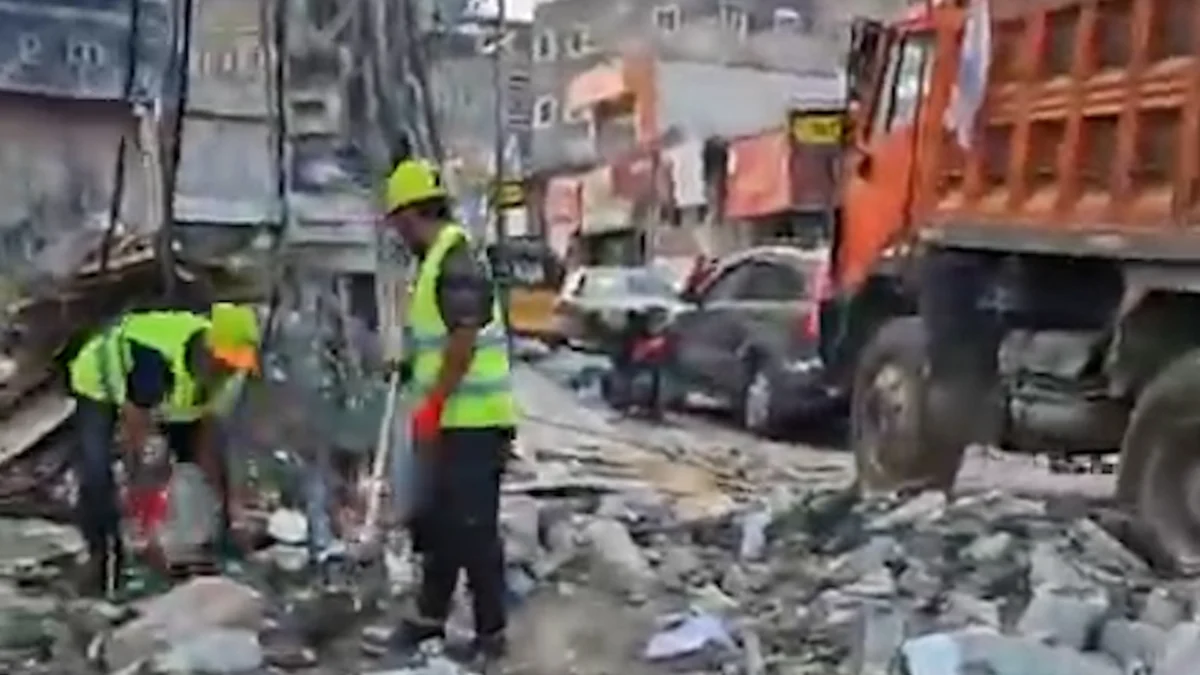
The city of Nabatieh, a vital administrative and commercial hub in southern Lebanon, has witnessed the commencement of a massive recovery and cleanup operation following a period of intense military activity and infrastructure destruction. In a coordinated effort that underscores the resilience of the local population, ambulance teams, civil defense units, youth scouts, municipal workers, and local residents have converged upon the city’s most devastated districts. This collective mobilization aims to remove the literal and metaphorical weight of the recent conflict, focusing on the clearing of heavy rubble, the reopening of arterial roads, and the assessment of structural damage to residential and commercial properties. While the sounds of heavy machinery now replace the echoes of bombardment, the atmosphere remains thick with both the dust of debris and the lingering uncertainty of regional stability.
A Unified Front in the Face of Destruction
The cleanup campaign in Nabatieh is not merely a logistical necessity but a symbolic act of reclaiming the urban space. Since the early hours of July 4, 2026, the city has seen an unprecedented level of cooperation between various non-governmental organizations and state-affiliated services. Leading the charge are the Lebanese Civil Defense and various emergency medical services, who, despite limited resources and the exhaustion of months of high-alert operations, have deployed bulldozers and excavators to the city center.
Joining them are the Imam al-Mahdi Scouts and other local youth organizations, who have taken on the arduous task of manual debris removal in narrow alleyways where heavy machinery cannot reach. Municipal workers have focused their efforts on restoring basic utility lines, particularly water pipes and electricity cables that were severed during the height of the hostilities. For many residents, the sight of neighbors working alongside professional emergency responders provides a sense of communal solidarity that is essential for psychological recovery in the wake of war.
Historical and Geographic Context: Why Nabatieh Matters
To understand the scale of the recovery efforts, one must understand the significance of Nabatieh. As the capital of the Nabatieh Governorate and the Nabatieh District, the city serves as the heartbeat of the Jabal Amel region. It is a center for trade, education, and healthcare for dozens of surrounding villages. Throughout history, Nabatieh has been a focal point of resistance and resilience, frequently finding itself on the front lines of the various conflicts that have defined the Lebanon-Israel border regions for decades.
The recent destruction is part of a broader pattern of escalation that began in late 2023 and intensified through 2025 and into 2026. The city’s markets, known for their vibrant Monday "Souq al- الاثنين," were among the areas hardest hit. The destruction of these commercial zones has not only displaced families but has also paralyzed the local economy, making the current recovery efforts critical for the survival of the region’s middle and working classes.
Chronology of the Conflict Leading to July 2026
The path to the current state of Nabatieh has been marked by a steady and devastating escalation of hostilities.
- Late 2025: Intensification of Aerial Campaigns: Following a breakdown in diplomatic negotiations regarding the implementation of UN Resolution 1701, the frequency of air strikes in southern Lebanon increased significantly. Nabatieh, due to its strategic position and its role as a logistical center, became a frequent target of high-intensity bombardments.
- Spring 2026: Infrastructure Targeted: By March and April 2026, the focus of military operations shifted toward "dual-use" infrastructure. This period saw the destruction of several key bridges connecting Nabatieh to the coastal city of Sidon and the eastern Bekaa Valley, effectively isolating the city and complicating humanitarian access.
- May-June 2026: The Siege Mentality: During these months, the city experienced daily shelling. Large sections of the historic center and the residential outskirts were reduced to ruins. The population of the city, which typically swells during the summer months with expatriates, saw a mass exodus, leaving only the most vulnerable and those dedicated to civil service.
- Early July 2026: The Fragile De-escalation: While no formal permanent ceasefire has been solidified, a tactical lull in heavy bombardment allowed for the mobilization of the cleanup crews witnessed on July 4. This window of opportunity is being utilized to the fullest extent, with workers operating in shifts to clear the streets before any potential resumption of hostilities.
Quantifying the Damage: Data and Impact Assessment
Preliminary reports from the Nabatieh Municipality and independent engineering consultants suggest a level of destruction that will take years and billions of dollars to rectify. While a full census of the damage is still underway, the following data points provide a glimpse into the scale of the challenge:
- Residential Impact: Approximately 35% of the housing units in the city’s core have been rendered uninhabitable, with an additional 20% requiring significant structural repairs.
- Infrastructure: Over 15 kilometers of primary and secondary roads within the city limits were cratered or blocked by fallen buildings. At least three major electrical substations serving the district were disabled.
- Economic Loss: The "Souq" area, which houses over 400 small businesses, saw nearly 60% of its storefronts destroyed or severely damaged. The loss of inventory and trade revenue is estimated to exceed $150 million for the first half of 2026 alone.
- Public Services: Two major hospitals in the vicinity reported damage to their external wings, and at least six schools were used as shelters before being hit, necessitating a total overhaul of the local education system before the next academic year.
Statements and Reactions: A Community in Limbo
The local leadership has been vocal about the need for both immediate action and long-term international support. A spokesperson for the Nabatieh Municipal Council stated, "What we see today is the indomitable spirit of our people. We are clearing the roads not just for cars, but to show that Nabatieh cannot be erased. However, we cannot do this alone. The scale of the rubble exceeds the capacity of our local machinery. We need international intervention, not just in the form of words, but in heavy equipment and reconstruction funds."
A representative from the Lebanese Red Cross, participating in the cleanup, noted the hazards involved: "The removal of rubble is a dangerous task. We are constantly finding unexploded ordnance (UXO) beneath the bricks. Our teams are working alongside demining experts to ensure that as we reopen the city, we are not leading residents into further danger."
Meanwhile, residents returning to check on their homes expressed a mixture of grief and determination. "I found my shop in ruins," said Ahmed, a local hardware store owner. "But seeing the scouts and the neighbors helping to move the stones gives me hope. We will rebuild, as we have done many times before. We just want a lasting peace so we don’t have to do this again in five years."
Analysis of Implications: The Road Ahead
The recovery of Nabatieh is a litmus test for the future of southern Lebanon. The success of this cleanup operation carries several broader implications:
1. Political Stability and Governance
The ability of local municipalities and civil society to lead the recovery, in the absence of a fully functioning central state in Beirut, highlights the decentralization of crisis management in Lebanon. If the recovery is seen as efficient and fair, it may bolster the influence of local actors. Conversely, if the process is slow or marred by corruption, it could lead to further social unrest.
2. The Humanitarian Challenge
The reopening of streets is the first step in addressing a massive displacement crisis. Tens of thousands of people from Nabatieh and its surrounding villages are currently living in temporary shelters or with relatives in the north. The "recovery" cannot be considered complete until these families have safe homes to return to, which requires a massive influx of building materials—items currently in short supply due to border restrictions and economic sanctions.
3. Geopolitical Tensions
The cleanup is happening "amid ongoing tensions." The presence of heavy machinery and large groups of people near sensitive zones is often viewed with suspicion by opposing military forces. There is a constant risk that recovery efforts could be mistaken for military engineering works, leading to renewed strikes. The role of UNIFIL (United Nations Interim Force in Lebanon) in mediating these movements is more critical than ever to prevent a tragic misunderstanding.
4. Economic Viability
Lebanon’s economy was already in a state of collapse prior to the 2025-2026 conflict. The cost of reconstruction in Nabatieh alone is a fraction of the total needed for the south. Without a clear path to economic reform and international aid packages from the World Bank or IMF, the "recovery" might remain superficial—clearing the streets but leaving the buildings as hollow shells.
Conclusion: A City Redefined by Resilience
As the sun sets over the charred but busy streets of Nabatieh on this July day, the progress is visible. Major thoroughfares that were impassable 48 hours ago are now open to emergency vehicles and residents’ scooters. The dust of pulverized concrete still hangs in the air, a reminder of the violence that occurred, but the sound of the bulldozer is a different kind of noise—it is the sound of work, of movement, and of a refusal to remain buried.
The recovery of Nabatieh is a marathon, not a sprint. The "cleanup campaign" is merely the opening ceremony of a process that will define the region for the next decade. For the ambulance teams, scouts, and residents of Nabatieh, today was about moving the first thousand tons of stone. Tomorrow, it will be about the next thousand, and the day after, it will be about laying the first new brick. In the face of ongoing southern Lebanon tensions, the city has chosen to start the long walk toward a semblance of normalcy, one cleared street at a time.
