

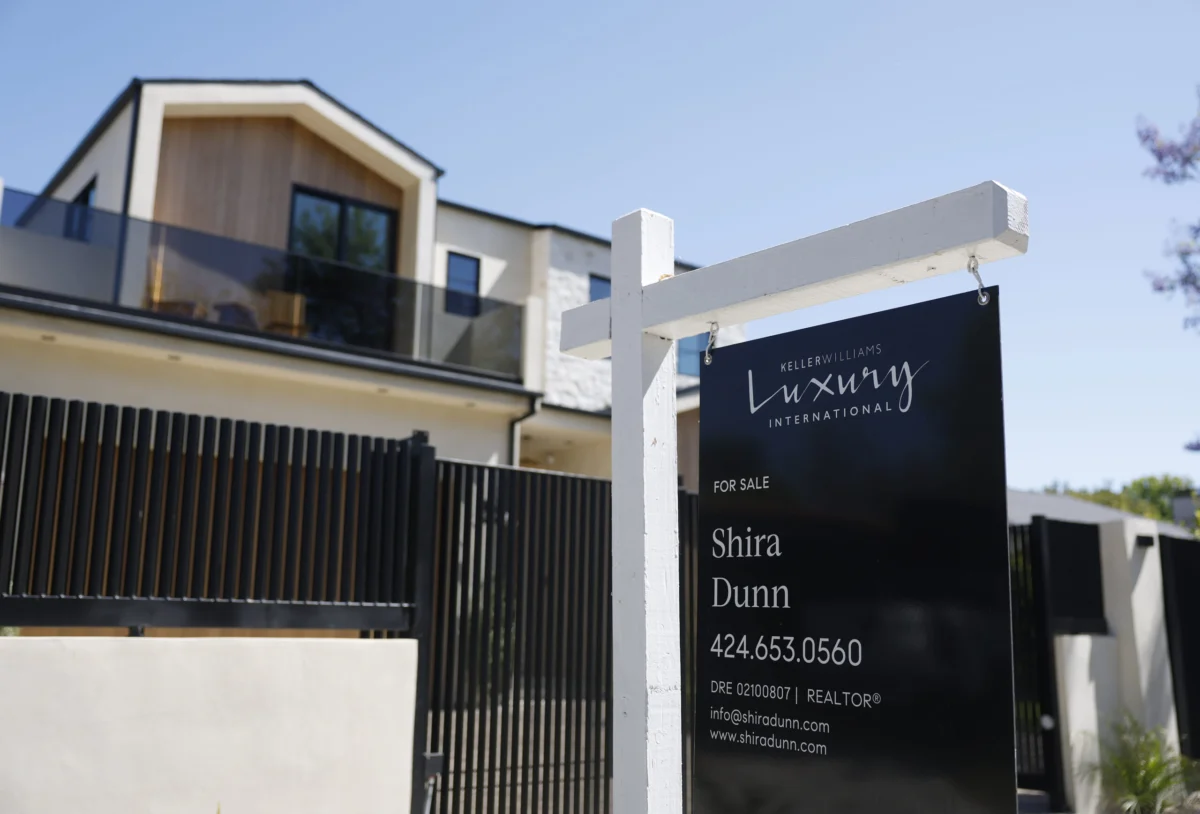
The U.S. housing market is grappling with a significant surge in mortgage rates, reaching their highest point since March, following an unexpectedly robust inflation report and persistent geopolitical anxieties. An exceptionally "hot" reading from the government’s Producer Price Index (PPI) early Wednesday acted as a primary catalyst, propelling bond yields upward and, consequently, pushing mortgage rates higher across the board. This latest increase compounded an existing upward trend in rates that had already been observed earlier in the week, fueled by escalating concerns surrounding negotiations over the Iran war and broader regional instability.
According to data compiled by Mortgage News Daily, the average rate for a popular 30-year fixed mortgage climbed to 6.57% on Wednesday. This figure represents a notable increase of 15 basis points (0.15 percentage points) since the previous Friday, positioning rates at a level not seen since March. That month marked a critical turning point for the market, as falling rates abruptly reversed course following the initial onset of the aforementioned conflict. While Wednesday’s particular increase was substantial, it was notably smaller than the dramatic jump recorded just a day prior, which was triggered by the release of the more broadly impactful Consumer Price Index (CPI).
The Inflationary Pressure Cooker: PPI and CPI Explained
Understanding the recent volatility in mortgage rates necessitates a deeper dive into the economic data that underpins them. The Producer Price Index (PPI) measures the average change over time in the selling prices received by domestic producers for their output. In essence, it tracks inflation from the perspective of the seller or producer, reflecting price changes in various stages of production. A "hot" PPI read, as observed this week, indicates that producers are experiencing higher costs for goods and services, which they often pass on to consumers. This upstream inflation is a critical leading indicator for future consumer prices.
While the PPI offers valuable insights into the pipeline of inflation, the Consumer Price Index (CPI) is generally considered a more direct and immediate measure of inflation’s impact on households. The CPI tracks the average change over time in the prices paid by urban consumers for a market basket of consumer goods and services. Because it directly reflects the cost of living, the CPI is often more closely watched by financial markets and is a primary input for the Federal Reserve’s monetary policy decisions.
Matthew Graham, chief operating officer at Mortgage News Daily, underscored this distinction, explaining, "PPI, in general, is not as big a deal as CPI." He elaborated that while both are important, the bond market, which directly influences mortgage rates, often reacts more sharply to the CPI. Bonds also carry an inherent assumption of a "corrective drop" in rates once significant geopolitical events, such as the conflict in question, resolve. However, even a less impactful PPI report can still exert considerable pressure when the market is already sensitive to inflationary signals. The cumulative effect of both reports within a short span this week highlights the pervasive inflationary environment the economy is currently navigating.
Geopolitical Tensions Add Fuel to the Fire
Beyond domestic economic indicators, the global geopolitical landscape continues to cast a long shadow over financial markets. The original article specifically references "news of more trouble in negotiations over the Iran war" as a factor contributing to the earlier surge in mortgage rates this week. This likely refers to escalating tensions or setbacks in diplomatic efforts related to the broader conflict in the Middle East, which has significant implications for global energy markets and supply chains.
Historically, geopolitical instability, particularly in oil-producing regions, leads to increased oil prices due to supply concerns or perceived risks. Higher oil prices directly feed into inflation across various sectors, from transportation costs to manufacturing expenses. This global inflationary pressure, combined with domestic factors, pushes investors to demand higher yields on bonds to compensate for the erosion of purchasing power. The U.S. Treasury market, which sets the benchmark for long-term borrowing costs, including mortgages, is particularly sensitive to these shifts. Therefore, renewed anxieties surrounding the conflict and its potential to disrupt global trade and energy supplies directly translated into higher bond yields and, subsequently, elevated mortgage rates. The "start of the war" in March, mentioned as a previous turning point for rates, further underscores the profound impact of these international events on domestic financial conditions.
A Rollercoaster Week for Mortgage Rates: A Chronology
The current state of mortgage rates is the culmination of a dynamic and volatile week, marked by a series of economic data releases and geopolitical developments.
- Early Week Surge (Pre-CPI): Even before the major inflation reports, mortgage rates were already trending upward. This initial climb was largely attributed to mounting concerns over geopolitical developments, specifically the aforementioned "trouble in negotiations over the Iran war." Market participants reacted to the increased risk and potential for further economic disruption, prompting a preemptive rise in bond yields.
- Tuesday’s CPI Impact: The release of the Consumer Price Index (CPI) on Tuesday delivered a more significant shock to the market. While specific numbers were not detailed in the original source, the article indicates that the CPI report triggered a "much bigger" jump in mortgage rates than the PPI report on Wednesday. This suggests the CPI data pointed to higher-than-expected or persistently elevated consumer inflation, reinforcing the market’s expectation that the Federal Reserve would need to maintain its hawkish stance on monetary policy.
- Wednesday’s PPI Impact: Following the CPI, Wednesday’s Producer Price Index (PPI) report, although deemed less impactful than CPI by experts like Matthew Graham, still contributed to the upward pressure. Its "exceptionally hot read" confirmed that inflationary pressures were strong at the producer level, suggesting that consumer prices would likely remain elevated in the near future. This data point solidified the market’s conviction regarding the inflationary environment, leading to the reported 0.15% increase in the 30-year fixed mortgage rate since Friday, pushing it to 6.57%.
- Historical Context – March Reversal: The article highlights that current rates are at their "highest level since March." This refers to a period when mortgage rates had initially been falling, offering a glimmer of hope for the housing market. However, this downward trend was abruptly reversed with the "start of the war," which rapidly escalated geopolitical risks and reignited inflationary concerns, causing rates to climb once more.
- Year-over-Year Comparison: Looking back further, Andy Walden, head of mortgage and housing market research at ICE, a mortgage technology company, noted that while current rates are approximately 40 basis points higher than they were in February, they are still "closer to 7% at this time last year." This comparison offers a nuanced perspective, indicating that while recent increases are challenging, the market has experienced even higher rates in the not-too-distant past.
The Housing Market’s Fragile Rebound

The recent spike in mortgage rates arrives at a particularly sensitive juncture for the U.S. housing market. After a period of significant slowdown and stagnation, particularly in March, the spring buying season was finally beginning to show tentative signs of renewed vitality. This nascent recovery is critical for the overall health of the real estate sector and the broader economy.
Evidence of this emerging life comes from the National Association of Realtors (NAR), which cited data from Sentrilock, a provider of lockboxes used by real estate agents for properties on the market. Their findings revealed a promising trend: home showings in April were up by 8% year-over-year. Crucially, this increase was not confined to a single region but was observed across all four major regions of the country, indicating a broad-based, albeit modest, resurgence in buyer interest.
Several factors were contributing to this fragile rebound. One primary driver was a gradual cooling in home prices. While national home prices remain higher than they were a year ago, the rate of appreciation has slowed significantly. This moderation, though not a widespread decline, has started to make homeownership appear slightly more attainable for some prospective buyers who had been priced out during the peak of the market frenzy. The psychological effect of seeing prices stabilize, even at elevated levels, can encourage fence-sitting buyers to re-enter the market.
Inventory Woes and Affordability Challenges
Despite the encouraging uptick in buyer interest and home showings, the housing market continues to grapple with persistent structural challenges, most notably a severe lack of available inventory. Andy Walden of ICE highlighted this critical issue, stating, "Inventory has not rebounded yet, we’re still 11-12% below where we should be." This deficit means that even with a slight increase in demand, the market remains highly competitive, often leading to bidding wars in desirable areas and preventing a more substantial cooling of prices. The reasons for low inventory are multifaceted, including homeowners with historically low mortgage rates being reluctant to sell and give up their advantageous financing, and a slower pace of new construction failing to keep up with demographic demand.
The recent increase in interest rates further complicates the already precarious affordability landscape. Walden articulated the direct impact on potential buyers, noting, "If you look at what that means for buying power out there in the market, it’s down about 4% from where it was in February." This means that for the same monthly mortgage payment, buyers can now afford a less expensive home or need to make a larger down payment. While he acknowledged that the market is "more affordable than last year," when rates were closer to 7%, it is simultaneously "not as affordable as we were early this year" when rates were lower. This fluctuating affordability creates a moving target for homebuyers, making financial planning and decision-making exceptionally challenging. The current environment forces many to compromise on location, size, or amenities, or to delay their homeownership aspirations altogether.
Expert Perspectives and Market Sentiment
The prevailing sentiment among industry experts reflects a mixture of cautious optimism tempered by significant concern. Matthew Graham’s observation regarding the bond market’s assumption of a "corrective drop after the war is over" suggests that some market participants are pricing in a future de-escalation of geopolitical tensions, which could provide relief to rates. However, the timing and certainty of such a resolution remain highly speculative. The current reality is one of elevated rates driven by concrete inflation data and ongoing global uncertainties.
Real estate agents on the ground are likely to report a renewed sense of urgency among some buyers who fear rates could climb even higher, prompting them to lock in financing quickly. Conversely, others might retreat to the sidelines, adopting a wait-and-see approach, hoping for rates to stabilize or decline. This creates a bifurcated market where motivated buyers contend with limited supply, while a larger cohort of potential buyers remains hesitant due to affordability concerns. Lenders, meanwhile, are navigating increased demand for rate locks and providing more nuanced advice to clients regarding adjustable-rate mortgages or strategies to mitigate higher fixed rates.
Broader Economic Ramifications and Forward Outlook
The trajectory of mortgage rates has far-reaching implications beyond the housing market itself, influencing the broader U.S. economy. Higher borrowing costs for homes can dampen consumer spending, as a larger portion of household income is allocated to mortgage payments. This can have a ripple effect on retail sales, services, and other discretionary expenditures. Furthermore, a slowdown in the housing market can impact related industries, such as construction, home improvement, and real estate services, potentially leading to job losses or reduced investment.
For the Federal Reserve, persistent inflation, as indicated by the "hot" PPI and CPI reports, strengthens the case for maintaining a restrictive monetary policy. This means the Fed may be less inclined to cut its benchmark interest rate in the near future, and depending on subsequent data, could even consider further hikes if inflationary pressures prove more entrenched than anticipated. Such a stance would continue to exert upward pressure on bond yields and, by extension, mortgage rates.
Looking ahead, the housing market faces a delicate balance. The nascent spring momentum, driven by easing price appreciation and pent-up demand, is now being tested by the latest surge in borrowing costs. Sustained high rates could quickly stifle the recovery, pushing affordability further out of reach for many prospective buyers. The supply issue, a chronic problem, will likely continue to underpin prices even if demand wanes slightly. Analysts will closely monitor future inflation reports, Federal Reserve communications, and geopolitical developments for any signals that might offer a reprieve or signal further challenges for mortgage rates and the housing market in the coming months. The immediate future suggests a period of continued volatility and adaptation for all participants in the real estate ecosystem.
