

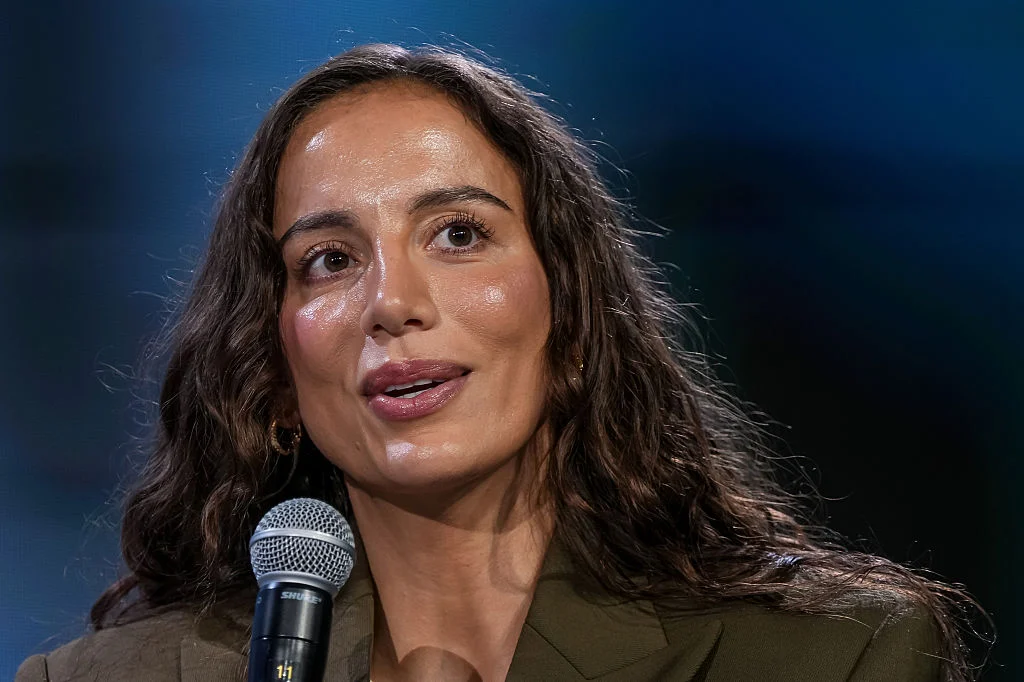
In a rare and highly anticipated public appearance, Mira Murati, the former Chief Technology Officer of OpenAI and current Chief Executive Officer of Thinking Machines Lab, sat down with Bloomberg’s Emily Chang in San Francisco on Thursday. This engagement marked Murati’s first major media appearance in approximately 18 months, signaling an end to her period of relative seclusion following her departure from the world’s most prominent artificial intelligence company. While Murati is widely regarded as a technical architect of the modern generative AI era, she has historically avoided the spotlight, preferring the internal rigors of product development to the performative nature of the conference circuit. However, with the AI sector facing increasing scrutiny over governance, talent retention, and the rapid centralization of power, her return to the public stage serves as a pivotal moment for an industry in transition.
The timing of Murati’s reemergence is strategically significant. For the past year and a half, Thinking Machines Lab has operated largely in "stealth mode," a common practice for high-stakes startups looking to avoid the distractions of the hype cycle. During this period, the company has quietly secured venture capital, recruited elite research talent from competitors, and released its debut product, Tinker—an API designed for the fine-tuning of open-source AI models. Yet, as competitors like Anthropic gain momentum and Elon Musk’s xAI integrates more deeply with the SpaceX ecosystem ahead of potential public offerings, the pressure for Thinking Machines to establish a clear market identity has intensified. Staying "heads down" is a virtue in engineering, but in the capital-intensive world of frontier AI, visibility is a prerequisite for long-term viability.
The Technical Shift: From Prompting to Interaction Models
The centerpiece of Murati’s discussion was the unveiling of what Thinking Machines Lab calls "interaction models." Murati described this as a departure from the "turn-based" paradigm that currently dominates the AI landscape. In the prevailing model, characterized by products like ChatGPT and Claude, a user provides a prompt, the machine processes the request, and then generates a static response. Murati argues that this dynamic is inherently limited because it does not mirror the fluid, multi-modal nature of human cognition and communication.
Thinking Machines is developing models designed to process continuous streams of audio, text, and video in 200-millisecond intervals. This specific latency target is critical; 200 milliseconds is roughly the threshold at which human perception begins to register a delay as "real-time." By operating at this speed, Murati suggests that AI can move beyond simple response generation to pick up on the nuances of human interaction—interruptions, mid-thought corrections, and the communicative weight of silence. While she was careful to manage expectations, declining to provide a firm release date, she framed these models as the foundational layer for a more intuitive form of human-computer synthesis.
A Chronology of the OpenAI Crisis: The Five-Day "Blip"
The interview inevitably turned to the events of November 2023, a period of unprecedented corporate chaos that cemented Murati’s reputation as a crisis manager. During the five-day stretch when OpenAI’s board of directors fired CEO Sam Altman, Murati was thrust into the role of interim CEO. Inside OpenAI, the event is now colloquially referred to as "the blip," a term that Murati used during the interview.
To understand the weight of her reflections, it is necessary to revisit the chronology of those five days:
- Friday, Nov. 17, 2023: The board abruptly fires Sam Altman, citing a lack of "candid" communication. Murati is named interim CEO.
- Saturday – Sunday, Nov. 18-19: Massive internal pushback begins. Microsoft, OpenAI’s primary investor, announces it will hire Altman and any resigning staff.
- Monday, Nov. 20: Nearly the entire OpenAI workforce signs a letter demanding the board’s resignation and Altman’s reinstatement. Murati, despite being the interim CEO appointed by the board, joins the staff in their protest.
- Tuesday, Nov. 21: Negotiations reach a fever pitch.
- Wednesday, Nov. 22: Altman is reinstated as CEO with a new initial board.
Murati told Bloomberg that she felt a profound sense of clarity during the crisis, stating that her primary objective was "protecting the mission and the team." She asserted that without her intervention and the stabilizing presence of the leadership team, OpenAI would have "imploded." However, she also expressed a degree of retrospective caution. While her intent was clear, she acknowledged that she would have pushed for greater transparency and a more structured transition plan had she known the full extent of the board’s reasoning. When asked directly if she still trusts Sam Altman, Murati declined to give a simple affirmative or negative, instead pivoting to a broader critique of how the industry is structured.
The Governance Gap and the Concentration of Power
Murati’s most pointed comments were directed at the structural vulnerabilities of the AI industry. She expressed a growing concern over the concentration of consequential decisions in the hands of a very small group of individuals. This critique extends beyond OpenAI to include the entire "frontier lab" ecosystem, where a handful of CEOs and boards hold the keys to technology that could fundamentally reshape the global economy.
Her argument was not centered on the personal character of these leaders, but on the "absence of structural checks." She noted that even well-intentioned individuals can make catastrophic errors and that organizations naturally drift away from their original missions over time. Murati suggested that the industry has spent a disproportionate amount of time debating "AI virtue"—the moral alignment of models—while neglecting the more boring but essential work of governance. This perspective aligns with a growing chorus of researchers who argue that the non-profit/for-profit hybrid structures of companies like OpenAI and Anthropic are insufficient to manage the immense commercial and social pressures of the current AI arms race.
Navigating the War for Talent and Executive Volatility
The interview also addressed the recent "brain drain" at Thinking Machines Lab. In recent months, several high-profile researchers have departed the startup, leading to speculation about internal instability. Murati downplayed these departures, characterizing them as a natural byproduct of "compressing years of normal organizational volatility into months."
The competition for AI talent has reached a fever pitch, with top-tier researchers often commanding "nine-figure" compensation packages—a mix of high salaries and massive equity grants. Murati acknowledged that while these figures capture the public imagination, they are rarely the sole driver of talent migration. She suggested that the desire to work on foundational architecture, rather than iterative product updates, remains the primary motivator for the world’s best engineers. In a moment of levity that drew laughter from the audience, she remarked on her own competitive drive: "When I wake up in the morning, I am not thinking about how to kill the competitor."
Broader Implications: The Human Role in an AI Future
As the conversation expanded to the societal impact of AI, Murati adopted a measured, almost philosophical tone. She pushed back against the binary framing of the AI future as either an "inevitable utopia" or an "inevitable dystopia." Instead, she argued that the current era is a plastic moment—a period where human agency still has the power to dictate the trajectory of the technology.
She addressed growing anxieties regarding mass job displacement and the potential for AI to be weaponized for the creation of chemical or biological agents. Murati’s stance is that these risks are real but manageable, provided that humans do not "take their hands off the wheel too soon." This metaphor of the "wheel" suggests a belief in proactive regulation and a refusal to succumb to technological determinism.
Analysis: The Strategic Rebranding of Mira Murati
From a journalistic perspective, Murati’s Bloomberg appearance serves as a strategic rebranding. By distancing herself from the "cult of personality" surrounding Sam Altman and focusing on technical "interaction models" and "structural governance," she is positioning Thinking Machines Lab as the "adult in the room."
Her refusal to directly endorse her former boss, while simultaneously taking credit for saving the company during "the blip," suggests a leader who is comfortable with the complexities of power but wary of its current distribution. As Thinking Machines Lab prepares to move out of the background, Murati’s challenge will be to translate these high-level philosophical and technical goals into a product that can compete with the overwhelming resource advantages of the tech giants.
The 200-millisecond interaction model may be the technical breakthrough she seeks, but her comments on governance suggest that the real "interaction" she is worried about is the one between rapid technological progress and the fragile human institutions tasked with overseeing it. For now, the market is paying attention, but the "noise" Murati made in San Francisco will eventually need to be backed by the "signal" of a transformative product.
