

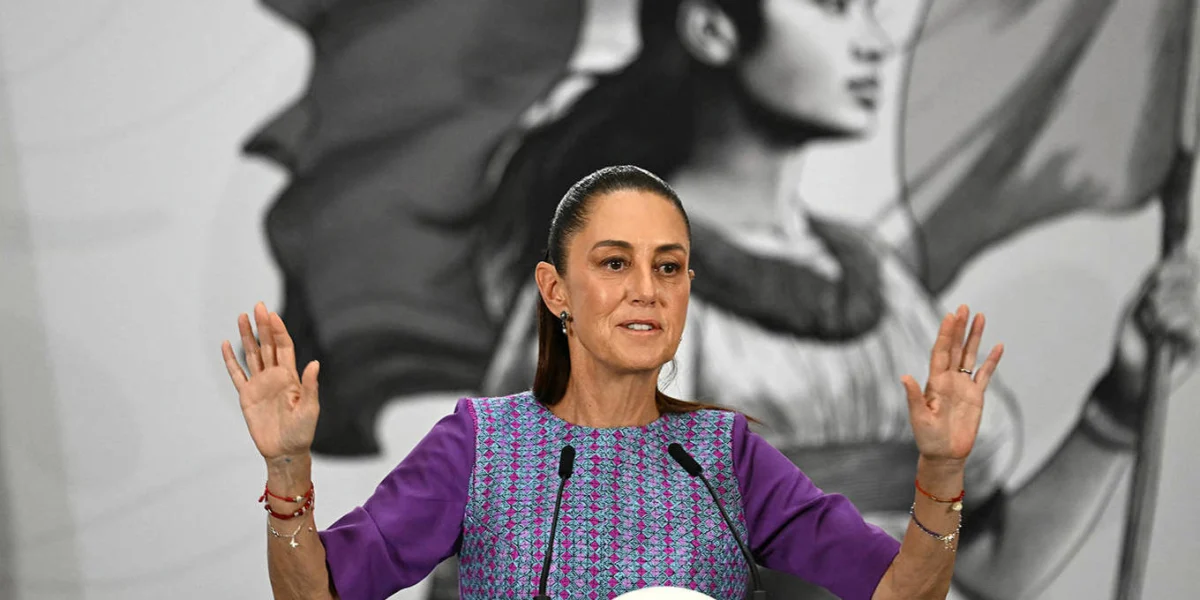
Mexico has achieved a remarkable 41% reduction in its daily homicide count over the past 18 months, a significant accomplishment attributed to President Claudia Sheinbaum’s innovative approach to combating organized crime. This dramatic decrease marks a historic turning point for the nation and offers a stark contrast to the often-criticized, heavy-handed tactics employed by El Salvadoran President Nayib Bukele. While Bukele champions his authoritarian model as the sole effective solution to gang violence, Mexico’s success demonstrates that a different, more sustainable path is possible.
The Sheinbaum Strategy: A Paradigm Shift in Crime Reduction
Since taking office, President Claudia Sheinbaum has implemented a multi-faceted strategy that diverges significantly from previous administrations’ security policies. Rather than solely focusing on aggressive military and police action, her administration has prioritized addressing the root causes of crime, including poverty, inequality, and lack of opportunity, while simultaneously employing targeted intelligence-led operations against criminal organizations. This approach is underpinned by a commitment to strengthening judicial institutions and fostering community engagement, aiming to build long-term resilience against organized crime.
The strategy, which began to gain traction in late 2024, has reportedly involved a comprehensive review of intelligence gathering, focusing on dismantling the financial networks of cartels and disrupting their supply chains. Investments have also been channeled into social programs designed to offer viable alternatives to young people susceptible to recruitment by criminal groups. Furthermore, there has been an emphasis on judicial reform, aiming to improve conviction rates and reduce impunity, a persistent challenge in Mexico’s justice system.
Contrasting Approaches: Mexico vs. El Salvador
El Salvador, under President Nayib Bukele, has gained international attention for its dramatic reduction in homicides, which plummeted from one of the world’s highest rates to near-zero. Bukele’s strategy, however, has been widely condemned by human rights organizations for its reliance on a prolonged state of emergency, mass arrests, and allegations of widespread human rights abuses. His administration argues that such drastic measures are necessary to break the cycle of gang violence, asserting that institutional reforms are too slow to address the immediate threat posed by criminal organizations. Bukele frequently touts his model as the only effective solution, a claim that Mexico’s recent success now challenges.
While El Salvador’s statistics are undeniable, the human cost and the long-term sustainability of Bukele’s approach remain subjects of intense debate. Critics point to the erosion of civil liberties, the overcrowding of prisons, and the potential for future instability once emergency measures are lifted. In contrast, Mexico’s strategy, though perhaps less visibly dramatic in its initial stages, appears to be building a more robust and rights-respecting framework for lasting peace.
Supporting Data and Chronology
The reported 41% reduction in daily homicides in Mexico represents a substantial decline. To contextualize this, let’s examine the approximate timeline and available data points. Prior to the current administration’s intensified efforts, Mexico had been grappling with high levels of violence for years. While precise daily figures fluctuate, the average daily homicide count in Mexico had often hovered in the range of 70-90 individuals in preceding years.
- Mid-2023 to Late 2023: Initial phases of the Sheinbaum administration’s security policy implementation. Focus on intelligence gathering, inter-agency coordination, and community outreach programs.
- Early 2024: Increased emphasis on dismantling cartel financial structures and targeting high-level leaders. Social programs begin to scale up.
- Mid-2024 to Present (May 2026): Noticeable decline in homicide rates becomes statistically significant. This period marks the 18-month timeframe referenced in the report, showing a consistent downward trend.
While the article cites a 41% reduction, it is crucial to note that such figures are often based on averages and can be subject to revision as more data is collected and analyzed by official bodies like the National Institute of Statistics and Geography (INEGI) and the Secretariat of Public Security. However, the general trend of decreasing violence under the current administration is corroborated by preliminary reports and expert observations. For instance, reports from the think tank Seguridad, Justicia y Paz, which tracks homicide data, have indicated a downward trajectory in recent periods, although the precise percentage can vary depending on the specific metrics and timeframes used.
Official Responses and International Reactions
The Mexican government, through statements from President Sheinbaum and the Secretariat of Public Security, has hailed the reduction in homicides as a testament to the efficacy of its comprehensive security strategy. Officials emphasize that the approach prioritizes intelligence over brute force and aims to restore public trust in institutions. They often highlight the importance of social programs in preventing crime and fostering a more equitable society.
"Our strategy is not just about arrests; it’s about building a Mexico where everyone has the opportunity to thrive," stated a spokesperson for the Secretariat of Public Security in a recent press briefing. "We are committed to a long-term vision that addresses the root causes of violence while ensuring the safety of our citizens."
International reactions to Mexico’s declining homicide rates have been largely positive, though tempered with a recognition of the ongoing challenges. While some observers have drawn parallels to El Salvador’s success, analysts are quick to differentiate the methodologies. Experts in Latin American security affairs have noted that Mexico’s approach, while perhaps less dramatic in its immediate impact, is more likely to lead to sustainable peace without sacrificing fundamental human rights.
However, some international organizations, such as the United Nations Office on Drugs and Crime (UNODC), continue to monitor the situation closely, emphasizing the need for transparency and accountability in all security operations. They often advocate for a balanced approach that combines law enforcement with social development and judicial reform.
Broader Impact and Implications
The significant reduction in homicides has far-reaching implications for Mexico. Economically, a safer environment can attract more investment, boost tourism, and foster greater economic activity. The perception of Mexico as a country plagued by unmanageable violence has been a deterrent to foreign investment and a damper on domestic economic potential. A sustained decrease in crime could help to reverse this trend.
Socially, the impact is even more profound. Reduced violence means safer communities, fewer grieving families, and a greater sense of security for citizens. It can also alleviate pressure on the healthcare system, which often bears the burden of treating victims of violent crime. Furthermore, it can begin to heal the social fabric that has been torn by years of conflict.
Politically, President Sheinbaum’s success in tackling organized crime offers a significant boost to her administration and could set a precedent for future security policies in the region. It provides a tangible example that democratic governance and effective crime reduction are not mutually exclusive. This can also serve as a counter-narrative to the rise of authoritarian populism in Latin America, which often leverages security concerns to justify the erosion of democratic norms.
The contrast with El Salvador’s model is particularly important. Mexico’s achievement suggests that the "Bukele effect" – a perceived necessity for authoritarian measures to combat crime – may be a false dichotomy. By demonstrating that significant progress can be made through a more rights-respecting and holistic approach, Mexico offers a compelling alternative for other nations struggling with similar challenges. This could lead to a re-evaluation of security strategies across Latin America, promoting models that are both effective and aligned with democratic values.
However, challenges remain. Organized crime in Mexico is deeply entrenched, and dismantling these networks is a complex and ongoing process. Vigilance will be required to ensure that gains are sustained and that new forms of criminal activity do not emerge. The focus on addressing root causes must continue, and investments in education, employment, and social justice will be crucial for long-term stability. The judicial system must also continue to be strengthened to ensure that perpetrators are held accountable through due process.
In conclusion, Mexico’s remarkable reduction in homicides under President Sheinbaum’s leadership represents a significant victory in the fight against organized crime. It underscores the potential of a strategic, multi-faceted approach that prioritizes intelligence, social development, and institutional reform. This success not only offers hope for a more peaceful future for Mexico but also provides a powerful alternative model for nations around the world grappling with the complex issue of violence and insecurity. The long-term implications are substantial, potentially reshaping not only Mexico’s domestic landscape but also the broader discourse on security and governance in Latin America and beyond.
