

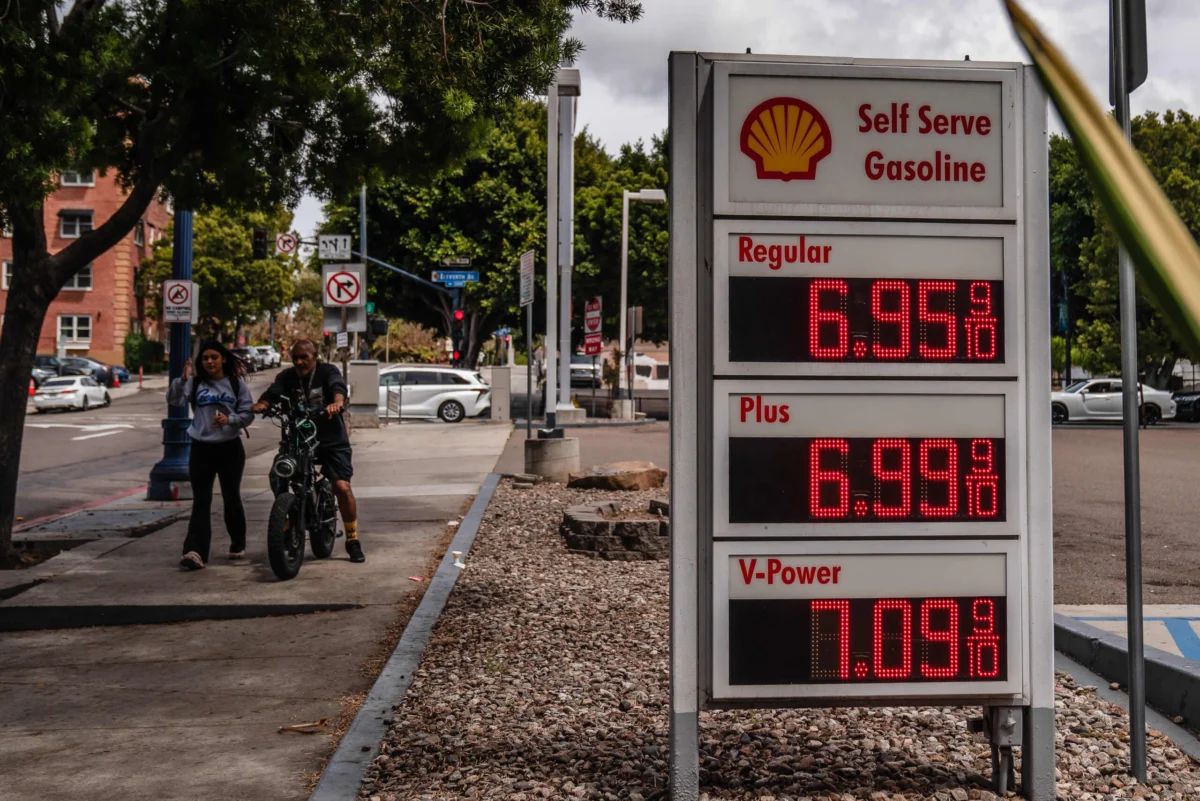
Surging gas prices, exacerbated by escalating geopolitical tensions in the Middle East, have driven consumer sentiment to a stark new low in early May, according to the preliminary findings of the University of Michigan’s closely watched Survey of Consumers released on Friday. The index registered a preliminary reading of 48.2, marking a significant 3.2% decline from April’s already record-low figure and a substantial 7.7% drop compared to the same period last year. This downturn significantly undershot the expectations of economists surveyed by Dow Jones, who had anticipated a reading of 49.7.
The pervasive inflation fears, particularly concerning the cost of everyday necessities and major purchases, have been identified as the principal catalyst behind the continued erosion of consumer confidence. Joanne Hsu, the director of the Survey of Consumers, elaborated on the findings, stating that the trend, which also saw the current conditions index plummet by 9%, is "owing to a surge in concerns about high prices both for personal finances as well as buying conditions for major purchases."
The Weight of Rising Gas Prices and Trade Policies
A striking one-third of survey respondents explicitly cited soaring gas prices as the primary driver of their economic anxiety. This figure underscores the direct and immediate impact of energy costs on household budgets. Compounding these concerns, another third of respondents pointed to tariffs as a significant contributing factor to their unease. These trade policies are intrinsically linked to the actions of former President Donald Trump, who initiated a significant military action against Iran in late February and subsequently announced a broad slate of tariffs in April 2025.
"Taken together, consumers continue to feel buffeted by cost pressures, led by soaring prices at the pump," Hsu observed, highlighting the dualpronged assault on consumer purchasing power. The implications of the geopolitical situation in the Middle East are clear in her assessment: "Middle East developments are unlikely to meaningfully boost sentiment until supply disruptions have been fully resolved and energy prices fall." This statement suggests that immediate relief for consumers hinges on a stabilization of global energy markets, a scenario that remains uncertain given the ongoing volatility.
A Glimmer of Hope Amidst the Gloom
Despite the overwhelmingly negative sentiment, the survey did reveal a couple of modest bright spots. The expectations index, which gauges consumers’ outlook for the future, showed a slight improvement, coming in at 48.5. This represents a 0.8% increase from April and a 1.3% rise from the previous year. This marginal uptick in future expectations, though still at low levels, suggests that some consumers may be anticipating a potential, albeit distant, improvement in economic conditions.
Furthermore, the inflation outlook, while still elevated, exhibited a slight easing. The one-year inflation projection dipped to 4.5%, down by 0.2 percentage points from prior readings, and the five-year projection settled at 3.4%, a decrease of 0.1 percentage point. This minor reduction in inflation expectations, even if not a dramatic shift, could signal a nascent recognition among consumers that the most acute phase of price acceleration might be subsiding, or at least that the rate of increase is moderating.
Market Reaction and Broader Economic Context
Following the release of the University of Michigan survey, stock indexes generally held positive territory, indicating that the market may have already priced in some of the consumer sentiment weakness or was more focused on other economic indicators.
The timing of the consumer sentiment report was particularly noteworthy, as it arrived shortly after the Bureau of Labor Statistics released its April jobs report. This report painted a picture of a resilient labor market, with stronger-than-expected job creation. Nonfarm payrolls rose by 115,000 in April, and the unemployment rate held steady at 4.3%. This contrast between a robust job market and declining consumer sentiment highlights a growing divergence in economic signals, where employment gains are not translating into widespread optimism due to persistent inflationary pressures.

The Escalating Cost of Fuel
The persistent problem of soaring energy prices is starkly illustrated by the latest gasoline figures. According to AAA, the national average for a gallon of regular unleaded gasoline stood at $4.54 on Friday. This represents a nearly 40-cent increase from just one month prior and a staggering nearly $1.40 surge compared to the same period in the previous year. This dramatic price increase at the pump directly impacts household budgets, forcing consumers to allocate a larger portion of their income to fuel, thereby reducing discretionary spending.
Background and Chronology of Events
The current economic climate has been shaped by a confluence of factors, with the conflict in the Middle East and evolving trade policies playing a pivotal role in recent weeks.
- Late February 2025: Escalating tensions in the Middle East led to military actions and increased uncertainty in global oil markets. The involvement of Iran, a significant oil-producing nation, raised concerns about potential disruptions to global supply chains and subsequent price hikes.
- April 2025: Former President Donald Trump announced an aggressive slate of tariffs on a range of imported goods. This move, intended to protect domestic industries, also raised concerns about retaliatory tariffs from other nations and potential increases in the cost of imported goods for American consumers.
- Early May 2025: The University of Michigan’s Survey of Consumers released its preliminary findings for May, revealing a significant drop in consumer sentiment, with a clear link drawn to rising gas prices and broader inflation fears. This coincided with the release of the April jobs report, which showed continued strength in employment.
Analysis of Implications
The sharp decline in consumer sentiment has several significant implications for the U.S. economy.
- Reduced Consumer Spending: Consumer spending is a major engine of economic growth in the United States. A significant drop in confidence typically leads to a reduction in discretionary spending on non-essential goods and services, such as dining out, entertainment, and durable goods. This could translate into slower economic growth in the coming quarters.
- Impact on Businesses: Businesses, particularly those reliant on consumer discretionary spending, may face declining sales and profitability. This could lead to slower hiring, potential layoffs, and a general cooling of business investment.
- Inflationary Pressures: While the survey indicated a slight easing in inflation expectations, the persistent high cost of energy and the potential for tariffs to increase the price of imported goods could continue to exert upward pressure on overall inflation. This creates a challenging environment for policymakers at the Federal Reserve, who are tasked with balancing inflation control with economic growth.
- Geopolitical Sensitivity: The direct link between Middle Eastern developments and consumer sentiment underscores the vulnerability of the U.S. economy to global events. Any further escalation or prolonged instability in the region could continue to weigh on consumer confidence and economic activity.
- Policy Challenges: The current economic landscape presents a complex challenge for policymakers. The Federal Reserve faces the dilemma of potentially needing to raise interest rates to combat inflation, which could further dampen economic growth and consumer spending. Fiscal policy responses, such as measures to alleviate energy costs or address trade disputes, may also be considered, but their effectiveness and potential unintended consequences remain subjects of debate.
Official Responses and Broader Economic Commentary
While the survey itself is a key indicator, official responses from government bodies or economic agencies would typically offer further context. In the absence of direct quotes within the provided text, it can be inferred that policymakers would be closely monitoring these trends. The Federal Reserve, in particular, would be paying close attention to consumer sentiment as it informs their decisions on monetary policy. A sustained period of low consumer confidence could influence their assessment of inflationary risks and the overall health of the economy.
Economists from various institutions would likely be analyzing the data in conjunction with other leading economic indicators. The divergence between the strong jobs report and the weak consumer sentiment report would be a focal point of discussion, prompting analyses of labor market resilience versus the real impact of inflation on household purchasing power. The ongoing debate about the effectiveness of trade policies and their contribution to inflationary pressures would also likely intensify.
Conclusion
The preliminary May reading of the University of Michigan’s Survey of Consumers paints a concerning picture of American consumer sentiment, driven by the potent combination of soaring energy prices and broader inflation fears. While a resilient labor market offers some counterpoint, the direct impact of rising costs on household budgets appears to be overshadowing employment gains. The continued geopolitical uncertainty in the Middle East and the ongoing effects of trade policies further complicate the economic outlook. The coming months will be critical in determining whether these headwinds will lead to a sustained slowdown in consumer spending and overall economic activity, or if the underlying strength of the labor market can eventually buoy consumer confidence. The response from policymakers, particularly the Federal Reserve, will be closely watched as they navigate the delicate balance between inflation control and economic growth.
