

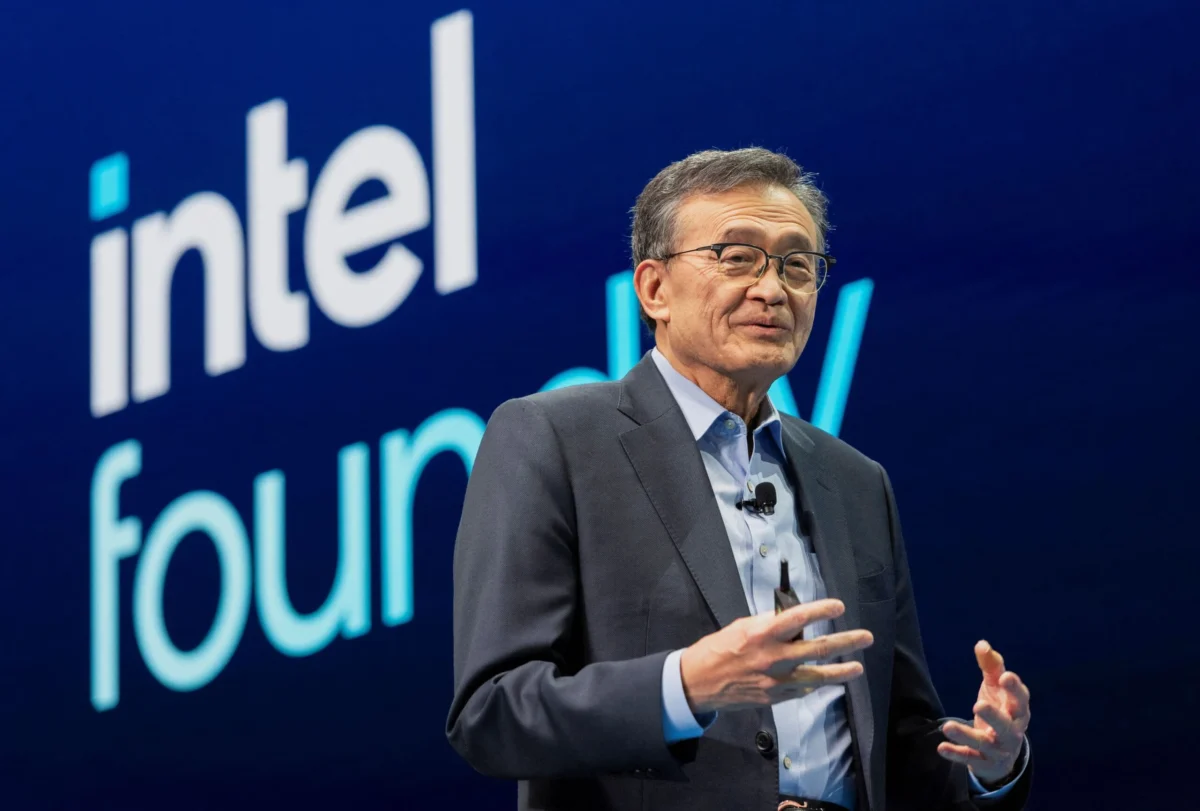
Apple and Intel are reportedly finalizing a landmark agreement that would see the Silicon Valley pioneer manufacture semiconductors for the iPhone maker’s future devices. This potential partnership represents one of the most significant shifts in the global semiconductor landscape in over a decade, signaling a major strategic pivot for both companies as they navigate an increasingly complex and competitive technological environment.
According to reports from the Wall Street Journal and industry insiders, the two tech giants have been engaged in high-level negotiations for more than a year. These discussions culminated in a preliminary agreement reached in recent months, marking a formalization of intent that could fundamentally alter the supply chain dynamics for the world’s most valuable consumer electronics company. While both Apple and Intel have officially declined to comment on the specifics of the deal, the market reaction has been swift and decisive. Intel shares surged nearly 14% following the news, while Apple shares saw a 2% uptick, reflecting investor optimism regarding the synergistic potential of the arrangement.
A Strategic Pivot in the Semiconductor Ecosystem
For Apple, the move to incorporate Intel into its manufacturing roster marks the end of an era defined by exclusive reliance on Taiwan Semiconductor Manufacturing Co. (TSMC). Since Apple transitioned its Mac lineup to its proprietary M-series silicon and continued the evolution of its A-series chips for the iPhone and iPad, TSMC has been the sole architect of Apple’s physical hardware. However, as the demand for advanced semiconductors reaches unprecedented levels—driven largely by the global explosion in generative artificial intelligence (AI)—the limitations of a single-source supply chain have become a point of strategic concern for Cupertino.
TSMC’s wafer capacity, while vast, is currently under immense pressure. The Taiwanese firm is the primary manufacturer for nearly every major player in the tech industry, including Nvidia, which has seen its own demand skyrocket due to the AI gold rush. According to Ben Bajarin, a leading chip analyst at Creative Strategies, Apple is currently TSMC’s second-largest customer, trailing only Nvidia. As tech companies engage in a "semiconductor frenzy" to secure enough capacity for next-generation AI processing, Apple’s need for a "viable second source" has moved from a long-term goal to an immediate necessity.

The Resurrection of Intel’s Foundry Ambitions
The agreement serves as a massive vote of confidence for Intel’s foundry business, a division that has struggled for years to gain traction against its Asian rivals. Under the leadership of CEO Pat Gelsinger, Intel has aggressively pursued an "IDM 2.0" strategy, which involves not only designing its own chips but also opening its fabrication plants (fabs) to external customers.
For years, Intel’s foundry efforts were plagued by production delays, low yields, and technical setbacks that led many industry observers to question whether the company could ever compete with the precision of TSMC or Samsung. However, the reported deal with Apple suggests that Intel has cleared significant technical hurdles. "They’ve got through the rough patch and can now be considered validated as a credible second source," Bajarin noted, highlighting that the involvement of a client as demanding as Apple serves as a gold standard of validation for Intel’s manufacturing capabilities.
Intel is currently ramping up its domestic production capacity at a rapid pace. Central to this effort is its new high-volume production facility in Chandler, Arizona. This plant is utilizing Intel’s 18A node, the company’s most advanced production process to date. The 18A node is designed to compete directly with TSMC’s 2nm process, which is currently manufactured primarily in Taiwan. By bringing this level of sophistication to American soil, Intel is positioning itself as the premier domestic alternative for high-end silicon.
Technical Roadmaps and the 18A-P Node
Industry analysts suggest that while the preliminary agreement is in place, the actual integration of Intel-manufactured chips into Apple devices may follow a specific technical timeline. Apple is known for its rigorous quality standards and is likely to wait for the refinement of Intel’s processes. While the current 18A node is in production, experts point toward the "18A-P" node—a refined version of the architecture—as the likely candidate for Apple’s high-volume requirements.
The 18A-P node is expected to scale as early as next year. Bajarin described the initial 18A node as "a little bit rough" in its early stages, noting that the "P" (or plus) variant is designed to "clean a lot of stuff up," offering better power efficiency and higher transistor density. For Apple, which prioritizes the performance-per-watt metric in its mobile and laptop chips, these refinements are critical.

Chronology of the Apple-Intel Relationship
The history between Apple and Intel is long and storied, characterized by periods of deep collaboration followed by a public and high-stakes decoupling.
- 2005-2006: Steve Jobs announced that Apple would move away from PowerPC processors to Intel chips for the Mac lineup, a move that saved the Mac from a performance plateau.
- 2010s: As Apple developed its own AX-series chips for the iPhone using ARM architecture, the company began to outpace Intel’s mobile offerings in terms of efficiency.
- 2020: Apple officially announced the "Apple Silicon" transition, beginning the two-year process of replacing Intel CPUs in Macs with its own M1 chips.
- 2021-2023: Intel launched its IDM 2.0 strategy, investing billions in new fabs in Arizona and Ohio, specifically targeting external foundry customers.
- 2024: Reports surface of a year-long negotiation between Apple and Intel, culminating in the current preliminary agreement for foundry services.
The irony of Apple returning to Intel—not as a buyer of Intel’s designs, but as a user of its factories—is not lost on industry observers. It represents a "full circle" moment where Intel’s manufacturing prowess, rather than its processor architecture, becomes the primary value proposition for Apple.
Supporting Data and Market Context
Intel’s resurgence is reflected in its stock performance, which has climbed more than 200% over the past year. This growth is fueled by both the foundry news and the broader "reshoring" trend in the United States. The U.S. government, through the CHIPS and Science Act, has signaled that domestic semiconductor manufacturing is a matter of national security. Intel has been a primary beneficiary of this policy, receiving billions in federal grants and loans to build out its domestic infrastructure.
Apple’s diversification strategy also includes other players. Executives from Apple have reportedly visited Samsung’s new chip manufacturing plant currently under construction in Taylor, Texas. Samsung, Intel, and TSMC remain the only three entities on Earth capable of producing the sub-3nm chips required for modern AI and high-performance computing. With TSMC shifting its rhetoric to call Intel a "formidable competitor," it is clear that the monopoly on high-end fabrication is beginning to crack.
Broader Impact and Implications
The implications of an Apple-Intel deal extend far beyond the two companies. For the global supply chain, it reduces the "Taiwan risk"—the geopolitical concern that a conflict in the Taiwan Strait could paralyze the global tech economy. By moving some production to Intel’s Arizona facilities, Apple is effectively de-risking its hardware pipeline.

For Intel, securing Apple as a customer provides the necessary volume to make its massive capital expenditures in Arizona and Ohio profitable. Apple’s order volumes are so large that they can single-handedly sustain the operations of a modern fab. Furthermore, this deal paves the way for other major tech firms to follow suit. Intel has already secured foundry and packaging customers like Amazon and Cisco, and Elon Musk has indicated that his companies—Tesla, SpaceX, and xAI—plan to utilize Intel’s future 14A node at his "Terafab" in Austin, Texas, by 2029.
Official Responses and Future Outlook
While official spokespeople for Apple and Intel have remained tight-lipped, the silence is typical for high-stakes semiconductor agreements that involve proprietary intellectual property and multi-year lead times. TSMC, however, has subtly acknowledged the changing tide. TSMC CEO C.C. Wei’s recent comments labeling Intel a "formidable competitor" are seen by analysts as an attempt to manage expectations among shareholders as Apple begins to split its orders.
The next 12 to 24 months will be a critical validation period. If Intel can successfully deliver Apple-designed chips on its 18A-P node with the yields and reliability Apple demands, it will solidify Intel’s position as a global foundry powerhouse. For consumers, this shift might not be immediately visible on a spec sheet, but it ensures a more stable and robust supply of the chips that power everything from the latest iPhone to the next generation of AI-enabled MacBooks.
As the "Silicon Desert" in Arizona continues to expand, the partnership between Apple and Intel stands as a testament to the changing priorities of the tech industry: a focus on domestic resilience, manufacturing diversity, and the relentless pursuit of the capacity needed to power the AI age.
