

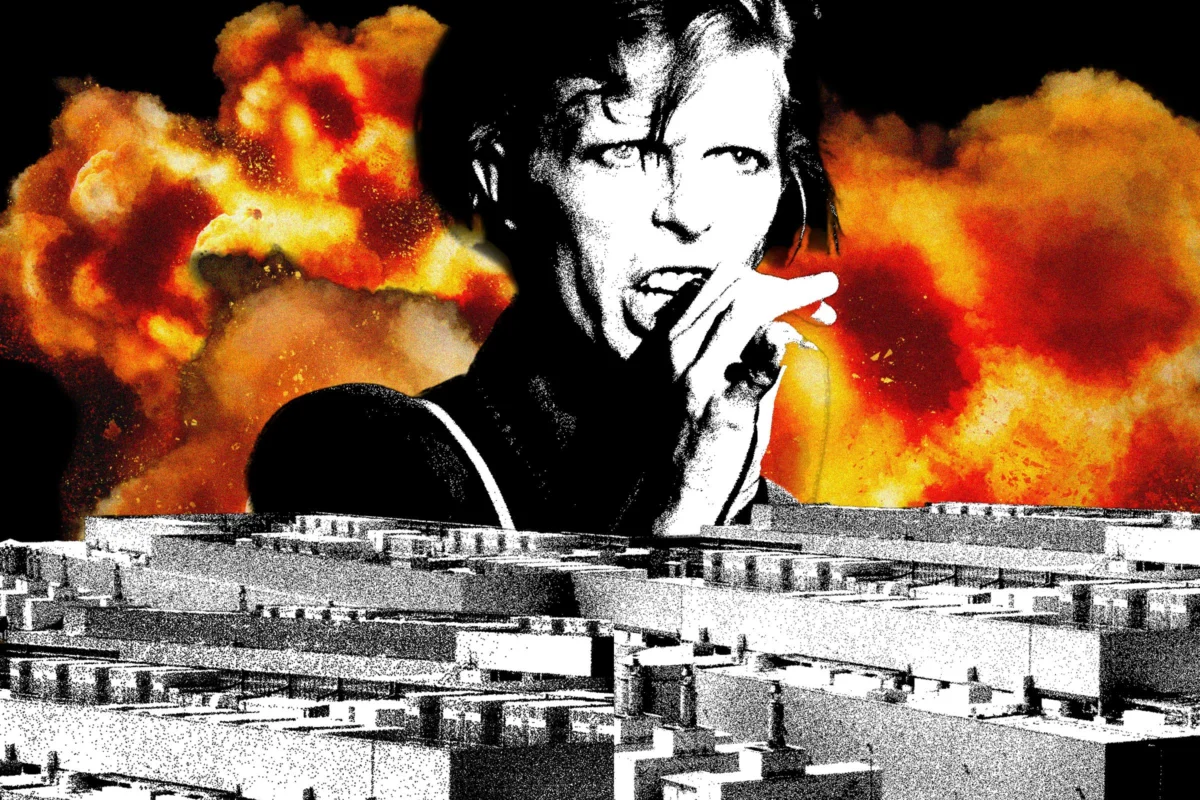
Meta Platforms Inc. has launched a high-profile advertising campaign on its official Instagram account intended to frame artificial intelligence as a bridge for human connection, rather than a wedge that drives society apart. However, the promotional video has immediately drawn scrutiny from cultural critics and music historians for its use of David Bowie’s 1972 classic "Five Years" as its soundtrack. While the ad attempts to project a vision of technological optimism, the song itself is famously the opening track of The Rise and Fall of Ziggy Stardust and the Spiders from Mars, a concept album detailing a looming global apocalypse. The juxtaposition of a corporate message about a bright, AI-driven future against a song about the literal end of the world has sparked a debate over the intentionality and self-awareness of Big Tech marketing.
The advertisement, which appeared on Thursday morning, features a series of heartwarming vignettes: a toddler interacting with a butterfly, parents laughing with an infant, and New York Knicks star Jalen Brunson waving to crowds during a championship parade. A narrator provides a voiceover that explicitly addresses public anxieties regarding the rapid integration of AI into daily life. "Call us optimists, call us dreamers, call us whatever the hell you want—but we’re betting on people, and we like those odds," the narrator states. The ad also prominently features Meta’s Ray-Ban smart glasses, attempting to rebrand the hardware as a tool for capturing spontaneous family moments rather than a device for surreptitious recording, a point of significant public controversy since the product’s launch.
The Disconnect Between Lyrics and Lore
The central tension of the campaign lies in the choice of music. "Five Years" is widely regarded as one of the most haunting descriptions of social collapse in the rock canon. The lyrics used in the Meta ad focus on a montage of human sensory experiences: "I heard telephones, opera house, favorite melodies / I saw boys, toys, electric irons and TVs / My brain hurt like a warehouse, it had no room to spare / I had to cram so many things to store everything in there." While these lines could be interpreted as a metaphor for the vast data-processing capabilities of AI, the song’s broader context is far darker.
Omitted from the advertisement are the song’s opening lines, which set the scene for a planet with only sixty months of existence remaining: "News had just come over / We had five years left to cry in / News guy wept and told us / Earth was really dying." The song proceeds to describe a world descending into chaos, panic, and desperate attempts at finding meaning before the end. Critics have pointed out that using an "end-of-the-world" anthem to promote a technology that some experts warn poses an existential risk to humanity is a choice that borders on the surreal.
Jeremy D. Larson, deputy director at Pitchfork, noted that the use of the song in this context feels "either really ignorant or really insidious." Larson suggested that hearing the work of an artist like Bowie—who often explored themes of alienation and the dehumanizing effects of technology—used to sell generative AI feels "specifically nonconsensual," despite the legalities of music licensing.
Meta’s Defense: A Legacy of Optimism?
In response to inquiries regarding the song choice, Meta spokesperson Francis Brennan defended the creative decision by citing David Bowie’s own reflections on the track. Brennan pointed to a 1972 quote from Bowie, sourced via BowieBible.com and originally published in NME Magazine, where the artist expressed a desire to counter societal fear. "People are so incredibly serious and scared of the future that I would wish to turn the feeling the other way, into a wave of optimism," Bowie said at the time. "If one can take the micky out of the future, and what it is going to be like… It’s going to be unbelievably technological."
However, this interpretation is contested by those who worked closely with Bowie. Mick Woodmansey, the drummer for the Spiders from Mars, provided a starkly different account of the song’s emotional weight in a 2018 interview. Woodmansey recalled that during the recording session, Bowie was visibly distraught. "We knew it was about the end of the world and pretty depressing," Woodmansey said. "I remember when we recorded it, he was actually in tears. He was doing the vocal and he was actually crying."
The discrepancy highlights a common trend in corporate advertising: the selective use of cultural artifacts to suit a specific brand narrative while ignoring the artist’s original intent. This practice is facilitated by the commercial landscape of music rights. In early 2022, David Bowie’s entire publishing catalog was sold to Warner Chappell Music for upwards of $250 million. This deal gave the publisher the authority to license Bowie’s songs for commercial use, often bypassing the aesthetic or philosophical preferences that the artist might have held during his lifetime.
A Chronology of Tech Marketing Missteps
Meta’s latest campaign follows a pattern of "heavy-handed" advertising by major technology firms attempting to soften the public’s perception of AI and emerging tech. Over the last several years, several notable campaigns have backfired or been criticized for being out of touch with consumer sentiment:
- FTX and Larry David (2022): During the Super Bowl, the now-defunct cryptocurrency exchange FTX aired a commercial featuring comedian Larry David dismissing various historical inventions like the wheel and the lightbulb. The ad’s tagline, "Don’t be like Larry," urged viewers not to miss out on the crypto revolution. FTX filed for bankruptcy nine months later, and the ad became a symbol of the hubris of the crypto era.
- Google Gemini and the Olympic Letter (2024): Google faced backlash for an ad showing a father using the Gemini AI tool to write a fan letter for his young daughter to send to an Olympic athlete. Critics argued the ad suggested that AI should replace even the most personal and heartfelt forms of human expression, undermining the very "human connection" the company claimed to support.
- Anthropic’s "Hope in Hard Questions" (2024): The AI safety startup Anthropic released a somber ad featuring images of burning buildings and graveyards, asking, "Who’s gonna hit the brakes if we need to?" While the ad eventually pivoted to themes of hope, its dark imagery reinforced the idea that AI development is inherently dangerous, even as the company sought to position itself as the responsible alternative.
The Business of AI Sentiment
The push for "optimistic" AI branding comes at a critical time for Meta. The company has pivoted aggressively toward artificial intelligence following a multi-billion-dollar investment in the "Metaverse," which has yet to achieve mainstream adoption. Meta’s Llama models are now central to its strategy, and the company is under pressure to prove that AI will enhance, rather than cannibalize, its core social media platforms.
Market data suggests that the public remains deeply divided on the benefits of AI. According to a 2023 study by the Pew Research Center, 52% of Americans feel more concerned than excited about the increased use of artificial intelligence in daily life. This "trust gap" is what campaigns like Meta’s are designed to bridge. By using iconic music and imagery of family life, Meta is attempting to "humanize" a technology that many perceive as cold, extractive, or threatening to job security.
However, the strategy of using "Five Years" may have the opposite effect for those familiar with the source material. In the narrative of the Ziggy Stardust album, the five-year countdown to destruction is the catalyst for the arrival of a rock star who acts as a messenger for extraterrestrial beings. In this light, Meta’s use of the song could be seen as an unintentional metaphor for the "alien" nature of AI and the transformative, perhaps destructive, impact it may have on the social fabric.
Implications for the Creative Industry
The controversy also touches on the broader anxiety within the creative community regarding AI. Musicians, writers, and actors have increasingly voiced concerns about their work being used to train AI models without consent or compensation. The fact that Bowie’s voice and lyrics are being used to sell the very technology that many artists fear will eventually replace them adds a layer of irony to the Meta campaign.
As AI companies continue to search for a "human" voice, they are likely to continue leaning on the cultural capital of the past. Whether it is Google using the Olympics or Meta using David Bowie, the goal is to associate the unknown—and often frightening—potential of AI with the familiar and beloved touchstones of human history.
For now, the Meta ad remains live, serving as a case study in the complexities of modern brand storytelling. It demonstrates that while a company can buy the rights to a song, it cannot always control the meaning that the audience attaches to it. In the case of "Five Years," the message of connection is inextricably linked to the shadow of the apocalypse, leaving viewers to wonder if Meta is truly betting on people, or if they are simply whistling past the graveyard of the old world.
