

Markets for the first time in the current cycle now think the Federal Reserve’s next move will be an interest rate hike. The shift in expectations, driven by a series of unexpectedly high inflation readings, signals a potential recalibration of monetary policy as the central bank navigates a landscape marked by rising price pressures and a new leadership at its helm. Traders in the fed funds futures market are now pricing in a significant probability of an interest rate increase as soon as December, with a much higher degree of certainty extending into the early part of 2027. This sentiment is meticulously tracked by the CME Group’s FedWatch tool, which utilizes the prices of 30-day federal funds futures contracts to gauge market probabilities.
Shifting Sands: The FedWatch Tool and Market Sentiment
The CME FedWatch tool, a critical barometer of market sentiment regarding the Federal Reserve’s future monetary policy actions, has undergone a notable transformation in recent days. As of the latest readings, the probability of a December interest rate hike has climbed to nearly 51%. This suggests that the market is now leaning towards a tightening of monetary policy in the near term. The momentum towards higher rates continues into the subsequent months, with a move higher by January carrying approximately a 60% probability and March seeing that figure surpass 71%. This escalating probability underscores a growing conviction among market participants that the Federal Reserve may be compelled to reverse its previous trajectory of holding rates steady, or even considering cuts, in response to persistent inflationary pressures.
The Inflationary Tide: Recent Data Paints a Stark Picture
The catalyst for this dramatic shift in market expectations appears to be a confluence of recent economic data, particularly concerning inflation. The past week has witnessed the release of both consumer and wholesale inflation reports that posted multiyear highs. The Consumer Price Index (CPI), a widely watched measure of inflation, has shown a persistent upward trend, surprising economists and policymakers alike. Similarly, the Producer Price Index (PPI), which tracks inflation at the wholesale level, has also indicated a significant acceleration in price pressures across various sectors of the economy. These readings are not isolated incidents; import and export prices have also reached levels not observed since the last major inflation spike, a period that necessitated aggressive monetary policy tightening by the Federal Reserve.
Echoes of the Past: The Legacy of Aggressive Rate Hikes
The current inflationary environment inevitably draws parallels to the period of aggressive rate hikes initiated by the Federal Reserve in 2022. During that cycle, the central bank embarked on a series of substantial rate increases, including four consecutive moves of three-quarter percentage point increments, in an effort to curb runaway inflation. The memory of those swift and decisive actions continues to inform market participants’ expectations about the Fed’s potential response to renewed inflationary pressures. The current data suggests that the central bank may be facing a similar challenge, albeit with different underlying economic conditions.
A New Sheriff in Town: Kevin Warsh Takes the Reins
Adding another layer of complexity to the evolving monetary policy landscape is the recent transition in leadership at the Federal Reserve. Kevin Warsh officially takes over the helm of the Federal Reserve as of Friday. Warsh, a former Fed Governor, has previously indicated a view that the central bank might actually be able to lower rates in the current economic environment. This perspective, if pursued, could create a divergence between the Fed’s stated intentions and market expectations, particularly if inflation continues to surprise to the upside.
Internal Disagreement: Dissent at the Last FOMC Meeting
The divergence in views regarding monetary policy was already evident at the last Federal Open Market Committee (FOMC) meeting. In a notable development, three members dissented from the decision to hold benchmark rates steady. Their objections were specifically directed at the language used in the FOMC statement, which hinted that the next move would be a cut. This dissent signals a clear internal debate within the Federal Reserve about the appropriate path forward for monetary policy, with some members expressing a greater concern about inflation than others. The differing opinions of these dissenting members, coupled with the new leadership, could lead to a more dynamic and potentially unpredictable policy environment.
Forecasters See Red: Inflation Projections Soar
Further reinforcing the market’s concern about inflation, economists participating in the Survey of Professional Forecasters have projected that second-quarter inflation will top out at 6%. This figure represents a significant upward revision from the last estimate, underscoring the growing apprehension among economic experts about the persistence of elevated price levels. Such a high inflation rate, if realized, would undoubtedly put further pressure on the Federal Reserve to take decisive action to restore price stability. The release of these revised forecasts on Friday has likely contributed to the increased market conviction that a rate hike is on the horizon.
Broader Economic Context and Potential Implications
The current economic backdrop is characterized by a complex interplay of factors. While inflation is surging, the broader economic growth picture remains somewhat uncertain. The labor market, though showing signs of resilience, could also be impacted by higher interest rates. Businesses may face increased borrowing costs, potentially leading to reduced investment and hiring. Consumers, in turn, could experience a slowdown in spending due to higher mortgage rates, credit card interest, and the erosion of purchasing power caused by inflation.
The Federal Reserve’s mandate is to promote maximum employment and price stability. The current situation presents a direct challenge to achieving both objectives simultaneously. A premature tightening of monetary policy could risk stifling economic growth and employment, while a delayed response to inflation could lead to entrenched price pressures and a more difficult economic correction in the future.
Analyzing the Fed’s Dilemma
The Federal Reserve finds itself in a precarious position. On one hand, the surging inflation data demands a response to maintain credibility and prevent a wage-price spiral. On the other hand, the global economic environment is still recovering from various shocks, and an overly aggressive tightening could trigger a recession. The new leadership under Kevin Warsh will face immediate pressure to articulate a clear strategy that balances these competing concerns.
The market’s current pricing of a likely rate hike reflects a growing belief that the Federal Reserve will prioritize bringing inflation under control, even at the potential cost of some economic deceleration. This sentiment suggests that the era of ultra-low interest rates may be definitively over, and a period of higher borrowing costs for businesses and consumers is imminent.
Historical Parallels and Future Outlook
Historically, periods of high inflation have often been met with significant monetary policy interventions. The aggressive rate hikes of the early 1980s, spearheaded by then-Fed Chair Paul Volcker, serve as a stark reminder of the lengths to which central banks have gone to tame runaway inflation. While the current economic context is different, the underlying principle of using interest rates to cool down an overheating economy remains a primary tool in the Federal Reserve’s arsenal.
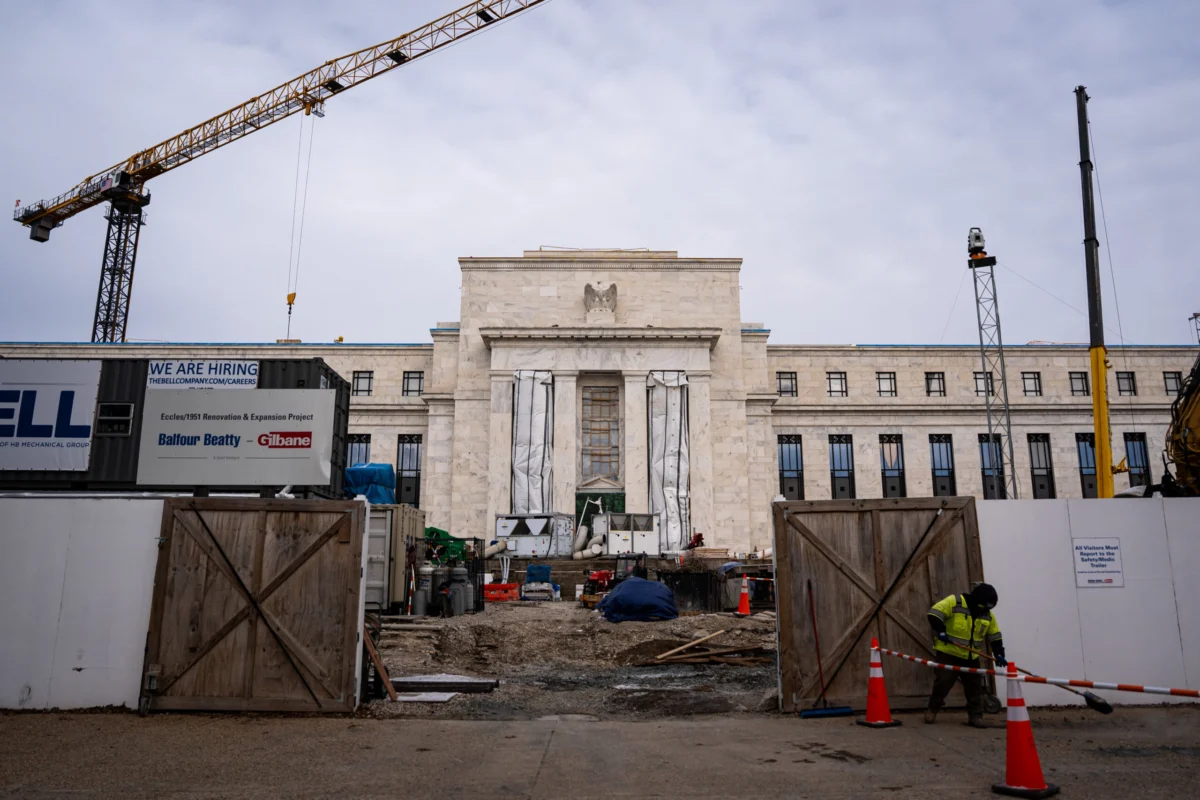
The coming months will be critical in observing how the Federal Reserve, under its new leadership and in the face of mounting inflationary data, navigates this challenging economic landscape. The market’s current bet on a rate hike is a strong signal, but the actual policy decisions will depend on a multitude of incoming economic indicators and the Federal Reserve’s evolving assessment of the risks and opportunities. The potential for continued volatility in financial markets remains high as investors and policymakers grapple with the uncertainty surrounding the future trajectory of inflation and monetary policy. The coming weeks and months will undoubtedly be closely watched by global financial markets as they seek clarity on the Federal Reserve’s commitment to price stability in a rapidly changing economic environment. The implications of these decisions will ripple far beyond the walls of the Marriner S. Eccles Federal Reserve building, impacting everything from household budgets to corporate investment strategies. The market’s current pricing reflects a sober assessment of the challenges ahead, and the Federal Reserve’s response will be a defining factor in shaping the economic narrative for years to come.
