

The Linux Mint project, one of the most prominent community-driven Linux distributions, has officially signaled a transformative shift in its development philosophy and release schedule. Lead developer Clement “Clem” Lefebvre recently confirmed that the upcoming major release, designated as Linux Mint 27 and codenamed "Adrien," is scheduled for a late 2025 debut, likely coinciding with the holiday season. This announcement marks the end of the traditional twice-a-year release cadence that has defined the distribution for over a decade. By moving to a longer, more deliberate development cycle, the Mint team aims to implement more ambitious architectural changes and provide a more polished user experience that addresses the evolving needs of the modern desktop user.
A Strategic Shift in Development Philosophy
For years, Linux Mint followed a predictable six-month release cycle, mirroring the cadence of its upstream base, Ubuntu. However, the development team recently acknowledged that this rapid turnaround was becoming a bottleneck for innovation. The administrative overhead of preparing two major releases per year left little room for deep-seated code overhauls or the development of complex new features.
The decision to move to a yearly release cycle was finalized in October, following a series of internal discussions and community feedback. This shift is designed to alleviate the pressure on the core development team, allowing them to tackle larger projects that were previously deemed too time-consuming to fit into a six-month window. According to the project leadership, the extra time is already yielding results, enabling the team to overhaul fundamental components of the Cinnamon desktop environment and introduce a suite of new "XApps" (Mint-native applications) that provide a more cohesive and modern interface.
The Logic Behind the Numbering and Naming Convention
One of the most immediate changes visible to the community is the jump in version numbering. While early development snapshots were tentatively labeled as Mint 23 "Alfa," the team has decided to synchronize release numbers with the calendar year of their launch. Consequently, the next major version will be Linux Mint 27, reflecting its 2027-aligned support cycle and its relationship with the upcoming Ubuntu 26.04 Long Term Support (LTS) base.
Moving forward, the project will abandon the use of point releases (such as 22.1 or 22.2) in favor of whole-number annual increments. This means the release following 27 will be Linux Mint 28. In another departure from tradition, the project is pivoting its naming convention. For years, Linux Mint versions were given female names in alphabetical order (e.g., Victoria, Wilma, Zena). Starting with Mint 27, the distribution will adopt male names, with "Adrien" serving as the debut title for this new era.
Technical Foundation: Ubuntu 26.04 LTS and Kernel 7.0
Linux Mint 27 will be built upon the foundation of Ubuntu 26.04 LTS, known by its Canonical codename "Resolute Raccoon." This choice ensures that Mint users will benefit from five years of standard security updates and potentially up to ten years of expanded support. By basing the distribution on an LTS release, the Mint team provides a stable environment for users who prioritize reliability over "bleeding edge" software.
Under the hood, Linux Mint 27 is expected to ship with Linux Kernel 7.0. While the specific sub-version will be determined closer to the release date, the move to the 7.0 series promises enhanced hardware support, particularly for the latest Intel and AMD processors, as well as improved drivers for Wi-Fi 7 and advanced power management features. This technical leap is essential for ensuring that Mint remains a viable choice for new laptops and workstations released in late 2025 and early 2026.
Major Feature: The Return of Integrated Hibernation
A centerpiece of the Linux Mint 27 release is the comprehensive re-integration of hibernation into the desktop experience. While hibernation—the process of saving the current system state to the disk and completely powering down—is a standard feature in many operating systems, it has historically been difficult to configure in various Linux distributions due to complexities involving swap partitions and secure boot protocols.
To address this, Mint 27 introduces a dedicated "Sleep Modes" page within the System Administration tool. This interface simplifies the process of enabling hibernation by guiding users through the necessary swap-space requirements and automated configuration steps. The project lead emphasized that this feature is particularly critical for laptop users. Unlike the standard "Suspend" mode, which continues to draw a small amount of power to keep data in RAM, hibernation ensures zero power consumption. This prevents scenarios where a user closes their laptop lid only to find a depleted battery and lost work several hours later.
Introducing Superlight: A Modern System Monitor
Linux Mint 27 will debut "Superlight," a high-performance system monitoring application developed to replace the aging GNOME System Monitor. Superlight is designed to be both lightweight and information-dense, providing real-time graphical data for:

- CPU utilization and per-core performance.
- RAM and swap-space allocation.
- GPU activity and video memory usage.
- Network throughput and latency.
- Disk I/O and temperature sensors.
- Fan speeds and battery health.
One of the most innovative aspects of Superlight is its integrated storage analysis tool. Unlike traditional monitors that only show total disk usage, Superlight can categorize data into specific silos, such as installed Steam games, Flatpak applications, and system files. This allows users to quickly identify "disk space hogs" without needing to open secondary utilities like Baobab or Disk Usage Analyzer.
Enhancements to the Cinnamon Desktop and Nemo File Manager
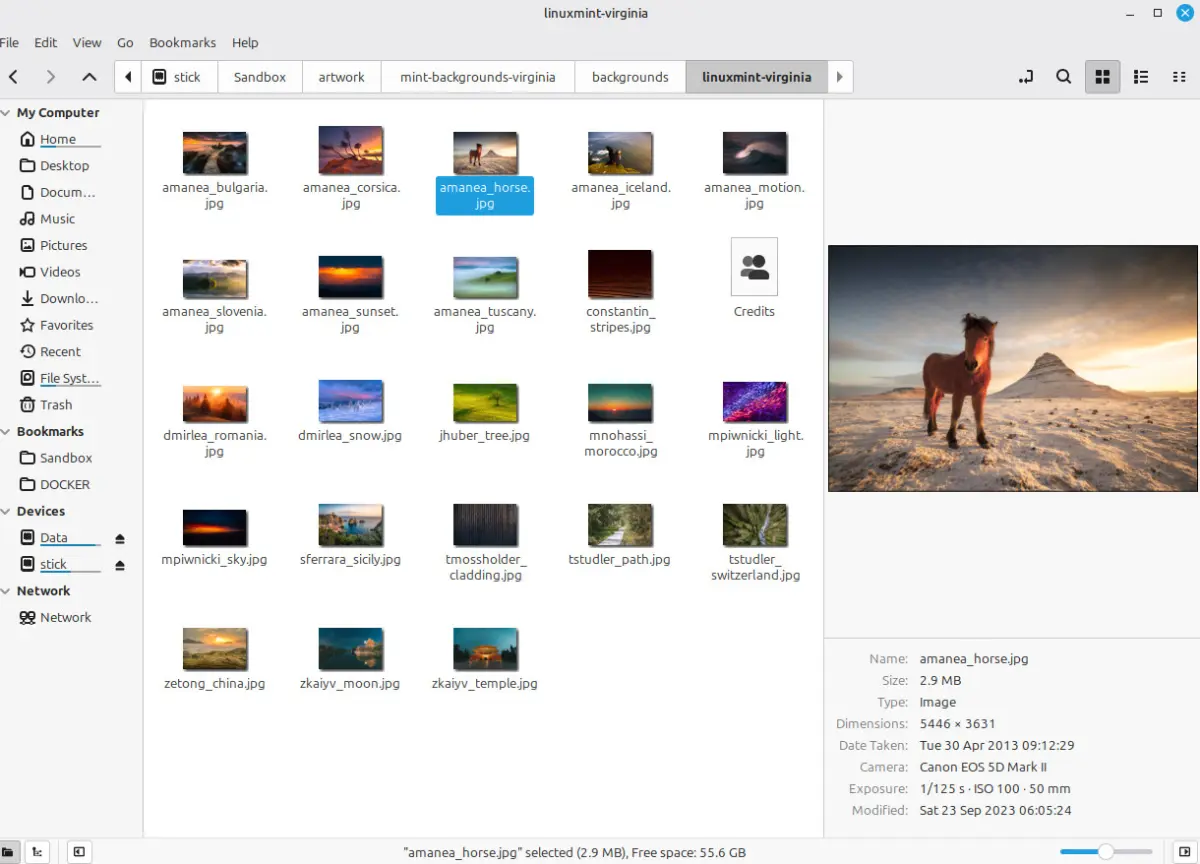
The Cinnamon desktop environment, Mint’s flagship interface, continues to receive refinements aimed at productivity. The Nemo file manager is being updated to include a media preview pane, which can be toggled instantly using the F7 key. This pane provides high-resolution previews of images, audio, and video files, along with detailed metadata. For photographers, this includes EXIF data such as ISO settings, capture date, and camera model, allowing for rapid file sorting without opening a dedicated image viewer.
Furthermore, the team is working on deep-level code cleanup within Cinnamon to improve performance on high-refresh-rate monitors and multi-monitor setups. While X11 remains the default display server for Linux Mint 27, the team has made significant strides in Wayland compatibility. Though not yet ready to replace X11 as the primary option, the "Wayland session" in Mint 27 will be significantly more stable, offering improved gesture support and window management for users who choose to experiment with the newer protocol.
Velocitty and Unfold: Expanding the XApps Ecosystem
Mint 27 introduces two new major applications to the XApps suite: Velocitty and Unfold.
Velocitty is a new terminal emulator designed for power users who require advanced session management. Unlike basic terminals, Velocitty allows users to organize SSH connections, recurring projects, and local scripts into a searchable interface. This reduces the need for manual command entry for frequently accessed remote servers or development environments.
Unfold serves as a streamlined archive manager. Recognizing that many existing tools are either too basic or overly cluttered, Unfold focuses on a clean UI while providing robust backend support for 7-Zip and 7zip-RAR formats. It natively supports password-protected and encrypted archives, ensuring that users can handle modern compression standards with minimal friction.
A New Installation Experience
The transition to Mint 27 also involves a change in how the operating system is installed. The project is moving away from the "Ubiquity" installer, which has been the standard for Ubuntu-based distros for years, in favor of the Linux Mint Debian Edition (LMDE) live installer. This installer has been refined to support a wider array of hardware configurations, including:
- OEM bulk-installation support for hardware vendors.
- Enhanced support for both legacy BIOS and modern EFI/UEFI systems.
- Streamlined Secure Boot integration.
- Improved handling of LVM (Logical Volume Management) and LUKS (Linux Unified Key Setup) for full-disk encryption.
Analysis of Broader Implications
The move to a yearly cycle and the rebranding of version numbers suggests that Linux Mint is maturing from a "derivative" distribution into a more independent platform. By distancing itself from the rapid-fire release schedule of Ubuntu, Mint is positioning itself as the premier choice for "long-term desktop computing."
This strategy is likely to appeal to enterprise environments and less-technical home users who find frequent operating system upgrades disruptive. Furthermore, by developing custom tools like Superlight and Velocitty, the Mint team is reducing its dependency on the GNOME ecosystem, which has recently moved in a design direction (GNOME 40+) that often clashes with Mint’s traditional desktop philosophy.
The inclusion of modern software, such as the expected GIMP 3.2.2 as the default image editor, indicates that while the base of the OS remains stable and "old-school," the application layer will remain current. This balance between a rock-solid foundation and modern productivity tools is the core value proposition of Linux Mint 27.
As the Linux community moves toward 2026 and 2027, the "Adrien" release will serve as a critical test of whether a slower, more deliberate development pace can keep a distribution competitive in an era of rapid technological change. If successful, Linux Mint 27 could set a new standard for how community-driven projects manage growth and stability in the open-source world.
