

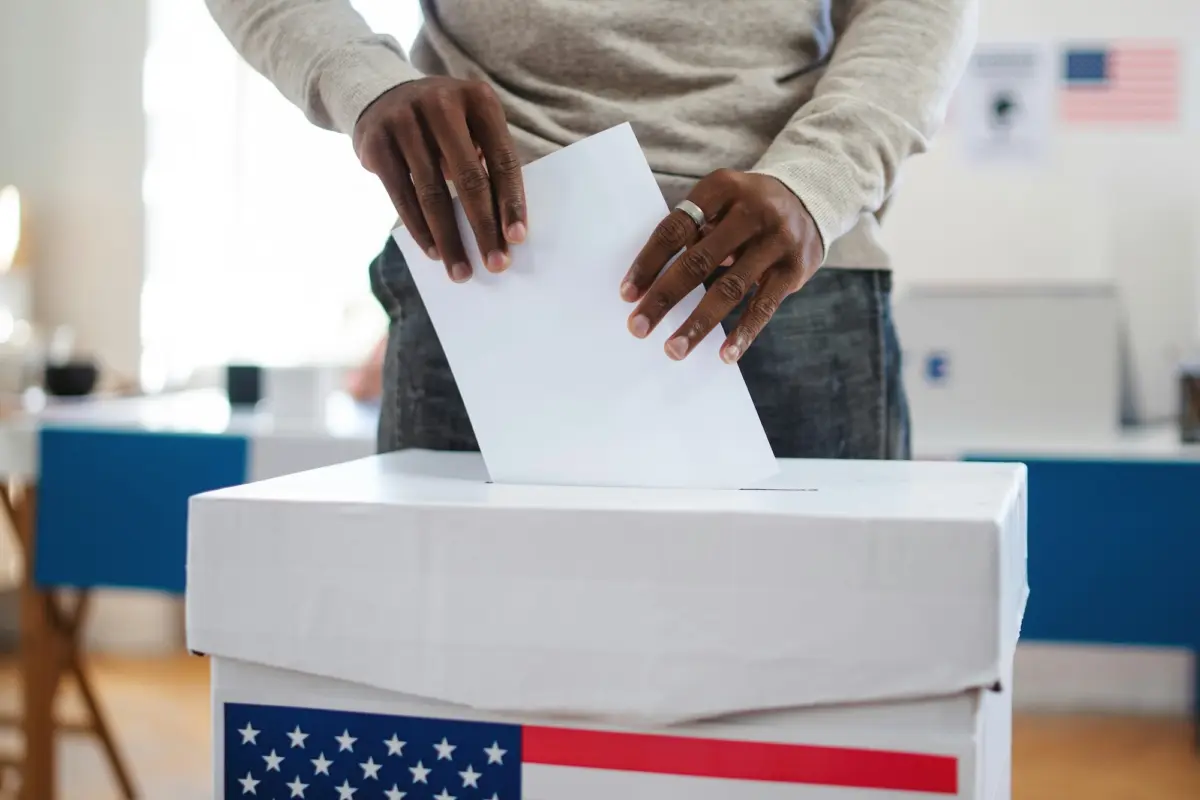
As the United States approaches the 2026 midterm elections, a complex web of digital surveillance, administrative pressure, and grassroots mobilization has emerged, fundamentally altering the landscape of American democracy. While voter registration is traditionally viewed as a civic duty supported by nonpartisan entities, the rise of sophisticated, privately funded platforms has introduced new risks regarding data privacy and political transparency. At the center of this controversy is VoteSafe.org, a website that presents itself as a neutral informational resource but has been revealed as a data-collection tool for America PAC, the political action committee controlled by billionaire Elon Musk. This development, coupled with aggressive executive actions and a surge in community-led advocacy, defines a pivotal moment in the ongoing struggle over the integrity of the U.S. electoral process.
The Rise of VoteSafe.org and the Digital Surveillance of Voters
In recent months, millions of Americans have encountered advertisements on Meta platforms, including Facebook and Instagram, promoting VoteSafe.org. The website’s interface is designed to mirror official government portals, offering users the ability to check their registration status, request absentee ballots, and sign up for election reminders. However, investigative reporting has pulled back the curtain on the site’s true purpose. Far from being a public service, VoteSafe.org is an operation funded by America PAC. Elon Musk, the driving force behind the PAC, has emerged as the single largest individual donor to Donald Trump and the Republican Party in the current election cycle, marking a significant shift in how tech billionaires leverage their wealth to influence voter behavior.
According to investigative journalist Judd Legum of Popular Information, VoteSafe.org functions as a "digital surveillance machine." When users input their personal information—including names, addresses, phone numbers, and voting intentions—that data is not merely used to facilitate registration. Instead, it is captured and transmitted to a network of private tech firms, America PAC, and various Republican get-out-the-vote (GOTV) operations. This granular data allows for highly specific micro-targeting, enabling political campaigns to track potential voters with unprecedented precision. Records indicate that America PAC spent upwards of $180,000 in a single week to promote the site on Meta’s platforms, targeting demographics in key swing districts.
Fact-checking organizations, including Snopes, have verified these findings, noting that the site’s privacy policy allows for extensive data sharing with "affiliated organizations." This lack of transparency has drawn sharp criticism from privacy advocates who argue that voters are being misled into surrendering sensitive personal information under the guise of civic engagement. In contrast, nonpartisan resources such as the federal government’s Vote.gov continue to provide state-by-state election information without the secondary motive of partisan data harvesting.
A Chronology of Escalating Tensions: 2020 to 2026
The current climate of suspicion and legal maneuvering did not emerge in a vacuum. It is the culmination of a six-year period characterized by intense litigation and a shifting executive approach to election management.
- November 2020 – January 2021: Following the 2020 presidential election, dozens of lawsuits were filed to challenge the results in several states. Despite a total lack of evidence of widespread fraud, these challenges fueled a narrative of "stolen" elections that culminated in the January 6 attack on the U.S. Capitol.
- 2021 – 2024: During his time out of office, Donald Trump maintained a consistent rhetoric regarding voter fraud, specifically targeting mail-in ballots and the use of drop boxes. This period saw a wave of state-level legislative changes aimed at tightening voting requirements.
- January 2025: Upon returning to the presidency, the Trump administration began implementing a series of executive measures that watchdogs labeled as potential "election interference." This included the systematic removal of leadership from the bipartisan Election Assistance Commission (EAC).
- Early 2026: The administration backed judicial efforts that resulted in the further gutting of the Voting Rights Act, limiting the federal government’s ability to oversee changes to voting laws in states with histories of discrimination.
- Mid-2026: The Department of Justice (DOJ) began demanding voter rolls from over 30 states, threatening to prosecute local election officials who did not comply. Simultaneously, the administration ordered the deployment of federal agents to polling stations and introduced new U.S. Postal Service (USPS) regulations affecting mail-in ballots.
Administrative Pressure and the Legal Counter-Offensive
The executive branch’s recent actions have sparked a flurry of litigation from civil rights groups and local governments. One of the most significant legal battles involves the U.S. Postal Service. New USPS rules, which critics argued would slow the delivery of mail-in ballots, were recently challenged in the First Circuit Court of Appeals. A three-judge panel issued a stay against these rules, concluding that they would likely result in the disenfranchisement of millions of voters. The court’s opinion emphasized that the potential for voter fraud—the administration’s stated reason for the rules—was minimal compared to the certainty of widespread disenfranchisement.
Furthermore, the city of Denver, alongside several civil rights organizations, filed suit to prevent the deployment of federal immigration agents at polling places. The plaintiffs cited the "troops at polls" law, a long-standing legal principle intended to prevent the intimidation of voters by armed government personnel. Advocates argue that the presence of such agents is specifically designed to discourage participation among immigrant communities and naturalized citizens, despite evidence showing that non-citizen voting is a virtually non-existent issue in U.S. elections.
The administration’s demand for voter rolls has also met stiff resistance. Several secretaries of state have refused to hand over sensitive voter data to the DOJ, citing state privacy laws and the potential for the data to be used for partisan "purging" of registration lists. These officials argue that the federal government’s sudden interest in state-level rolls is a pretext for identifying and removing voters who lean toward the opposition.
The No Kings Movement: A New Era of Grassroots Organizing
In response to what they perceive as an existential threat to the democratic process, a new coalition of grassroots organizations has emerged. Leading this charge is the "No Kings" movement, an organization that has evolved from a digital boycott campaign into a sophisticated national network of advocates. Unlike previous movements that relied primarily on social media hashtags, No Kings has focused on hyper-local, in-person organizing.
The movement gained significant momentum following its "day of action" on February 17, 2025. By March 2026, the group had successfully organized events in every congressional district across all 50 states. These events, ranging from community block parties to formal voter education workshops, served to build "permanent advocacy groups" that remain active between election cycles.
After a quiet summer period, the No Kings coalition—which includes heavyweights such as Voto Latino, Indivisible, and Public Citizen—has announced a massive mobilization for the 2026 early voting period. Their strategy includes:
- Volunteer Training: Educating thousands of individuals on how to legally and peacefully de-escalate attempts at voter intimidation at polling sites.
- Mass Turnout Events: Coordinating nationwide "Get Out the Vote" rallies scheduled for October 17, 2026.
- Alternative Engagement: Providing a "corporate-free" alternative to organizations like the Civic Alliance. While the Civic Alliance partners with major corporations like BP, Target, and Meta, No Kings emphasizes a labor-led, community-first approach that eschews billionaire funding.
Ezra Levin, co-founder of Indivisible, highlighted the stakes of this mobilization in a recent statement, noting that the goal is no longer just to "send a message" but to actively prevent the consolidation of authoritarian power through the exercise of the franchise.
Analysis of Implications: Corporate "Civics Washing" vs. Authentic Engagement
The 2026 election cycle has highlighted a growing divide in how civic engagement is facilitated in the United States. On one hand, there is the phenomenon of "civics washing," where corporate entities and billionaire-backed PACs use the language of democracy to further private or partisan interests. VoteSafe.org is a prime example of this trend, utilizing the aesthetic of a public utility to feed a private data machine.
On the other hand, the resurgence of labor unions and grassroots coalitions suggests a return to more traditional, community-based forms of political organizing. These groups argue that when the "peaceful transfer of power" is under threat, voters should be wary of any resource that requires them to trade their privacy for participation.
The broader implications for the 2026 midterms are profound. The outcome may depend less on traditional campaign messaging and more on which side succeeds in defining the "integrity" of the election. For the administration and its allies, integrity is framed as a matter of security and the elimination of alleged fraud. For advocates and legal challengers, integrity is defined by the accessibility of the ballot and the protection of the voter from both state-sponsored intimidation and private-sector surveillance.
As October 17 approaches, the effectiveness of the No Kings movement and the final rulings of the appellate courts will likely determine the shape of the American electorate for years to come. In an era where billionaires can launch their own registration platforms and federal agencies can be deployed to polling precincts, the fundamental question remains: who truly controls the gateway to the ballot box? The answer will be written in the turnout numbers and the legal precedents set in the coming weeks.
