

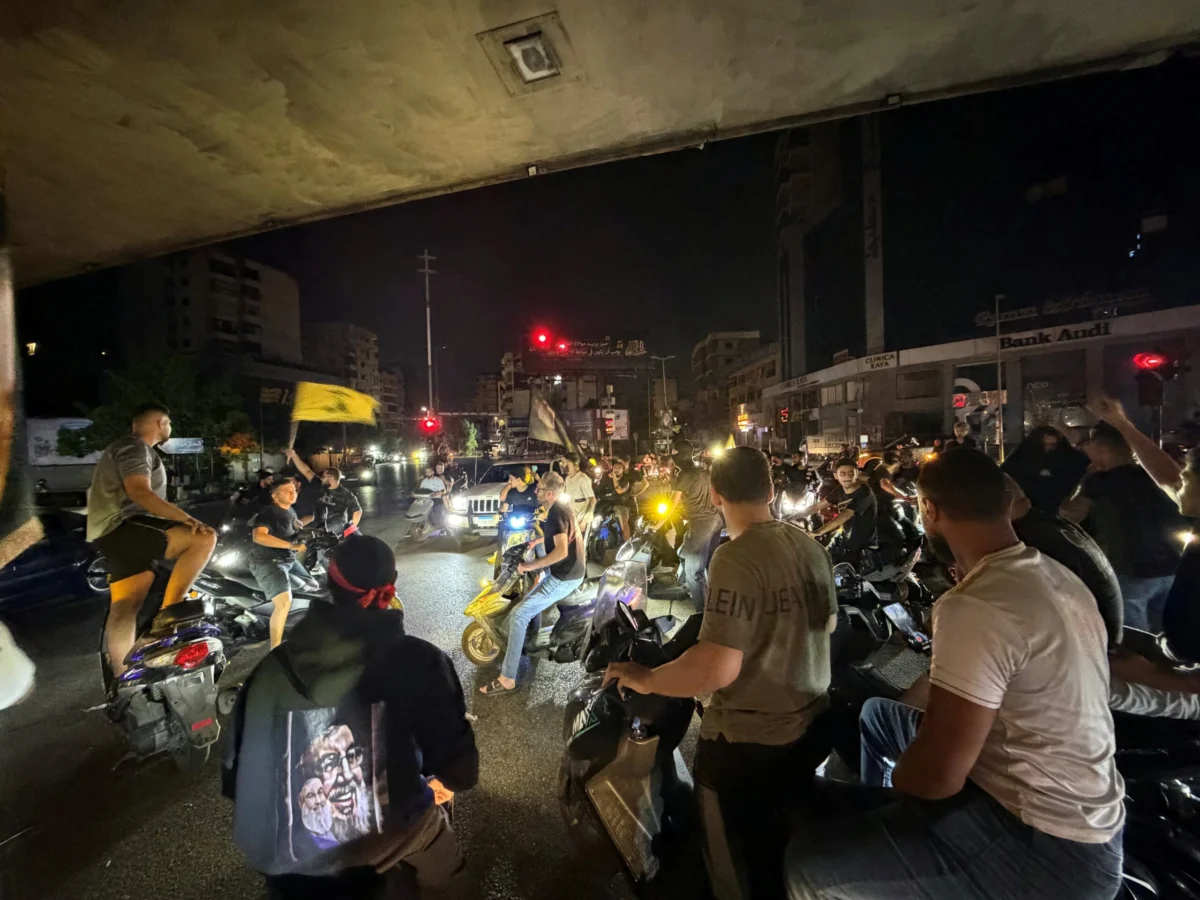
Beirut, Lebanon – A United States-brokered framework agreement, signed on Friday, June 26, 2026, between the governments of Lebanon and Israel after months of direct negotiations, has ignited a fresh wave of protests across the Lebanese capital. Demonstrators, many waving flags of the Iran-backed group Hezbollah, voiced profound anger and skepticism over a deal that critics argue fails to address the deep wounds inflicted by years of conflict and maintains an asymmetric power dynamic. The agreement, intended to delineate maritime and land borders and establish security protocols, has been met with a mix of cautious optimism from government proponents and fierce condemnation from those most impacted by Israel’s ongoing military presence in southern Lebanon.
Chronology of Conflict and Negotiation
The recent framework agreement emerges from a protracted and bloody history of conflict between Lebanon and Israel, punctuated by periods of intense fighting and fragile ceasefires. The current phase of hostilities between Israel and Hezbollah, a powerful Lebanese political party and militant group, ignited in October 2023. This conflict saw varying levels of intensity, but significantly escalated on two distinct occasions. The first major escalation occurred in September 2024, followed by a fragile ceasefire reached in November 2024. However, this calm proved short-lived, with Lebanon reporting over 10,000 Israeli violations of the ceasefire in the subsequent months, highlighting the persistent instability in the border regions.
The second, and more recent, escalation began on March 2, 2026. This intensification by Israel came just two days after the killing of Iranian Supreme Leader Ali Khamenei in a joint US-Israeli air attack on Tehran on February 28, 2026. Hezbollah responded to Khamenei’s assassination by firing on Israel for the first time in over a year, triggering a swift and forceful Israeli military reaction.
In the immediate aftermath of this escalation, the Lebanese government found itself in a precarious position. On March 2, 2026, the same day as the Israeli intensification, Beirut declared Hezbollah’s military activities illegal, asserting that the group’s actions risked inviting Israel’s wrath in a war fought on behalf of Iran, rather than the Lebanese people. The government even attempted, unsuccessfully, to expel the Iranian ambassador, signaling its desperate efforts to de-escalate tensions and distance itself from Tehran’s regional agenda.
Despite the Lebanese government’s stance, Hezbollah continued its military confrontations with Israel in southern Lebanon. During this period of heightened conflict, the Israeli army established what it terms a "security zone," extending as deep as 10 kilometers (6.2 miles) into Lebanese territory. This de facto occupation, coupled with the devastating humanitarian toll, created immense pressure on the Lebanese government to seek a diplomatic solution. It was against this backdrop that Beirut entered United States-brokered negotiations with Israel, despite strong objections from Hezbollah, which viewed any direct engagement with Israel as a betrayal.
Terms of the Washington Agreement and Immediate Fallout
The newly signed 14-point Washington agreement aims to pave a path toward stability, but its specific provisions have immediately become points of contention. Key aspects include Israel’s recognition of Lebanon’s sovereignty over its own territory and a commitment that the Lebanese Armed Forces (LAF) will eventually assume full authority in southern Lebanon. However, this transfer of authority is made explicitly "pending the verified disarmament of" non-state armed groups, primarily Hezbollah. Crucially, the agreement does not stipulate an immediate or binding withdrawal of the Israeli army from the areas it currently occupies within Lebanon.
This omission has fueled the outrage expressed by protesters in Beirut. Thousands took to the streets on Friday, mirroring the deep-seated resentment felt by communities ravaged by the conflict. The war, which intensified significantly since early March 2026, has claimed the lives of more than 4,200 people and forcibly displaced hundreds of thousands from their homes in southern Lebanon and the Beirut suburbs.
Ali Zaytoun, a resident of Beirut’s southern suburbs, known as Dahiyeh, articulated the profound emotional toll. "After everything my family, my village, the south, and Dahiyeh have endured – the destruction, the displacement, the grief and the loss – it is incredibly difficult for me to accept an agreement with the same state that carried out the military actions that devastated our communities," Zaytoun stated. Zaytoun, who manages a popular Instagram account documenting the history of Dahiyeh, shared his personal experience of multiple displacements due to Israeli attacks. "Imagine someone destroys your home and your life, and then you’re expected to simply move on as if nothing happened," he lamented. "My protest is about remembering those who suffered, standing up for my community, and expressing that this agreement does not reflect the justice or respect that people who lived through this war deserve." His sentiments resonate with a significant portion of the Lebanese populace, particularly those in the south who have borne the brunt of the violence.
Official Reactions and Skepticism
Reactions from various political actors underscore the deep divisions within Lebanon regarding the agreement. Hezbollah chief Naim Qassem swiftly declared the agreement "null and void," branding it "humiliating, shameful, and a surrender of sovereignty." Hassan Fadlallah, a Hezbollah lawmaker, issued a stark warning of potential "internal conflict" in Lebanon should the deal proceed. Parliament Speaker Nabih Berri, while calling for calm, also echoed concerns that the deal was an attempt to incite internal strife, reflecting the precarious balance of power and political factions within the country.
Conversely, proponents of the Lebanese government’s decision argued that direct negotiations were the only viable path, given the nation’s limited leverage against Israel’s technological superiority and unwavering US support. Lebanese Prime Minister Nawaf Salam took to social media after the signing, asserting that the agreement "aims to achieve Israel’s withdrawal from all Lebanese territories." President Joseph Aoun called it "a first step" towards restoring Lebanon’s full sovereignty, signaling a pragmatic approach to a complex geopolitical reality. On Saturday, following the agreement’s signing, President Aoun held a call with his US counterpart, President Donald Trump, assuring him that Lebanon "would assume its responsibilities" in implementing the framework. Aoun also expressed hope that Washington would help ensure commitments "are fulfilled, particularly by pressing Israel to pull out from the areas it occupies."
However, many analysts remain deeply critical of the final terms. Karim Emile Bitar, a professor of international relations at Saint Joseph University of Beirut, remarked, "This framework agreement essentially mirrors the reality of the military and political balance on the ground, which is decisively tilted in Israel’s favour." Bitar drew parallels to the Oslo Accords, the series of US-brokered agreements between the Palestine Liberation Organization (PLO) and Israel in the 1990s. "We see a similar pattern here: Israeli negotiators seek recognition and get the other side to relinquish leverage while offering no binding timetable or reciprocal obligations," he added, suggesting that Lebanon might have conceded too much without sufficient guarantees.
Further exacerbating concerns, Israeli Defence Minister Israel Katz insisted on Saturday that Israeli soldiers would remain in Lebanon until Hezbollah is disarmed, directly contradicting the Lebanese government’s stated aim of full Israeli withdrawal and casting a shadow over the agreement’s long-term prospects.
Broader Regional Implications and US Reliance
The framework agreement cannot be viewed in isolation; it is deeply intertwined with broader regional dynamics and the significant role of the United States. Just days before the Washington framework was signed, Iran and the US reached a memorandum of understanding (MoU) aimed at ending the war launched by the US and Israel against Iran in late February 2026. This MoU explicitly declared, among other things, "the immediate and permanent termination of military operations on all fronts, including Lebanon," between the two countries and their allies. Lebanon’s inclusion in this broader MoU was reportedly a key Iranian priority, and a "deconfliction cell" was formed to bolster the supposed ceasefire in the country.
Throughout the war and the subsequent negotiations, Lebanon’s government has actively sought to distance itself from Iran’s influence. However, some critics argue that this pivot has led to an overreliance on the United States, a problematic stance given Washington’s strong backing of Israel. Lebanese writer Elia Ayoub, founder of the podcast The Fire These Times, articulated this concern: "We are seeing the confirmation of what Hezbollah has been warning all along. Not because Hezbollah got it right, but because the Lebanese state got it so wrong." Ayoub added, "I understand the need to not depend on Iran, but what we’ve instead done is become even more dependent on the US than we’ve previously been. And it’s the US that has been bankrolling Israel’s genocide in Palestine and war crimes in Lebanon." This perspective highlights the complex geopolitical tightrope Lebanon is forced to walk, navigating between regional powers and its own internal divisions.
Karim Emile Bitar also underscored the inherent asymmetry of the negotiating environment, stating, "The United States is unlikely to act as a neutral mediator and will almost certainly align with Israeli positions whenever disputes arise over the interpretation or implementation of the agreement. This creates a fundamentally asymmetric negotiating environment in which Lebanon has little leverage and few effective guarantees." Such analyses cast serious doubt on the enforceability of the agreement, particularly its aspects pertaining to Israeli withdrawal or adherence to future disputes.
Challenges to Implementation and Future Outlook
The path to implementing the framework agreement is fraught with significant challenges, leading many to question its efficacy. Karim Safieddine, a nonresident fellow with the Tahrir Institute for Middle East Policy, expressed deep skepticism, asserting that the framework left the Lebanese government with "very little agency." He concluded, "It’s Israel imposing a deal. It’s very clear what this deal is. It’s just a surrender agreement."
Analysts also drew parallels to the November 2024 ceasefire agreement, expressing doubt that Israel would be sufficiently incentivized to respect the new framework. "It’s one thing to sign a declaration of intent; it’s another thing to have it implemented, and I can see all kinds of problems emerging from this," said Nicholas Blanford, a nonresident fellow at the Atlantic Council and author of a book on Hezbollah. He recalled that Israel repeatedly complained last year that the LAF’s efforts to disarm Hezbollah were either too slow or ineffective. The US often sided with Israel in these diplomatic spats, despite encouragement from European and other officials for Washington to support the LAF more broadly.
A critical provision, Point 9 of the agreement, states that Lebanon’s government commits to a "rigorous, performance-based program to enable the capacity of the LAF to assert full military and security control within Lebanon … to implement the disarmament of all non-state armed groups." This particular clause has ignited fears in Lebanon about potential confrontations between the LAF and Hezbollah. However, Blanford suggested that a large-scale escalation between the two is unlikely in the immediate future. "The Lebanese army and the government are unwilling to use force against Hezbollah," he explained. "Forcibly trying to disarm a group that is refusing to disarm is an act of war. And I think the Lebanese army and the Lebanese government would be extremely wary of that."
The framework agreement, while a diplomatic achievement on paper, faces an arduous journey towards meaningful implementation. The deep-seated anger of the Lebanese populace, the staunch opposition from Hezbollah, Israel’s security demands, and the inherent asymmetry of US mediation all combine to create a highly volatile environment where the prospect of true and lasting peace remains distant and uncertain. The coming months will test the resolve of all parties, and the international community, to navigate these complex challenges and prevent a relapse into widespread conflict.
