

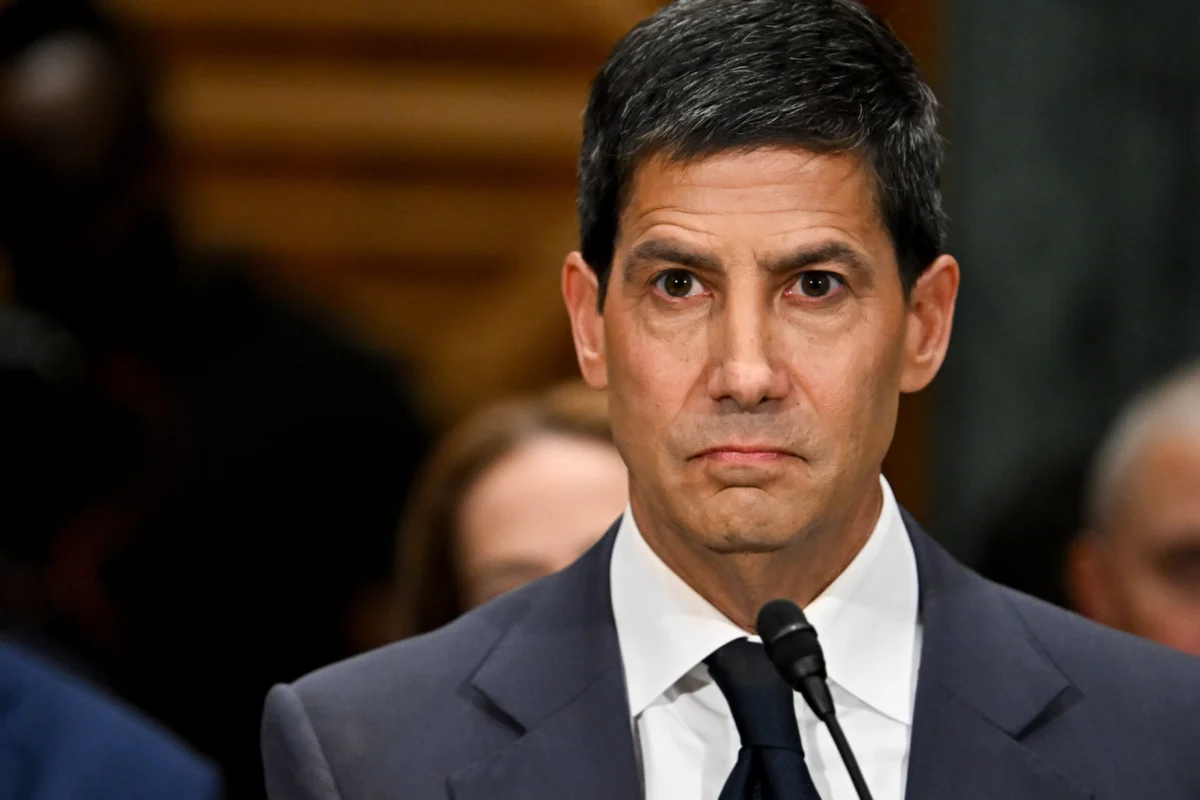
The intricate and often opaque world of central banking, typically far removed from public discourse, finds itself under an uncharacteristic spotlight as Federal Reserve Chair nominee Kevin Warsh articulates a vision for the institution’s independence that has left economists, former officials, and market observers grappling with its profound implications. At the heart of this unfolding debate is Warsh’s nuanced, some would say contradictory, philosophy regarding the Fed’s autonomy, particularly in areas he categorizes as "non-monetary matters" and the future governance of its formidable balance sheet. The ambiguity surrounding these proposals, especially in the context of financial instruments like currency swap lines, has ignited a spectrum of reactions ranging from cautious optimism to deep apprehension about the potential erosion of the Fed’s vital independence.
The Shifting Sands of Central Bank Autonomy
The concept of Federal Reserve independence is a cornerstone of modern economic policy, widely credited with insulating monetary policy decisions from short-term political pressures. This autonomy allows the Fed to make decisions based on long-term economic stability, such as controlling inflation and promoting maximum employment, rather than succumbing to the immediate demands of political cycles. Historically, this independence has been fiercely guarded, evolving from early agreements like the 1951 Treasury-Fed Accord, which formally established the Fed’s control over monetary policy, to its robust role in navigating recent financial crises. Its credibility in financial markets hinges on the perception that its decisions are purely economic, free from political influence.
However, Warsh, a former Federal Reserve Governor and a key figure during the 2007-2008 financial crisis, has introduced a distinction that challenges this traditional understanding. While he unequivocally states that the Fed should be "strictly independent" in formulating monetary policy, he simultaneously expresses a willingness to collaborate with Congress and the Trump administration on "non-monetary matters." This distinction, seemingly innocuous, becomes problematic given the inherent difficulty in drawing a clear line between what constitutes "monetary" and "non-monetary" functions within a modern central bank. His testimony and subsequent written responses to senators’ questions following his April 21 confirmation hearing offered little in the way of clarification, stating: "Fed officials are not entitled to the same special deference in areas affecting international finance, among other matters." This particular phrase has resonated with a disquieting tone across the financial community, raising questions about the scope of the Fed’s authority in a globalized economy.
A New Accord and the Balance Sheet Conundrum
Further adding to the complexity, Warsh has frequently alluded to the need for a new "Fed/Treasury accord" that he suggests would govern the Fed’s balance sheet. The specifics of this proposed accord remain largely undefined, fueling speculation and concern. The Fed’s balance sheet, once a relatively modest instrument, ballooned dramatically during the Great Financial Crisis and the COVID-19 pandemic through programs like quantitative easing (QE), which involved massive purchases of government bonds and mortgage-backed securities. These actions were taken to inject liquidity into the financial system, lower long-term interest rates, and support economic activity when conventional interest rate tools were constrained by the zero lower bound.
For six former Fed officials interviewed for this article, Warsh’s comments have been, at best, "unclear or confusing." At worst, they view his analysis as "worrisome" for the future of Fed independence. The potential outcomes, they suggest, could range from benign adjustments to existing conventions to more concerning limitations on the Fed’s critical ability to deploy its balance sheet effectively during a crisis. The pervasive lack of detail in Warsh’s pronouncements has prevented these officials from drawing definitive conclusions, yet the underlying anxiety is palpable.
Expert Apprehension: The Balance Between Independence and Cooperation
Jeffrey Lacker, the former President of the Richmond Fed and a known hawk on interest rate and balance sheet policy, offered a nuanced perspective. He indicated that he could potentially welcome a new accord between the Fed and the Treasury Department if its primary outcome was to reorient the Fed’s focus solely on monetary policy, thereby delegating "credit policy" — the allocation of credit to specific sectors — to the Treasury. Under such an arrangement, the Fed’s asset purchases might be restricted to only government treasuries, precluding it from buying mortgages or other financial instruments, as it did during recent crises. This aligns with a long-standing criticism from some quarters that the Fed’s expanded balance sheet operations ventured too far into fiscal policy territory.
However, Lacker quickly tempered his conditional approval with a stark warning: "I can also imagine a less constructive agreement that lets the Treasury use the Fed’s balance sheet to bypass Congress, perpetuating bad practices and compromising the Fed’s independence." This sentiment was echoed by a former high-level Fed official, who chose to speak on condition of anonymity due to the sensitive nature of the topic. This official stated gravely, "If followed to its logical conclusion, the Fed could lose control of its balance sheet." Such an outcome would fundamentally alter the central bank’s operational capacity and its independence, effectively making it an extension of the executive branch’s fiscal agenda.
Currency Swap Lines: A Test Case in the Gray Area
One specific financial instrument that vividly illustrates the "gray area" Warsh’s comments traverse is the currency swap line. These arrangements, primarily utilized during periods of acute financial stress, involve the Fed providing U.S. dollars to another country’s central bank in exchange for an equivalent amount of that foreign bank’s currency. From the Fed’s traditional viewpoint, these operations are a crucial mechanism for injecting dollar liquidity into foreign markets, thereby preventing or mitigating a global scramble for dollars that could rapidly destabilize and infect U.S. markets. They serve as a vital shock absorber in the international financial architecture.
However, as several former Fed officials pointed out, swap lines inherently occupy a complex intersection of monetary policy, international finance, and even foreign policy. The first indicator of their monetary nature is that they require approval from the Federal Open Market Committee (FOMC), the very body responsible for setting U.S. monetary policy. Second, when these swap lines are drawn upon by foreign central banks, they directly increase the size of the Fed’s balance sheet. During the tumultuous Great Financial Crisis, for instance, swap lines temporarily added nearly $600 billion to the Fed’s balance sheet, representing approximately 25% of its total assets at the time, according to data from Haver Analytics. More recently, during the early stages of the COVID-19 pandemic, these lines peaked at $450 billion, demonstrating their significant impact on the Fed’s footprint.
The current relevance of swap lines has been heightened by recent comments from Treasury Secretary Scott Bessent, who indicated that several Persian Gulf nations, including the United Arab Emirates (UAE), have requested such arrangements. While the Treasury Department itself possesses the authority and funds to provide swap lines — as it did recently for Argentina — it remains unclear whether Bessent intends for the Fed to assume this role. When senators specifically questioned Warsh on whether the Fed would be obligated to comply with the Treasury’s wishes in such a scenario, his response was notably indirect, failing to provide a clear answer.

For many former Fed officials, the prospect of extending swap lines to wealthy nations like the UAE, which boasts considerable reserves and sovereign wealth funds and does not appear to be facing an immediate dollar liquidity crisis, raises red flags. Such an action, they contend, could be perceived less as a necessary market intervention and more as a political gesture aimed at bolstering an ally in the context of ongoing geopolitical tensions, such as the Iran war. Providing a dollar swap line, these officials suggest, would confer international prestige on the UAE, typically reserved for G-7 nations and other major developed economies. This effectively blurs the line between legitimate monetary policy and the potentially politicized allocation of resources, leading one former official to warn of the "worst outcome," where "the Fed’s balance sheet becomes an arm of foreign aid."
The Broader Implications for the Fed’s Operational Framework
Warsh’s proposals extend beyond swap lines, hinting at fundamental changes to much larger segments of the central bank’s operations. The revised Treasury-Fed accord he envisions would, in ways yet to be specified, govern both the size and potentially the composition of the Fed’s balance sheet. This suggests a departure from the prevailing view among many Fed officials who consider balance sheet policy an integral component of monetary policy, especially when short-term interest rates are at or near zero. The fact that decisions regarding the purchase or sale of assets require a majority vote of the FOMC underscores their monetary policy nature in the current framework.
Warsh’s skepticism regarding the Fed’s expansive balance sheet is well-documented. His objection to the Fed’s decision not to reduce its balance sheet more aggressively in the aftermath of the Great Recession was a primary factor in his resignation as a governor in 2011. Similarly, Treasury Secretary Bessent has been a vocal critic, famously comparing the Fed’s growing balance sheet to a "gain of function" experiment, arguing it expands the Fed’s economic footprint and concentrates power that rightfully belongs with the Treasury and the administration. "I think that, especially during the GFC, a lot of things moved from Treasury to the Fed that are political decisions that should be at Treasury," Bessent told CNBC on April 14, expressing agreement with Warsh’s underlying premise, though admitting he was "not sure exactly what he means about the Treasury-Fed accord."
The potential impact of such an accord is multifaceted. On one hand, it could lead to a more constrained Fed, potentially limiting its asset purchases solely to U.S. Treasuries, thereby curtailing its involvement in "credit policy" — a term Jeffrey Lacker uses to describe the Fed’s purchases of non-Treasury assets like mortgages during the Great Recession or corporate bonds during the pandemic. Proponents of this view argue it would force fiscal authorities to take responsibility for credit allocation, rather than relying on the central bank.
On the other hand, the deeper concern, as articulated by former Boston Fed President Eric Rosengren, is the potential for such an accord to severely hobble the Fed’s ability to respond effectively during a severe crisis. If the Fed is required to seek Treasury permission for asset purchases or is bound by strict limits on the size and composition of its balance sheet, its flexibility to act swiftly and decisively to stabilize markets could be critically compromised. Rosengren noted that one reason the Fed diversified its asset purchases beyond Treasuries was to avoid becoming an overly dominant player in specific segments of the Treasury market, which could itself distort market functioning.
Risks to Market Credibility and Global Standing
The most significant apprehension among former Fed officials revolves around the potential for Treasury influence to fundamentally undermine the central bank’s independence. Should the Treasury gain the ability to direct the Fed to purchase specific amounts or types of assets, it could send a chilling signal to bond markets. Such an action could be interpreted as the Fed directly financing the government deficit or engaging in the politically motivated allocation of credit to favored sectors — accusations that have, at times, been leveled against the Fed even under its current mandate. This would effectively be seen as the Treasury dictating monetary policy, a direct assault on the Fed’s autonomy and a move that could spook investors, drive up borrowing costs, and weaken the dollar’s international standing.
Jim Bullard, former President of the St. Louis Fed, acknowledged that discussions about the Fed and Treasury cooperating to limit the Fed’s purchasing scope have a long history. While agreeing with Bessent’s critique of the Fed’s tendency to accumulate assets during crises without fully unwinding them, Bullard cautioned that Bessent’s comments about "intimate cooperation" between the two institutions "is usually associated with bad outcomes." This historical perspective underscores the delicate balance required to maintain a functional separation of powers.
It is worth noting that some areas of cooperation or influence between the Fed and the executive branch are already conventional, albeit not without their critics. In bank supervision policy, for example, the Fed often aligns with the administration’s broader regulatory philosophy. Under President Joe Biden, the Fed began to consider the financial costs of climate risk for regulated banks, only to pivot away from this focus following President Donald Trump’s re-election, subsequently embarking on a process of reducing regulatory burdens on banks in line with the administration’s stated goals. This political swing is partly attributable to the Fed’s collaborative role with other agencies headed by political appointees in crafting regulatory policy. Furthermore, on matters of dollar policy, the Fed has long deferred to the Treasury as the primary authority.
The Path Forward: Navigating Uncertainty
JPMorgan’s chief U.S. economist, Michael Feroli, points out that any rapid shift in monetary policy under Warsh would face checks and balances. "The other 11 members of the FOMC will act as a brake on any quick shift in monetary policy under Warsh," Feroli wrote in a recent report, highlighting the collegial nature of the Fed’s decision-making body. This collective governance structure provides a crucial safeguard against unilateral policy shifts.
Ultimately, Warsh’s complex and often cryptic pronouncements suggest an underlying philosophy aimed at buttressing what he perceives as the Fed’s core independence. By advocating for the shedding of "non-monetary" responsibilities and a redefinition of the Fed’s balance sheet role, he may believe he can insulate the central bank’s primary function — setting interest rates — from political interference, even from the president who nominated him. As he himself hinted during his nomination hearing, "Presidents want lower rates, but Fed independence up to the Fed." The challenge, however, lies in precisely defining the boundaries of that independence in an increasingly interconnected and crisis-prone global economy.
The stakes are exceptionally high. The interpretation of Federal Reserve independence by its incoming chair could fundamentally redefine the institution’s role for decades to come, impacting its ability to respond effectively to future financial crises, its credibility in global markets, and the delicate balance of power between the central bank and the executive branch. As the Senate prepares for Warsh’s potential confirmation, the financial world watches closely, awaiting further clarity on a vision that could reshape the very bedrock of U.S. economic governance.
