

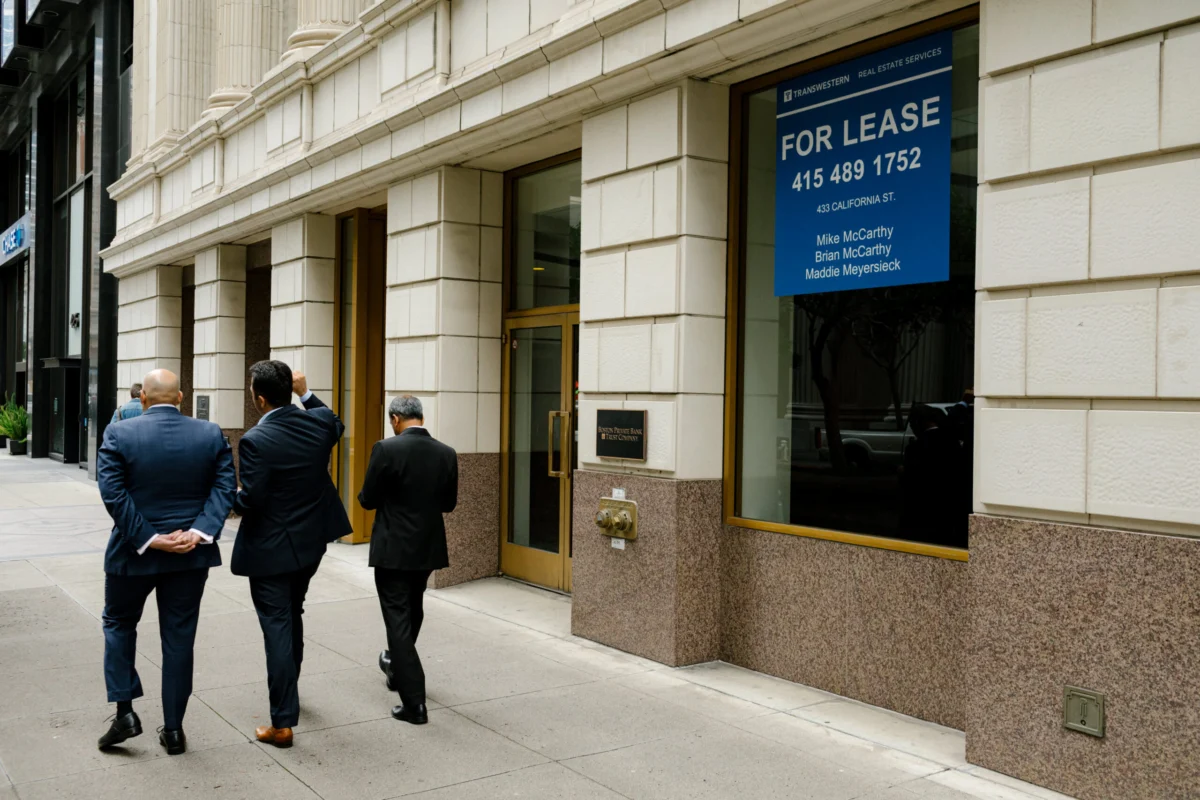
In a compelling turn of events that defies prevailing economic anxieties and a challenging geopolitical landscape, the demand for office space across the United States has exhibited a robust recovery, reaching levels not seen since the onset of the global pandemic. This unexpected resurgence, as evidenced by key industry metrics, signals a potentially significant shift in the commercial real estate sector, challenging previous assumptions about the enduring impact of remote work and economic volatility.
The first quarter of the current year marked a pivotal moment for the office market, with new in-person and virtual office tours climbing to their highest point since the pandemic began. This surge is meticulously tracked by the VTS Office Demand Index (VODI), a crucial forward-looking indicator that typically forecasts lease signings approximately a year or more in advance. The index, compiled by VTS, a leading commercial real estate software company, reported an impressive 18% increase from the fourth quarter of the previous year and a 13% rise when compared to the same period one year ago. These figures present a stark contrast to the often-gloomy narratives surrounding the future of traditional office environments.
Unpacking the Demand Metrics: A Closer Look at VODI’s Signal
The VTS Office Demand Index (VODI) serves as an invaluable barometer for the health and future trajectory of the office market. By aggregating anonymized data from thousands of office buildings across major U.S. markets, VODI captures the real-time touring activity of prospective tenants, offering an early glimpse into their leasing intentions. A consistent uptick in touring activity, whether virtual or physical, directly correlates with an increase in eventual lease agreements, providing a reliable leading indicator for market performance. The reported increases – 18% quarter-over-quarter and 13% year-over-year – are not merely incremental gains but represent a substantial rebound, particularly against a backdrop of ongoing economic uncertainty and inflationary pressures.
Nick Romito, CEO of VTS, articulated the sentiment of cautious optimism permeating the industry. "Although tested against a turbulent backdrop, demand for office space has seen an exceptional start to the year," Romito stated in a company release. He further emphasized a crucial aspect of this recovery: its diversified nature. "What perhaps is most notable about this quarter’s positive performance is that it was led not just by tech’s sustained AI boom – but also by finance and legal companies entering the market as well." This observation is critical, suggesting that the recovery is not a singular, sector-specific phenomenon but rather a broader revitalization driven by multiple pillars of the economy. The burgeoning artificial intelligence sector, with its intensive need for collaborative research and development spaces, has undoubtedly contributed significantly. Simultaneously, the steadfast return-to-office mandates and hybrid work policies adopted by many firms within the traditionally office-centric finance and legal industries are also playing a substantial role in stimulating renewed demand.
The Paradox of Demand Amidst Stagnant Employment
One of the most perplexing aspects of this office market recovery is its apparent disconnect from broader employment trends. According to data from the Bureau of Labor Statistics, office-using employment remains approximately 2% below its 2022 levels. Conventionally, a decrease in office-using employment would lead to a corresponding reduction in the demand for office space, as fewer workers necessitate less physical infrastructure. This divergence presents a curious paradox that industry analysts are working to unravel.
Several theories have emerged to explain this anomaly. One prominent hypothesis suggests that the current labor market dynamics, characterized by a slight softening compared to the tight conditions of recent years, may be affording employers greater leverage. With a more competitive talent pool, companies might feel more emboldened to enforce stricter return-to-office policies, thereby increasing the effective demand for physical workspace even if the overall headcount in office-using sectors hasn’t fully rebounded. This newfound employer leverage could be a significant factor in compelling workers back into communal environments, stimulating the need for well-appointed office facilities that support collaboration and corporate culture.
Another perspective points to a "flight to quality" phenomenon. Even if companies are not expanding their overall footprint, they may be upgrading their existing spaces or relocating to newer, more amenity-rich buildings to attract and retain talent in a hybrid work environment. This means that while the overall square footage leased might not dramatically increase, the desirability and therefore the demand for premium, modern office space are certainly on the rise. Older, less functional buildings, conversely, continue to struggle with high vacancy rates, creating a bifurcated market where prime assets thrive while secondary ones languish.
The Evolving Landscape of Vacancy and the Flight to Quality
The national office vacancy rate offers a nuanced picture of the market’s health. While the overall demand indicators are positive, significant pockets of vacancy persist, highlighting a growing disparity within the commercial real real estate landscape. According to a report from JLL, a prominent commercial real estate services and investment management company, the national office vacancy rate saw a modest but encouraging decline of 14 basis points in the first quarter of this year, settling at 22.2%. This figure is also down 30 basis points from its most recent peak in the second quarter of 2022, signaling a gradual, albeit uneven, tightening of the market.
However, a critical detail emerges from JLL’s analysis: vacancy remains "hyper-concentrated predominantly in larger-scale, aging buildings with financially constrained owners." A staggering 10% of office buildings are reported to comprise more than 60% of total national vacancy. This data underscores the concept of the "flight to quality," where tenants are increasingly prioritizing modern, flexible, and amenity-rich spaces over older, less functional properties. Companies are seeking environments that foster collaboration, enhance employee well-being, and reflect a forward-thinking brand image, especially in a hybrid work era where the office must offer a compelling reason for employees to commute.
Owners of these aging, less desirable buildings face significant challenges. Many are grappling with outdated infrastructure, high operating costs, and limited capital for extensive renovations. This situation has led to discussions about potential repurposing of these "zombie buildings" into alternative uses such as residential units, laboratory spaces, or mixed-use developments, though such conversions are often complex and costly. The ongoing disparity between demand for prime assets and the lingering vacancy in secondary properties is expected to be a defining characteristic of the office market for the foreseeable future, driving innovation in building design and urban planning.
A Tale of Two Cities: Regional Variances in Recovery
As with nearly every aspect of real estate, the office recovery is intensely local, characterized by significant variations in performance across different metropolitan areas. This geographic segmentation reflects diverse economic drivers, industry concentrations, and local market dynamics.
Leading the Charge: San Francisco, New York City, and Los Angeles

San Francisco, a city that faced one of the most severe downturns in office occupancy post-pandemic, is now demonstrating a remarkable comeback. This resurgence is largely fueled by the relentless growth of the artificial intelligence sector. The Bay Area’s deep talent pool, robust venture capital ecosystem, and concentration of AI startups are creating a renewed demand for specialized office and lab spaces. Companies in generative AI, machine learning, and data science require collaborative environments for their highly skilled teams, driving a noticeable uptick in leasing activity within the city’s financial district and surrounding tech hubs. Local real estate experts suggest that while the broader tech industry may still be recalibrating, the specific niche of AI is experiencing an unprecedented boom, translating directly into office demand.
New York City, a global financial and cultural capital, is also at the forefront of the office market recovery. Its inherent diversity of employment, spanning finance, legal services, media, technology (beyond just AI), and creative industries, provides a resilient foundation. Large financial institutions and law firms, many of whom have either fully returned to office or implemented structured hybrid models, continue to anchor demand. The city’s dense urban environment and extensive public transportation network also make a compelling case for in-person work, fostering a vibrant ecosystem that thrives on face-to-face interaction. The sheer volume of diverse industries ensures a steady baseline of demand, insulating it somewhat from sector-specific shocks.
Los Angeles, often synonymous with the entertainment industry, has also witnessed double-digit increases in office demand on a quarterly basis. This growth is predominantly fueled by the city’s burgeoning creative industry, which encompasses film production, digital media, gaming, and innovative tech startups. The collaborative nature of these fields often necessitates physical presence for brainstorming, production, and client meetings. Ryan Masiello, Chief Strategy Officer of VTS, highlighted LA’s performance, noting, "LA’s positive performance this time around was a new bright spot – and it remains to be seen if Los Angeles can sustain growth in the near term." This cautious optimism acknowledges the dynamic nature of the creative industries and the potential for market fluctuations.
Facing Headwinds: Boston, Seattle, Washington D.C., and Chicago
Conversely, several major cities are experiencing weaker demand, struggling to keep pace with the national recovery. Boston, a traditional hub for life sciences, was identified as the worst-performing market in the VTS report. The city’s life science offices have taken a significant hit, primarily due to substantial government funding cuts and a broader slowdown in venture capital investment within the biotech sector. This has led to an oversupply of specialized lab and office space, creating a challenging environment for landlords. Many life science companies, particularly startups, are now consolidating or delaying expansion plans, impacting the overall demand.
Seattle, Washington D.C., and Chicago are also contracting in terms of office demand. These cities are not seeing the robust employment growth that is buoying other markets. Seattle, heavily reliant on the technology sector, has been impacted by major tech company layoffs and the widespread adoption of remote work policies by its largest employers. Washington D.C., a government-centric city, has felt the effects of federal hiring freezes and a slower return-to-office rate among government agencies and contractors. Chicago, while boasting a diverse economy, has contended with corporate relocations, concerns about downtown vibrancy, and a slower rebound in its central business district.
Masiello’s analysis encapsulates this regional divergence: "The AI boom continues to be a dominant headline for office, and markets that lack a major tech presence, or are without a primary growth lever in another industry, are seeing declines in demand." This underscores the critical importance of a dominant, growing industry or a highly diversified economic base for sustained office market vitality in the current climate.
Broader Impact and Future Implications
The unexpected recovery in office demand carries significant implications for various stakeholders, from real estate investors and developers to urban planners and city officials.
Investment Landscape: For investors, the bifurcated market presents both opportunities and risks. Premium, amenity-rich properties in leading markets are likely to continue appreciating, attracting capital and commanding higher rents. Conversely, owners of older, less desirable assets in lagging markets face increasing pressure to invest in costly renovations, pursue alternative uses, or potentially face financial distress. This trend could accelerate consolidation in the market, with well-capitalized firms acquiring underperforming assets for strategic repositioning. The "flight to quality" is not just a tenant preference but a driving force behind investment decisions, favoring new developments or extensively renovated properties over aging stock.
Urban Planning and City Centers: The health of the office market is intrinsically linked to the vitality of urban centers. A rebound in office occupancy can stimulate local economies by increasing foot traffic for retail, restaurants, and public transportation. Cities grappling with high office vacancies might need to intensify efforts to incentivize office-to-residential conversions, promote mixed-use developments, and enhance public spaces to attract both businesses and residents. The challenge for urban planners will be to create dynamic, resilient city cores that can adapt to evolving work patterns and economic shifts. The long-term success of central business districts hinges on their ability to offer more than just office space, transforming into vibrant ecosystems that integrate work, living, and leisure.
The Evolution of Work: While office demand is recovering, it is unlikely to return to pre-pandemic norms without fundamental changes. Hybrid work models are here to stay, and companies are continually refining their strategies for optimal in-office presence. The renewed demand suggests that the office retains its crucial role as a hub for collaboration, innovation, mentorship, and culture-building. However, the purpose of the office is evolving, shifting from a mere place for individual work to a destination for collective endeavors. This ongoing evolution will influence future office design, requiring more flexible layouts, advanced technology, and a greater emphasis on communal spaces and amenities.
Economic Resilience: The resilience shown by the office market, particularly in the face of geopolitical tensions (such as the reference to "war with Iran" in the original context, implying global instability) and domestic economic uncertainty, underscores the underlying strength of certain sectors of the U.S. economy. It suggests that despite widespread concerns about a potential recession, key industries are not only weathering the storm but actively planning for future growth, which includes a physical footprint. This can be viewed as a positive indicator for broader economic stability, reflecting a deeper confidence among businesses than some economic forecasts might suggest.
Conclusion
The first quarter of the year has delivered a surprising and encouraging narrative for the U.S. office market. Despite a complex economic backdrop and persistent challenges, the VTS Office Demand Index indicates a robust recovery in tenant touring activity, driven by a diversified resurgence led by the AI boom in tech, and a steadfast return from the finance and legal sectors. While the paradox of rising demand amidst stagnant office-using employment requires further analysis, it points to a market that is adapting to new realities, including employer leverage and a pronounced "flight to quality."
The recovery, however, is not monolithic. It is a highly localized phenomenon, with dynamic markets like San Francisco, New York City, and Los Angeles forging ahead, while others such as Boston, Seattle, Washington D.C., and Chicago grapple with unique headwinds. This regional divergence underscores the importance of specific industry drivers and a diversified economic base for sustaining office market vitality. As the market continues to evolve, stakeholders will need to remain agile, focusing on strategic investments in high-quality assets, innovative urban planning, and a deep understanding of the changing nature of work to navigate the opportunities and challenges ahead. The story of the office market in 2023 is one of unexpected resilience, ongoing transformation, and a clear signal that the physical office, albeit in an evolved form, remains an integral component of the modern economy.
