

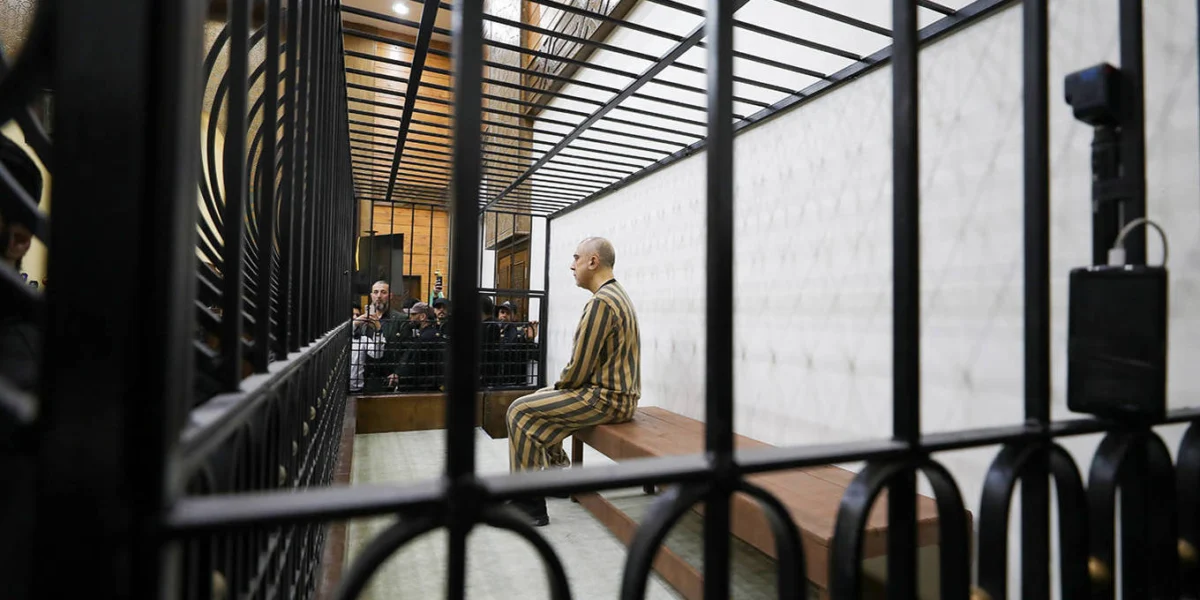
The question of how to address the crimes of a toppled regime—the killers, torturers, and their enablers—is a perpetual and agonizing challenge for successor governments. Striking a delicate balance between the imperative of justice for victims and the urgent need for societal stability is a tightrope walk that has tested leaders from post-World War II Europe to contemporary post-conflict nations. Syria’s emerging leadership, much like Charles de Gaulle in France and Konrad Adenauer in Germany before them, is confronting this reality: the necessity of engaging with, and potentially rehabilitating, elites previously associated with the fallen regime to rebuild a fractured society. This complex predicament, fraught with historical precedent and practical considerations, is unfolding against a backdrop of protracted conflict and immense human suffering.
The Legacy of Repression and the Dawn of a New Era
For over a decade, Syria has been engulfed in a devastating civil war, a conflict that began in 2011 with widespread protests against the authoritarian rule of Bashar al-Assad. The regime’s response to these peaceful demonstrations was brutal and swift, escalating into a full-blown conflict that has claimed hundreds of thousands of lives, displaced millions, and decimated the nation’s infrastructure. During this period, systematic human rights abuses, including mass killings, widespread torture, enforced disappearances, and the use of chemical weapons, have been well-documented by international organizations, including the United Nations and numerous human rights watchdogs.
The initial euphoria that often accompanies the fall of an oppressive regime is invariably tempered by the daunting task of reconstruction and reconciliation. For Syria, this challenge is magnified by the sheer scale of the violence and the deep societal divisions that have been exacerbated by years of conflict. As a new political order, or fragments of one, begins to assert itself in different regions, the specter of accountability for past atrocities looms large. The international community, while largely united in condemning the regime’s actions, remains divided on the most effective pathways to justice and accountability, further complicating the internal dynamics.
Historical Precedents: Navigating the Minefield of Transitional Justice
The Syrian dilemma is far from unprecedented. History offers a stark tableau of nations grappling with similar moral and political quandaries.
Post-Nazi Germany: Following the defeat of Nazi Germany in 1945, the Allied powers faced the monumental task of denazification and prosecuting war criminals. While significant efforts were made through the Nuremberg Trials and subsequent denazification programs, the imperative to rebuild the country and establish a bulwark against Soviet influence led to compromises. Many former Nazi officials, particularly those in administrative and technical roles, were reintegrated into West German society and government, a decision that prioritized stability and economic recovery over universal prosecution. This approach, while controversial, was instrumental in the rapid reconstruction of West Germany.
Post-Junta Argentina: In the aftermath of the military dictatorship in Argentina (1976-1983), which was responsible for widespread human rights abuses, including forced disappearances and torture, there was a strong public demand for justice. The initial trials of high-ranking military leaders were a significant step, but subsequent governments, under pressure to quell lingering military unrest and restore political stability, enacted "amnesty laws" that effectively shielded many perpetrators from prosecution. This period is often cited as a cautionary tale about the tension between justice and immediate political expediency.
Post-Apartheid South Africa: In contrast, South Africa adopted a different model with the establishment of the Truth and Reconciliation Commission (TRC) after the end of apartheid. The TRC offered amnesty to perpetrators who fully disclosed their crimes, focusing on truth-telling and reconciliation rather than solely on punishment. While lauded for its restorative justice approach, the TRC also faced criticism for perceived leniency towards some perpetrators and for failing to provide adequate reparations to all victims.
These historical examples illustrate a recurring theme: the inherent tension between the desire for retributive justice and the pragmatic need for political stability and societal cohesion. The decisions made by leaders in these transitional periods have had lasting impacts on their nations’ trajectories, shaping their democratic institutions, social fabric, and international standing.
The Syrian Context: A Fractured Landscape and Competing Interests
Syria’s current situation is uniquely complex. The conflict has fragmented the country, with different regions controlled by various factions, including the Assad regime, opposition groups, and Kurdish forces, all supported by international powers with competing geopolitical interests. This fragmentation complicates any centralized effort towards justice and reconciliation.
The Assad regime, though weakened, has maintained control over key areas, and its survival has been heavily reliant on support from Russia and Iran. The question of how to deal with former regime officials is not merely an internal Syrian matter; it is deeply intertwined with regional power dynamics and international relations.
Supporting Data on Human Rights Abuses:
Numerous reports detail the systematic nature of the atrocities committed. For instance, the Syrian Network for Human Rights (SNHR) has documented over 230,000 deaths attributed to the Syrian regime since 2011, including tens of thousands of torture victims. The UN Commission of Inquiry on Syria has consistently reported on crimes against humanity and war crimes committed by all parties, but with a significant focus on the regime’s systematic targeting of civilians and its use of torture as a tool of repression. Chemical weapons attacks, documented by the Organisation for the Prohibition of Chemical Weapons (OPCW), have further underscored the regime’s brutality.
The Pragmatic Calculus of Rebuilding
The core of the dilemma lies in the practicalities of governance. Rebuilding a shattered nation requires a functional bureaucracy, an educated workforce, and economic infrastructure. Many individuals who held positions within the former regime, while complicit in its abuses, also possessed the technical expertise and institutional knowledge necessary to manage state functions.
Syria’s new leaders, whether they emerge from the current fragmented landscape or from a future unified government, will likely face the same difficult choices as de Gaulle and Adenauer. A wholesale prosecution of every individual who served the regime, particularly those in lower and mid-level administrative roles, could paralyze the state and further destabilize the country.
Inferred Statements and Reactions:
-
Victim Advocacy Groups: Organizations representing victims of the regime’s atrocities would likely advocate for robust accountability measures, demanding that perpetrators face justice for their crimes. They might express concern that any compromise with former elites would betray the sacrifices of those who suffered. "Justice delayed is justice denied," might be a common sentiment, reflecting a deep-seated desire for accountability that transcends political expediency.
-
International Legal Bodies: International organizations like the International Criminal Court (ICC), while potentially unable to act directly within Syria due to political roadblocks, would continue to document evidence and push for universal jurisdiction principles to be applied where possible. Their statements would likely emphasize the importance of upholding international humanitarian law and the need for accountability to prevent future atrocities.
-
Regional Powers: Neighboring countries, some of which have been deeply involved in the Syrian conflict, would have varying perspectives. Those who supported the Assad regime might advocate for clemency for former officials to ensure regional stability. Conversely, countries that supported opposition groups might push for harsher accountability measures.
-
De Facto Authorities in Controlled Regions: Any emerging Syrian governance structures, whether in Damascus or elsewhere, would face internal pressure to demonstrate a commitment to justice while simultaneously managing the practicalities of governing. Leaders might issue statements emphasizing a commitment to both accountability and national reconciliation, seeking to balance these competing demands.
The Implications of Compromise and Accountability
The path Syria’s leaders choose will have profound and lasting implications:
-
Impact on Rule of Law: A failure to hold perpetrators accountable could undermine the development of a robust rule of law, potentially fostering impunity and setting a dangerous precedent for future governments. Conversely, overly broad prosecutions could lead to a collapse of state functions.
-
Societal Reconciliation: The process of dealing with former elites will significantly influence the prospects for genuine societal reconciliation. If victims feel their grievances are ignored, deep-seated resentments could fester, hindering long-term peace. However, if the process is perceived as politically motivated or overly lenient, it could also breed division.
-
International Legitimacy: The way Syria addresses past crimes will impact its standing on the international stage. Countries that demonstrate a commitment to justice and human rights are more likely to garner international support for reconstruction and development.
-
Economic Recovery: The reintegration of skilled individuals, even those with problematic pasts, might be seen by some as necessary for economic recovery. However, this must be carefully balanced against the risk of empowering individuals associated with corruption and repression.
The Path Forward: A Spectrum of Options
Ultimately, Syria’s leadership will likely pursue a path that is a hybrid of different transitional justice mechanisms, adapted to its unique circumstances. This might involve:
- Targeted Prosecutions: Focusing on individuals most responsible for the most egregious crimes, such as those at the highest levels of command and those directly involved in torture and mass killings.
- Lustration and Vetting: Implementing processes to vet individuals for public service, barring those found to have committed serious abuses from holding positions of power.
- Truth Commissions and Reparations: Establishing mechanisms for victims to share their stories and for the state to acknowledge past wrongs and provide reparations.
- Amnesties (Limited and Conditional): Potentially offering conditional amnesties for lower-level perpetrators in exchange for cooperation and disclosure, a highly contentious but sometimes pragmatically necessary measure.
- International Cooperation: Collaborating with international bodies for evidence gathering, capacity building, and potentially for trials in absentia or through hybrid tribunals, if feasible.
The decisions made in Damascus, or in any future unified Syrian government, will be etched into the nation’s history. They will reflect not only the immediate pressures of governance but also a fundamental choice about the values that will define Syria’s future: whether it will be a society built on the foundations of justice and accountability, or one that prioritizes expediency over the long arc of historical reckoning. The lessons from Germany, Argentina, and South Africa, among others, offer a somber yet instructive guide as Syria navigates this treacherous terrain, a terrain where the pursuit of justice and the demand for stability are inextricably, and often painfully, linked.
