

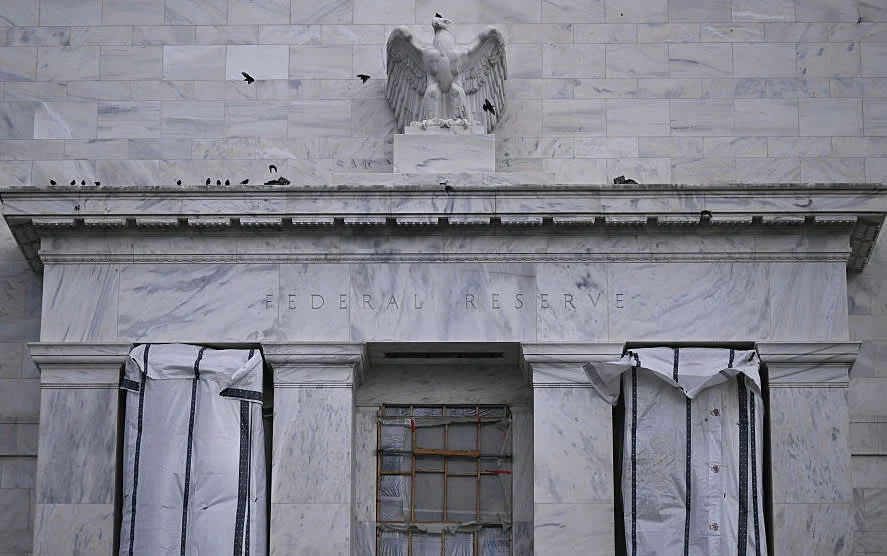
Federal Reserve officials who dissented from the latest post-meeting statement expressed reservations not about the decision to hold interest rates steady, but about the committee’s forward-looking guidance, arguing that signaling a potential future rate cut was inappropriate given current economic uncertainties and resurgent inflationary pressures. The unusually high number of dissenting votes, four out of twelve, underscores a growing divergence of opinion within the Federal Open Market Committee (FOMC) regarding the trajectory of monetary policy in an increasingly complex economic landscape.
The Core of the Disagreement: Forward Guidance
The central point of contention revolved around the phrasing in the FOMC statement: "In considering the extent and timing of additional adjustments to the target range for the federal funds rate, the Committee will carefully assess incoming data, the evolving outlook, and the balance of risks." While seemingly innocuous, Federal Reserve observers and market participants widely interpret such language as implying a bias towards further action in line with recent trends. In this instance, following a series of three rate cuts in the latter half of 2025, the market interpreted the statement as suggesting that the next move was more likely to be a reduction than an increase.
Regional Federal Reserve Presidents Neel Kashkari of Minneapolis, Lorie Logan of Dallas, and Beth Hammack of Cleveland each released statements detailing their dissenting votes, all pointing to this perceived forward guidance as the primary reason for their disagreement. Governor Stephen Miran also dissented, reportedly in favor of a rate reduction, adding another layer to the internal debate.
Dissenting Voices and Their Rationale
Neel Kashkari, in his statement, articulated his concern that the FOMC statement included "a form of forward guidance about the likely direction for monetary policy." He argued that "Given recent economic and geopolitical developments and the higher level of uncertainty about the outlook, I do not believe such forward guidance is appropriate at this time." Kashkari advocated for a more neutral stance, suggesting that the committee’s statement should have indicated that the next move could be either a cut or a hike, reflecting the heightened unpredictability of the economic environment. This marks the third consecutive FOMC meeting where the committee has maintained its benchmark interest rate, following a period of monetary easing in late 2025.
Beth Hammack echoed Kashkari’s sentiment, stating her disagreement with the decision to signal an "easing bias around the future path for monetary policy." She asserted, "I see this clear easing bias as no longer appropriate given the outlook." Hammack specifically highlighted the persistent and "broad-based" nature of inflation pressures. Her concerns were amplified by recent geopolitical events, particularly the escalating conflict in Iran and the subsequent surge in oil prices, which she identified as significant threats to the Fed’s long-standing 2% inflation target.
Lorie Logan also voiced her growing apprehension about the Fed’s ability to bring inflation back to its mandated target. She pointed to the ongoing conflict in the Middle East as a potential catalyst for "prolonged or repeated supply disruptions that could create further inflationary pressures." Simultaneously, Logan acknowledged the resilience of the labor market, characterized by low unemployment and steady job gains keeping pace with labor force expansion. However, she cautioned that "The economic outlook is highly uncertain, however." Logan further elaborated on the importance of forward guidance as a "policy tool" upon which "households and businesses rely on… to make future plans." Her dissent suggests a belief that providing potentially misleading guidance in an uncertain environment could hinder effective economic planning.

The Historical Context of Dissent
The occurrence of four dissenting votes on the FOMC is notable, representing the largest number of dissents since 1992. This level of internal disagreement signals a significant divergence in economic assessments and policy preferences among the committee’s members. While monetary policy decisions are typically made by consensus, a substantial number of dissents can indicate underlying tensions and a lack of unified conviction about the path forward. The FOMC, composed of the seven members of the Board of Governors and five Reserve Bank presidents, is designed to foster debate, but such a significant split warrants closer examination.
Recent Economic Data: Fueling Inflationary Concerns
The timing of these dissents is particularly significant, as recent economic data has lent credence to the concerns of the dissenting officials. Data released on Thursday indicated a pickup in inflation during March. The Personal Consumption Expenditures (PCE) price index, the Fed’s preferred inflation gauge, showed an increase. Crucially, core inflation, which strips out volatile food and energy components, climbed to 3.2% in March. This represents the highest level seen since November 2023, according to the Commerce Department. This resurgence in core inflation is a key indicator for the Fed, as it suggests that price pressures are becoming more embedded in the broader economy, rather than being solely driven by temporary supply shocks.
The Geopolitical Overlay: The Iran Conflict and Oil Prices
The statements from Hammack and Logan directly link inflationary pressures to the escalating geopolitical situation in the Middle East. The conflict in Iran has indeed sent shockwaves through global energy markets. Prior to the current tensions, oil prices had been relatively stable, but the increased risk of supply disruptions due to conflict has led to a significant surge in crude oil futures. This has a cascading effect on the economy, increasing transportation costs, manufacturing expenses, and ultimately contributing to higher prices for a wide range of goods and services. The Fed’s mandate includes price stability, and a sustained increase in energy prices directly challenges this objective.
Broader Implications for Monetary Policy and Market Expectations
The divergence of opinion within the FOMC has immediate implications for financial markets. Market participants closely scrutinize FOMC statements for clues about the future direction of interest rates. Ambiguous or conflicting signals can lead to increased market volatility and uncertainty.
For households and businesses, clearer guidance from the Fed is essential for making informed decisions about borrowing, investment, and spending. If the market interprets the Fed’s language as signaling a bias towards easing, businesses may delay investment decisions, anticipating lower borrowing costs. Conversely, if the guidance is perceived as more neutral or hawkish, businesses might accelerate investment to lock in current rates.
The dissenting votes suggest that the Fed may be entering a more complex phase of monetary policy, where the path back to price stability is less clear-cut. The committee will need to carefully navigate the interplay between persistent inflation, a resilient labor market, and significant geopolitical risks. The upcoming economic data releases will be critical in shaping the Fed’s future decisions and the market’s expectations.
The FOMC’s next meeting will be closely watched to see if the committee adjusts its communication strategy to reflect the nuanced views expressed by the dissenting members. A move towards more explicit data-dependent language, acknowledging the uncertainty of the outlook, could be a potential outcome. Alternatively, if inflation continues to trend upwards, the Fed might be compelled to adopt a more explicitly hawkish stance, even if it means further challenging market expectations of imminent rate cuts. The internal debate highlighted by these dissents underscores the delicate balancing act the Federal Reserve faces in trying to achieve its dual mandate of maximum employment and price stability in an increasingly unpredictable global environment.
