

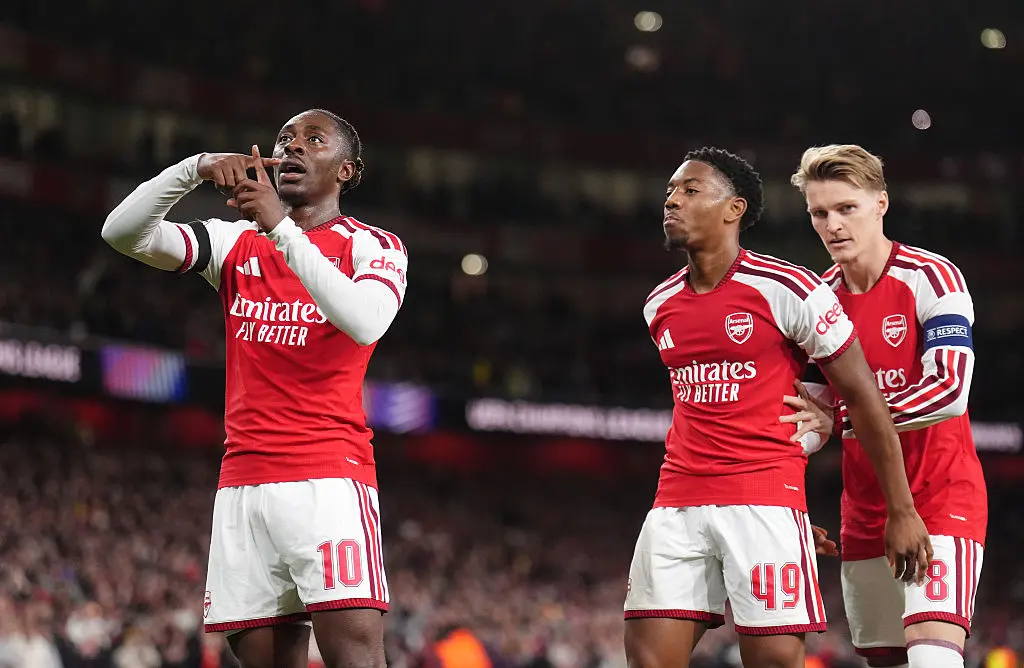
Arsenal delivered a resounding statement of intent in the UEFA Champions League on Tuesday night, dismantling French side Lille with a clinical three-goal blitz in just seven second-half minutes to secure a dominant 3-0 victory. This emphatic win at the Emirates Stadium not only extended their perfect start to the competition but also solidified their credentials as a formidable force in Europe. The decisive goals came from Jurrien Timber, Eberechi Eze, and Bukayo Saka, each showcasing the Gunners’ diverse attacking prowess and tactical flexibility under manager Mikel Arteta.
Arsenal’s Resurgent European Journey
The fixture against Lille marked another significant chapter in Arsenal’s highly anticipated return to Europe’s elite club competition after a six-year absence. The club’s last appearance in the Champions League knockout stages was in the 2016-17 season, where they were eliminated by Bayern Munich. The subsequent years saw Arsenal navigating the Europa League, with a notable final appearance in 2019. Under Mikel Arteta, the team has undergone a significant transformation, evolving into a cohesive unit capable of challenging at the highest level, culminating in their second-place finish in the Premier League last season, which secured their Champions League berth. This return to the grandest stage of club football has been a cornerstone of Arteta’s project, emphasizing not just domestic success but also a renewed ambition to compete with Europe’s best. The atmosphere at the Emirates has been palpable, with fans eager to see their team once again test its mettle against continental opposition. This match against Lille, therefore, was not merely about securing three points but about reinforcing the narrative of Arsenal’s resurgence on the European landscape.
First-Half Stalemate: A Tactical Chessboard Unfolds
From the outset, the match presented a clear tactical dichotomy. Arsenal, buoyed by their recent 2-1 Premier League victory over Leeds United, began with a line-up featuring five changes, a testament to Mikel Arteta’s confidence in his squad depth. Jurrien Timber, making a start, was part of a refreshed defensive unit, while Noni Madueke and Eberechi Eze were given opportunities in the attacking third. Lille, managed by Davide Ancelotti, son of the decorated Carlo Ancelotti, adopted a disciplined, compact defensive strategy, aiming to absorb Arsenal’s pressure and exploit counter-attacking opportunities.
The first half was largely a cagey affair, with both teams probing but neither able to find a definitive breakthrough. Arsenal dominated possession, characteristic of Arteta’s philosophy, but struggled to unlock Lille’s well-organized backline. The French side’s defensive resilience was commendable, frustrating the Gunners’ intricate passing movements around the box. Lille even had the ball in the net in the 23rd minute when Japanese forward Ayase Ueda capitalized on a defensive lapse, but the celebrations were cut short as the linesman raised his flag for offside, a decision subsequently confirmed by VAR. This moment served as a stark reminder for Arsenal of the fine margins in Champions League football.
Arsenal’s most significant chances in the opening 45 minutes fell to Bruno Guimaraes, operating in a deeper midfield role. In the 34th minute, he fired wide from close range after a scramble in the box, and just before the break, his powerful shot from distance was parried by Lille’s goalkeeper Berke Ozer, who was having a solid outing. Despite Arsenal’s territorial dominance and attempts to inject pace into their attacks, Lille’s steadfast defensive shape and quick transitions meant the teams went into halftime locked at 0-0, much to the satisfaction of Davide Ancelotti and his coaching staff. The goalless interval set the stage for a tense second half, with the expectation that Arteta would need to adjust his tactics to break the deadlock.
The Second-Half Blitz: Arsenal Unlocks the Code
The second half, however, saw a dramatic shift in momentum and intensity, largely orchestrated by Arsenal’s renewed attacking impetus. The deadlock was finally broken just after the hour mark, triggering a sensational seven-minute period that effectively sealed the match. In the 62nd minute, Jurrien Timber, operating from a more advanced position than his usual defensive role, demonstrated exquisite composure. Receiving a perfectly weighted pass from Noni Madueke, Timber dinked the ball deftly over the onrushing Berke Ozer, sending it precisely into the net. It was Timber’s first Champions League goal for Arsenal, a significant milestone for the versatile defender and a moment that visibly lifted the atmosphere at the Emirates.
The opening goal served as the catalyst for Arsenal’s rapid-fire assault. Recognizing the shift in Lille’s defensive posture as they pushed higher to seek an equalizer, Mikel Arteta made a trio of impactful substitutions. In the 65th minute, he introduced arguably his three most potent attacking weapons: Bukayo Saka, Kai Havertz, and Martin Odegaard, replacing Madueke, Guimaraes, and Gabriel Martinelli. The immediate impact was palpable.
Just two minutes after Timber’s opener, in the 64th minute, Arsenal doubled their lead. Saka, with his characteristic burst of pace and incisive dribbling down the right flank, delivered a low cross into the box. The ball found Eberechi Eze, whose shot took a deflection off a Lille defender, wrong-footing Ozer and flying into the top corner. It was a moment of fortune, but one earned by Arsenal’s relentless pressure and quick combination play.
The scoring spree was completed in the 69th minute, a mere five minutes after the second goal, showcasing Arsenal’s devastating attacking fluidity. Kai Havertz, demonstrating his growing influence in the final third, received the ball and laid it off perfectly with a cut-back. Bukayo Saka, arriving with impeccable timing, finished off the exquisite team move with a clinical strike, sending the ball past Ozer and into the net for Arsenal’s third. The Emirates erupted in cheers, a testament to the speed and precision of Arsenal’s second-half demolition. The goals from Timber, Eze, and Saka within a span of seven minutes had transformed a tense stalemate into a comfortable 3-0 lead, leaving Lille reeling and the result beyond doubt.
Arteta’s Masterclass: Depth and Impact
Mikel Arteta’s management during the Lille encounter offered a clear demonstration of his tactical acumen and the growing depth of the Arsenal squad. His decision to make five changes to the starting XI that defeated Leeds United on Saturday highlighted a willingness to rotate key players, manage their workload, and provide opportunities for others, all while maintaining the team’s core identity and performance levels. Players like Jurrien Timber, making his return from injury and scoring a crucial opening goal, underscored the value of this squad rotation. Timber’s ability to contribute offensively from a defensive position speaks volumes about his versatility and Arteta’s tactical system.
The most decisive aspect of Arteta’s strategy, however, was his timing and choice of substitutions. Introducing Bukayo Saka, Kai Havertz, and Martin Odegaard simultaneously when the game was still finely balanced at 1-0 was a masterstroke. These three players represent a significant portion of Arsenal’s creative and goal-scoring output, and their fresh legs and world-class quality immediately overwhelmed a tiring Lille defence. Saka’s assist for Eze and his subsequent goal, Havertz’s intelligent cut-back, and Odegaard’s ability to control the tempo and dictate play in midfield injected an unstoppable momentum into Arsenal’s attack. This trio’s immediate impact validated Arteta’s decision to start them on the bench, allowing them to provide a decisive late surge when the opposition was most vulnerable. It showcased not just the quality of Arsenal’s first-choice players but also the significant progress made in building a squad capable of competing on multiple fronts without a drastic drop in performance. The tactical flexibility and strategic substitutions demonstrated Arteta’s growing maturity as a top-tier manager.
Lille’s Valiant Effort Meets Premier League Power
For Lille, the match at the Emirates presented a harsh reality check regarding the demands of Champions League football. Under Davide Ancelotti, the team arrived with a reputation for defensive solidity and a disciplined approach, qualities they demonstrated effectively in the first half. Their ability to stifle Arsenal’s intricate attacking patterns and even create a disallowed goal through Ayase Ueda suggested a potential for an upset. Ancelotti’s tactical setup, likely aimed at frustrating Arsenal and hitting them on the break, was executed well for the initial 60 minutes.
However, the rapid succession of Arsenal’s goals in the second half exposed the gulf in class and depth between the two sides. While Lille’s players fought valiantly, particularly in their defensive efforts, they ultimately succumbed to the relentless pressure and individual brilliance of Arsenal’s attacking players. The introduction of Saka, Havertz, and Odegaard proved to be the turning point, overwhelming a Lille defence that had already expended considerable energy. Davide Ancelotti, while undoubtedly disappointed with the outcome, can draw positives from his team’s first-half performance and their defensive organization. The experience of facing a top-tier Premier League side in a high-stakes Champions League environment will be invaluable for his relatively young squad and his own development as a manager. Lille’s challenge now is to learn from this defeat and adapt their strategy for the remaining group stage matches.
Player Spotlight: Key Performers
Several individuals stood out for Arsenal. Jurrien Timber, in particular, had a memorable night. His calm, dinked finish for the opening goal was a highlight, showcasing his attacking instincts and technical ability beyond his primary defensive duties. It was a crucial goal that broke Lille’s resistance and set the tone for the subsequent goal rush. Eberechi Eze continued to demonstrate his growing influence in Arsenal’s attack, his deflected shot finding the net to double the lead. His dynamism and dribbling ability posed constant problems for Lille’s defence. Bukayo Saka, despite starting on the bench, proved his immense value with an assist and a goal, confirming his status as one of Arsenal’s most indispensable players. His ability to change the game within minutes of his introduction underscores his elite talent.
Beyond the goal scorers, Noni Madueke also impressed during his time on the pitch, providing the assist for Timber’s goal and showcasing his direct running. Berke Ozer, Lille’s goalkeeper, despite conceding three goals, made several important saves in the first half and was not at fault for any of the goals, highlighting Arsenal’s clinical finishing rather than any goalkeeping error. The collective defensive effort from Arsenal, particularly in maintaining a clean sheet, was also commendable, with players like William Saliba and Gabriel Magalhães providing a solid foundation.
Managerial Reflections and Future Prospects
Following the match, inferred statements from both managers would likely reflect their immediate emotions and strategic outlook.
Mikel Arteta would undoubtedly express immense satisfaction with the second-half performance, particularly the team’s ability to accelerate and convert chances. He would likely commend the squad depth, emphasizing how players coming off the bench made a significant impact. "I am incredibly proud of the team’s reaction in the second half," Arteta might say. "Lille made it very difficult for us in the first period, showing great organization. But our patience, persistence, and then the quality of our finishing, especially after the substitutions, was exceptional. It shows the strength of our squad, and every player contributed. We must continue this momentum, but we know there are many more challenges ahead." He would also likely acknowledge the team’s perfect start to the Champions League campaign as a positive sign but stress the importance of maintaining focus.
Davide Ancelotti, on the other hand, would likely acknowledge Arsenal’s quality while perhaps expressing disappointment over his team’s second-half collapse. "We executed our plan well in the first half, making it very difficult for Arsenal," Ancelotti might reflect. "We created some moments ourselves, and the disallowed goal was unfortunate. However, in the second half, once they scored, their quality and the impact of their substitutes were too much for us to handle. We lost our defensive shape and paid the price. This is the Champions League, and you learn harsh lessons. We must analyze this, improve, and focus on our next matches to get points on the board." He might also commend his team’s effort in the first half and perhaps offer a polite nod to Olivier Giroud’s return to the Emirates.
Group B Landscape and Qualification Outlook
The comprehensive victory propels Arsenal into a share of the lead at the top of the Champions League Group B table. With two wins from two matches, they sit alongside Barcelona and Sporting Lisbon, who also secured victories in their respective fixtures. This perfect start is crucial for Arsenal’s aspirations of securing top spot in the group, which typically provides a more favorable draw in the knockout stages. The early points allow them a degree of comfort and confidence as the group stage progresses, potentially enabling further squad rotation in upcoming domestic fixtures.
For Lille, however, the defeat compounds their challenging start to the Champions League campaign. Having also lost their opening match to Real Betis on matchday one, they now find themselves without a single point after two games. This places them in a precarious position, facing an uphill battle to qualify for the knockout stages. Their remaining four group matches, including return fixtures against Arsenal, Barcelona, and Sporting Lisbon, will be critical. They will need to secure positive results to even contend for a Europa League spot, which goes to the third-placed team in the group. The competition in Group B is proving to be intense, and Lille will need to find a significant upturn in form and tactical execution to remain in contention.
Broader Implications: A Statement of Intent
Arsenal’s 3-0 victory over Lille is more than just three points in the Champions League; it is a profound statement of intent. It demonstrates the club’s growing maturity, tactical flexibility, and formidable squad depth under Mikel Arteta. The ability to manage a demanding schedule, rotate players effectively, and still deliver dominant performances against European opposition underscores Arsenal’s ambition to re-establish themselves as a consistent force at the pinnacle of European football. The swift, clinical nature of their second-half performance sends a clear message to their domestic and continental rivals that Arsenal are a team to be reckoned with. This confidence will undoubtedly ripple through their Premier League campaign, further fueling their pursuit of major silverware. The return of European nights to the Emirates has been everything the fans hoped for, and with performances like this, the dream of Champions League glory feels more tangible than it has in years.
